TRAILS

  • Hike to the HOLLYWOOD Sign

    Hike to the HOLLYWOOD Sign

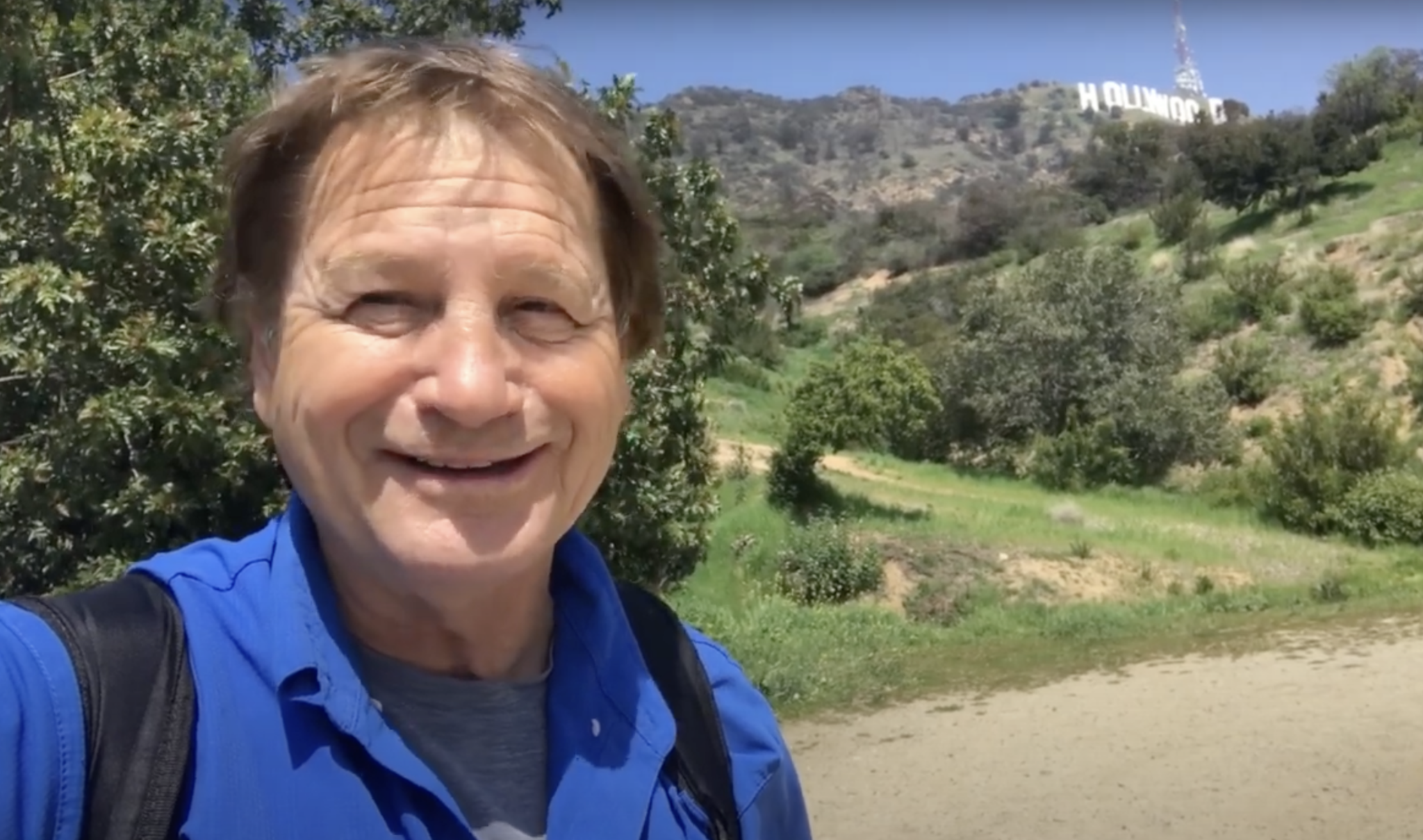
    Hike to the HOLLYWOOD Sign. Celebrate the 100th anniversary of the iconic landmark. Enjoy this fun new video HIKE TO THE HOLLYWOOD SIGN 

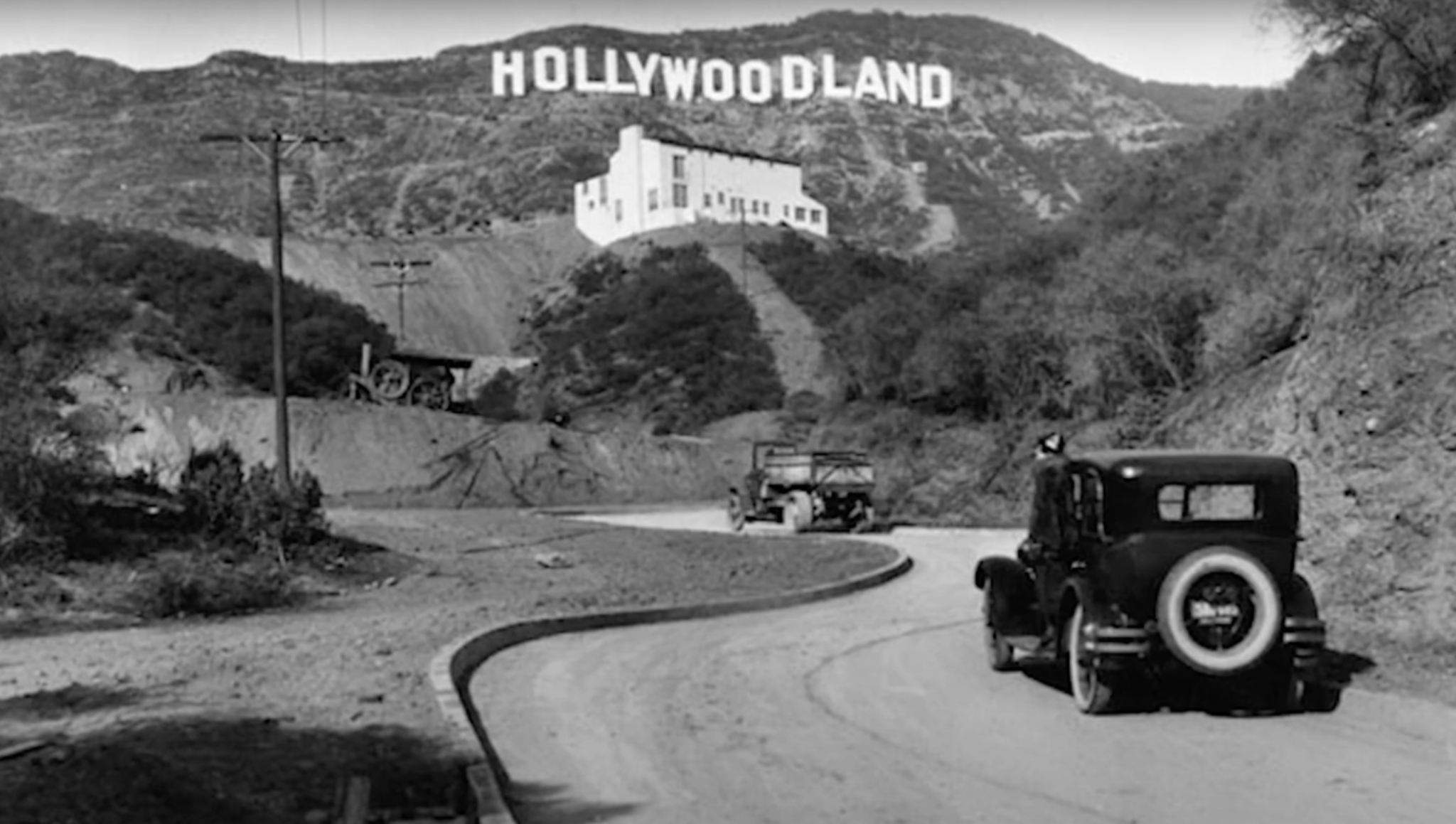
    When the HOLLYWOOD Sign was dedicated on July 13, 1923, no one imagined it would become an iconic symbol for the entertainment industry and greater Los Angeles. Four thousand blinking bulbs were added to the towering letters, and it was lit up for the first time December 8, 1923

    A hundred years ago, it was the HOLLYWOODLAND sign, put up by real estate developers to promote the sales of new homes in the Hollywood Hills. At the time, the “sign was believed to be the largest in the world.

    Given the Writer Guild and Screen Actors Guild strikes and the uncertainty facing the TV-film industry, little wonder the sign has received scant attention in its centennial year. For a longer explanation of why the HOLLYWOOD Sign’s big year has been a bust, check out the Washington Post HOLLYWOOD Sign Story

    Nevertheless it continues to be a highly popular destination for hikers.  So let’s learn a little more about the Hollywood Sign before we hit the trail.
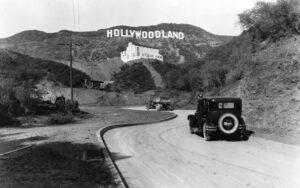
    In the 1920s, visitors drove not hiked to the HOLLYWOODLAND Sign as it was then known.

    A rather rickety real estate advertisement it was, 14 unevenly spaced, 50-foot-high letters that swayed in the breeze. It was built to last for a year or two, but Hollywood rapidly became the moviemaking capital of the world and the sign endured, now forever associated with the silver scree

    Hiking to the HOLLYWOOD Sign likely began in earnest during the 1930s when Depression era government workers constructed the Griffith Park trail system. In 1944, about 440 acres surrounding the HOLLYWOODLAND sign became part of Griffith Park.  When the sign finally got a little TLC in 1949, the “LAND” portion of the sign was removed.

    In 1978 the sign got an extreme makeover with steel letters supported by sturdy cement columns thanks to the generosity of celeb donors, including Hugh Hefner, Alice Cooper, and Gene Autry. Visit the Hollywood Sign Trust to learn more about the history of the HOLLYWOOD Sign.

    To learn about all the Best Day Hikes in Griffith Park and the Hollywood Hills, get a copy of The Trailmaster Guide, Hike Griffith Park & the Hollywood Hills. For a limited time only, The Trailmaster’s Hike Griffith Park & Hollywood Hills ebook is available on Amazon for just $1.99.

    Geography 101

    Mt. Lee NOT Mt. Hollywood is where you’ll find the HOLLYWOOD Sign

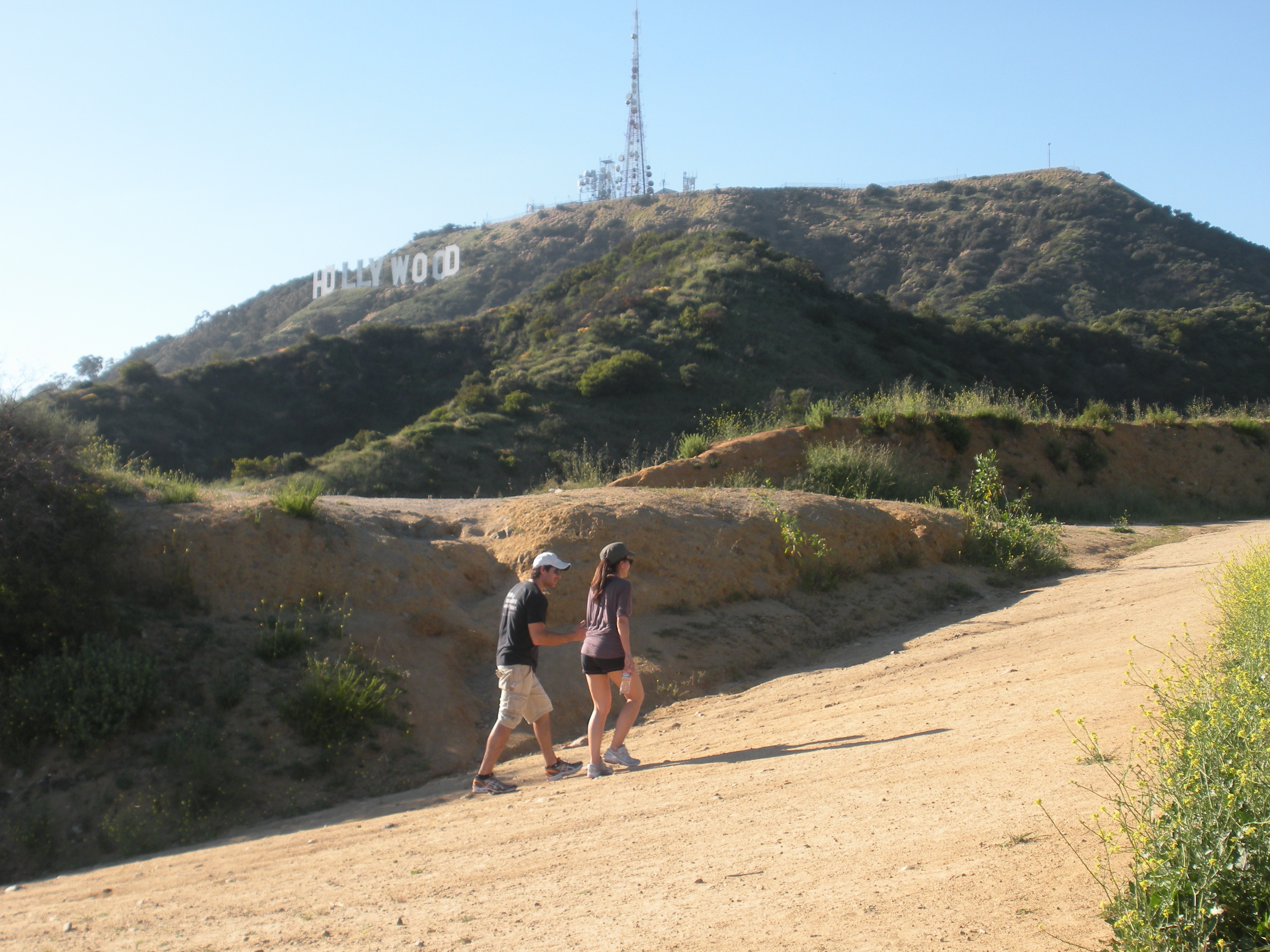
    First thing a hiker needs to know is that Mt. Hollywood, Griffith Park’s premiere peak, is NOT the mountain crowned by the HOLLYWOOD Sign. The HOLLYWOOD SIGN rests near the summit of Mt. Lee. You’ll get great photo angles on the sign and abundant selfie opportunities as you ascend Mt. Lee. (Resist the urge to climb over the fence in order to have your picture taken next to the sign; it’s strictly illegal.

    The Hollywood Hills form the eastern end of the Santa Monica Mountains and share a similar ecology to the range’s taller and wilder peaks to the west. The differences between the two ends of the range have more to do with human settlement than natural history; the Hollywood Hills are by far the most developed part of the mountains.

    Three of The Trailmaster’s  Favorite Hikes

    Hike to the HOLLYWOOD Sign from Innsdale Drive: Easy hike to Hollywood Sign Overlook (Selfie Heaven), followed by ascent on Mulholland Trail and Mt. Lee Drive to the sign.

    Hike to the HOLLYWOOD Sign from Wonderview Drive: A somewhat challenging route for the true hiker! Visit the Wisdom Tree and ascend Burbank Peak and Cahuenga Peak via Aileen Getty Trail on the way to the sign.

    Hike to the HOLLYWOOD Sign from Brush Canyon: Visit the Bronson Caves (“Bat Cave”), ascend Brush Canyon to Mulholland Trail, then over to Mt. Lee Drive to the sign.

    You can also hike to the HOLLYWOOD Sign from several popular locales in Griffith Park including Ferndell, Griffith Observatory, and Mt. Hollywood. Trailmaster recommendation: Climbing to Mt. Hollywood AND to the HOLLYWOOD Sign on the slopes of Mt. Lee adds up to a great hike!

    Hollywood Sign from Innsdale Drive

    From Innsdale Drive to Hollywood Sign Viewpoint
    is 2 miles round trip with 200-foot elevation gain; to HOLLYWOOD Sign is 4.6 miles round trip with 700- foot gain

    This hike does not save the best for last. Great views of the HOLLYWOOD Sign are yours from the beginning of the hike, which makes it highly appealing to the many visitors from across the nation and around the world looking for the easiest way to get photo ops.

    A combination of winding streets and dirt fire roads lead a short mile to Hollywood Sign Viewpoint, aka Selfie Heaven. Frame your photos with the flora en route: cactus, California holly, palm trees, bougainvillea, and bamboo.

    DIRECTIONS: From northbound Highway 101, exit on Barham Drive and drive north 0.3 mile to Lake Hollywood Drive. Turn right and follow the winding road, passing a junction with Wonder View Drive, then Lake Hollywood Reservoir. After 1.5 miles, turn left on Tahoe Drive and continue 0.25 mile to Canyon Lake Drive. Find curbside parking where you can, and the trailhead located 0.1 mile at the end of Canyon Lake Drive at Innsdale Drive.

    THE HIKE: Walk up the wide dirt road (Innsdale Trail for lack of a better name) and… wow, there it is, the HOLLYWOOD Sign. Curve around a bend and just 0.25-mile out, you’ll find yourself directly below the letters. Wow!

    The fire road angles right toward houses and at the 0.5-mile mark, squeeze past a driveway and reach a residential street (Mulholland). Turn left and make another left at the first junction. March past a thicket of signs, ascend past a last house to reach a dirt road, and wind across a hillside above the HollywoodLand neighborhood.

    A short mile from the trailhead, the dirt trail ends at a teal-colored gate. Ascend steps to a paved road located at the crest of Deronda Drive to meet Mt. Lee Drive and a junction. Walk 100 yards up the paved service road (toward a water tank) to Hollywood Sign View. Join visitors from around the world, nearly all taking and posting photos.

    Back to business and the route to the Hollywood Sign: 1.3 more miles up paved Mt. Leet Drive. As you ascend get views of Griffith Observatory and Mt. Hollywood to the east, and downtown L.A. to the southeast and, in 0.3 mile, meet a dirt fire road (Mulholland Trail) that leads toward Brush Canyon (see hike description). Keep left on the paved road for the final mile, and get more views: the Verdugo Mountains, San Gabriel Mountains, and downtown Burbank.

    Just short of the summit, look right and note the signed junction with steep Aileen Getty Ridge Trail that leads to Cahuenga Peak. (A great add-on to this hike!) Minutes later, pass along the chain link fence separating the road from the sign, and reach a vista point above the ‘H’ in the HOLLYWOOD Sign. Enjoy!

    Hollywood Sign from Wonderview Drive

    From Wonder View Drive to Cahuenga Peak is 2.4 miles round trip with 900-foot elevation gain; to Mt Lee is 3.2 miles round trip

    Wonder View Trail leads to the 1,820-foot summit of Cahuenga Peak, high point of the Hollywood Hills. The narrow and steep path (a true hiker’s route) continues to nearby Mt. Lee, which hosts the famed HOLLYWOOD Sign.

    In 2010, hikers and movie fans from across the nation and around the world were delighted to learn that creative conservation efforts, combined with fundraising from private and public sectors, succeeded in purchasing the peak and adding it to Griffith Park.

    When the developers announced plans to subdivide the peak into luxury estates, local conservationists, film fans, and celebs rallied to “Save the Peak.” Some

    $12 million was raised to purchase the 138-acre site. Hollywood notables, including Steven Spielberg and Tom Hanks, plus the Tiffany & Company Foundation, Hugh Hefner and Aileen Getty contributed serious cash, as did state and local agencies.
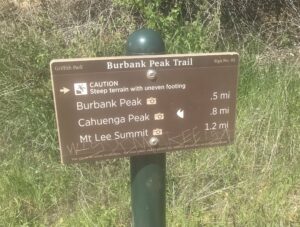
    Enjoy vistas from Burbank Peak and Cahuenga Peak on the way to Mt. Lee and the HOLLYWOOD Sign.


    As the story goes, Cahuenga, which names a pass, a peak and nowadays a boulevard was once a native Shoshone village located on the banks of the Los Angeles River near present-day Universal City. The peak is the 12th highest in the Hollywood Hills/Santa Monica Mountains.

    DIRECTIONS: From Highway 101 in North Hollywood, exit on Barham Boulevard and head north 0.3 mile. Turn right on Lake Hollywood Drive and continue 0.5 mile to intersect Wonder View Drive (no street parking). Park alongside Lake Hollywood Drive.


    THE HIKE: Walk 0.25 mile up paved Wonder View Drive to its end. Hike past a yellow vehicle gate on dirt road 300 feet to unsigned Burbank Peak Trail (formerly Wonder View Trail) on your right. Begin a steep eastward ascent east, zigzagging up the south slope of Cahuenga Peak. Enjoy wonderful views of Mt. Lee with its forest of antennae, Griffith Observatory, Mt. Hollywood, downtown L.A.
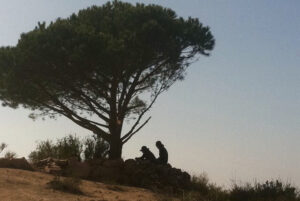
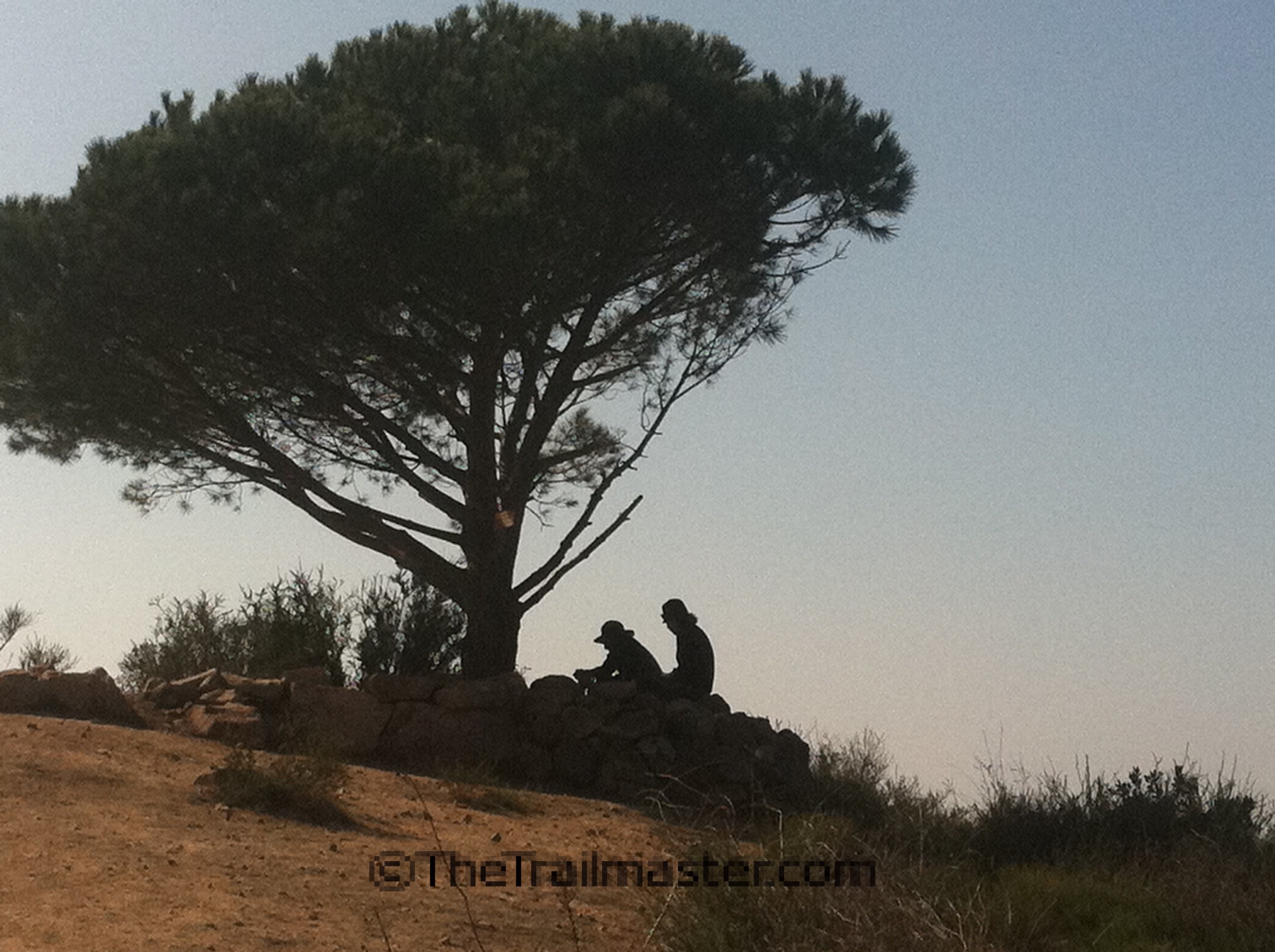
    Step off the trail and get wisdom or share it at the Wisdom Tree

    After a quite aggressive 0.8-mile climb the rough trail gains a ridgeline and splits: the signed right fork leads to Cahuenga Peak and a short pathway leads left to a lone pine tree and the top of Burbank Peak (1,690 feet). Pause to read the summit logbook stashed below the Wisdom Tree; hikers have been known to get very creative with their philosophizing in this book. Clear-day panoramic views are terrific—particularly angles on the San Fernando Valley and San Gabriel Mountains.

    Join signed Aileen Getty Ridge Trail and hike east along a ridgeline 0.3 mile to the summit of Cahuenga Peak. The path then drops to a saddle between Cahuenga Peak and Mt. Lee (1,680 feet) and ends at Mount Lee Road. Turn right and walk up the paved road to the viewpoint above the HOLLYWOOD Sign.

    Hollywood Sign from Brush Canyon

    From Canyon Drive to HOLLYWOOD Sign is 6.4 miles round trip with 1,100-foot elevation gain

    Located in the southeast area of the Griffith Park, Brush Canyon is less developed and less crowded than other areas of the park. Cloaked in chaparral, Brush Canyon definitely lives up to its name. Apparently, its brushy nature was not a secret; “Brush Canyon” was on the map in the early years of the 20th century—even before the park was established.

    But brush isn’t the only flora in the Brush Canyon. Oak and sycamore thrive in the bottom of the canyon.

    Along with offering a convenient trailhead for a hike to the HOLLYWOOD Sign, Brush Canyon is an ideal place to start for a sojourn to other nearby summits—particularly the three noteworthy peaks that rise above the ridges of the canyon: Mt. Bell, Mt. Chapel and Mt. Hollywood.

    Due to the closure of the Hollyridge Trail, Canyon Drive trailhead has become a favorite trailhead for a hike to the HOLLYWOOD Sign. Expect lots of company on the trail from SoCal hikers and visitors from across the US and around the world.
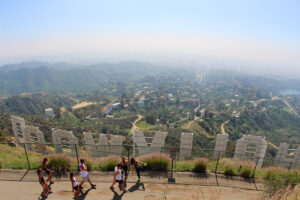
    Enjoy the view from above the DOOWYLLOH Sign, uh, HOLLYWOOD Sign

    DIRECTIONS: From Franklin Avenue, on the southern boundary of Griffith Park, turn north on Bronson Avenue or Canyon Drive (the streets soon join and continue as Canyon). Follow Canyon Drive a winding mile through the hills into Griffith Park. Park alongside the road or in a lot near a picnic area or in a small parking lot by the trailhead at road’s end. Note: Park authorities close the road at sunset.

    THE HIKE: Those heading directly for the Bronson Caves will locate the trailhead on the right (east) side of Canyon Drive. Join a fire road and hike south a short distance to the caves.


    Walk past an info board with a large park map and join the fire road (Brush Canyon Trail). The trail passes handsome sycamores that line the canyon bottom but once the trail begins climbing northeast it leaves the trees behind and Brush Canyon lives up to its name. Chaparral flora frame views of the HOLLYWOOD Sign and Mt. Hollywood.

    After 1.25 miles and a stiff 600-foot gain, reach an overlook (great views of metro LA) and soon thereafter a signed junction with Mulholland Trail, a wide dirt road. Go left (west) on a more level course, pass a junction with Hollyridge Trail (that leads to the closed Beachwood Drive trailhead). Keep right, and wind west to meet Mt. Lee Drive, 2.2 miles from the trailhead.

    A 0.4-mile descent on Mt. Lee Drive leads to Hollywood Sign View (great views indeed and photo ops galore from this overlook; see hike description from Innsdale Drive). Ascend the steep paved road about 1 mile to the summit and a view of DOOWYLLOH, those giant white capital letters from above and behind the sign.

    A locked gate prevents hikers from reaching the top of Mt. Lee. But do enjoy the views from about 100 feet above the HOLLYWOOD Sign.
  • Hike California State Parks

    Hike California State Parks

    California State Parks offer some of the best hiking the state has to offer: Torrey Pines, Malibu Creek, Point Lobos, Calaveras Big Trees, Humboldt Redwoods and a hundred more. Watch my video Hike California State Parks and hiker on!

    With the recent addition of Dos Rios Ranch State Park to the system, California now has 280 state parks!

    Who knew?

    Down the Dipsea Trail in Mount Tamalpais State Park.The short answer is hardly anyone. I’ve asked a thousand Californians or more to name five California State Parks. Fewer than 10 percent can do so. Surprising to me, a majority of these baffled respondents are outdoorsy Californians—the kind of people who come to my talks or I meet on the trail.

    I confess to being a little obsessed by California state parks and am the only crazy enough to have hiked and written about all 280 of them.  At first my interest in the parks was professional. During a long stint as the Los Angeles Times hiking columnist, I noticed my readers enjoyed discovering SoCal’s state parklands. For nearly 20 years, I partnered with the California State Parks Foundation, helping to share stories about the wonders of our state parks. Then I started keeping a list of parks I visited, and you know how it is when you get compulsive about something…

    Turns out you can take a hike in about half of California’s 280 state parks.  You can explore these “hiker parks” on 3,000(!) miles of trail.

    Wine country wandering, Sugarloaf Ridge State Park.The California State Park System is widely regarded as the nation’s finest—and the most popular, too, with nearly 70 million visitors a year. In terms of number of parks and number of visitors, it’s second only to the National Parks system.

    Other states have high mountains, vast deserts, and scenic shorelines, but only California contains all of these natural features, and preserves examples of them in its park system.

    Hiking Topanga State Park, one of the gems of the Santa Monica Mountains.The multitude of intriguing state park environments, and the many fine paths that explore them, add up to some world-class hiking adventures.

    Ancient redwoods grow along the mist-covered edge of the continent. The alpine beauty of the Sierra Nevada towers above Emerald Bay and Sugar Pine Point state parks on the shores of world-famous Lake Tahoe. Warm, sandy state beaches from San Clemente to Refugio beckon visitors to Southern California.

    State parks preserve a cross-section of California ecology from the bottom of the Central Valley at Caswell Memorial State Park to the top of alpine peaks at Mt. San Jacinto State Park; from uncommonly dry desert lands, where Joshua trees thrive, such as Saddleback Butte State Park to the near-rainforest environment of Del Norte Redwoods State Park.

    Footpath amidst the ferns in Van Damme State ParkState parks showcase a fabulous array of Nature’s handiwork: giant Sequoias in Calaveras Big Trees State Park; the rare Torrey pines making a last stand in a natural reserve near San Diego; palm oases in Anza-Borrego Desert State Park; some of the tallest trees on earth in Jedediah Smith Redwoods State Park.

    State parks highlight California’s history and offer the opportunity to follow the trails of the forty-niners, Spanish missionaries, and Native Americans. Hike into history where the Gold Rush began (Marshall Gold State Historic Park), where a famed writer found inspiration (Jack London State Historic Park), where a lonely lighthouse-keeper lived and worked (Pt. Sur State Historic Park).

    Park pathways are as varied as the parks themselves. Some trails are easy—a “walk in the park.” Leg-stretchers along the Sacramento River at Woodson Bridge and Colusa state recreation areas allow motorists a break from Interstate 5; beach walks from Border Field State Park to MacKerricher State Beach provide a similar break from Coast Highway 1.

    Many state park hikes are suitable for the whole family—slow paced adventures with much to see on a short hike. These family hikes, by utilizing described options, can usually be extended to half- day or all-day outings. The avid hiker will find challenges aplenty in the parks, too—long day hikes that offer grand tours and great workouts.

    Hike smart, reconnect with nature, and have a wonderful time on the trail.

    Hike on.

    —John McKinney

  • Top Ten Waterfalls California State Parks

    Top Ten Waterfalls California State Parks

    For fans of falling water, California’s state parks offer a variety of intriguing waterfalls in all shapes and sizes. The Trailmaster’s list of “Top Ten Waterfalls California State Parks” is more like a “Ten Falls to Get You Started” list; I have many more favorites, small and large.

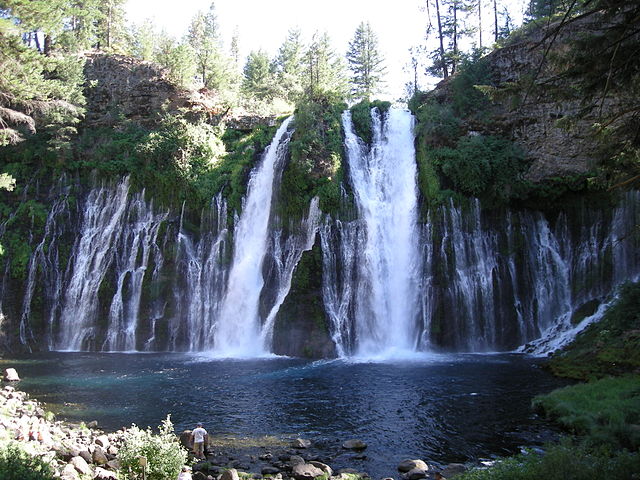
    Some waterfalls in California State Parks are world-class attractions: President Theodore Roosevelt once proclaimed Burney Falls in McArthur-Burney Memorial State Park “the eighth wonder of the world.”

    One of California's natural wonders: Burney Falls in McArthur-Burney State Park
    One of California’s natural wonders: Burney Falls in McArthur-Burney State Park

    And the state parks system offers two more showstopper waterfalls: in Julia Pfeiffer Burns State Park, magnificent McWay Fall tumbles from the Big Sur bluffs into the Pacific, and in Big Basin Redwoods State Park, lovely Berry Creek Falls dances in the forest primeval.

    Other waterfalls in California State Parks exhibit a more subtle beauty. With waterfalls, as in art, beauty is very much in the eye of the beholder. Falls tend to be as diverse as the parks themselves. Some thunder along all year, while others are very much seasonal affairs. Generally speaking, this year Northern California got rain and Southern California did not. Plan accordingly.

    Here are ten of my favorite falls and how to go with the flow.

    Gold Dust Falls
    Prairie Creek Redwoods SP

    Waterfalls near the coast are a rarity, so the presence of three of them in close proximity to the California Coastal Trail is a special treat indeed. Gold Dust Falls, a long, slender tumbler, spills some 80 feet to the forest floor. An unnamed waterfall is located just south of Gold Dust; another is located just north. Access: An easy 2-mile round trip hike from Fern Canyon to Gold Dust Falls.

    Burney Falls
    McArthur-Burney Falls Memorial SP

    Not surprisingly, the falls was considered a “power spot” by the native people who lived in the region. Park visitors can feel the power by watching the 200 million gallons of water that tumble into Burney Creek Gorge. While many waterfalls exceed Burney Falls in height, few can match its grandeur—twin, thundering 129-foot falls, accompanied by numerous plumes of water.

    This state park is in volcano country, characterized by lava rock and huge subterranean rivers and reservoirs. One of these underground aquifers feeds Burney Creek—and in turn, Burney Falls. The fall flows at nearly full throttle all year even though, a half mile above the falls, Burney Creek is often absolutely dry. Access: A short walk, peer over the railing and there it is. Admire the falls from different perspectives by hiking a mile or two on both sides of Burney Creek.

    Rush Creek Falls
    South Yuba River SP

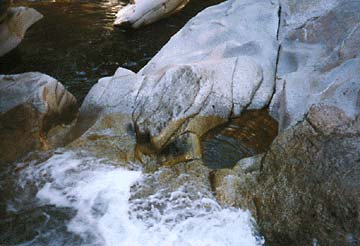
    South Yuba River Waterfall
    South Yuba River Waterfall

    South Yuba Independence Trail offers wheelchair access and delightful passage for adventurers of all abilities to the charms of California’s Gold Country and some lovely waterfalls. Volunteers transformed a Gold Rush-era water ditch and wooden flumes into a whole access trail along the Yuba River.

    Many-tiered Rush Creek Falls tumbles over polished granite. You can admire the spectacle from a gravity-defying flume above the tallest drop—about 50 feet. Access: A pleasant, mile-long path crosses ravines by way of several wooden flumes to an elaborate wooden ramp that circles down to the edge of Rush Creek above the main fall.

    Hot Spring Creek Falls
    Grover Hot Springs SP

    Most visitors come to this out-of-the-way park to soak in the hot springs. Still, a jaunt on one of the park’s inspiring footpaths and a visit to the vigorous, 50-foot tall waterfall on Hot Springs Creek, adds to the pleasure of a park known for its soothing pools. Access: An easy 3-mile round trip hike from the park campground along Hot Springs Creek meanders amidst giant sugar pines to the waterfall.

    Berry Creek Falls
    Big Basin Redwoods SP

    Framed by five-fingered ferns, Berry Creek Falls is a real looker, the kind of waterfall that graces magazine covers. A walk through the redwoods in California’s first state park is one to remember, as is the 70-foot waterfall, which hurtles over a sheer cliff into a large pool. Access: Figure a 12-mile round trip hike from Highway 1 to reach the waterfall, as well as 60-foot Silver Falls and Golden Falls, which spills over a reddish-gold cliff. It’s about the same distance to reach the falls from park headquarters via Skyline to the Sea Trail.

    Pfeiffer Falls
    Pfeiffer Big Sur SP

    This park is quintessential Big Sur—redwoods and the Big Sur River, great camping and hiking. A lovely path leads under stately redwoods. Then you ascend a stairway to an observation platform at the base of the falls. Pfeiffer-Redwood Creek cascades over a 40-foot precipice to a small grotto.
    Access: An easy, family friendly 2-mile round trip hike leads from Big Sur Lodge to Pfeiffer Falls.

    McWay Falls
    Julia Pfeiffer Burns SP

    A redwood grove, dramatic Big Sur coastal vistas, and the only major California waterfall to cascade into the Pacific are some of this park’s attractions. From a well-designed overlook, you can observe slender but dramatic McWay Falls tumbling a hundred feet from the granite cliffs into McWay Cove. Access: A 0.25-mile long, wheelchair accessible trail passes through a pedestrian tunnel under Highway 1 and leads to the overlook above McWay Falls.

    La Jolla Canyon Falls
    Point Mugu SP

    La Jolla Valley welcomes visitors with a native grassland, drifts of oak, a peaceful pond and, in spring, wildflowers and a lovely waterfall. La Jolla Creek runs most of the year and so does the falls, a 15-foot high tumbler with a modest pool at its base; the waterfall is most sprightly in spring.
    Access: The waterfall is located a short mile up the trail at the second creek crossing from the park’s Ray Miller Trailhead.

    Santa Ynez Canyon Falls
    Topanga SP

    Ferns, falls, wildflowers and dramatic sandstone cliffs are some of the delights of a ramble through Santa Ynez Canyon. The route passes through a narrow sandstone canyon past mini-falls to the lovely 15-foot fall.
    Access: From the park’s Palisades Highland trailhead, it’s a 2.4-mile round trip walk to the falls.

    Borrego Palm Canyon Falls
    Anza-Borrego Desert SP

    Borrego Palm Canyon is the third-largest palm oasis in California, the first site sought for a desert state park back in the 1920s, and home to a lovely waterfall. A 15-foot waterfall cascades over huge boulders into a damp grotto surrounded by a palm oasis. Heavenly! Access: From the Borrego Palm Canyon Campground, a family-friendly, 3-mile round trip hike takes you along the park nature trail to the waterfall.

    And Ten More Favorite Falls

    Fern Falls
    Jedediah Smith Redwoods SP

    Fern-lined Boy Scout Trail meanders three miles amidst 300-foot tall redwoods to a lovely, 35-foot high S-shaped cascade.

    Russian Gulch Falls
    Russian Gulch SP

    A six-mile loop trail through a lush coastal canyon and some wooden stair-steps lead up to a 30-foot waterfall that cascades into a handsome hollow.

    Devil’s Fall
    Auburn SRA

    You can drive to 75-foot high Devil’s Fall, which divides into a half-dozen chutes and rushes below Yankee Jim’s Road.

    Sonoma Creek Falls
    Sugarloaf Ridge SP

    Swollen by winter rains, Sonoma Creek generates a handsome, 25-foot waterfall that cascades below the park campground.

    Stairstep Falls
    Samuel P. Taylor SP

    Take an easy 2.5-mile round trip hike to this aptly named 40-foot falls that cascades down rock “stairs.”

    Tip Toe Falls
    Portola Redwoods SP

    A 2-mile loop trail through hardwoods and redwoods visits this diminutive, fern-framed falls that fills a large and deep pool.

    Castle Rock Falls
    Castle Rock SP

    A 0.75-mile trail leads to a substantial observation platform and a grand view of the falls, an impressive, one hundred-foot Kings Creek cascade.

    Maple Falls
    Forest of Nisene Marks

    Four miles of hiking and a half-mile of wet and wild creekside scrambling bring the energetic hiker to a fern-filled world and a 40-foot waterfall.

    Limekiln Falls
    Limekiln SP

    A half-mile of trail and some splashing up Limekiln Creek delivers you to this impressive falls, which cascades feet over limestone cliffs.

    Green Valley Falls
    Cuyamaca Rancho SP

    From the Green Valley Falls picnic area, walk 0.25 mile along the Sweetwater River to a lovely series of low, but wide, cascades.

    Hike On,
    John McKinney
    The Trailmaster

    P.S. For more information about any of these hikes, check out Hike Southern California

  • Why I Like to Hike Joshua Tree National Park

    Why I Like to Hike Joshua Tree National Park

    Joshua Tree National Park beckons hikers with pathways leading to a diversity of desert environments, including sand dunes, native palm oases, cactus gardens and jumbles of jumbo granite.

    Joshua Tree is a great place to take a hike. And there’s a lot of park to hike!

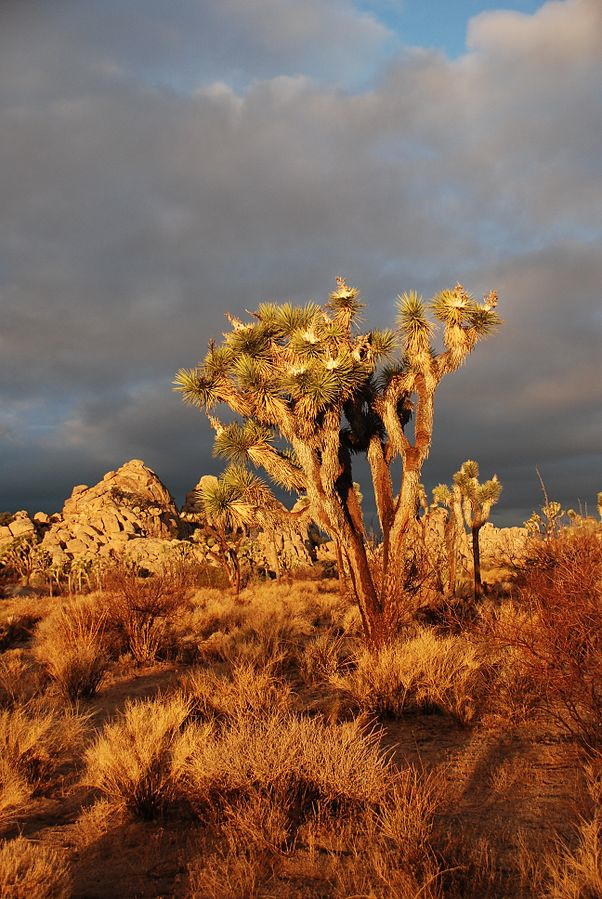
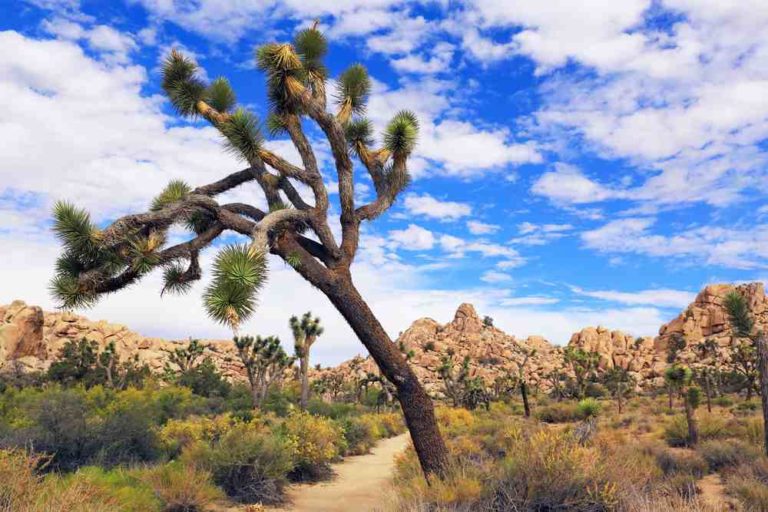
    Joshua Trees (and so much more!) on the trail in Joshua Tree National Park.
    Joshua Trees (and so much more!) on the trail in Joshua Tree National Park.

    JT is a large national park, slightly larger than Yosemite in fact, with compelling sights-to-see scattered over nearly 800,000 acres. With elevations that range from 900 feet to more than 5,000 feet, the park has a great deal of biodiversity as well.

    With limited time, it’s best to choose a strategy to explore Joshua Tree. One approach is to focus on one area per visit: Cottonwood Springs, Black Rock Canyon or the Wonderland of Rocks for example. Another way to go is to choose one route of travel—say from the West Entrance or North Entrance—and stop for hikes along major park roads.

    Another strategy to employ is to take a lot of short hikes. The park has a dozen interpreted nature trails ranging from 0.25 mile to 1 mile in length. They travel over gentle terrain and offer an ideal introduction to the wonders of the desert.

    In combination with stops at the park visitor centers, the park’s nature trails deliver an excellent overview of the park. Taking several short hikes in a day is a good way to go for the first-time visitor as well as for those new to desert hiking, and who may be unfamiliar with its rigors and requirements.

    "JT is one of my favorite places to hike," declares Trailmaster John McKinney, seen here on the trail in the Keys View area of Joshua Tree National Park.
    “JT is one of my favorite places to hike,” declares Trailmaster John McKinney, seen here on the trail in the Keys View area of Joshua Tree National Park.

    In Joshua Tree, hikers have the opportunity to experience two deserts: the Mojave and the Colorado. The Mojave Desert in the western part of the park includes Joshua tree forests and some intriguing geology—particularly the dramatic hills of bare rock, usually broken up into loose boulders. Along with the Joshua trees that dominate the open spaces, the park also holds enclaves of pinyon pine, California juniper and the desert scrub oak.

    Below 3,000 feet, the eastern part of the park reflects the Colorado Desert—with habitats of creosote bush, ocotillo, yucca and cholla cactus. This lower and drier desert features cactus gardens and dunes, plus palm oases, where water occurs naturally year-around and the native California fan palm thrives.

    Paths to palm oases are one of the park’s special attractions. Oasis Visitor Center is located alongside the Oasis of Mara, also known as Twenty-nine Palms. For many hundreds of years Native Americans lived at “the place of little springs and much grass.”

    Cottonwood Spring, near the south end of the park is a little palm and cottonwood-shaded oasis that attracts desert birds and bird-watchers. The trail to Fortynine Palms Oasis winds up and over a hot rocky crest to the dripping springs, pools, and the blessed shade of palms and cottonwoods. Lost Palms Oasis Trail visits the park’s premier palm grove.

    No visit to JT would be complete without a short hike into the Wonderland of Rocks, twelve square miles of massive jumbled granite. This curious maze of stone hides groves of Joshua trees, trackless washes and several small pools of water.

    Hikers often cross paths with rock-climbers and spot them practicing their craft on formations high above the desert floor. From Hidden Valley to the Wonderland of Rocks, the park has emerged as one of the world’s premiere rock-climbing destinations. The park offers relatively easy access to about 3,000 climbing routes, ranging from the easiest of bouldering to some of the sport’s most difficult technical climbs.

    The Jumbo Rocks area is Joshua Tree National Park to the max: a vast array of rock formations, a Joshua tree forest, the yucca-dotted desert open and wide. Check out Skull Rock (one of the many rocks in the area that appear to resemble humans, dinosaurs, monsters, cathedrals and castles) via a nature trail that provides an introduction to the park’s flora, wildlife and geology.

    In Queen Valley, just west of Jumbo Rocks, is the signed beginning of Geology Tour Road, a rough dirt road (four-wheel drive recommended) extending 18 miles into the heart of the park. Motorists get close-up looks at the considerable erosive forces that shaped this land, forming the flattest of desert playas, or dry lakebeds, as well as massive heaps of boulders that tower over the valley floor. Good hikes begin off Geology Tour Road, which delivers a Joshua tree woodland, an historic spring, abandoned mines and some fascinating native petroglyphs.

    One of my favorite footpaths is Black Rock Canyon Trail, which follows a classic desert wash, then ascends to the crest of the Little San Bernardino Mountains at Warren Peak. Desert and mountain views from the peak are stunning.

    Must-do classic hikes include the short but steep ascent through a lunar landscape of rocks and Joshua trees to the top of 5,470-foot Ryan Mountain. Reward for the climb is one of the park’s best views. Lost Horse Mine Trail visits one of the area’s most successful gold mines, and offers a close-up look back into a colorful era, and some fine views into the heart of the park.

    Hike smart, reconnect with nature and have a wonderful time on the trail.

    Hike on.

  • Cahuenga Peak and the HOLLYWOOD Sign

    Cahuenga Peak and the HOLLYWOOD Sign

    Wonder View Trail leads to the 1,820-foot summit of Cahuenga Peak, high point of the Hollywood Hills. The narrow and steep path (a true hiker’s route) continues to nearby Mt. Lee, which hosts the famed HOLLYWOOD Sign.
     
    This trail is sure to become increasingly traveled with the recent closure of the Beachwood Dive trailhead, for many years the most popular way to hike to the HOLLYWOOD Sign.
     
     Wonder View Trail: From Wonder View Drive to Cahuenga Peak is 2.4 miles round trip with 900-foot elevation gain; to Mt Lee is 3.2 miles round trip
    Visitors from across the nation and around the world take a hike to the famed Hollywood Sign.
    Visitors from across the nation and around the world take a hike to the famed Hollywood Sign.

    In 2010, hikers and movie fans from across the nation and around the world were delighted to learn that creative conservation efforts, combined with fundraising from private and public sectors, succeeded in purchasing the peak and adding it to Griffith Park.

    As the story goes, Cahuenga Peak piqued the interest of aircraft mogul (and movie producer) Howard Hughes, who purchased it in the 1930s with the intention of building a mountaintop love nest for Ginger Rogers. She turned him down and the property remained undeveloped (a minor miracle in SoCal) until 2002 when a group of Chicago developers bought the land from the Hughes estate.

    When the developers announced plans to subdivide the peak into luxury estates, local conservationists, film fans, and celebs rallied to “Save the Peak.” Some $12 million was raised to purchase the 138-acre site. Hollywood notables, including Steven Spielberg and Tom Hanks, plus the Tiffany & Company Foundation, Hugh Hefner and Aileen Getty contributed serious cash, as did state and local agencies.

    As the story goes, Cahuenga, which names a pass, a peak and nowadays a boulevard was once a native Shoshone village located on the banks of the Los Angeles River near present-day Universal City. The peak is the 12th highest in the Santa Monica Mountains.

    DIRECTIONS

    From Highway 101 in North Hollywood, exit on Barham Boulevard and head north 0.3 mile. Turn right on Lake Hollywood Drive and continue 0.5 mile to intersect Wonder View Drive (which has no street parking). Park alongside Lake Hollywood Drive.

    Cahuenga Peak by Mark Chumley (click to enlarge)
    Cahuenga Peak by Mark Chumley (click to enlarge)

    THE HIKE

    Walk 0.25 mile up paved Wonder View Drive to its end. Hike past a yellow vehicle gate on dirt road 300 feet to unsigned Wonder View Trail on your right. Begin a steep eastward ascent east, zigzagging up the south slope of Cahuenga Peak. Enjoy wonderful views of Mt. Lee with its forest of antennae, Griffith Observatory, Mt. Hollywood and downtown L.A.

    Walk to the Wisdom Tree in a less-traveled part of Griffith Park.
    Walk to the Wisdom Tree in a less-traveled part of Griffith Park.

    After a quite aggressive half-mile climb the rough trail gains a ridgeline and splits. A short side trail leads left to a lone pine tree and the top of Burbank Peak (1,690 feet). Pause to read the summit logbook stashed below the Wisdom Tree; hikers have been know to get very creative with their philosophizing in this book. Clear-day panoramic views are terrific—particularly angles on the San Fernando Valley and San Gabriel Mountains.

    Return to Wonder View Trail and hike across a ridge. The path drops to a saddle between Cahuenga Peak and Mt. Lee (1,680 feet) and ends at Mount Lee Road. Turn right and walk up the paved road for a view through chain-link fence at the HOLLYWOOD Sign.

    Hike on.

    John McKinney

    For more great hikes, check out my new guide, Hike Griffith Park & the Hollywood Hills.


  • Why I Like to Hike the     Santa Monica Mountains

    Why I Like to Hike the Santa Monica Mountains

    As a young adult I lived in the most urban section of the Santa Monica Mountains—the Hollywood Hills—and in one of the most rural parts—Topanga Canyon.

    The home mountains are where I camped overnight with the scouts and learned to drive a car with a clutch. Later in life, the home mountains helped me unwind from the stresses of metropolitan life.

    Sant Monica Mts Peaks001Going back to the 1980s, I’ve helped defend the home mountains from unwise developments, cheered supporters and chastised bureaucrats, celebrated new parklands and new trails. I even spent the greater part of a year mapping, promoting, and speaking out for the Backbone Trail, the 65-mile pathway that extends across the spine of the range.
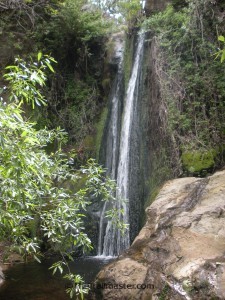
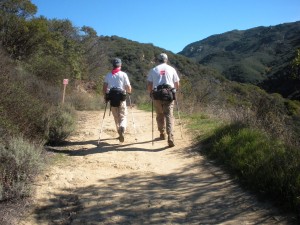
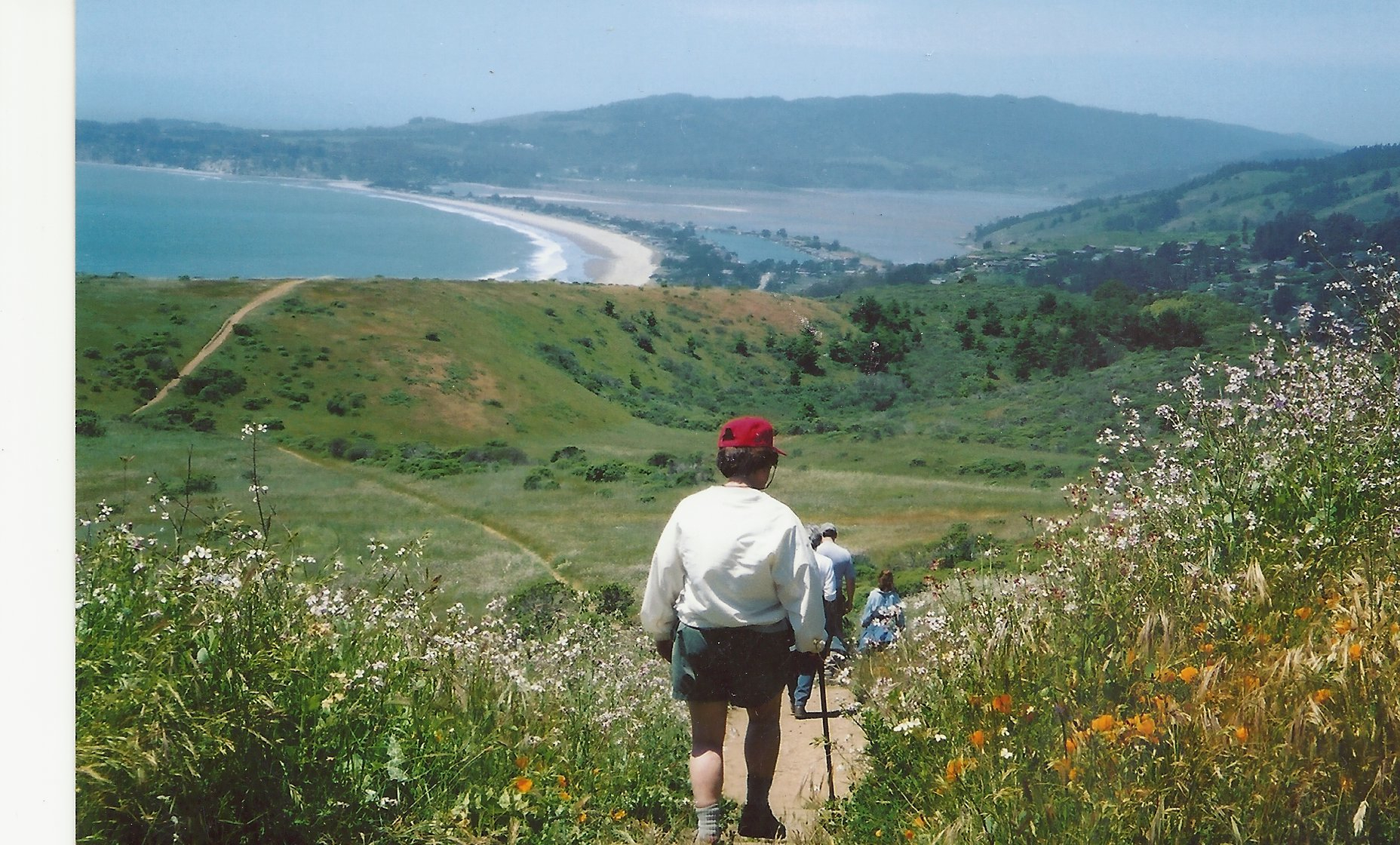
    All of which means I have a particular fondness for hiking the Santa Monica Mountains and delight in sharing my favorite trails. Wildflowers, waterfalls and wonderful scenery that’s been the backdrop for hundreds of movies and thousands of episodes of TV shows are highlights for hikers.

    Spring wildflower blooms are impressive. A hike to Nicholas Flat might reveal wishbone bush, encelia, chia, Parry’s phacelia, ground-pink, scarlet bugler, goldfields… check out the “What’s Blooming?” section of the Santa Monica Mountains National Recreation Area website.

    Sycamore Canyon Falls in Point Mugu State Park.
    Sycamore Canyon Falls in Point Mugu State Park.

    Trails lead by still waters—Nicholas Pond, Century Lake and Charmlee’s Old Reservoir—and by lively creeks in Sullivan Canyon, Malibu Canyon and Zuma Canyon. Behold surprising waterfalls in Temescal Canyon, Sycamore Canyon and La Jolla Canyon.

    More movies and TV shows have been filmed in the Santa Monica Mountains than anywhere else in the world, and it’s lots of fun to hike to and through movie locations. Malibu Creek State Park, just to name one park, has served as Wales, Korea, Connecticut, and even the Planet of the Apes. Other park sites in the mountains have subbed for the Wild West, Italy, Switzerland, Asia, outer space, and a variety of fantasy locations. More than 500 productions a year take place in these mountains.

    Because M*A*S*H, both the original movie and the long-running television series, was filmed here, and because what is now parkland used to be a movie ranch, Malibu Creek is the state park most associated with the film industry. Thou¬sands of visitors a year hike out to the original site of the M*A*S*H filming.

    Superb trails lead through the Santa Monica Mountains.
    Superb trails lead through the Santa Monica Mountains.

    We who love hiking in these mountains are forever grateful to Milt McAuley, who wrote trail guides and the classic Wildflowers of the Santa Monica Mountains.

    “Come on an adventure, walk the trails,” urged McAuley, who hiked until shortly before his death at the age of 89. “Experience the beauty and friendship that is waiting for you.”

    Bordered by two of the busiest freeways in the world—the Ventura and San Diego—they remain a near-wilderness. Within easy reach of 16 million people, they nevertheless offer solitude and plenty of silent places.

    Geography

    The Santa Monica Mountains is the only relatively undeveloped mountain range in the U.S. that bisects a major metropolitan area. The mountains extend from Griffith Park in the heart of Los Angeles to Point Mugu, 50 miles away. The range is 12 miles wide at its broadest point, and reaches an elevation of about 3,000 feet.

    One of the few east-west trending ranges in the country, the Santa Monica Mountains can cause a little geographic confusion to the first-time visitor. Santa Monica Bay and the Malibu coastline also extend from east to west alongside the mountains so that the mountain explorer actually looks south to the ocean and heads west when hiking up-coast.

    Natural Attractions

    The mountains host a Mediterranean ecosystem, the only one in the country under National Park Service protection. Large stretches are open and natural, covered with chaparral and oak trees, bright in spring with wildflowers. Oak woodland and fern glens shade gentle seasonal creeks.

    Largest areas of open space are in the western part of the mountains. Point Mugu State Park holds one of the finest native tall-grass prairies and one of the best sycamore groves in the state. The gorge sculpted by Malibu Creek is an unforgettable sight.

    In the eastern portion of the mountains, open space is harder to come by, but those pockets that do exist are all the more valuable because they are so close to the metropolis. Canyons such as Los Liones, Caballero, Rustic and Sullivan are precious resources.

    History

    Ancestors of the Chumash Indians lived in the mountains as early as 7,000 years ago. Abundant food sources helped the Chumash become the largest Indian tribal group in California at the time of Juan Cabrillo’s arrival in 1542. The Chumash’s highly developed culture included oceangoing plank canoes called tomols and a system of astronomy that was both mystical and practical.

    Spanish missionaries, soldiers and settlers displaced the Chumash. During the 19th century, the Santa Monicas were controlled by a few large land holdings—including Rancho Topanga-Malibu-Sequit—and used primarily for cattle ranching. As the land holdings were broken up, some ranchers supplemented their modest living by renting space to visiting horseback riders and vacationers.

    Conservationists proposed Whitestone National Park in the 1930s and Toyon National Park in the 1960s, but it wasn’t until Will Rogers, Topanga, Malibu Creek and Point Mugu state parks were established in the late 1960s that the mountains received any substantial government protection. In 1978 the bill creating Santa Monica Mountains National Recreation Area was approved by Congress.

    Administration

    Some 70,000 acres of public land is preserved within the boundaries of the Santa Monica Mountains National Recreation Area. This represents about one-third of the 200,000 acres covered by the range.

    The National Recreation Area is not one large area, but a patchwork of state, federal and county land, as well as private property still to be acquired. The major land stewards are California State Parks and the National Park Service.

    For three decades the Santa Monica Mountains Conservancy, a state agency, has been particularly effective at acquiring parkland in the mountains. The Mountains Recreation and Conservation Authority manages and provides ranger services for parks that it owns and are owned by the Santa Monica Mountains Conservancy.

    Hike smart, reconnect with nature and have a wonderful time on the trail.
    Hike on.
    –John McKinney

    Interested in more hikes in the Santa Monica Mountains? Check out the “HIKE the Santa Monica Mountains Pocket Guide” at The Trailmaster Store.

  • Why I Like to Hike Point Reyes

    Why I Like to Hike Point Reyes

    With densely forested ridges, wild and open coastal bluffs, and deserted beaches, Point Reyes National Seashore is an unforgettable place to ramble.

    I’ve liked hiking Point Reyes ever since I discovered it back during my college days, but I really grew extra fond of it when I led week-long hiking adventures around the peninsula during the first decade of the 21st century. Sometimes when you have the experience of leading others along favorite trails, you learn to admire a place all the more.

    Point Reyes, a haven for birds, heaven for hikers.
    Point Reyes, a haven for birds, heaven for hikers.

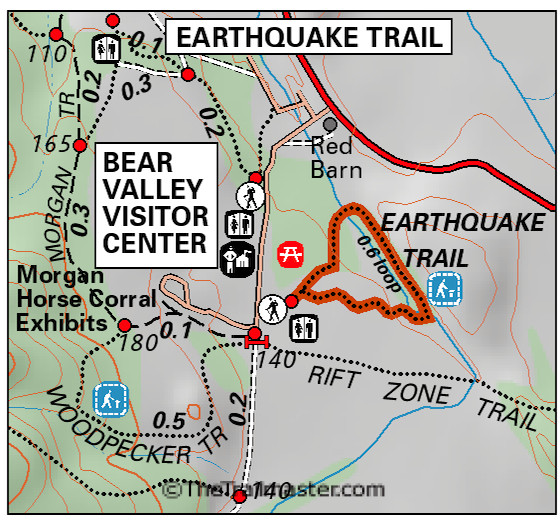
    I usually had about a dozen hikers with me, walkers from across the nation as well as from Europe, clients of an upscale British walking vacation company. We walked the Rift Zone Trail to the back door of Point Reyes Seashore Lodge, our “base camp,” then set out on each day to discover more of the many wonders of the peninsula: Bear Valley, Arch Rock, Mt. Wittenberg, Abbotts Lagoon, Chimney Rock, Point Reyes Lighthouse, Hearts Desire Beach, Tomales Bay and Tomales Point.

    My English friends say that with its moors, weirs, glens, and vales, Point Reyes Peninsula calls to mind the seacoast of Great Britain. California coast chauvinist that I am, I usually come back at them by saying that when I’ve hiked the Shetland Islands or wandered the Devon Coast, these landforms have reminded me of favorite landscapes in Point Reyes National Seashore.

    I delight in the whole Point Reyes experience: kayaking Tomales Bay, cycling the back roads, camping, cheese-tasting, wildflower walks and lighthouse tours. I’ve hiked Point Reyes with friends, family and school children and everyone who ventures into this area seems to experience—and retain—some of the peninsula’s magic.

    In hindsight, some conservationists believe that the drawn-out preservation process (a 30-year struggle) actually benefited Pt. Reyes because in the interim attitudes shifted a bit from parks-as-playgrounds to parks-as-nature preserves.

    So few roads or recreation facilities were constructed here, and I say thank God for that. The area’s three tiny towns—Olema, Pt. Reyes Station, Inverness—have remained very small. San Franciscans have an altogether different attitude toward their wilderness-next-door than, say, Bostonians have toward summer-crowded Cape Cod National Seashore. BTW it was  President John F. Kennedy who signed the legislation creating Point Reyes National Seashore in 1962.

    Bear Valley is the busy hub of Pt. Reyes National Seashore, and there’s not a hotel or restaurant in sight. Lots of trails to hike, though. From the park visitor center about 40 miles of trail thread through the valley, and to the ridges and beaches beyond.

    More than a hundred miles of trail meandering through the national seashore beckon the hiker to explore wide grasslands, Bishop pine and Douglas fir forest, chaparral-cloaked coastal ridges and windswept beaches. The paths range from easy beach walks and nature hikes to rugged mountain rambles. If you want to plan a backpacking trip, Point Reyes has four hike-in camps available by reservation.

    And take it from someone who has walked the entire length of the California coast: the coastal trails in Point Reyes National Seashore are among the finest along the entire 1,600-mile California Coastal Trail.

    Hike on.
    John McKinney

    Interested in more Point Reyes hikes? Check out HIKE Point Reyes

  • Runyon Canyon Park

    Runyon Canyon Park

    Runyon Canyon in the Hollywood Hills is a great place to hike. And perhaps the most popular trail in L.A. By some estimates, 35 thousand people visit Runyon Canyon every week. The canyon was closed for fourth months in 2016 for repair of a water main and was greatly missed by L.A. hikers!

    No Man’s Canyon was the earliest name given to the deep arroyo that nature sculpted in the Hollywood Hills. A century-and-a-half ago, it was the wild domain of birds and rabbits, coyotes and lizards.

    Runyon Canyon Trail: 2-mile loop with 500-foot elevation gain
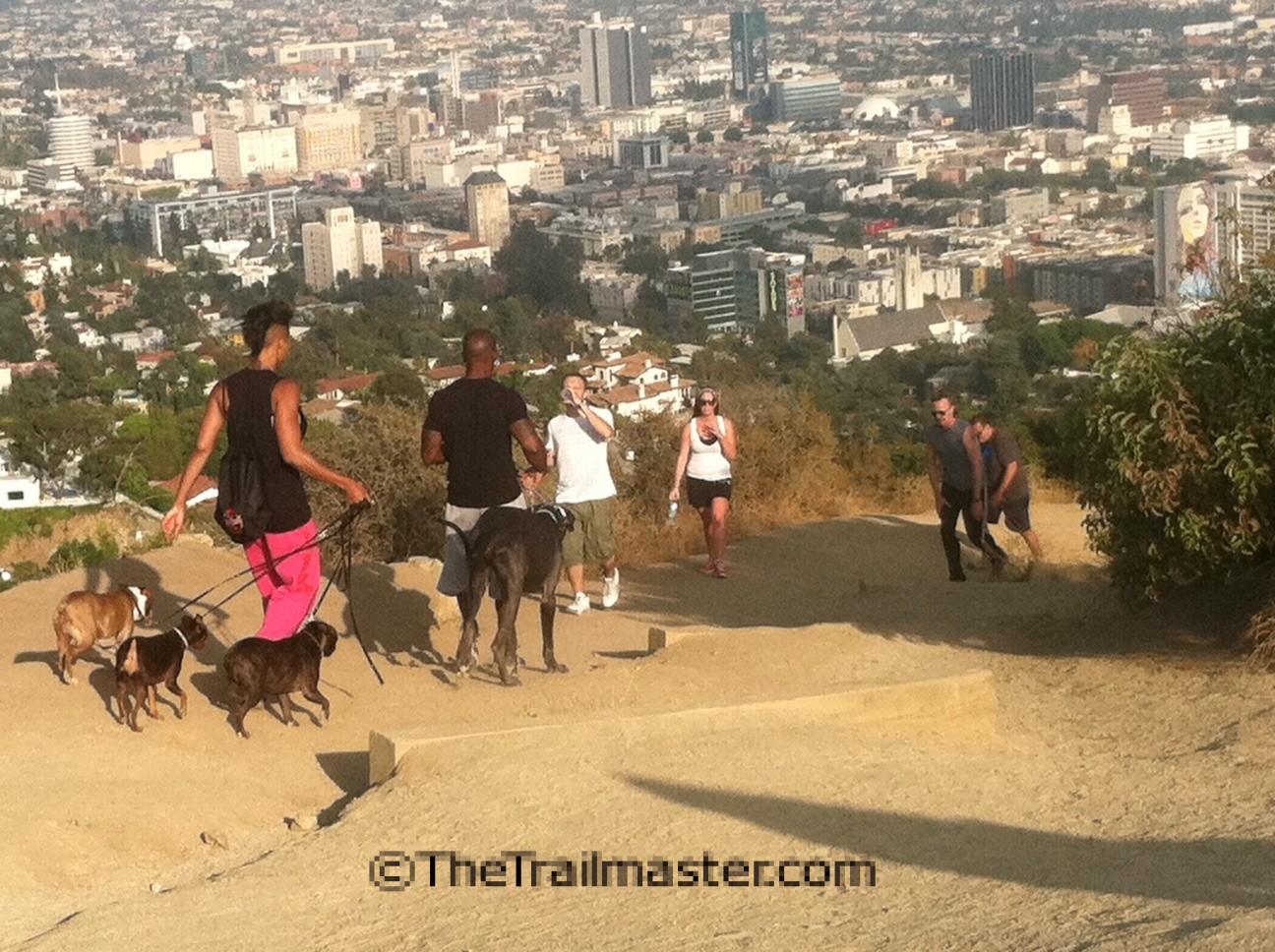
    Runyon Canyon: Expect lots of two-legged and four-legged company on your hike.
    Runyon Canyon: Expect lots of two-legged and four-legged company on your hike.

    Today Runyon Canyon Park is a great relief from the din of the city and a peaceful contrast to the hustle and bustle of nearby Hollywood and Sunset Boulevards. The canyon is an extremely popular place to run, hike and walk the dog—and it’s quite the social scene!

    At day’s end, hundreds hit the trails and many of these after-work exercisers bring dogs. Count on lots of paws on the pathways and watch where you step.

    Runyon Canyon’s unusual group of owners began with “Greek George” Caralambo, who in 1867 received title to it as a reward for his service as leader of the Army Camel Corps. Coal magnate Carmen Runyon bought the canyon in 1919 and built a hunting lodge.
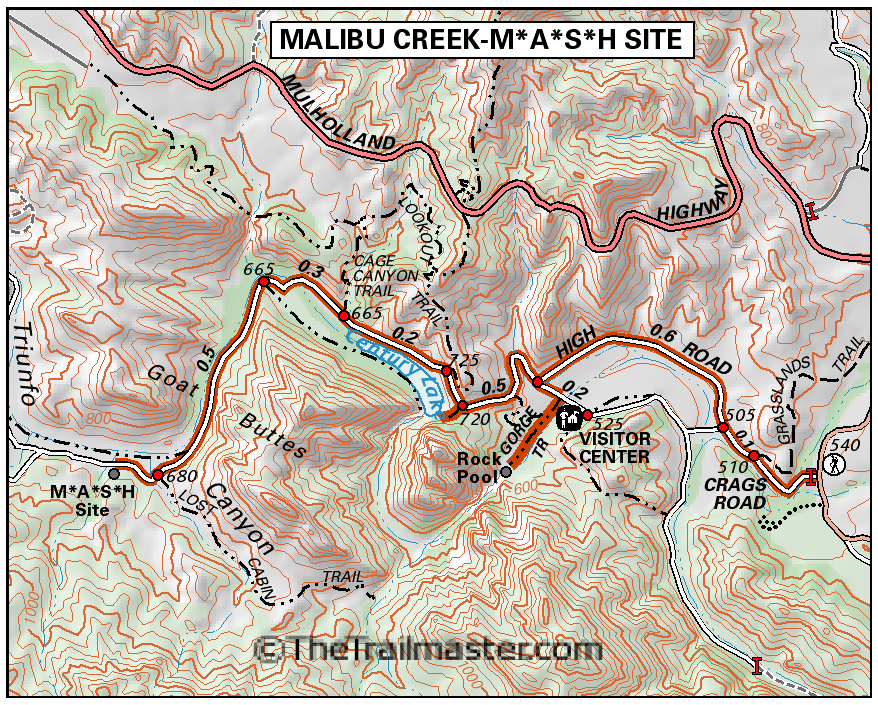
    Actor/singer John McCormick (hit movie, “Song of My Heart”) purchased the canyon in 1929 and built a mansion called San Patrizio. Wallace Beery, John Barrymore and Basil Rathbone were frequent guests. In 1942, millionaire arts patron Huntington Hartford bought the estate and renamed it “The Pines.” Hartford commissioned Frank Lloyd Wright to draw up plans for a futuristic resort hotel, art gallery and theater but was unable to build Huntington Hartford Play Resort.

    In 1964, Kahlua importer Jules Berman purchased Runyon Canyon, razed San Patrizio mansion and tried to develop a subdivision of luxury homes. Homeowner groups fought Berman’s development plans and those of a later owner, Iranian exile Mana Vasir. Finally in 1984, the City of Los Angeles purchased Runyon Canyon and created a park.

    DIRECTIONS

    From the Hollywood Freeway in Hollywood, exit on Highland Avenue and head south past the Hollywood Bowl to Franklin Avenue. Turn west on Franklin and drive 0.3 mile to Fuller Avenue. Turn right and proceed a short distance to road’s end at The Pines entrance gate to Runyon Park. Street parking is where you find it.
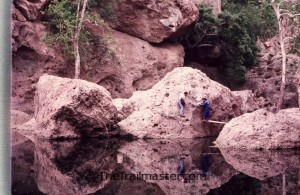
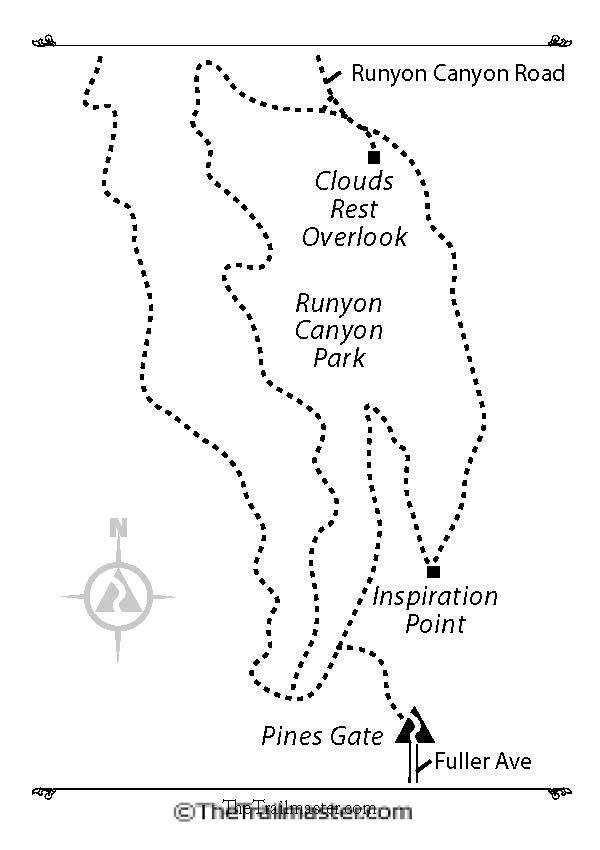
    Runyon Canyon (South) Map by Mark Chumley (click to enlarge)
    Runyon Canyon (South) Map by Mark Chumley (click to enlarge)

    THE HIKE

    From the wrought-iron gate, enter Runyon Canyon Park and angle left at the first opportunity. Curve along the park’s south boundary to a second junction. Note the left fork trail (excellent longer hike option) and instead join the asphalt road ascending along the west canyon wall and begin a clockwise tour.

    Ascend north amidst chaparral and bend east to a junction. (Runyan Canyon Road continues north to Mulholland Drive. See hike description.) Bend right on the dirt road and soon reach Clouds Rest Overlook, offering great clear-day vistas.

    Bear right on the narrow dirt road and descend along the steeply pitched east wall of the canyon. The trail, too, gets quite steep as it descends to Inspiration Point for great views of Hollywood, and drops to the canyon floor. Walk the canyon bottom back to the trailhead.

    Interested in more hikes in Griffith Park and the Hollywood Hills? Check out my guide: Hike Griffith Park and Hollywood Hills

  • Why I Like to Hike Sequoia National Park

    Why I Like to Hike Sequoia National Park

    Come for the sequoia, stay for the Sierra.

    And take a hike in Sequoia and Kings Canyon National Parks.

    If you only drive through you’ll be disappointed: Sequoia and Kings Canyon have the superlative scenery and postcard views found in the country’s most noted national parks, but you have to hike to find them.

    Hike in the company of giants in Sequoia and Kings Canyon National Parks.
    Hike in the company of giants in Sequoia and Kings Canyon National Parks.

    Naturally the groves of sequoia are the primary draw to both namesake Sequoia National Park and to Kings Canyon National Park. “Noblest of a noble race,” is how the great naturalist John Muir described the trees, biggest on earth, and the prime reason for the formation of the parks. General Sherman, standing 274 feet tall and measuring 36.5 feet in diameter at the base of its massive trunk, is the largest of the large trees.

    Scenic 46-mile-long Generals Highway connects the national parks and offers access to the most popular sequoia groves, but auto travel is restricted to lower and middle elevations, so if you want to fully experience the park you need to hike into the Sierra Nevada high country.

    Want to get away from it all? Famed High Sierra Trail extends east-west across Sequoia National Park. Nearly half of one of the great trails of the world—the 225-mile long John Muir Trail—extends through Sequoia and Kings Canyon national parks. By some accounts, a backpacker in Sequoia National Park can hike to a spot farther away from roads than anywhere else in the continental U.S.

    Long-distance backpacking expeditions aren’t required to reach many of the alpine charms of Sequoia and Kings Canyon national parks. Where the road ends, an extensive trail system begins and many of the parks’ most compelling natural attractions—waterfalls, rivers, lakes, vista points and remote sequoia groves—can be reached by easy, moderate and all-day hikes.

    You can choose from day hikes in what the National Park Service considers to be the five major regions of the parks: Giant Forest, Mineral King and the Foothills areas of Sequoia National Park plus the Grant Grove and Cedar Grove areas of Kings Canyon National Park.

    The groves are great, but it’s possible to take many hikes in Sequoia and Kings Canyon national parks without sighting a single sequoia. Hillsides with chaparral and dotted with oaks aren’t exactly rare in California but the California Foothills ecosystem in the lower elevations around Ash Mountain in Sequoia National Park is the only one in the nation under National Park Service protection. Some foothill trails, including footpaths along forks of the Kaweah River, can be hiked all year around.

    Mineral King, a gorgeous, avalanche-scoured valley ringed by rugged 12,000-foot peaks, is another area irresistible to hikers. Views from atop the Great Western Divide and the many lakes hidden in glacial cirques compel hikers to return summer after summer.

    The hiking season for much of Sequoia and Kings Canyon national parks is a fairly short one. Middle elevations—5,000 to 9,000 feet—are often snow-covered from November through May. In Mineral King, and higher in the High Sierra, the season can be even shorter.

    Kids love the big trees, even in spring when snow lingers in Sequoia National Park.
    Kids love the big trees, even in spring when snow lingers in Sequoia National Park.

    If you have only one day (promise yourself to return soon when you have more time!), drive from Grant Grove to Giant Forest or vice-versa and hike amidst the magnificent sequoia in each locale.

    Ideally, the hiker needs at least three days to get a fair sampling of Sequoia and Kings Canyon National Parks. Take in the sequoia groves on the first day, on the second day, head for the high country (Lakes Trail is a good choice) and on the third day, take a hike in Mineral King.

    Hikes in the parks are suited for a range of abilities: memorable family walks among the big trees, pleasant excursions to lakes and waterfalls, challenging hikes high into the Sierra Nevada.

    More than one million visitors per year pass through the parks, and major trails are well-traveled during the summer, but I’ve rarely felt over¬whelmed by humanity when hiking in Sequoia and Kings Canyon national parks. Many hikers told me they have found quiet and tranquility on the trail to the park’s natural treasures—provided, of course, you avoid tourist-trafficked hot spots such as Moro Rock and General Sherman Tree.

    When I hit the trail in Sequoia and Kings Canyon national parks, I feel as if I’m living large and hiking larger: the trees are huge, the mountains high, the canyons deep and the trail system is quite extensive—a well-maintained network of more than 800 miles. The parks offer hundreds of thousands of acres of untouched Sierra high country, of which more than 90 percent is designated wilderness. If you’re a hiker, that’s a dream come true.

    Hike on.
    John McKinney

    Interested in more hikes in Sequoia and Kings Canyon? Check out my “HIKE Sequoia and Kings Canyon Pocket Guide” at The Trailmaster Store

  • Ventura’s Grant Park and Serra Cross

    Ventura’s Grant Park and Serra Cross

    From City Hall to Grant Park Overlook is 2 miles round trip with 300-foot elevation gain

    Finally, after 95 years, Ventura’s Grant Park has a hiking trail.

    Before construction of the path, Grant Park’s primary attraction was Serra Cross honoring Father Junipero Serra, the Franciscan monk who founded Ventura Mission and many more in California. First erected in 1782 as a navigation aid for travelers bound for Buenaventura by land and sea, the cross crowning the summit of the park has often been renovated and replaced. This park was badly burned in the Thomas Fire; check with park authorities for the latest access information.

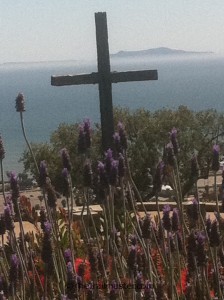
    Serra Cross: spiritual uplift, romance and grand clear-day vistas.
    Serra Cross: spiritual uplift, romance and grand clear-day vistas.

    The view from the cross is commanding: the Ventura coastline, Anacapa and Santa Cruz islands and the wide blue Pacific. And romantic, too. Generations of Venturans have exchanged wedding vows at Serra Cross.

    Construction and funding of the hiking trail was spearheaded by promoters of a plan to create a botanical garden with an emphasis on flora of the Ventura coast. Backers of Ventura Botanical Garden envision plantings in five areas representing the world’s Mediterranean climates: Chile, Australia, The Mediterranean, South Africa and, of course, Ventura.

    Beginning at Ventura’s century-old City Hall, the twisty trail ascends sage and cactus-dotted slopes. Venturans and visitors are oriented to the coast; the pathway may change that outlook and integrate the city’s hillside backdrop into public consciousness.

    Businessman Kenneth Grant planned to build an observatory on his hilltop property but gave up on that plan and in 1918 donated 107 acres to the city of Buenaventura. Some proud Venturans envision transforming Ventura via Grant Park in the same way San Francisco was transformed by Golden Gate Park.

    DIRECTIONS

    From Highway 101 northbound, exit on California Street. Stay in the center lane, make a right and drive 3 blocks north. Turn right on Poli Street, then make an immediate left into the parking lot behind City Hall. (From Highway 101 southbound, exit on Ventura Avenue. Turn right on Thompson Boule¬vard, make a left on California Street and drive 3 blocks north. Turn right on Poli Street, then left into the parking lot behind City Hall.) Locate the trailhead in the upper parking lot.

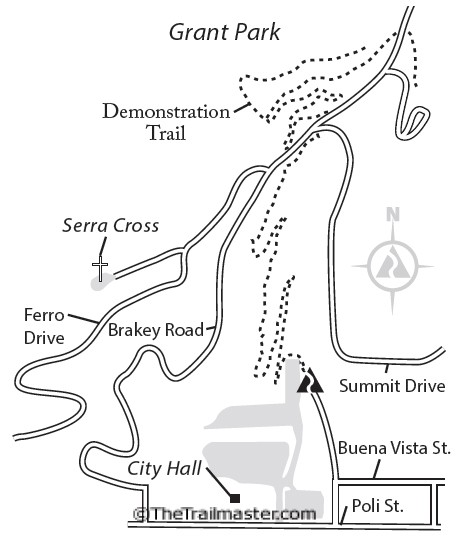
    Grant Park Map by Mark Chumley (click to enlarge)
    Grant Park Map by Mark Chumley (click to enlarge)

    THE HIKE

    Begin the gentle grade with numerous switchbacks ascending slopes cloaked with the coastal sage community. Get better and better views as you climb. Lupine and other wildflowers dot the slopes in spring.

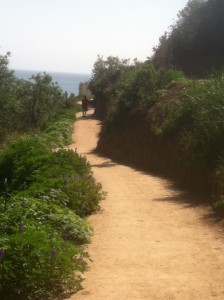
    Get grand ocean vistas from a new trail that links Ventura City Hall with Grant Park and Serra Cross.
    Get grand ocean vistas from a new trail that links Ventura City Hall with Grant Park and Serra Cross.

    Trail-builders unearthed cobblestones used a century ago to form terraces for agriculture. They were possibly built by Chinese immigrants, who were restricted at the time from owning more level and tillable parcels. About 200 feet of stone wall was incorporated into the trail design.

    The path ends at the park road. Go right 0.2 mile to a vista point. The 360-degree panorama includes mountains, metro Ventura, Ag-Land, Channel Islands and the wide blue Pacific. Turn left and walk 0.3 miles along the road to reach Serra Cross. Reach Serra Cross by trail by improvising a route via pathways paralleling the road.

    Interested in more hikes in Ventura County? Check out HIKE Southern California

  • Mount Hollywood Trail from Griffith Observatory

    Mount Hollywood Trail from Griffith Observatory

    Griffith Park’s best-known hike leads to the top of 1,625-foot Mount Hollywood, the park’s premiere peak. Mount Hollywood is not the mountain crowned by the historic Hollywood sign; however, the Mount Hollywood Trail to it delivers great views of Mt. Lee and the bold HOLLYWOOD lettering across its summit. Mount Hollywood can be hiked by way of several different trails but the route from Griffith Observatory is by far the most popular.

    https://www.youtube.com/watch?v=g2NW4fLJM8w

    Mount Hollywood Trail

    From Griffith Observatory to Mount Hollywood is 3 miles round trip with 500-foot elevation gain

    On clear days the entire basin is spread out before you from the San Gabriel Mountains to the Pacific Ocean. Sometimes mounts San Gorgonio, Baldy and San Jacinto can be seen. The view at night can be spectacular, too.

    Griffith Observatory opened to the public in 1935 and has been a cultural institution, tourist attraction and L.A. landmark ever since. Closed in 2002 for an extensive renovation, the observatory reopened in 2006, retaining its Art Deco exterior and adding all new exhibits and a theater.

    The 2007 Griffith Park came dangerously close to the observatory, seared Mt. Hollywood and severely damaged Captain’s Roost and Dante’s View, two lovely rest stops along the trail to Mt. Hollywood. Post fire replanting efforts have greatly benefited Dante’s View.

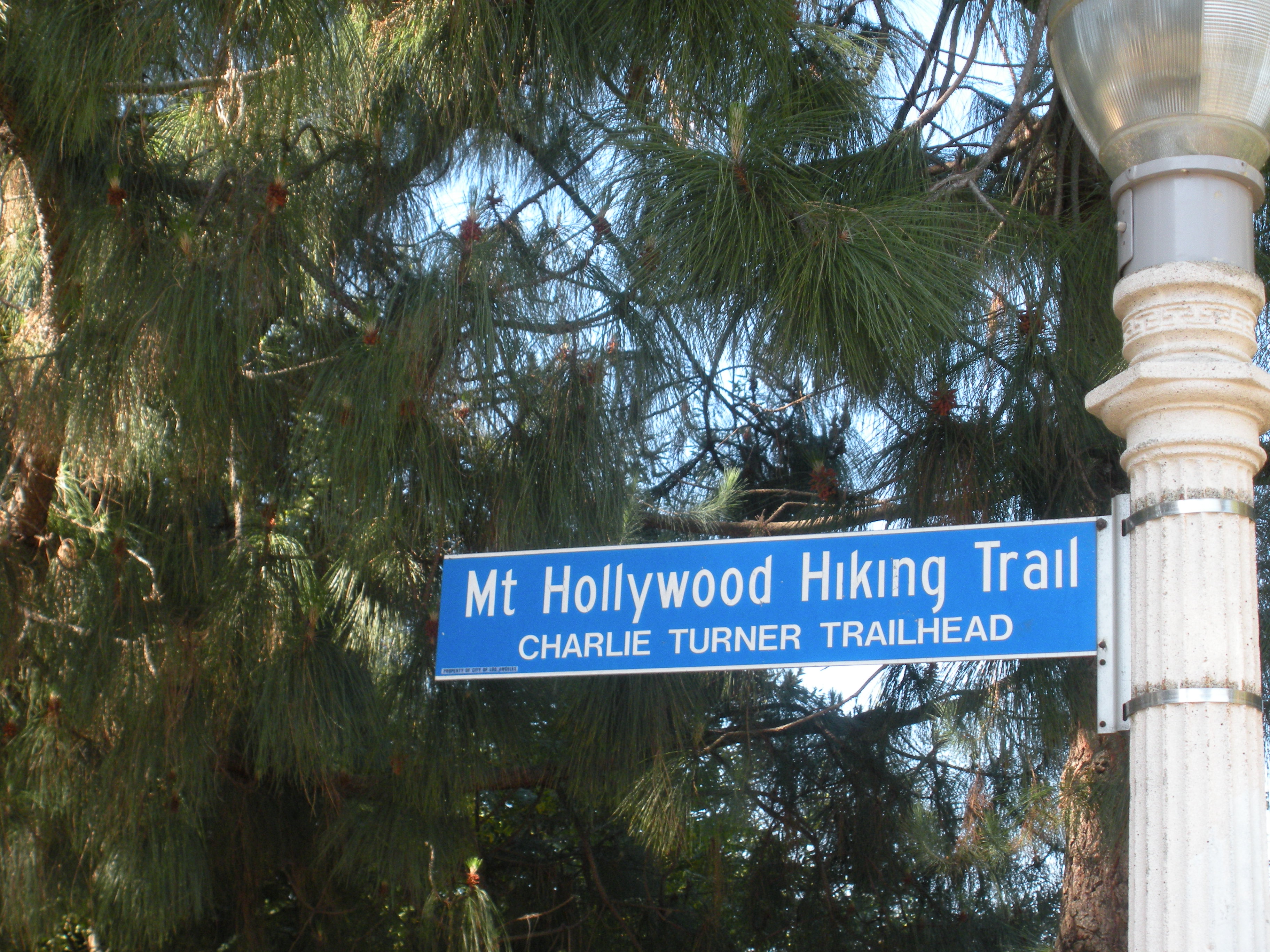
    The trailhead for Mount Hollywood is named for longtime park volunteer Charlie Turner.
    The trailhead for Mount Hollywood is named for longtime park volunteer Charlie Turner.

    Artist-writer Dante Orgolini, an immigrant of Italian descent, began planting a two-acre retreat of pine, palm and pepper trees high on the south-facing slope of Mt. Hollywood in 1965. British-born retired insurance agent Charlie Turner took over as caretaker in 1978 after Orgolini’s death and, for the next 15 years, until he was nearly 90, hiked to the garden virtually every morning to tend the plants. The trailhead for Mount Hollywood is named for Turner.

    DIRECTIONS TO MOUNT HOLLYWOOD TRAIL

    From Los Feliz Boulevard, take Vermont Avenue into the park. Follow signs to the observatory and park in the north end of the lot farthest from the observatory near the signed and landscaped Charlie Turner Trailhead.

    Mount Hollywood Map by Mark Chumley (click to enlarge)
    Mount Hollywood Map by Mark Chumley (click to enlarge)

    THE HIKE

    A brief ascent along the narrow ridgeline dividing Vermont Canyon on the east and Western Canyon on the west leads to Berlin Forest. Among the trees planted by L.A.’s German sister city officials, is a whimsical sign pointing northeast to Berlin, 6,000 miles away.

    The path traverses the top of the Vermont Canyon Road tunnel and about 0.9 mile out reaches a four-way junction on the brushy shoulder of Mount Hollywood. The left branch loops around the west side, the right around the east side.

    Ascend the right (east) branch of the Mount Hollywood Trail to Dante’s View, where a water fountain and picnic tables suggest a rest stop for hikers. Dedicated volunteers maintain the garden. Continue the short distance to the top of Mt. Hollywood and enjoy the view.

    Return the way you came or descend the western loop of the Mt. Hollywood Trail past Captain’s Roost, a rest stop, to a junction with Charlie Turner Trail.

    Interested in more hikes near Griffith Park and the Hollywood Hills? Check out my guide HIKE Griffith Park and Hollywood Hills

  • Why I Like to Hike Death Valley

    Why I Like to Hike Death Valley

    A bighorn sheep standing watch atop painted cliffs, sunlight and shadow playing atop the salt and soda floor, a blue-gray cascade of gravel pouring down a gorge to a land below the level of the sea—these are a few of the many awesome scenes I’ll always remember and why I like to hike Death Valley National Park.

    Hike Death Valley National Park? The Forty-niners, whose suffering gave the valley its name, would have howled at the notion. “Death Valley National Park” seems a contradiction in terms, an oxymoron of the great outdoors.

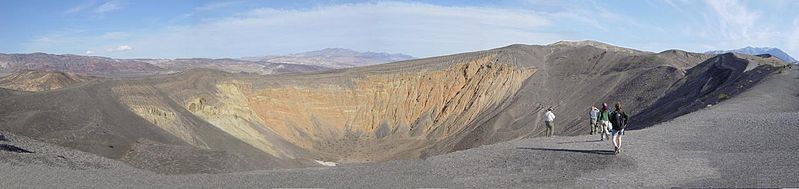
    Enjoy a hike around the rim of Ubehebe Crater in Death Valley National Park.
    Enjoy a hike around the rim of Ubehebe Crater in Death Valley National Park.

    Park? Other four-letter words are more often associated with Death Valley: gold, mine, heat, lost, dead. And the four-letter words shouted by teamsters who drove the 20-mule team borax wagons across the valley floor need not be repeated.

    "Hike or Die, Death Valley" license plate frame--hopefully just for fun.
    “Hike or Die, Death Valley” license plate frame–hopefully just for fun.

    Hike? Well, “hike” is a four-letter word not commonly associated with Death Valley. However, we who like to hike Death Valley intend to subvert the dominant paradigm and share the park’s many intriguing trails.

    In fact, “Death Valley” got its name from some hikers—all be it some very unhappy ones. Looking for a shortcut to the California gold country, two groups of travelers with about 100 wagons got lost in the huge valley for weeks in December of 1849. After slaughtering their oxen and burning the wood of their wagons to cook the meat, they finally located a pass and hiked out of the valley. One of the women in the group is reported to have said, “Goodbye Death Valley!” and the name stuck.

    Even the hiker with little or no interest in geology can be awestruck by Death Valley, where the forces of the earth are exposed to view with dramatic clarity: a sudden fault and a sink became a lake. The water evaporated, leaving behind borax and above all, fantastic scenery. Although Death Valley is called a valley, in actuality it is not. Valleys are carved by rivers. Death Valley is what geologists call a graben. Here a block of the earth’s crust has dropped down along fault lines in relation to its mountain walls.

    Death Graben National Park?

    Nope. Just doesn’t have the right ring to it.

    Many of Death Valley’s topographical features are associated with hellish images—Funeral Mountains, Furnace Creek, Dante’s View, Coffin Peak and Devil’s Golf Course—but the national park can be a place of great serenity for the hiker.

    At 3.3 million acres, Death Valley is the largest national park outside of Alaska. The very notion of hiking the desert in general, and at a place like Death Valley in particular, is a surprising one to some people—even to some avid hikers. The desert that seems so huge when viewed from a car can seem even more intimidating on foot.

    Compared to forest or mountain parks, Death Valley has a limited number of signed footpaths; nevertheless, hiking opportunities abound because roads (closed to vehicles), washes, and narrow canyons serve as excellent footpath substitutes.

    The distances across Death Valley are enormous. If you only have one day, stick around the Furnace Creek Visitor Center. Take in Harmony Borax Works, Badwater, Dante’s View and hike the interpretive trail through Golden Canyon.

    For the average hiker, there’s a week or two’s worth of hiking in the park, though you can get a fair sampling of this desert in three to four days. Although it’s tempting, don’t over-schedule. Death Valley is vast, with abundant sights to see and hikes to take.

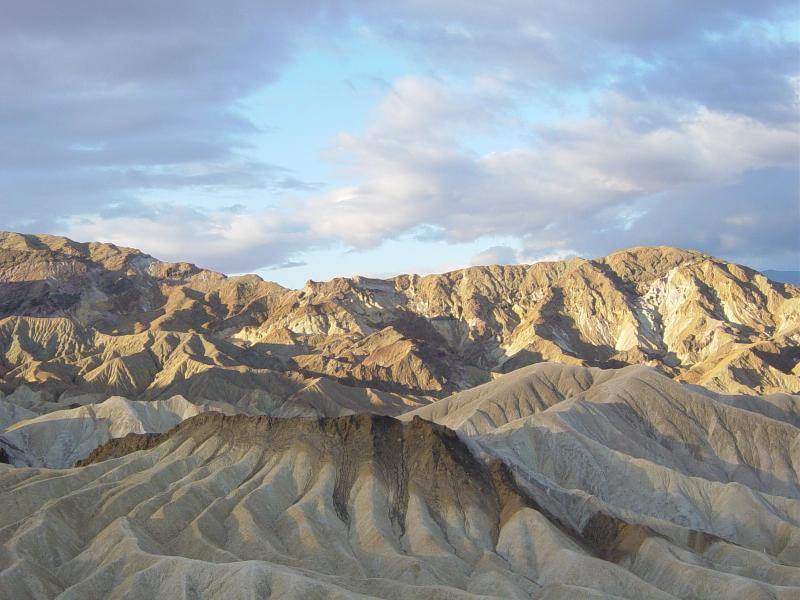
    Sunrise at Zabriskie Point (photo Daniel Mayer)
    Sunrise at Zabriskie Point (photo Daniel Mayer)

    To see as much of the park as possible, choose a different entrance and exit highway. Several routes lead into the park, all of which involve crossing one of the steep mountain ranges that isolate Death Valley from, well, everything. If you enter on Highway 127 through Death Valley Junction, exit on the scenic byway through the Panamint Valley. If you entered from the Panamint side, take your leave of the park by following Badwater Road (Highway 178) south from Furnace Creek, across the Black Mountains and Greenwater Valley to intersect Highway 127 at Shoshone.

    A particular highlight of hiking Death Valley is encountering the multitude of living things that have miraculously adapted to living in this land of little water, extreme heat and high winds. Two hundred species of birds are found in Death Valley. The brown whip-like stems of the creosote bush help shelter the movements of the kangaroo rat, desert tortoise and antelope ground squirrel. Night covers the movements of the bobcat, fox and coyote. Small bands of bighorn sheep roam remote slopes and peaks. Three species of desert pupfish, survivors from the Ice Age, are found in the valley’s saline creeks and pools.

    In spring, even this most forbidding of deserts breaks into bloom. The deep blue pea-shaped flowers of the indigo bush brighten Daylight Pass. Lupine, paintbrush and Panamint daisies grow on the lower slopes of the Panamint Mountains while Mojave wildrose and mariposa lily dot the higher slopes.

    In reality, Death Valley celebrates life. Despite the outward harshness of this land, when you hike Death Valley, you see it in a different light. As naturalist Joseph Wood Krutch put it: “Hardship looks attractive, scarcity becomes desirable, starkness takes on an unexpected beauty.”

    Hike smart, reconnect with nature and have a wonderful time on the trail.

    Hike on.

    The Trailmaster John McKinney

  • California’s Gold Country: Treasures for Hikers

    California’s Gold Country: Treasures for Hikers

    California’s Gold Country offers many treasures for the hiker. Most of the gold in California’s Gold Country was mined long ago, but the wonderful scenery in the High Sierra foothills remains, a favorite of hikers and history buffs.

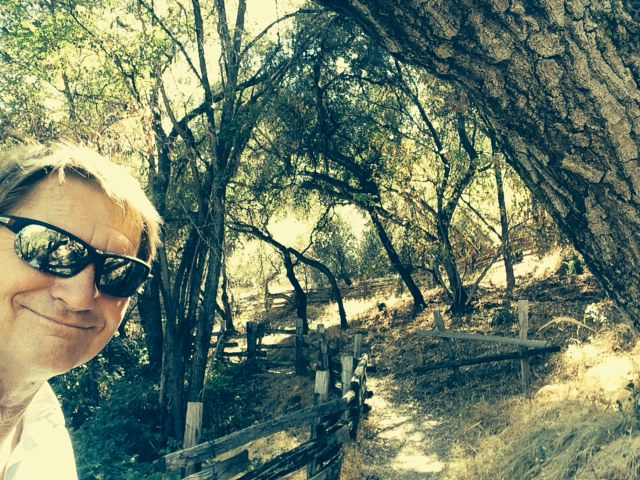
    California's Gold Country trails like this one in Marshall Gold SHP, are a favorite of Trailmaster John McKinney,
    California’s Gold Country trails like this one in Marshall Gold SHP, are a favorite of Trailmaster John McKinney,

    Highway 49 pays tribute to the Gold Rush and links a wonderful collection of restored mining towns and parks that preserve the heritage of that colorful era. Marshall Gold Discovery State Historic Park, Empire Mine State Historic Park, and other Gold Country parks preserve tunnels, trails, mines, and mountains made famous by the 49ers.

    Also on the western slope of the Sierra Nevada are the famed giant sequoia groves of Calaveras Big Trees State Park. The “Big” in the park name is no exaggeration; sequoias are the largest living things on Earth.

    The Gold Country is a splendid destination in autumn. Autumn colors the trees in the Sierra foothills with gold and other fall hues.

    Highway 49 winds its way for about 350 miles through the Gold Country, a region that requires two to three packed days to explore. Choose to camp in or near the California state parks en route or make a “base camp” in a B&B or other lodging then venture out to explore the marquee Gold Country state parks—Empire Mine SHP and Marshall Gold Discovery SHP. Calaveras Big Trees State Park is well worth an entire day on its own.

    Be sure to visit the excellent Chaw'se Indian Musuem at Indian Grinding Rock SHP.
    Be sure to visit the excellent Chaw’se Indian Musuem at Indian Grinding Rock SHP.

    And wait, there’s more. Hike around Indian Grinding Rock SHP and see the impressive bedrock mortars and a reconstructed Miwok village. And you just have to take a long walk around Columbia SHP and see this restored gold rush town. After you take a hike, take the train. Head for Jamestown and visit Railtown 1897 SHP, where steam train trips are offered from April through November.

    On your tour along Highway 49 south of Sacramento, The Trailmaster recommends a trio of trails in California State Parks. These are easy to moderate hikes that offer a great intro to the scenic treasures of California’s Gold Country.

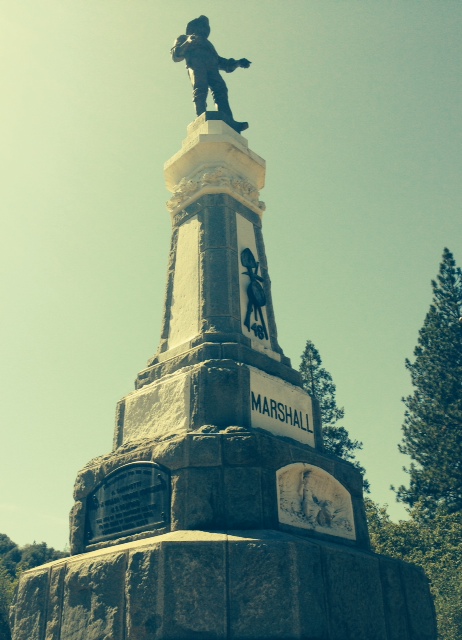
    Hike to a monument of James Marshall, who points to the spot where he discovered gold.
    Hike to a monument of James Marshall, who points to the spot where he discovered gold.

    Marshall Gold Discovery State Historic Park Monument Trail and Monroe Ridge Trail add up to a fine Gold Country ramble that offers great views, both panoramic and close-up of what is likely the single most important locale in California history. This hike (4-mile loop) visits the Marshall Monument, where a bigger-than-life figure holds a bigger-than-life gold nugget and points to the spot where he made the discovery that put California on the world map.

    Indian Grinding Rock State Historic Park Check out the amazing grinding rock—a 173-foot length of bedrock with 1,185 mortar cups, and truly something to behold. Then join two short trails: North Trail begins near the museum, follows a low ridge and loops back to a reconstructed Miwok Village. South Nature Trail tours meadowland, oak woods, plus stands of sugar pine and ponderosa pine.

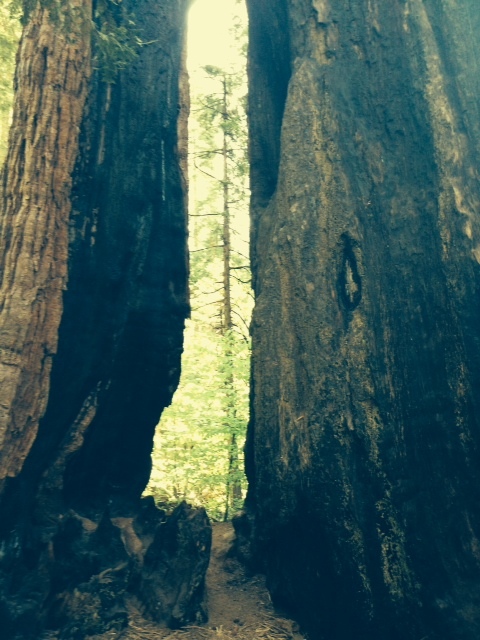
    Fire scarred, but still thriving, this sequoia is one of the more unusual trees in the park's magnificent South Grove.
    Fire scarred, but still thriving, this sequoia is one of the more unusual trees in the park’s magnificent South Grove.

    Calaveras Big Trees State Park The “Big Trees” in the park name is a tip-off: Two groves of giant Sequoia redwoods are the highlights of Calaveras Big Trees State Park. Most visitors tour the easy-to-access North Grove, while hikers in the know head for the park’s more remote South Grove, which has ten times the number of big trees and is far less visited than North Grove. North Grove is protected in a “Natural Preserve,” the highest category of environmental protection offered by the state park system. South Grove Trail is 5 miles round trip with a modest 400-foot elevation gain.

    Interested in more hikes in California’s Gold Country? Check out my guide, Hike Southern California

  • Mount Baldy

    Mount Baldy

    Devil ’s Backbone Trail: From Baldy Notch via ski lift, then to Mt. Baldy summit is 6.4 miles round trip with 2,200-foot gain; (without ski lift) 13 miles round trip with 3,800-foot gain

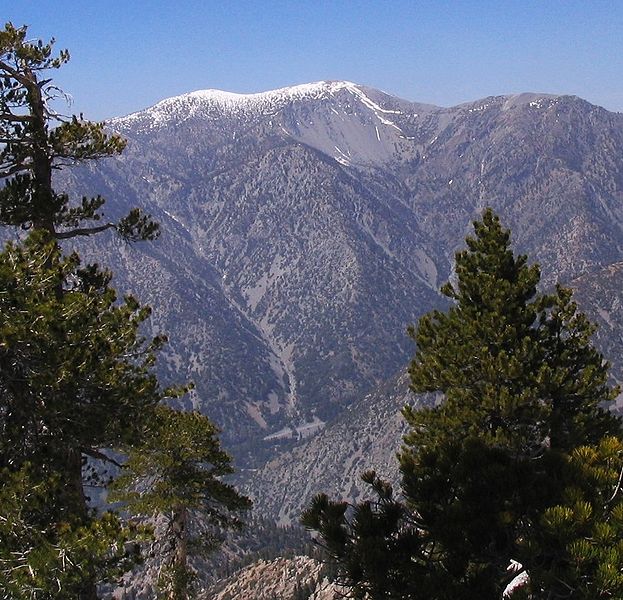
    Mt. San Antonio, more commonly known as Mt. Baldy, is the highest peak (10,068 feet) in the mountains and visible from much of the Southland. Its summit gleams white in winter and early spring, gray in summer and fall. Old Baldy is so big and bare that it seems to be snow-covered even when it’s not.

    Baldy is a bit austere from afar, but up-close, the white granite shoulders of the mountain are softened by a forest of pine and fir. Padres of Mission San Gabriel, circa 1790, named the massive stone bulwark after Saint Anthony, a 13th-century friar from Padua, Italy. In the 1870s, gold-seekers dubbed the massive peak a more earthly “Old Baldy.”

    From Baldy Notch, Devil’s Backbone Trail offers a moderately challenging route to the summit. This popular trail is the one most hikers associate with Baldy. Clear-day views from the top offer a panorama of desert and ocean, the sprawling Southland and the Southern High Sierra.

    An alternative is to walk up a fire road to Baldy Notch. This option adds 3 miles each way and a 1,300-foot gain to the hike. The fire road switchbacks up the west side of steep San Antonio Canyon, offers a good view of San Antonio Falls, then climbs northward to the top. This fire road is subject to closure. Check with the US Forest Service before you go.

    DIRECTIONS:

    From the Foothill Freeway (210) in Claremont, exit on Baseline Road and head west one block to Padua Avenue. Turn right and drive north 1.7 miles to a stop sign and an inter¬section with Mt. Baldy Road. Turn right and drive 7.2 miles to the national forest’s Mt. Baldy Visitor Center in Mt. Baldy Village, then a few more miles up to Manker Flats. To walk up the fire road, drive to the upper end of the Manker Flats Campground. Look for a vehicle gate and a paved road.

    Those riding the ski lift will continue 0.25 mile past the campground to the Baldy Ski Lifts and free parking. Purchase a ticket and ride the ski lift up to Baldy Notch. (The lift is operated weekends and holidays all year.)

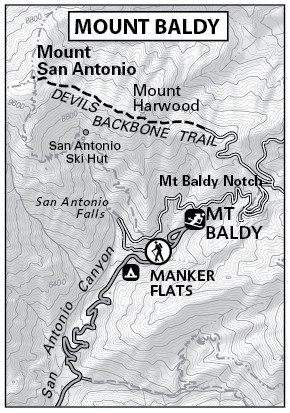
    Mount Baldy Map by TomHarrisonMaps.com (click to enlarge)
    Mount Baldy Map by TomHarrisonMaps.com (click to enlarge)

    THE HIKE:

    From Baldy Notch, a wide gravel path leads to a commanding view of the desert. Join a chair lift access/fire road, and ascend a broad slope forested in Jeffrey pine and incense cedar. The road ends in about 1.25 miles at the top of a ski lift.

    From here, a trail leads onto a sharp ridge, the Devil’s Backbone. Look north down into the deep gorge of Lytle Creek, and south into San Antonio Canyon. Pass around the south side of Mt. Harwood, “Little Baldy,” and up through scattered stands of lodgepole pine.

    Reach a tempestuous saddle (Hold onto your hat!) and continue on a steep rock-strewn pathway that zigzags past wind-bowed limber pine to the summit. Atop Baldy’s crown, rock windbreaks offer shelter. Enjoy vistas of San Gabriel and San Bernardino mountain peaks, the Mojave and the metropolis.

    Interested in more hikes in the San Gabriel Mountains? Check out my “HIKE the San Gabriel Mountains Pocket Guide at The Trailmaster Store.

  • Crystal Cove State Park Bluffs

    Crystal Cove State Park Bluffs

    Between the Pacific Coast Highway and the wide blue Pacific, and between Laguna Beach and Newport Beach, lie the beautiful blufftops of Crystal Cove State Park.

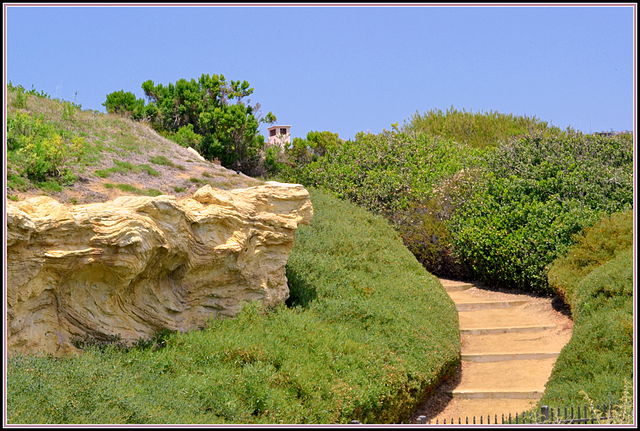
    Pathways lace Crystal Cove State Park bluffs
    Pathways lace Crystal Cove State Park bluffs

    A paved, multi-use path extends along most of the 3.2-mile length of the bluffs. Eight connector trails—dirt and paved ones as well as a boardwalk—invite the explorer to leave the main route and explore tide pools, rocky coves and sand strands and check such intriguingly named topography as Pelican Point and Little Treasure Cove.

    Be sure to visit the Crystal Cove Historical District. The funky wood-frame beach houses are in marked contrast to Newport Coast, the upscale community of luxury villas and custom homes arising on the inland side of the highway.

    The beach cottages, were acquired by State Parks when the Crystal Cove area was set aside as parkland. Three-dozen cottages have been renovated and readied for rental to vacationers.

    The beach at Crystal Cove attracts its share of surfers, swimmers and sun-bathers but still gives the feeling of being away from it all and by no means resembles one of SoCal’s mass use sandlots.

    Crystal Cove Beach as viewed from the deck of Ruby's Shake Shack
    Crystal Cove Beach as viewed from the deck of Ruby’s Shake Shack

    Park boundaries extend beyond the tideline A portion of Crystal Cove’s waters are protected in an underwater park, which attracts divers. Local conservationists planted kelp to provide habitat for the native marine life.

    Bottlenose dolphins are frequently sighted in these waters and even been known to give birth here. The creatures form birthing circles, a marvelous natural drama to witness should you be so lucky.

    Directions to Crystal Cove State Park

    Crystal Cove State Park’s Reef Point entrance is located off Pacific Coast Highway, three miles north of Laguna Canyon Road in Laguna Beach and 3.5 miles south of McArthur Boulevard in Newport Beach.

    The park’s Pelican Point Entrance boasts four parking lots, each with restrooms. At the Los Trancos entrance, a parking area on the inland side of PCH and a pedestrian tunnel leading under the highway facilitate access to the Crystal Cove Historical District.

    Interested in more hikes near Crystal Cove State Park? Check out HIKE Orange County

  • Gold Bluffs Beach a Magnificent Part of California Coastal Trail

    Gold Bluffs Beach a Magnificent Part of California Coastal Trail

    Wildlife-watching, waterfalls and a wilderness beach are highlights of a hike along the northern reaches of Gold Bluffs Beach in Redwood National Park. While even one of these en route attractions makes for a compelling hike, the mere prospect of so many engaging environments can put a hiker into sensory overload before reaching the trailhead.

    Gold Bluffs Beach and the hiking in Prairie Creek Redwoods State Park comprise one of those most inspiring lengths of the California Coastal Trail and I write about it with much enthusiasm in my narrative, “Hiking on the Edge: Dreams, Schemes and 1600 Miles on the California Coastal Trail.”

    Gold Bluffs Beach (both bluffs and beach) is prime Roosevelt elk territory. While nearby elk-viewing opportunities abound, the creatures seem all the more majestic in this wilderness setting.

    Roosevelt elk roam the bluffs above Gold Bluffs Beach in Prairie Creek Redwoods State Park. The California Coastal Trail at its most magnificent! (Photo SF Wolfman, wikimedia)
    Roosevelt elk roam the bluffs above Gold Bluffs Beach in Prairie Creek Redwoods State Park. The California Coastal Trail at its most magnificent! (Photo SF Wolfman, wikimedia)

    Waterfalls near the coast are a rarity, so the presence of three of them in close proximity to the California Coastal Trail is a special treat indeed. Gold Dust Falls, a long, slender tumbler, spills some 80 feet to the forest floor. An unnamed waterfall is located just south of Gold Dust; another is located just north.

    The hike gets off to an amazing start near the mouth of Fern Canyon. Check out The Trailmaster’s description of the Fern Canyon Hike

    This is an easy-moderate hike. From Fern Canyon to Gold Dust Falls is 2 miles round trip; to Butler Creek Backpack Camp is 4.5 miles round trip; to Ossagon Rocks is 6 miles round trip. No elevation gain to speak of.

    In the case of this hike, the journey north from Gold Bluffs Beach overshadows the destination; nevertheless, the destination—the odd Ossagon Rocks—are intriguing in their own way. The rocks resemble sea stacks, though they’re positioned right at land’s end, not in their usual offshore location.

    DIRECTIONS TO Gold BLUFFS BEACH

    From Highway 101 in Orick, drive 2 miles north to signed Davison Road. Turn left (west) and proceed 7 miles to road’s end at Gold Beach and the Prairie Creek Redwoods State Park Fern Canyon trailhead.

    THE HIKE

    Coastal Trail begins on the other side of Home Creek, an easy ford in summer, but may present a challenge during the rainy season. Usually a signpost on the north side of the creek shows the way to the start of Coastal Trail, as the California Coastal Trail is known in these parts.

    Join the path for a brief meander through the forest then out across the grass-topped dunes. The hiker is often out of sight of the surf, but never altogether removed from its thunderous roll, even when the Coastal Trail strays 0.1 mile inland.

    A mile out, the sound of falling water and an unsigned path forking right into the forest calls you to Coastal Trail’s first cascade, a long, wispy waterfall framed by ferns.

    Another 0.25 mile along the main path leads to the short connector trail leading to Gold Dust Falls. A well-placed bench offers repose and a place to contemplate the inspiring cataract. A minute or so more down the main trail delivers you to another brief spur trail and the third of Coastal Trail’s cascades.

    Coastal Trail edges from prairie to forest and reaches Butler Creek Camp, a hike-in retreat at 2.25 miles. The small camp is located at a convergence of environments—creekside alder woodland, a prairie matted with head-high native grasses, the creek mouth and the beach beyond.

    Cross Butler Creek and travel the grassy sand verbena-topped prairie for a final 0.5 mile to cross Ossagon Creek and junction with Ossagon Trail. Continue on Coastal Trail a bit farther north, then bid adieu to the path and head oceanward to Ossagon Rocks.

    Interested in more hikes near Gold Bluffs Beach? Check out HIKE the Redwoods

  • Tomales Bay State Park

    Tomales Bay State Park

    Johnstone and Jepson Trails: From Heart’s Desire Beach to Jepson Memorial Grove is 3 miles round trip with 300-foot elevation gain; to Shell Beach is 8 miles round trip

    Two lovely trails, named for a professor and a planner, explore Tomales Bay State Park. Botanist Willis Jepson, founder of the School of Forestry at the University of California, Berkeley, and author of the authoritative Manual of the Flowering Plants of California, is honored by the Jepson Trail.

    Conservationist Bruce Johnstone, Marin County planner, and his wife Elsie, worked long and hard to preserve Tomales Bay and place part of it in a state park. Johnstone Trail leads bayside from Heart’s Desire Beach to Shell Beach.

    Bay Area walkers have a little secret: When fog smothers Point Reyes and San Francisco Bay, try heading for Tomales Bay State Park. The park has a microclimate, and often has sunny days and pleasant temperatures when other neighboring coastal locales are damp and cold.

    DIRECTIONS

    From the town of Inverness, follow Sir Francis Drake Boulevard to Pierce Point Road. Turn right and drive a half-mile to the entrance to Tomales Bay State Park. Follow signs to the large parking lot at Heart’s Desire Beach.

    Point Reyes: Tomales Bay State Park by TomHarrisonMaps.com (click to enlarge)
    Point Reyes: Tomales Bay State Park by TomHarrisonMaps.com (click to enlarge)

    THE HIKE

    Signed Johnstone Trail departs from the south end of Heart’s Desire Beach and immediately climbs into a moss-draped forest of oak, bay, madrone, and wax myrtle.

    A half-mile of travel leads to Pebble Beach. At a trail junction, a short side trail goes straight down to Pebble Beach, but Johnstone Trail swings southwest and switchbacks up forested slopes. Ferns dot wetter areas of the coastal slope. The trail crosses a paved road and soon junctions.

    To continue to Shell Beach, bear left with the Johnstone Trail. The trail detours around private property, and contours over the coastal slope at an elevation of about 500 feet. The path leads through Bishop pine and a lush understory of salal and huckleberry bushes. After a few miles, the trail descends through madrone and oak forest to Shell Beach.

    Hikers content with looping back to Heart’s Desire Beach via Jepson Trail will continue straight at the above-mentioned junction. Bishop pine, along with its similar-looking piney cousins, the Monterey and knobcone, are known as fire pines, because they require the heat of fire to crack open their cones and release their seeds. Bishop pines are slow to propagate and are relatively rare in coastal California. (Another nice stand of Bishop pine is located in Montana de Oro State Park in San Luis Obispo County.)

    Surest way to distinguish a Bishop pine from its look-alike, the Monterey pine, is by counting the needles: Monterey pines have three needles to a bunch, Bishop pines have two needles to a cluster.

    From strategically placed benches, savor the fine bay views afforded by the Jepson Trail, which descends gently to Heart’s Desire Beach.

    Interested in more hikes in Point Reyes National Seashore? Check out my guide: HIKE Point Reyes.

  • Topanga State Park

    Topanga State Park

    Topanga State Park is a quiet retreat, surrounded by L.A. sprawl but retaining its rural character. The state park is sometimes billed as “the largest state park within a city limit in the U.S.”

    Eagle Springs Fire Road (Backbone Trail): To Eagle Rock via Eagle Rock/Eagle Springs Loop is 6.5 miles round trip with 800-foot elevation gain

    The name Topanga is from the Shoshonean Indian dialect. Until the 1880s, there was little permanent habitation in the canyon. Early settlers tended vineyards, orchards, and cattle ranches.

    The drive into Topanga Canyon to take a hike has been part of the hiking experience for 100 years.
    The drive into Topanga Canyon to take a hike has been part of the hiking experience for 100 years.

    In the 1920s, the canyon became a popular weekend destination for Los Angeles residents. Summer cabins were built along Topanga Creek and in surrounding hills. For $1 round trip fare, tourists could board a Packard auto stage in Santa Monica and be driven up Pacific Coast Highway and Topanga Canyon Road to the canyon’s scenic spots.

    Most Topanga trails are good fire roads. In the heart of the state park, the hiker will discover Eagle Rock, Eagle Spring and get topographically oriented to Topanga.

    I have a particular fondness for Topanga Canyon, having resided there and hiked there often during my grad school days. The park definitely offers four-season hiking: On a blustery winter day, city and canyon views are superb, in springtime, the hillsides are colored with wildflowers, and autumn offers great hiking weather and clear-day vistas.

    Summer, too, has its charms. It’s doubtful any poets will rhapsodize about such summer bloomers as bursage, mugwort, Indian milkweed, chaparral pea or ashyleaf buckwheat, though the scarlet petals of the California fuchsia and the tiny pink petals of the slim aster do have a certain charm. Just get an early start!

    DIRECTIONS TO TOPANGA STATE PARK

    From Topanga Canyon Boulevard, turn east on Entrada Road; that’s to the right if you’re coming from Pacific Coast Highway. Follow Entrada Road by turning left at every opportunity until you arrive at Topanga State Park. The trailhead is at the end of the parking lot.

    Topanga State Park Map by TomHarrisonMaps.com (click to enlarge)
    Topanga State Park Map by TomHarrisonMaps.com (click to enlarge)

    THE HIKE

    From the Topanga State Park parking lot, follow the distinct trail eastward to a signed junction, where you’ll begin hiking on Eagle Springs Road. You’ll pass through an oak woodland and through chaparral country. The trail slowly and steadily gains about 800 feet in elevation on the way to Eagle Rock. When you reach a junction, bear left on the north loop of Eagle Springs Road to Eagle Rock. A short detour will bring you to the top of the rock.

    To complete the loop, bear sharply right (southwest) at the next junction, following the fire road as it winds down to Eagle Spring. Past the spring, you return to Eagle Spring Road and retrace your steps back to the trailhead.

    Three-mile long Musch Ranch Trail, which passes from hot chaparral to shady oak woodland, crosses a bridge and passes the park pond, is another fine way to return to the trailhead.

    Interested in more hikes in the Santa Monica Mountains? Check out my guide: Hike the Santa Monica Mountains

  • Malibu Creek State Park

    Malibu Creek State Park

    Crags Road, High Road Trails: From Main Parking Area to Century Lake is 2.8 miles round trip with 100-foot elevation gain; to M*A*S*H site is 6 miles round trip with 200-foot gain

    Before land for Malibu Creek State Park was acquired in 1974, it was divided into three parcels belonging to Bob Hope, Ronald Reagan and 20th Century Fox. Although the park is still used for moviemaking, it’s primarily a haven for day hikers and picnickers.

    Today the state park preserves more than 7,000 acres of rugged country in the middle of the Santa Monica Mountains.

    The trail along Malibu Creek explores the heart of the state park. It’s an easy, nearly level walk that visits a dramatic rock gorge, Century Lake and several locales popular with moviemakers.

    Fans of the long-running TV show, M*A*S*H, will enjoy making the pilgrimage to the site where so many episodes were filmed. Some rusted vehicles, interpretive panels, a picnic table and helicopter pad are at the site. The prominent Goat Buttes that tower above Malibu Creek were featured in the opening shot of each episode.

    DIRECTIONS

    From Pacific Coast Highway, turn inland on Malibu Canyon Road and proceed 6.5 miles to the park entrance, 0.25 mile south of Mulholland Highway. If you’re coming from the San Fernando Valley, exit the Ventura Freeway (101) on Las Virgenes Road and continue four miles to the park entrance.

    Malibu Creek State Park Map by TomHarrisonMaps.com (click to enlarge)
    Malibu Creek State Park Map by TomHarrisonMaps.com (click to enlarge)

    THE HIKE

    From the parking area, descend a staircase near the restrooms at the western edge of the parking lot. Cross a small bridge, passing signs marked “Backcountry Trails.” Crags Road soon forks into a high road and a low road. Go right and walk along the oak-shaded high road, which makes a long, lazy left arc as it follows the north bank of Malibu Creek. You’ll reach an intersection and turn left on a short road that crosses a bridge over Malibu Creek.

    Moviemakers and hikers are two groups who appreciate the beauties of Malibu Creek.
    Moviemakers and hikers are two groups who appreciate the beauties of Malibu Creek.

    Gorge Trail is well worth a detour; follow it upstream a short distance to the gorge, one of the most dramatic sights in the Santa Monica Mountains. Malibu Creek makes a hairpin turn through 400-foot volcanic rock cliffs and cascades into aptly named Rock Pool. The Swiss Family Robinson television series and some Tarzan movies were filmed here, as were a number of scenes from the “Planet of the Apes” series of flicks.

    Retrace your steps back to the high road and bear left toward Century Lake. As the road ascends you’ll be treated to a fine view of Las Virgenes Valley. When you gain the crest of the hill, you’ll look down on Century Lake. Near the lake are hills of porous lava and topsy-turvy sedimentary rock layers that tell of the violent geologic upheaval that formed Malibu Canyon. A side trail leads down to the lake which was scooped out by members of Crag’s Country Club, a group of wealthy, turn-of-the-20th century businessmen who had a nearby lodge.

    The road follows a (usually) dry creek bed though, after a good rain, it can be wet and wild going. Soon after passing a junction with the Lost Cabin Trail, you’ll reach the M*A*S*H site.

    Interested in more hikes in the Santa Monica Mountains? Check out my guide: HIKE the Santa Monica Mountains

  • Point Reyes: All About Earthquakes

    Point Reyes: All About Earthquakes

    Earthquake Trail: 0.6 mile

    Earthquake Trail uses old photographs and other displays to explain the seismic forces unleashed by the great 1906 San Francisco earthquake. This well-done and entertaining geology lesson is particularly relevant because most of the land west of the San Andreas Fault Zone is within boundaries of Point Reyes National Seashore.

    Plates forming the earth’s crust do not always creep quietly past each other. In 1906 they clashed violently, and the result was California’s worst natural disaster. During the great quake, Point Reyes was shoved 16.4 feet to the northwest. A cow barn, located near the park rangers’ headquarters, was ripped in two. A corner of the barn stayed on the foundation and the rest was carried sixteen feet away.

    The San Andreas Fault is long (780 miles), narrow (one mile) and deep (20 miles). For obvious reasons, the fault is much-studied by scientists and as a result much research is available to share with the public. Surely a hike along Earthquake Trail is one of the most interesting ways to learn more about this great maker and shaker of continents.

    Paved and fully accessible for all visitors, the nearly flat trail is an engaging experience for all ages. On this memorable nature trail view creeks and fences that were rearranged by the 1906 quake.

    And Earthquake Trail is more than an earth science lesson. The path also offers a friendly intro to the parkland’s meadow and woodland communities. Even the most time-pressed  tourist will enjoy walking the trail.

    DIRECTIONS TO EARTHQUAKE TRAIL:

    Bear Valley Visitor Center is located just outside the town of Olema, 35 slow and curving miles north of San Francisco on Highway 1. A quicker route is by Highway 101, exiting on Sir Francis Drake Boulevard, and traveling 20 miles to Olema. Turn right on Coast Highway 1, proceed 0.1 mile, then turn left on Bear Valley Road, which leads 0.4 mile to parking for the Point Reyes National Seashore Visitor Center. Earthquake Trail begins at the southeast corner of the Bear Valley Picnic Area, right across the road from the Bear Valley Visitor Center.

    Point Reyes - Earthquake Trail by TomHarrisonMaps.com (click to enlarge)
    Point Reyes – Earthquake Trail by TomHarrisonMaps.com (click to enlarge)

    THE HIKE

    Study the interpretive panel of the San Andreas Fault in relief and walk into the meadow. Earthquake Trail soon forks: arrows on the pavement suggest you bear left (east).

    View photos of the San Francisco Earthquake and follow the trail amidst tangles of blackberry to an oak woodland and crosses a bridge over a branch of Olema Creek.

    The path curves south and passes more interpretive panels. Be sure to read the story of the cow caught in…well, I won’t spoil the colorful tale. Suffice it to say that it’s the best-known urban legend—rural legend, really—of Point Reyes.

    And finally, make sure you walk the short side trail to inspect a 16-foot break in the old fence line; this is the showstopper, a memorable illustration of the power of the quake of 1906 and quakes to come.

    Interested in more hikes in Point Reyes National Seashore? Check out HIKE Point Reyes