HIKE California

  • Hike California State Parks

    Hike California State Parks

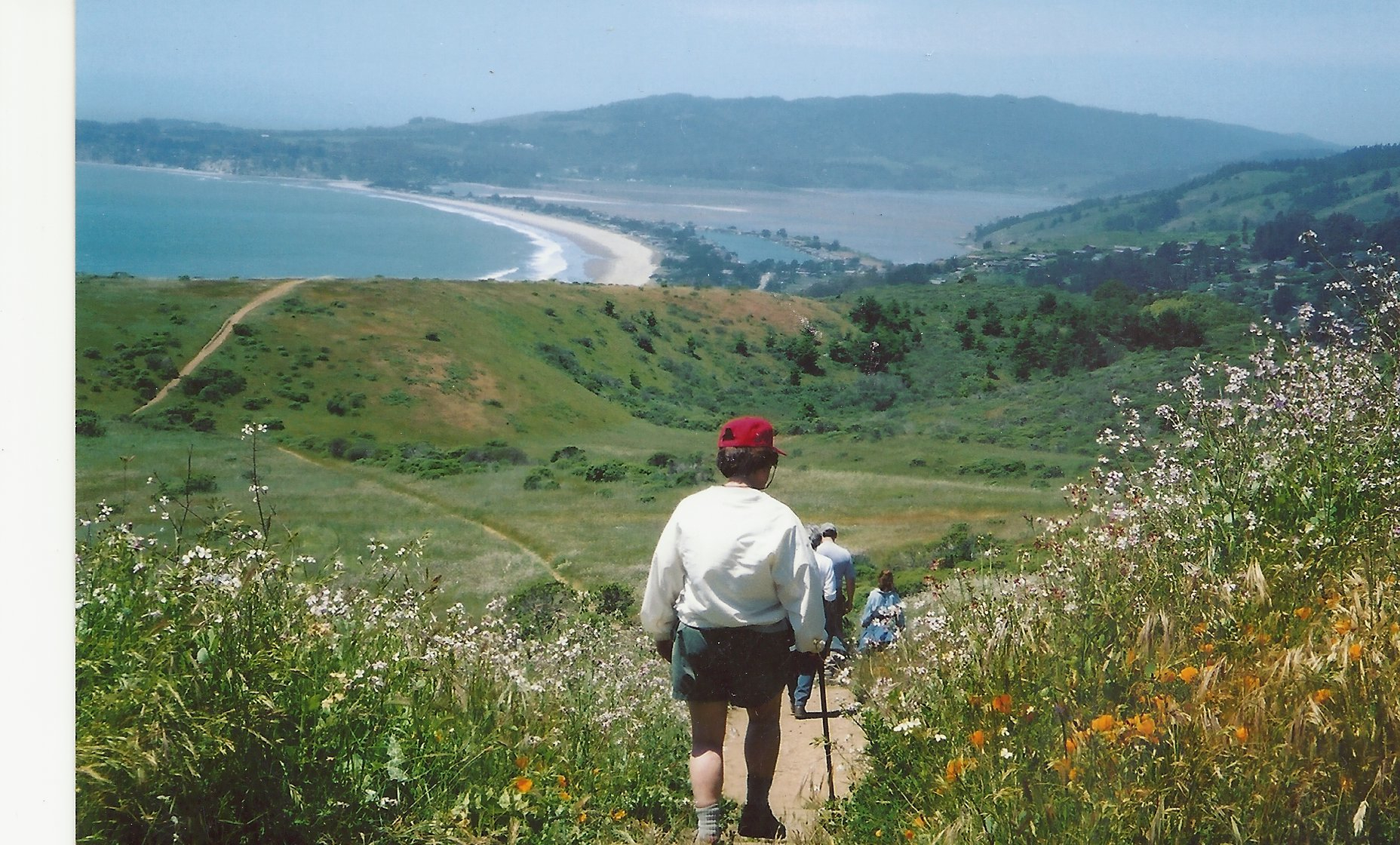
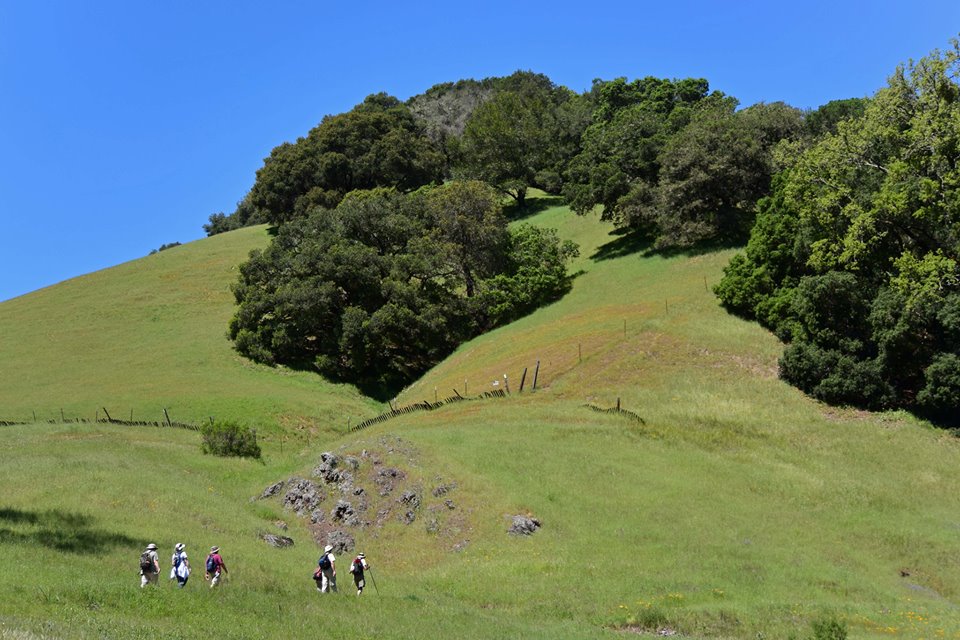
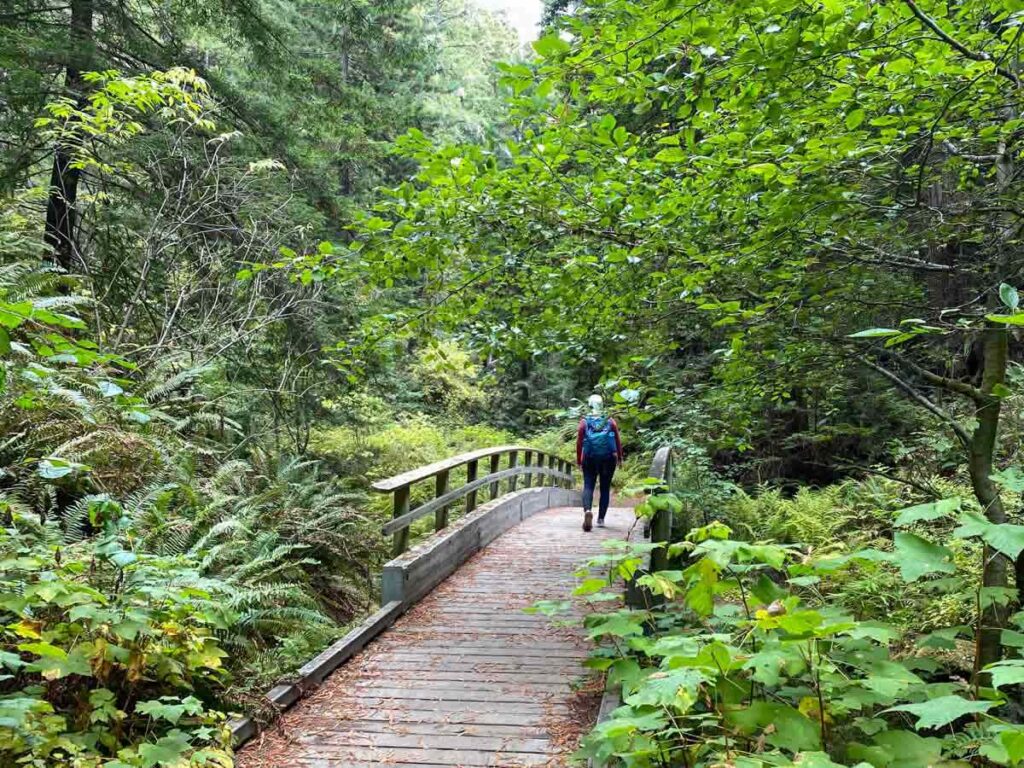
    California State Parks offer some of the best hiking the state has to offer: Torrey Pines, Malibu Creek, Point Lobos, Calaveras Big Trees, Humboldt Redwoods and a hundred more. Watch my video Hike California State Parks and hiker on!

    With the recent addition of Dos Rios Ranch State Park to the system, California now has 280 state parks!

    Who knew?

    Down the Dipsea Trail in Mount Tamalpais State Park.The short answer is hardly anyone. I’ve asked a thousand Californians or more to name five California State Parks. Fewer than 10 percent can do so. Surprising to me, a majority of these baffled respondents are outdoorsy Californians—the kind of people who come to my talks or I meet on the trail.

    I confess to being a little obsessed by California state parks and am the only crazy enough to have hiked and written about all 280 of them.  At first my interest in the parks was professional. During a long stint as the Los Angeles Times hiking columnist, I noticed my readers enjoyed discovering SoCal’s state parklands. For nearly 20 years, I partnered with the California State Parks Foundation, helping to share stories about the wonders of our state parks. Then I started keeping a list of parks I visited, and you know how it is when you get compulsive about something…

    Turns out you can take a hike in about half of California’s 280 state parks.  You can explore these “hiker parks” on 3,000(!) miles of trail.

    Wine country wandering, Sugarloaf Ridge State Park.The California State Park System is widely regarded as the nation’s finest—and the most popular, too, with nearly 70 million visitors a year. In terms of number of parks and number of visitors, it’s second only to the National Parks system.

    Other states have high mountains, vast deserts, and scenic shorelines, but only California contains all of these natural features, and preserves examples of them in its park system.

    Hiking Topanga State Park, one of the gems of the Santa Monica Mountains.The multitude of intriguing state park environments, and the many fine paths that explore them, add up to some world-class hiking adventures.

    Ancient redwoods grow along the mist-covered edge of the continent. The alpine beauty of the Sierra Nevada towers above Emerald Bay and Sugar Pine Point state parks on the shores of world-famous Lake Tahoe. Warm, sandy state beaches from San Clemente to Refugio beckon visitors to Southern California.

    State parks preserve a cross-section of California ecology from the bottom of the Central Valley at Caswell Memorial State Park to the top of alpine peaks at Mt. San Jacinto State Park; from uncommonly dry desert lands, where Joshua trees thrive, such as Saddleback Butte State Park to the near-rainforest environment of Del Norte Redwoods State Park.

    Footpath amidst the ferns in Van Damme State ParkState parks showcase a fabulous array of Nature’s handiwork: giant Sequoias in Calaveras Big Trees State Park; the rare Torrey pines making a last stand in a natural reserve near San Diego; palm oases in Anza-Borrego Desert State Park; some of the tallest trees on earth in Jedediah Smith Redwoods State Park.

    State parks highlight California’s history and offer the opportunity to follow the trails of the forty-niners, Spanish missionaries, and Native Americans. Hike into history where the Gold Rush began (Marshall Gold State Historic Park), where a famed writer found inspiration (Jack London State Historic Park), where a lonely lighthouse-keeper lived and worked (Pt. Sur State Historic Park).

    Park pathways are as varied as the parks themselves. Some trails are easy—a “walk in the park.” Leg-stretchers along the Sacramento River at Woodson Bridge and Colusa state recreation areas allow motorists a break from Interstate 5; beach walks from Border Field State Park to MacKerricher State Beach provide a similar break from Coast Highway 1.

    Many state park hikes are suitable for the whole family—slow paced adventures with much to see on a short hike. These family hikes, by utilizing described options, can usually be extended to half- day or all-day outings. The avid hiker will find challenges aplenty in the parks, too—long day hikes that offer grand tours and great workouts.

    Hike smart, reconnect with nature, and have a wonderful time on the trail.

    Hike on.

    —John McKinney

  • Mt Baden-Powell

    Mt Baden-Powell

    Mt. Baden-Powell Trail: From Vincent Gap to summit is 8 miles round trip with 2,800-foot elevation gain

    This trail and peak honor Lord Baden-Powell, a British Army officer who founded the Boy Scout movement in 1907. The well-engineered trail, grooved into the side of the mountain by the Civilian Conservation Corps in the mid-1930s, switchbacks up the northeast ridge to the peak.

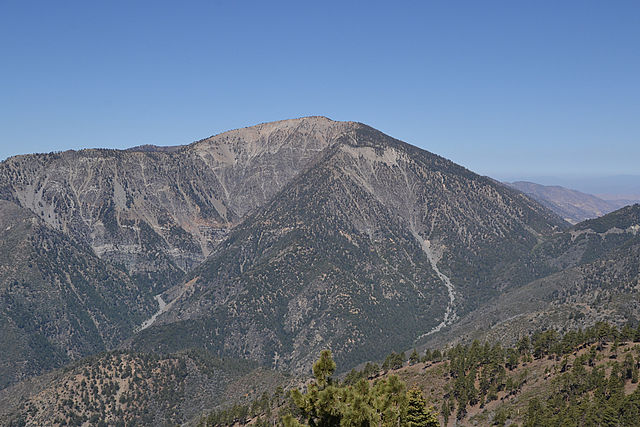
    Mount Baden-Powell is the spectacular conclusion to the Scouts' Silver Moccasin Trail across the San Gabriel Mountains. (photo by Eekster)
    Mount Baden-Powell is the spectacular conclusion to the Scouts’ Silver Moccasin Trail across the San Gabriel Mountains. (photo by Eekster)

    The peak was once known as North Baldy, before Southern California Boy Scouts lobbied the Forest Service for a name change. Mt Baden-Powell is the terminus of the scouts’ 53-mile Silver Moccasin Trail, a rugged week-long backpack through the San Gabriels.

    I have fond memories of hiking Mt. Baden-Powell with my own Scout Troop 441 more than 40 years ago. It’s one of those hikes that I enjoy doing over and over again, and that I like to share with friends.

    The trail follows a moderate, steady grade to the top of the mountain, where there’s a monument honoring Powell. On the summit, you’ll meet those ancient survivors, the limber pines, and be treated to superb views across the Mojave Desert and down into the Iron Fork of the San Gabriel River.

    DIRECTIONS:

    Take the Angeles Crest Highway (2) for 53 miles from La Cañada to the Vincent Gap Parking Area. The signed trailhead is at the northwest edge of the parking area. If you’re coming from the east, take Interstate 15 to the Wrightwood exit, three miles south of Cajon Pass. Proceed 8 miles west on Highway 138 to its intersection with Highway 2. Turn left on Highway 2 and drive 14 miles to the trailhead.

    Mt Baden-Powell Map by TomHarrisonMaps.com (click to enlarge)
    Mt Baden-Powell Map by TomHarrisonMaps.com (click to enlarge)

    THE HIKE:

    Begin the ascent from Vincent Gulch Divide, a gap separating the upper tributaries of the San Gabriel River to the south from Big Rock Creek to the northwest. The trail switchbacks southwest through Jeffrey pine and fir. The trail numbers more than three dozen of these switchbacks; however, so many inspiring scenes compete for the hiker’s attention it’s hard to get an accurate count.

    In 1.5 miles, a side trail (unmarked) leads a hundred yards to Lamel Spring, an inviting resting place and the only dependable water en route.

    With increased elevation, the switchbacks grow shorter and steeper and the vegetation changes from fir to lodgepole pine. Soon, even the altitude-loving lodgepoles give way to the heartiest of pines, the limber pine. A half-mile from the summit, around 9,000 feet in elevation, the first of these squat, thick-trunked limber pines come into view.

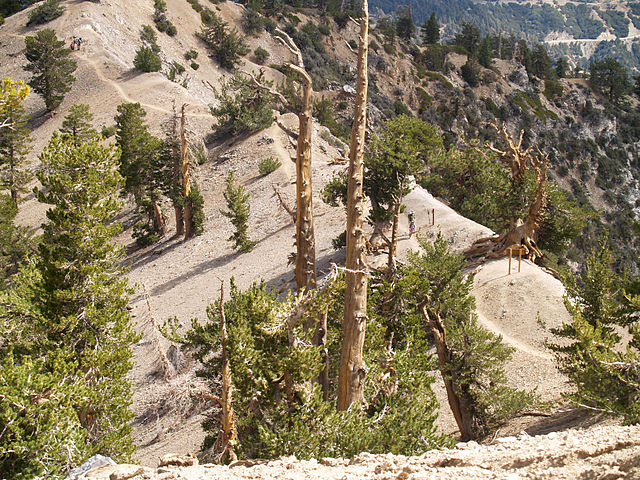
    The hike to the summit of Mt Baden-Powell leads past hardy limber pine. (photo by Mitch Barrie)
    The hike to the summit of Mt Baden-Powell leads past hardy limber pine. (photo by Mitch Barrie)

    To Limber Pine Forest: A tiny sign points right (southwest) to the limber pine stand, 0.125 mile. These wind-loving, subalpine dwellers are one of the few living things that can cope with the rarefied atmosphere. Pinus flexilis, botanists call the species, for its long, droopy, flexible branches. They bow and scrape like hyperextended dancers and appear to gather all their nourishment from the wind.

    Back on the main trail, a few more switchbacks bring you atop the ridge where Mt. Baldy can be glimpsed. Walk along the barren crest and intersect the Pacific Crest Trail. PCT swoops off to Little Jimmy Spring.

    Continue past the limber pines to the summit. A concrete monument pays homage to Lord Baden-Powell. Enjoy the superb view out across the Mojave to the southern Sierra and east to Baldy, San Gorgonio and San Jacinto.

    Interested in more hikes in the San Gabriel Mountains? Check out HIKE the San Gabriel Mountains

  • Eaton Canyon

    Eaton Canyon

    Eaton Canyon Trail:

    From the Nature Center to Eaton Falls is 3 miles
    round trip with 200-foot gain

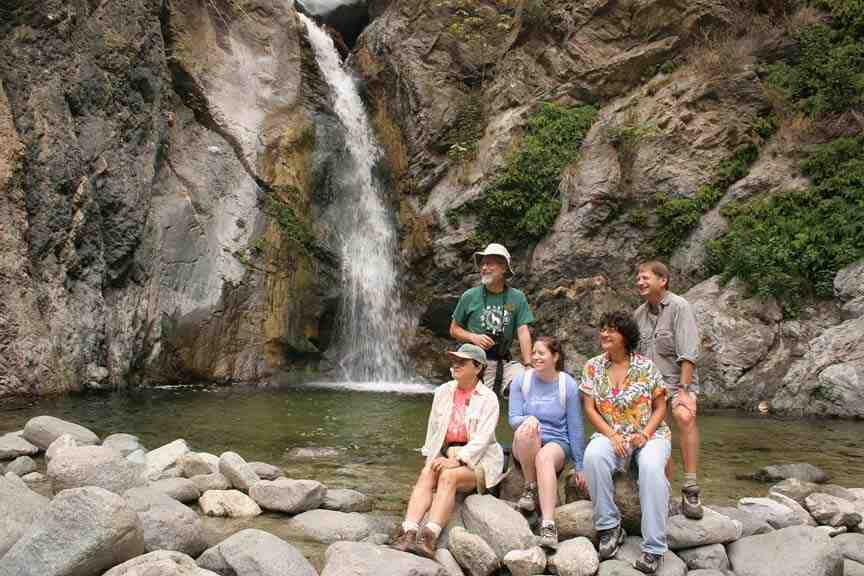
    Late one August afternoon in 1877, John Muir set out from Pasadena to begin his exploration of the San Gabriel Mountains. The great naturalist was very impressed with Eaton Falls, as he wrote in his book, The Mountains of California: “It is a charming little thing, with a low, sweet voice, singing like a bird, as it pours from a notch in a short ledge, some thirty-five or forty feet into a round mirror-pool.”

    Judge Benjamin Eaton channeled and piped the canyon’s waters to nearby ranches. The judge’s neighbors laughed when he planted grapevines, but the vines were quite successful and commanded a high price. Soon many other San Gabriel Valley farmers planted vineyards.

    Eaton Canyon Falls is a splendid little hike; getting to the upper falls, though, can be treacherous.
    Eaton Canyon Falls is a splendid little hike; getting to the upper falls, though, can be treacherous.

    Much of the canyon named for Judge Eaton is now part of Eaton Canyon Natural Area. The park’s nature center has exhibits that emphasize Southern California flora and fauna. Nature trails explore a variety of native plant communities—chaparral, coastal sage, and oak-sycamore woodland.

    Eaton Canyon is a busy place on weekends. Family nature walks are conducted by docent naturalists; the park also has birdwalks, natural history classes and children’s programs.

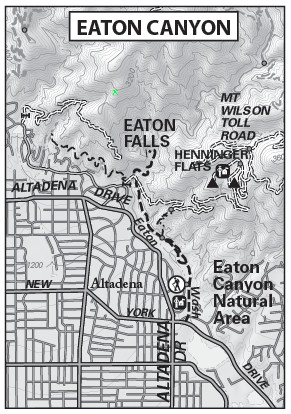
    The walk up Eaton Canyon to the falls is an easy one, suitable for the whole family. Eaton Canyon Trail leads through a wide wash along the east side of the canyon to a junction with Mt. Wilson Toll Road; ambitious hikers can join the road for a steep ascent of Mt. Wilson.

    DIRECTIONS:

    From the Foothill Freeway (210) in Pasadena, exit on Altadena Drive. Proceed north 1.7 miles to the signed entrance of Eaton Canyon County Park. Turn right into the park and leave your car in the large lot near the nature center.

    Eaton Canyon Map by TomHarrisonMaps.com (click to enlarge)
    Eaton Canyon Map by TomHarrisonMaps.com (click to enlarge)

    THE HIKE:

    From the parking lot, hike through the attractive grounds of the nature center. Cross the creek, then meander beneath the boughs of large oak trees and pass a junction with a connector trail that leads to the Mt. Wilson Toll Road.

    The trail leads along the wide arroyo. Eaton Canyon has been widened considerably by repeated floods that have washed away canyon walls floods and spread alluvium, or water-transported sand and rock, across the canyon floor. It takes a hearty group of drought-resistant plants to survive in this soil. Notice the steepness of the canyon’s walls. Early Spanish settlers called the canyon “El Precipio.”

    After a mile’s travel from the nature center, reach the Mt. Wilson Toll Road bridge. A right turn on the toll road will take you on a long, steep ascent to the top of Mt. Wilson. A left turn on Mt. Wilson Toll Road leads a very short distance to the unsigned junction with Altadena Crest Trail. Walking 0.5 mile on Altadena Crest Trail to a vista point rewards the hiker with great clear-day views of the Los Angeles Basin.

    To reach Eaton Falls, continue straight up Eaton Canyon wash. Rock-hop across the creek several times as you walk to trail’s end at the falls. (Don’t climb the falls; people have recently been injured and killed doing this.)

    Interested in more hikes in the San Gabriel Mountains? Check out my guide: HIKE the San Gabriel Mountains

  • Mount Whitney

    Mount Whitney

    You can’t get any higher than the 14,495-foot summit of Mt. Whitney, highest of all peaks in the continental U.S., and a once-in-a-lifetime (at least!) hiking experience. Hikers come from around the nation and from countries around the world to climb the fairly popular Mt. Whitney Trail, which climbs the mountain’s most accessible slopes.

    The hike on Mt. Whitney Trail from Whitney Portal to the summit is 21.4 miles round trip with 6,100-foot elevation gain.

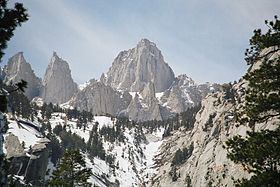
    Ready, set, go. Looking up at the east face of Mt. Whitney from Whitney Portal.
    Ready, set, go. Looking up at the east face of Mt. Whitney from Whitney Portal.

    The summit, on the eastern boundary of Sequoia National Park, can be climbed by the most fit and least altitude-sickness prone hikers in one day. Veteran hikers often make a before-dawn (3 to 4 a.m.) start for the climb to the peak.

    You must secure a permit to hike to Mt. Whitney from the US Forest Service, the agency administering the trail. Check out The Trailmaster’s Mt. Whitney Hike Planner accompanying the trail description.

    It’s somewhat fitting, somewhat not, that this highest of the High Sierra was named for geologist Josiah Dwight Whitney. At Whitney’s urging the California legislature founded and funded the California State Geological Survey in 1860 and placed him in charge.

    In 1871, Whitney sent Clarence King, mountaineer extraordinaire and Geological Survey researcher, to the High Sierra for his second attempt (bad weather had hampered the first) at finding the highest peak. King reached what he thought was the highest peak and named it “Whitney.” Alas, it was discovered a few years later that King had climbed the wrong peak (Mt. Langley) located 6 miles south.

    Before King could return to scale the right peak, some Lone Pine residents climbed it and named it Fisherman’s Peak.

    The last couple miles of trail to Whitney’s summit is the climax of the John Muir Trail, which begins in Yosemite Valley; this meeting on the map of Muir and Whitney is ironic because Whitney really disliked the great naturalist.

    Whitney had long insisted Yosemite Valley was the work of faulting. Upstart Muir advanced the then-revolutionary theory that Yosemite was carved by glaciers. “A mere sheepherder, an ignoramus,” Whitney called Muir. “A more absurd theory was never advanced.”

    Unhappily for Whitney’s place in geologic history, Muir’s glaciation theory has proven to be largely correct. Still, Whitney’s name remains at the top, elevation-wise anyway, a few hundred feet higher than 14,015-foot Mt. Muir, just south of Mt. Whitney.

    Answering the call of science (astronomy, meteorology) and scientists, Lone Pine residents financed and constructed the Mt. Whitney Trail in 1904. In 1909 a stone summit hut (which still stands today) was built by the Smithsonian Institute to study Mars.

    Over the years, the trail has been rehabilitated and realigned. It stands today—graded switchbacks hewn out of granite walls—as one of the finest examples in America of the trail-builder’s art.

    Directions: From Highway 395 in Lone Pine, turn west on Whitney Portal Road and drive 12 miles to Whitney Portal.

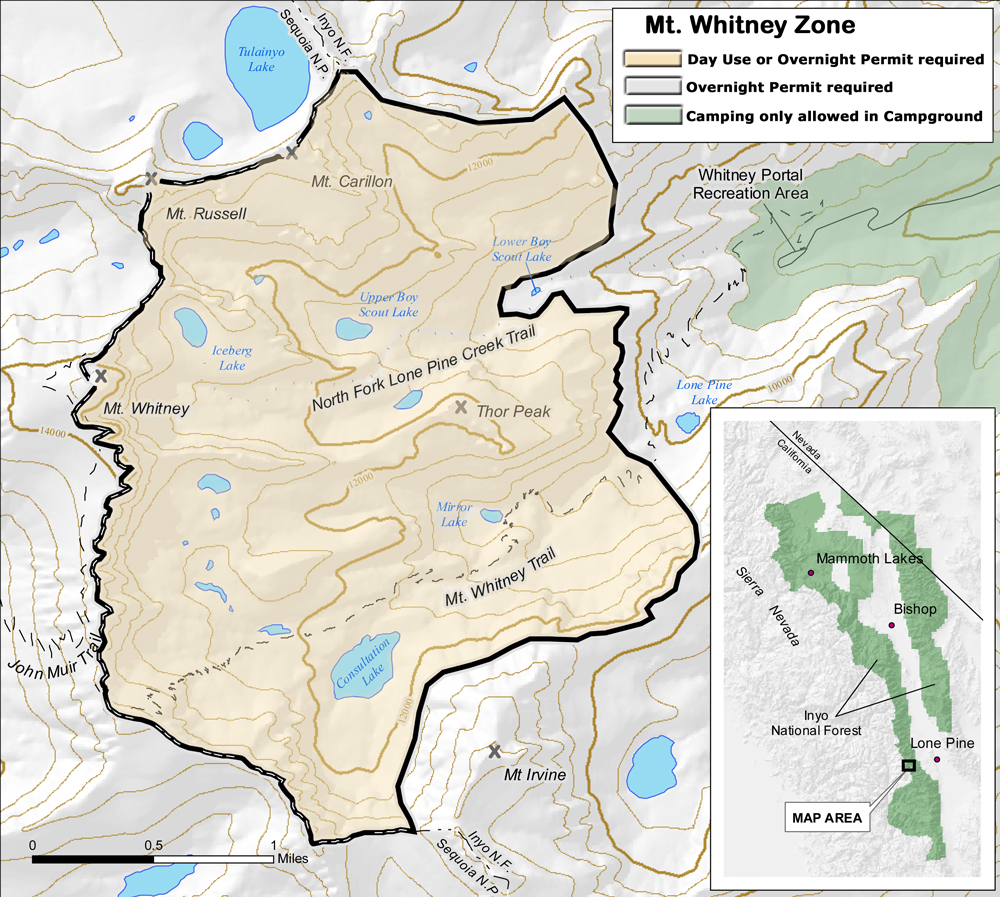
    Enjoy your hike into what the US Forest Service calls the "Mt. Whitney Zone"
    Enjoy your hike into what the US Forest Service calls the “Mt. Whitney Zone”

    The hike: From Whitney Portal, the path ascends open country dotted with Jeffrey pine and white fir. About 0.75 mile out, a path forks west—the famed Mountaineer’s Route used by climbers who tackle the eastern slope of the great mountain. Mt. Whitney Trail soon crosses the north fork of Lone Pine Creek and shortly thereafter enters the John Muir Wilderness.

    Switchbacks, long and short, ascend nearly 2 miles over sun-drenched slopes to Lone Pine Lake, visible from the main trail. A short (200 yards or so) side trail leads to the rock-walled lake. Perfect for a (cold) swim.

    After another half mile of climbing, the path skirts the south side of Bighorn Park (a long meadow), ascending alongside Long Pine Creek and, after crossing the creek, reaches Outpost Camp. It’s a pleasant enough camp, but usually ignored by summit-bound hikers because it’s too low and too far from the top.

    Farther up the trail, 4.3 miles from the trailhead, is tiny Mirror Lake (10,640 feet). Switchbacking above the lake, the trail passes some rather stunted foxtail pine and emerges above treeline. The path traverses Trailside Meadow, seasonally splashed with wildflowers. About 6.1 miles out, you climb to 12,000 feet and reach Trail Camp, last (highest) place to camp on the mountain.

    Now tackle the famed switchbacks, 96 of them. First there are some longer ones and then, about halfway along the 2.25-mile ascent to Trailcrest, you’ll encounter a series of switchbacks fitted with handrails. If you’re hiking this trail when its icy, you’ll know why the handrails were installed. Use them and appreciate them.

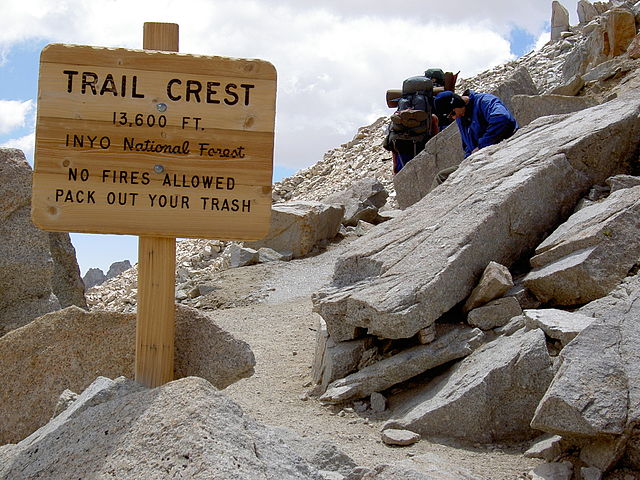
    Trail Crest and passage from Inyo National Forest to Sequoia National Park
    Trail Crest and passage from Inyo National Forest to Sequoia National Park

    About 8.5 miles from the trailhead, you’ll reach Trailcrest, a pass located at 13,714 feet at the boundary of Sequoia National Park. With nearly a hundred switchbacks under your boots, you get a feeling of accomplishment when you look down at Trail Camp, seemingly so small and so far down the mountain.

    The climb resumes as the path winds among large blocks of talus and between dramatic rock pinnacles. Enjoy stone-framed views of Owens Valley to the East. As for the western view, well, don’t look if you’re afraid of heights because there’s quite a drop-off. Nevertheless, while an acrophobe’s nightmare, the trail is plenty wide and distinct as it traverses the ridge.

    About 10 miles out, Whitney’s summit pops into view and you continue around to the southwest side of the peak. Choose among several steep summit routes marked with cairns. Gaining the summit, you’ll find a register next to the mountaineers hut, and the very highest point just east of the hut.

    Top of the world, or at least the top of Whitney.
    Top of the world, or at least the top of Whitney.

    Oh, the view from all directions: To the north, the panorama of summits includes Mt. Williamson (second-highest peak in the continental U.S.) and to the south the procession of peaks includes Mt. Langley and Mt. Muir. To the west are the Sawtooth Peaks, the Kaweah Peaks and a section of the Great Western Divide and to the east, shimmering like some mirage far below is the Owens Valley.

    While it’s tempting to want to linger on the summit for a long and well-deserved rest, be aware that hikers frequently underestimate the length of time required for the descent. You do not want to rush down the mountain on rubbery legs—that’s how injuries occur—and you want to return to the trailhead before dark. Enjoy your passage down the mountain, but remember to stay focused and watch your step.

  • Point Reyes: Abbotts Lagoon

    Point Reyes: Abbotts Lagoon

    From Abbotts Lagoon to Point Reyes Beach is 3.2 miles round trip

    Something about Abbotts Lagoon personifies the word melancholy. Maybe it’s the lagoon itself, a large, moor-like environment that compares to some of those I’ve visited by trail in Scotland. Then there are the lonely, wind-swept grasslands and the (perpetual, it seems) gray skies. It’s the kind of place you photograph in black and white.

    While a bit on the somber side, the lagoon and lands beyond are by no means dreary and depressing; in fact, the landscape encourages reflection—an inward journey to accompany a fine outer one. And spring is positively jubilant with abundant wildflowers, particularly California poppies, iris, and lots of lupine.

    On a weekday excursion, your thoughts may very well be your only companion on this rather lightly visited trail, which leads 1.6 miles to Point Reyes Beach. A low ridge hides Abbotts Lagoon from the sight of passing motorists on Pierce Point Road; this positioning seems to discourage drop-in visitation of the kind that occurs else-where along the coast of the national seashore.

    Gray-hued the lagoon may be, but it’s anything but lifeless. Lots and lots of birds, both migratory and year-around residents congregate in an upper freshwater lagoon and a more brackish lower lagoon. Look for the western grebe and its pint-sized cousin, the pie-billed grebe, as well as lots of coots and terns.

    If you can arrange a ride or car shuttle, a one-way hike (4.5 miles) from Abbotts Lagoon along the beach north to the Kehoe Beach Trailhead on Pierce Point Road is a great way to go.

    DIRECTIONS TO ABBOTTS LAGOON TRAILHEAD

    From the hamlet of Olema, head north just 0.1 mile on Highway 1, then turn left on Bear Valley Road. Proceed 2.25 miles and fork left on Sir Francis Drake Highway. Drive 5.5 miles to Pierce Point Road, fork right and continue another 3.2 miles to the signed Abbotts Lagoon Trail and gravel parking lot on the left (west) side of the road.

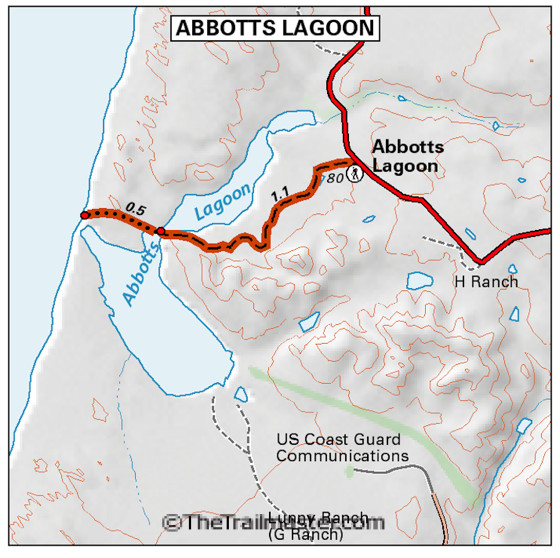
    Point Reyes: Abbotts Lagoon by TomHarrisonMaps.com (click to enlarge)
    Point Reyes: Abbotts Lagoon by TomHarrisonMaps.com (click to enlarge)

    THE HIKE

    THE HIKE: The wide, level trail leads across open fields. Gently rising, the trail offers better and better views of the lagoon. A well-located bench offers a fine place for quiet contemplation of water and wildlife.

    The trail crests about the 0.8 mile-mark, then descends slightly to reach a bridge a mile from the trailhead. The footbridge bisects the upper and lower lagoons or as more lyrical naturalists refer to it—the wings of the lagoon.

    From here an unmarked path edges around the base of the dunes between the wings of the lagoon to reach the ocean shores of Point Reyes Beach. Seals and sea lions have been known to snooze on this beach. Walk to your heart’s con¬tent for miles, up-coast or down.

    Northbound hikers can travel along the dune-lined beach about 2.8 miles to junction Kehoe Beach Trail, then hoof it another 0.6 mile to the trailhead on Pierce Point Road.

    Interested in more hikes in Point Reyes National Seashore? Check out HIKE Point Reyes

  • Santa Barbara: Rattlesnake Canyon

    Santa Barbara: Rattlesnake Canyon

    Rattlesnake Canyon Trail: From Skofield Park to Tin Can Meadow is 3.6 miles round trip with 1,000-foot elevation gain; to Gibraltar Road is 6 miles round trip with 1,500-foot gain

    Rattlesnake Canyon Trail is serpentine, but otherwise far more inviting than its name.

    The joys of hiking the canyon were first promoted by none other than the Santa Barbara Chamber of Commerce. In 1902 the chamber built “Chamber of Commerce Trail,” an immediate success with both tourists and locals, though both trail and canyon continued to be called Rattlesnake.

    In the 1960s, the city of Santa Barbara purchased the canyon as parkland. A handsome wooden sign at the foot of the canyon proudly proclaims: Rattlesnake Canyon Wilderness.

    The canyon was severely burned in the Tea Fire of November 2008, but the chaparral community in particular has recovered quite well from the devastation. Red-berried toyon, manzanita with its white urn-shaped flowers, and purple hummingbird sage cloak the slopes.

    DIRECTIONS TO THE RATTLESNAKE CANYON TRAILHEAD

    In Santa Barbara, follow State Street to Los Olivos Street. Head east and proceed a half mile, passing by the Santa Barbara Mission and joining Mission Canyon Road. Follow this road past its intersection with Foothill Road and make a right on Las Canoas Road, continuing to the trailhead, located near the handsome stone bridge that crosses Rattlesnake Creek. Park alongside Las Canoas Road.

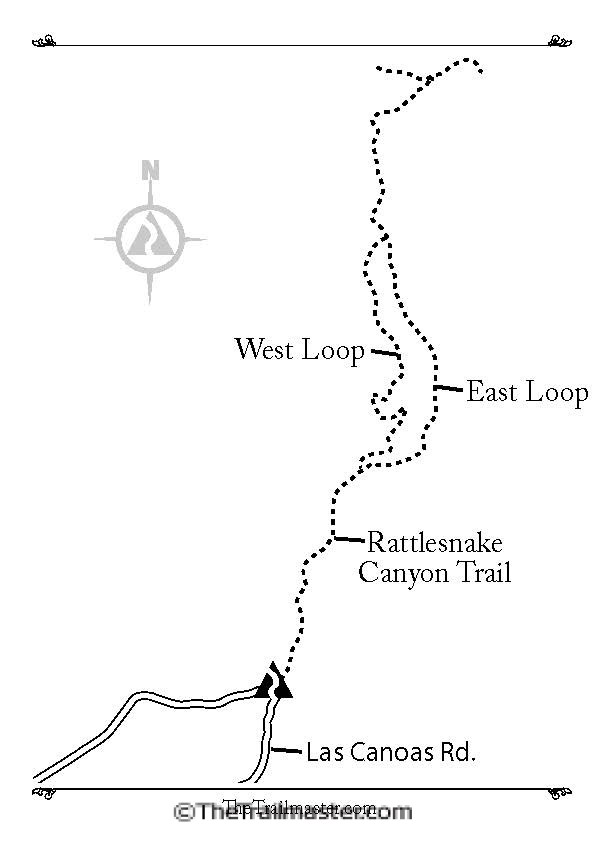
    Rattlesnake Canyon Map by Mark Chumley (click to enlarge)
    Rattlesnake Canyon Map by Mark Chumley (click to enlarge)

    THE HIKE

    From the Rattlesnake Canyon Wilderness sign, head north and soon rock-hop across the creek. A brief ascent leads to a trail that parallels the east side of the creek.

    After a half mile, an unsigned trail veers off to the right. (One of The Trailmaster’s favorite byways, this narrow path leads along and above the east bank of Rattlesnake Creek and reunites with the main trail in about a mile.)

    Soon after the junction, the main trail draws near the creek and crosses it. The path then ascends past remnants of a small stand of planted pines and into the open for good vistas of coast and ocean. Continue to a creek crossing and notice (you can’t miss it, really) a large flat rock in the middle of the creek known by locals as “Lunch Rock.”

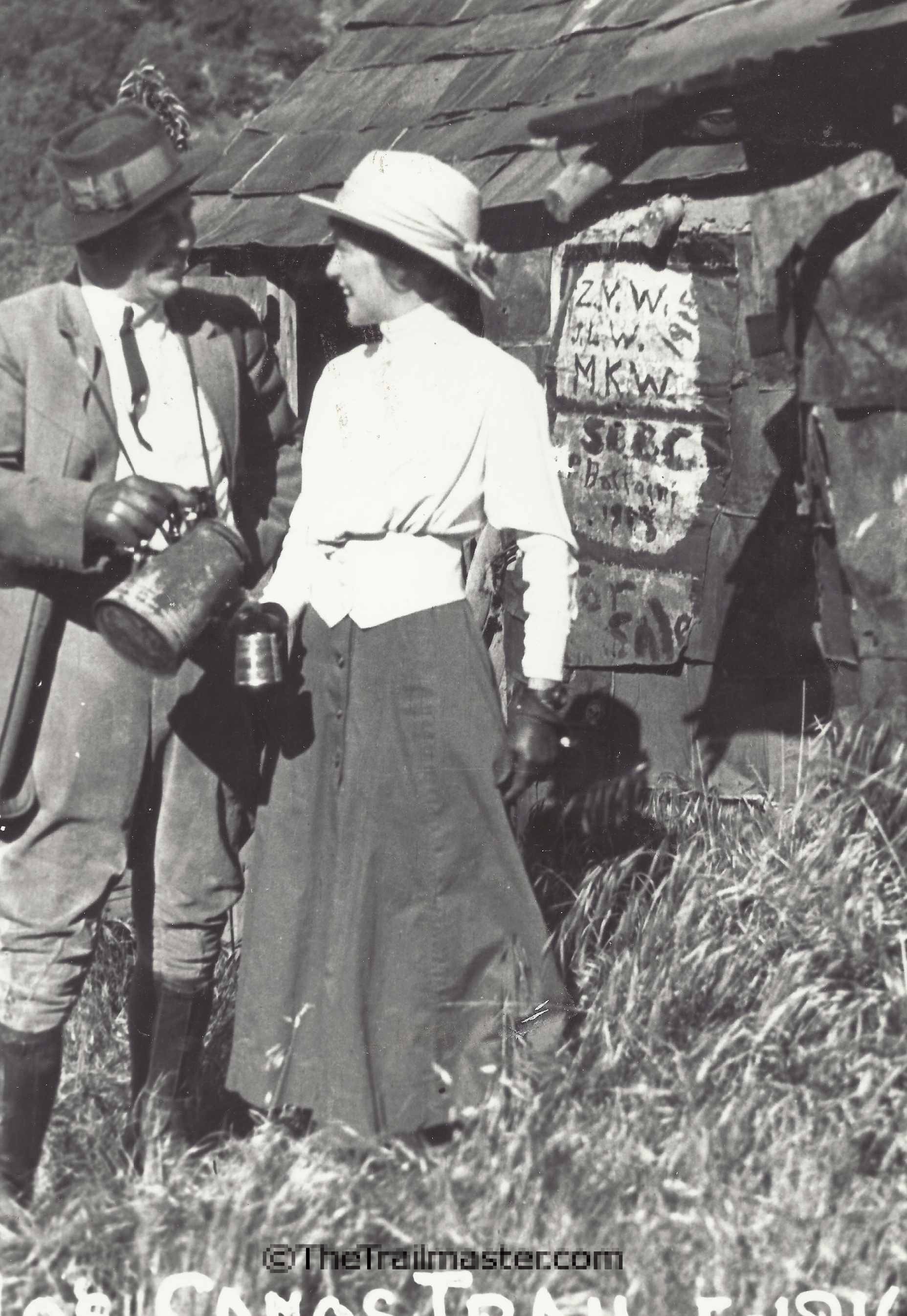
    Let's have coffee! These happy hikers visited Tin Can Shack in Rattlesnake Canyon in 1916.
    Let’s have coffee! These happy hikers visited Tin Can Shack in Rattlesnake Canyon in 1916.

    The trail crosses the creek again, continuing along the west bank to open, grassy Tin Can Meadow, named for a homesteader’s cabin constructed of chaparral framing and kerosene can shingles and sidings. For the first quarter of the 20th century, Tin Can Shack was a canyon landmark, mentioned in guidebooks of that era. A 1925 brushfire destroyed the shack.

    The apex of the triangular-shaped meadow is a junction. The trail bearing left leads 0.75 mile and climbs 500 feet to an intersection with Tunnel Trail. To the right, Rattlesnake Canyon Trail climbs 0.75 mile and 500 feet to meet Gibraltar Road. The hiker’s reward is an unobstructed view of the South Coast.

    Interested in more hikes in Santa Barbara? Check out HIKE Santa Barbara

  • Sequoia: Deeper into Giant Forest

    Sequoia: Deeper into Giant Forest

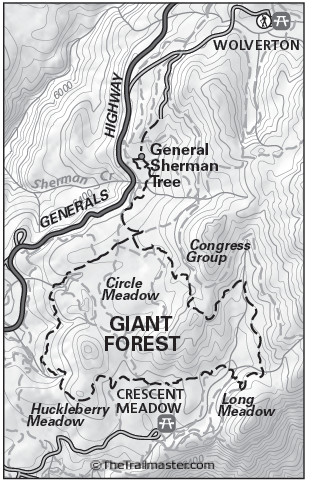
    Congress Trail, Trail of the Sequoias: Congress Trail is 2-mile loop; Trail of the Sequoias is 5.1-mile loop with 500-foot elevation gain

    Many are the wonders of the John Muir-named Giant Forest, which holds the park’s greatest concentration of sequoias—more than 8,000 big trees. Begin by joining visitors from across the country and around the world on the short walk to General Sherman Tree, the world’s largest living thing. Next meander Congress Trail, is an interpreted nature trail that loops through the Giant Forest where four of the five largest trees dwell.

    Trail of the Sequoias is for the hiker looking for more—more Giant Forest, more hiking, and a little more tranquility. It’s not exactly off-the-beaten path, but it is a much-less traveled route.

    DIRECTIONS TO THE GIANT FOREST TRAILHEAD

    From Generals Highway, turn west on Wolverton Road and drive a half mile. Turn right for “Sherman Tree” and proceed 0.8 mile to the large parking lot.

    Giant Forest Map by TomHarrisonMaps.com (click to enlarge)
    Giant Forest Map by TomHarrisonMaps.com (click to enlarge)

    THE HIKE

    Head down the paved path with many stairs and likely with lots of company 0.3 mile to pay your respects to the General Sherman Tree. The tree’s vital statistics: 275 feet high, 102 feet in circumference, between 2,300 to 2,700 years old. General Sherman is some 52,500 cubic feet in volume and weighs an estimated 2.8 million pounds.

    From the trailhead close to Sherman Tree, join signed and paved Congress Trail. Cross Sherman Creek on a wooden bridge and begin your tour of the giant sequoias, including aptly named Leaning Tree and some fire-scarred old veterans.

    Hikers from near and far wonder why so many magnificent trees in Sequoia National Park are stuck with the names of politicos and obscure presidents. The Washington Tree, named for revered first president, seems appropriate. But the McKinley Tree? The Cleveland Tree?

    Don’t look for the Bill Clinton Tree, George Bush Tree or Barack Obama Tree anytime soon; the national park service abandoned the practice of naming big trees after World War II.

    Paved Congress Trail leads a short mile to a junction with Trail of the Sequoias. Join this path for a half-mile ascent to this hike’s high point, then descend gradually 1.5 miles among more sequoias to Long Meadow.

    At the upper end of this meadow is Tharps Log, a cabin used for 30 summers until 1890 by cattle rancher Hale Tharp. From the cabin, you’ll join Crescent Meadows Trail, passing the severely scarred, but still standing Chimney Tree.

    Four miles out, join Huckleberry Trail for a brief climb, then follow signs to Circle Meadow, very shortly arriving at another trail junction. Trail of the Sequoias forks right (northeast), traveling a mile to the Senate Group and rejoining Congress Trail for the return to the General Sherman Tree trailhead.

    Interested in more hikes in Sequoia and Kings Canyon? Check out HIKE Sequoia and Kings Canyon

  • HIKE The San Gabriel Mountains: An Introduction

    HIKE The San Gabriel Mountains: An Introduction

    The San Gabriel Mountains

    Most of the San Gabriel Mountains lie just north of metro Los Angeles and within Angeles National Forest, one of the nation’s most popular national forests for hiking. For more than a century the range has delighted Southland residents seeking quiet retreats and tranquil trails.

    The San Gabriel Mountains are popular with hikers for good reason; in fact, for a lot of good reasons. An obvious reason for the range’s popularity is its close proximity to the 16 million people living in the greater Los Angeles area. The region has a well-deserved auto-centric reputation, yet boasts one of the largest concentrations of hikers in North America. (Arrive early to find parking at such popular trailheads as Chantry Flat!)

    The range’s front country offers the hiker inviting arroyos, fine vista points and easy-to-access trailheads from the metropolitan flatlands. Angeles Crest Highway offers a scenic byway to the high country, grand mountain peaks and a wealth of taller trees.

    My first hiking was in the San Gabriel Mountains with the Boy Scouts of Troop 441, Downey, California. When I was 12 years old, I hiked the 53-mile long Silver Moccasin Trail with a half-dozen boys and our Scoutmaster Arnold Blankenship.

    I was the youngest and smallest of the group and still remember the butterflies in my stomach at the beginning of the trail at Chantry Flats Ranger Station. And then we were off—traversing up, down and through deep canyons and along the high ridges of the mountains. The landscape seemed to change every day, from lowland chaparral slopes to oak-lined canyons to fir and pine forests.

    I still remember the intriguing names on the land: West Fork, Shortcut Canyon, Chilao Flat, Three Points, Cloudburst Summit, Islip Saddle… We put snow in our Sierra Cups and stirred in Wyler’s lemonade mix. No snow cone ever tasted so good. Little Johnny grew up a lot on that trip and, as the week progressed, I moved from the back of the pack to the middle to the front, until when it came time for summiting a couple of peaks, I passed everyone.

    “Look out boys, Johnny has summit fever,” our Scoutmaster declared, as I raced past the big guys. “Does that mean he has to go home?” one of the boys asked. “No, summit fever, that’s a good thing,” our leader explained. “You better catch it yourself or that little squirt is going to beat you to the top by half an hour.”

    Many years have passed since my scout days and yet I still get summit fever when approaching the San Gabriel Mountains. The mountains give me “Arroyo Fever” and “Foothill Fever,” too. Surely a million more hikers have felt exactly the same way: hikers have been tramping the trails and enjoying the natural beauty of the mountains since the 1890s.

    One of the first trail construction projects in the San Gabriels began in 1864 when Benjamin Wilson built a path to his timbering venture on the mountain that now bears his name. William Sturtevant, who came to California from Colorado in the early 1880s and became a premier packer and trail guide, linked and improved trails and made it possible to cross the mountains from west to east.

    More trails were built around the turn of the 20th century when Southern California’s “Great Hiking Era” began. Many rustic trail resorts were later built to serve the needs of hikers. Today, only vintage photographs and scattered resort ruins remind us of these happy times, but that by-gone era left us a superb network of trails — hundreds of miles of paths linking all major peaks, camps and streams.

    I enjoyed sharing accounts of trails in the mountains during my long service as the Los Angeles Times Hiking Columnist. I—in fact, all hikers—owe a debt of gratitude to John Robinson, who described 100 hikes in Trails of the Angeles, first published in 1971 and still the best and most comprehensive guide to the trail network in Angeles National Forest. Robinson also wrote The San Gabriels and several excellent histories of the San Gabriel Mountains.

    With a huge variation in terrain and elevation, the San Gabriel Mountains are not easily divided by geography into areas to hike. For purposes of geographic orientation, some recreation experts divide the San Gabriel Mountains into a front country and backcountry, foothills and high country. Sometimes the mountains are segmented into an east end, west end, south side, north side, city side, desert side, urban interface and alpine wilderness.

    That’s a bit too complicated for The Trailmaster. I focused on the task of selecting hikes you’re sure to like in the canyons and foothills and from high country trailheads along Angeles Crest Highway.

    HIKE the San Gabriel Mountains is an opinionated sampling of the range’s delights, from the famed Arroyo Seco to foothills above the San Gabriel Valley to subalpine wilderness and tall summits. Some of the more challenging trails climb the towering backbone of the range, a 30-mile long massif that includes the highest peaks in the range: Mt. Islip (8,250 feet) Mt. Baden-Powell (9,399 feet) and Mt. San Antonio (Baldy), the top summit at 10,068 feet.

    Melting snow and rain flows from the shoulders of high peaks feed the range’s largest river, the San Gabriel. The river divides into a dramatic East Fork known for its fierce resistance highway projects (and “Bridge to Nowhere”) and a more mellow West Fork, renown for its trout fishing. Both forks, as well as famed Arroyo Seco, offer great hiking.

    You’ll find memorable day hikes along one of the nation’s premiere long-distance trails, famed Pacific Crest Trail, which extends across the crest of the San Gabriel Mountains. And be sure to take a hike along another Trailmaster favorite — the 28.5-mile-long Gabrielino National Recreation Trail. The Forest Service, rarely given to bursts of lyricism, describes it thus: “This trail has been created for you—the city dweller—so that you might exchange, for a short time, the hectic scene of your urban life for the rugged beauty and freedom of adventure into the solitary wonderland of nature.”

    Let’s start a second “Great Hiking Era” in the San Gabriel Mountains.

    Geography

    Sixty miles long, 20 miles wide, the San Gabriels extend from Soledad Canyon on the west to Cajon Pass on the east. The mountains bless Los Angeles by keeping out hot desert winds, and curse it by keeping in the smog.

    The San Gabriel Mountains, known as a Transverse Range, extend east-west across the state. The range is young (less than a million years in its present location), dynamic (it moves and grooves with the San Andreas Earthquake Fault), and complex; the fractured and shattered mountains are composed of many different kinds of rocks of diverse ages.

    The San Gabriels are divided lengthwise into a steeper southern front range and a taller northern range by a series of east-west trending canyons. The southern foothills of the mountains rise abruptly 4,000 feet above the L.A. Basin. Mt. San Antonio (Baldy), at 10,068 feet the highest peak in the range, anchors the eastern end of the range.

    Natural History

    “The slopes are exceptionally steep and insecure to the foot and they are covered with thorny bushes from five to ten feet high” was how the great naturalist John Muir described the front range of the San Gabriels. The “thorny bushes” of Muir’s description belong to the dominant plant community of the mountains—the chaparral.

    Other front-range attractions are the arroyos. These boulder-strewn washes may seem dry and lifeless in the bottomland; however, a hiker following an arroyo’s course upward may soon find lush creekside flora, including ferns and wildflowers, shaded by oak, sycamore and alder.

    Higher elevations have a wealth of taller trees: Jeffrey pine, Ponderosa pine, lodgepole pine and the rare limber pine, as well as white fir and cedar.

    A huge range of elevations (1,000 to 10,064 feet) means a diversity of environments and a wide variety of birds and wildlife. Larger mammals in the mountains include deer, bears, mountain lions, bobcats and the Nelson bighorn sheep.

    History

    First to use the mountains were the native Shoshone, or Gabrielino. For the most part they lived in the valleys and lowlands, and used the mountains for gathering food and hunting animals.

    The Spanish gave the range two names: Sierra Madre (Mother Range) and Sierra de San Gabriel. Both were used until 1927 when the U.S. Board of Geographic Names decided upon the latter.

    As early as the 1880s, it became obvious to Southern Californians the mountains should be protected from the destruction caused by indiscriminate logging and other ventures. In 1892, the San Gabriel Timberland Reserve was proclaimed by President Harrison. It was the first forest reserve in California, and the second in the U.S. (The first was Yellowstone.) The name was changed to San Gabriel National Forest in 1907, and to the Angeles National Forest a year later.

    At the dawn of the 20th century, with President Theodore Roosevelt urging Americans to lead “the strenuous life,” Southland hikers headed for the nearby San Gabriels and spawned “The Great Hiking Era.” Soon every major canyon on the south side of the mountains had resorts or trail camps that offered hikers food and lodging.

    Depression-era public works projects of the 1930s brought about a golden age of public campground construction. Angeles Crest Highway, built between 1929 and 1956, linked many of the best high mountain picnic and camping areas.

    Administration

    The bulk of the San Gabriel Mountains (694,187 acres) is under the jurisdiction of Angeles National Forest, 701 N. Santa Anita Ave., Arcadia, CA 91006. Call 626-574-1613 or visit http://www.fs.usda.gov/angeles for the latest road and trail conditions, and information about user fees for campgrounds and select day-use areas.

    For more information about Placerita Canyon County Park, call 661-661-7721 or visit www.placerita.org; for Eaton Canyon County Park, call 626-398-5420 or visit www.ecnca.org.

    Learn more about the good work of the San Gabriel Mountains Trail Builders at www.sgmtrailbuilders.org

    Fire, Flood and Footpaths

    The 2009 Station Fire burned some 161,189 acres in the San Gabriel Mountains. The fire burned for more than a month and by some accounts was the worst in Los Angeles County history, consuming 250 acres and fully one quarter of Angeles National Forest.

    Areas that have been popular with hikers for more than a hundred years, such as the Arroyo Seco, Mt. Wilson and Charlton Flats were blackened by the blaze. About 133 miles of trail were scorched by the fire.

    As a veteran hiker of these mountains, I can assure you that the fire-decimated chaparral will soon re-grow, and that the ceanothus, chamise, manzanita and toyon will return sooner rather than later. (Unfortunately, I can give no such assurances about the speedy recovery of the pine-forested areas of the San Gabriels.)

    Hike smart, reconnect with nature and have a wonderful time on the trail.
    Hike on,
    John McKinney

    Interested in more hikes in the San Gabriel Mountains? Check out my HIKE the San Gabriel Mountains


  • Yosemite Valley Loop

    Yosemite Valley Loop

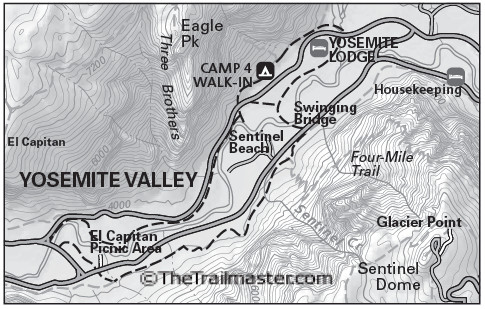
    Valley Trails: 5.5-mile loop

    The tram tour of Yosemite Valley is fine, but to really appreciate the valley, hit the trail. On this heart of the valley walkabout, you’ll enjoy vistas of many of its most famed attractions.

    Veteran valley hikers all have their favorite loops: long and short, Village Loop or Lodge Loop. Hiking options are limited only by the finite number of bridges over the Merced River.

    This is The Trailmaster’s favorite middle-distance Yosemite Valley jaunt. Lengthen the described loop by continuing west to Bridalveil Meadow and Bridalveil Fall or by meandering east via the network of paths connecting The Ahwanee, Curry Village and Yosemite Village.

    In spring, segments of the trail can be underwater. Be careful walking along Northside Drive.

    DIRECTIONS TO YOSEMITE VALLEY LOOP

    Day-use parking is available at Yosemite Lodge at the Falls. Or take the valley shuttle bus to stop #8 right in front of the lodge. Walk to the eastern end of the lodge complex and parking area and curve up to Northside Drive.

    Yosemite Valley Loop Map by TomHarrisonMaps.com (click to enlarge)
    Yosemite Valley Loop Map by TomHarrisonMaps.com (click to enlarge)

    THE HIKE

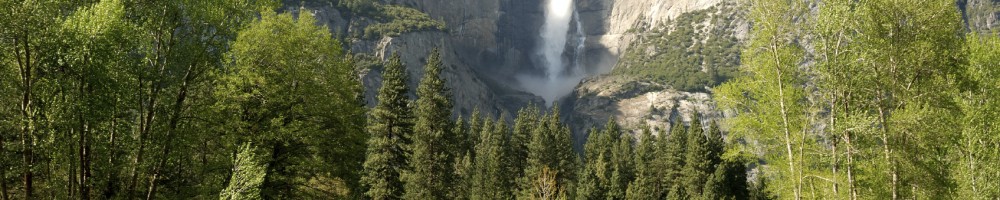
    Cross Northside Drive to meet the east-west trending footpath near its junction with Lower Yosemite Fall Trail and hike west (left) on the path. The wide path soon leads to the major Yosemite Falls trailhead and the wide paths that lead to the falls. Enjoy vistas of the three-tiered wonder as you continue southwest to the busy parking lot of Camp 4.

    Camp 4, by far the least expensive place to sleep in the park, attracts at least four kinds of visitors: Europeans (mostly young), Americans (mostly young), budget travelers of all ages and rock climbers.

    Some of the best rock climbers in the world came to the valley to challenge Yosemite’s walls in the years after World War II. They gathered at Camp 4 to share their ideas about routes and gear.

    Follow the path southwest through camp and surrounding woodland to Northside Drive. A crosswalk beckons you to cross the road and check out Leidig Meadow. The meadow, named for hoteliers Isabella and George Leidig who constructed an inn situated below Sentinel Rock in 1869, offers grand views of Half Dome, Clouds Rest and much more.

    After admiring the meadow, double-back across Northside Drive and continue on the path a short distance to the actual crossing of the road and a trail sign indicating it’s 2.3 miles to El Capitan and 5.9 miles to Bridalveil Fall.

    The path meanders between Northside Road and the willow- and cottonwood-cloaked north bank of the Merced River. Cross Northside Road to El Capitan Picnic Area or pick your own picnic spot along the Merced.

    While hikers can’t help spending a lot of time looking up at the majestic walls of the valley, the valley floor is worth a close look as well. Yellow pine forest is the dominant environment, though tree-lovers will find other pines, including Ponderosa, lodgepole and sugar, as well as oaks, willows and dogwood. The valley’s large meadows are seasonally sprinkled with such wildflowers as Chinese Houses, California poppy, Western buttercup, Indian pink and star flower.

    Continue another 0.5 mile west along the Merced to Devil’s Elbow, which doesn’t sound named for fun, but actually is kind of Yosemite’s Riviera—a sandy beach with plenty of flat rocks for sunbathing. The view of El Capitan from Devil’s Elbow was one of the great photographer Ansel Adams’ favorites.

    Cross the river via the road over El Capitan Bridge, a great place from which to observe mighty El Capitan, towering 3,593 feet above the Merced River. Rock climbers are frequently seen ascending the monolith, one of the largest blocks of exposed granite in the world.

    From the bridge, pick up the signed bridle path (“Curry Village 4.1 miles”) heading southeast. Admire the Cathedral Rocks and Cathedral Spires on the eastern side of the valley; some hikers think these rocks are as impressive as El Capitan. One of the most famous works of art inspired by Yosemite, Cathedral Rocks, Yosemite Valley, Winter, was created in 1872 by the renowned landscape painter Albert Bierstadt.

    Cross Southside Drive, head briefly south, then east, on a two-mile stretch of trail in the shadow of the valley’s south wall. Savor magnificent views of the valley’s north wall, including Upper and Lower Yosemite Falls.

    Hiking this stretch of Yosemite Valley’s floor delivers a view lost to most motorists. When you get away from what John Muir termed “blunt-nosed mechanical beetles,” and set out afoot, the scale and grandeur of all that stone meeting sky—Royal Arches, North Dome, Clouds Rest, Half Dome and more—increases exponentially.

    Isn’t it romantic?

    Well, a lot of people think so. Yellow Pine Beach and Sentinel Beach along the Merced River are favorite sites for weddings. Cross Southside Drive to visit the fine facilities and check out the nuptials-friendly scene: a pretty part of the river, lovely meadows and views of Yosemite Falls.

    Back on the trail, cross Sentinel Creek and after another 0.25 mile passes a junction with Four-Mile Trail that ascends to Glacier Point. Continue another 0.25 mile and cross Southside Drive to Swinging Bridge Picnic Area. Hike over the bridge and return to Yosemite Lodge via the paved bike path that skirts Leidig Meadow.

    Hike On.
    John McKinney,
    The Trailmaster

    Interested in more hikes in Yosemite? Check out HIKE Yosemite.

  • Yosemite: Tuolumne Meadows

    Yosemite: Tuolumne Meadows

    From Tioga Road to Parsons Lodge and Soda Springs is 1.5 miles round trip

    Lush and lovely Tuolumne Meadows is likely the national park’s best known site outside of Yosemite Valley and for good reason. Easily accessible by short trails, the High Sierra’s largest sub-alpine meadow is a glorious, wildflower-splashed basin ringed by forested slopes, roundish domes and sharp summits.

    Summers to remember, hiking through the Tuolumne Valley.
    Summers to remember, hiking through the Tuolumne Valley.

    John Muir’s first summer in the Sierra was spent as a shepherd, tending a flock of some 2,000 sheep pastured in Tuolumne Meadows. Muir’s journals of that time are filled with the wonders of nature he observed along with his first thoughts about the preservation of Yosemite. Muir soon realized that sheep, which he later characterized as “hoofed locusts,” and other grazing animals could destroy an alpine meadow.

    Today a length of the John Muir Trail crosses the great naturalist’s beloved Tuolumne Meadows. Other paths lead to Parsons Memorial Lodge named for Edward Parsons, who fought alongside John Muir to preserve the park, Hetch Hetchy Valley and other wildlands during the early days of the Sierra Club. After Parsons, an accomplished photographer, outings leader and early Sierra Club President died in 1915, the Club constructed this lodge in his honor.

    Parsons Lodge, long ago deeded to the National Park Service, has served as a reading room/ library for generations of visitors. Many a hiker has found a cool retreat on a hot summer’s day or taken refuge from an afternoon thunderstorm.

    Interpretive signs posted sporadically along Tuolumne Meadows paths offer insights about Parsons, Muir, the old Tioga Road and the Native American tribes who visited the meadows for so many centuries. For more information about the meadows, visit Tuolumne Meadows Visitor Center (open summer only), located about 0.1 mile west of the trailhead on Tioga Road.

    DIRECTIONS TO TUOLUMNE MEADOWS

    I like to begin this ramble from the north side of Tioga Road, just 0.1 mile east of Tuolumne Meadows Visitor Center. Parking is along both sides of Tioga Road. Some hikers prefer to access the Tuolumne Meadows trail system from the Lembert Dome/Glen Aulin/Soda Springs trailhead located a little farther to the east.

    Tuolumne Meadows Map by TomHarrisonMaps.com (click to enlarge)
    Tuolumne Meadows Map by TomHarrisonMaps.com (click to enlarge)

    THE HIKE

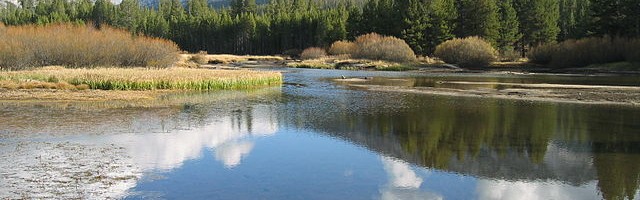
    The wide path extends north across the meadows. Families linger along the bends of the Tuolumne River to fish or to enjoy one of the best picnic spots on the planet.

    Cross the wooden bridge over the Tuolumne River, bend left along the river and take the signed trail forking right to Parsons Memorial Lodge. From the lodge, follow the signed path very briefly east to Soda Springs, a muddy area where carbonated water percolates up from the ground.

    The trail loops past some interpretive plaques then angles back toward the bridge over the Tuolumne River. From here, retrace your steps back to the trailhead.

    Hike on.
    John McKinney,
    The Trailmaster

    P.S. Interested in more hikes at Yosemite National Park? Check out HIKE Yosemite

  • Santa Barbara’s More Mesa Offers Hiking and More

    Santa Barbara’s More Mesa Offers Hiking and More

    More Mesa offers more: a defacto nature preserve, great bird-watching, a network of walking-hiking trails and access to Santa Barbara’s most isolated beach. I’ve been hiking More Mesa for more than 30 years, and it’s been my great pleasure to share this hike in my guidebooks for nearly that long.

    The More Mesa Preservation Coalition held a symposium recently to remind locals and conservationists statewide about the wonders of nature the mesa holds and the perils of development it could face.

    Birds galore over More Mesa, including the showy white-tailed kite.
    Birds galore over More Mesa, including the showy white-tailed kite.

    More Mesa has a diversity of habitats and attracts an abundance of bird life. It’s known for its bird life, including 16 different species of raptors. The white-tailed s kite, marsh hawk and other raptors, are quite active over the mesa in their pursuit of prey. Rare birds include the northern harrier and short-eared owl.

    This land has been threatened by development for decades. And it still is, though any development scheme faces vociferous opposition. Prominent Saudi developer Sheikh Khalid S. Al-Shobily purchased More Mesa in 2012, but has not announced any development plans.

    The mesa was once part of Thomas More’s Rancho La Goleta, who bought it in 1857 and grazed cattle here. More noticed natural tar seeping from mesa cliffs, gathered it up and sold it to the city of San Francisco, where the asphaltum was used to pave city streets.

    A mile-long walk up a residential street, across the bluffs, and down the cliffs on a combo stairs-pathway leads to a clean, mellow and sandy beach. More Mesa is a great walk without going down to the beach. The property is honeycombed with trails.

    More Mesa Coastal Trail: One of Trailmaster John McKinney's favorite Santa Barbara hikes.
    More Mesa Coastal Trail: One of Trailmaster John McKinney’s favorite Santa Barbara hikes.

    I like hiking a 2.5-mile loop around mesa. If you’re new to More Mesa, I suggest taking a counter-clockwise route. Head for the stairs to the beach, then take the path extending up-coast along the oceanside edge of More Mesa. Choose from a narrow footpath at the very edge of the bluffs or a wider one paralleling and enjoy views of the Channel Islanda and of the UCSB campus a few miles to the west

    The Trailmaster likes to walk the full length of the bluffs before turning inland near a line of homes and commercial nursery. (You can also follow the bluff trail to intersect other trails on your right that lead north toward the mountains and dip into oak-filled ravines.) Turn back east, along the inland edge of the mesa, continuing past a profusion of trails to close the loop and rejoin the main trail near the trailhead.

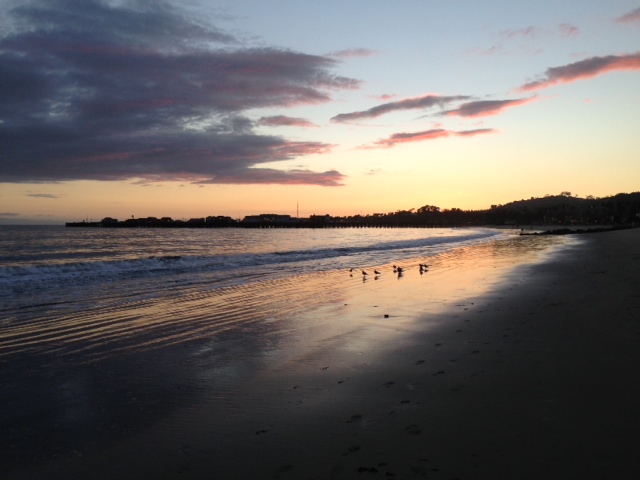
    From More Mesa, take a glorious sunset beach hike up-coast.
    From More Mesa, take a glorious sunset beach hike up-coast.

    Directions to More Mesa:

    From upper State Street at its junction with Highway 154, continue west along State as it becomes Hollister 1.2 miles to Puente Drive. Turn left (south). Puente Drive bends west, undergoes a name change to Vieja Drive, and passes Mockingbird Lane on your left 0.7 mile from Hollister. Public parking is not permitted along Mockingbird Lane; you must park along Puente Drive/Vieja Drive and walk up the lane past gated residential streets to the gated entrance to More Mesa. (Or exit Highway 101 on Turnpike. Head south to Hollister and turn left. Drive a few blocks to Puente Drive and follow above directions.)

    For more information about this hike (and many others), check out HIKE Santa Barbara

  • HIKE Sequoia and Kings Canyon National Parks

    HIKE Sequoia and Kings Canyon National Parks

    Come for the sequoia, stay for the Sierra. And take a hike in Sequoia and Kings Canyon National Parks.

    If you only drive through you’ll be disappointed: Sequoia and Kings Canyon have the superlative scenery and postcard views found in the country’s most noted national parks, but you have to hike to find them.

    What can you expect on a hike?

    For a great preview of hiking trails in Sequoia National Park check out Nature Valley Trail View. Creators of the site used a camera positioned above a hiker to gather 360-degrees of images from along the trail. The site is sponsored by Nature Valley, maker of the best-selling granola bars, and a longtime supporter of national parks.

    Visitors can zoom in on park maps to get panoramic views of 50 miles trail in Sequoia National Park. Similar to Google Street View, which gives a pedestrian’s eye view of cities, the site allows you to “walk” forward or backward and to gaze off in any direction.

    Along with Sequoia National Park, the Nature Valley Trail View site also features more than 300 miles of hiking trails in the Grand Canyon, Great Smoky Mountains and Yellowstone National Parks.

    Hike in the company of giants in Sequoia and Kings Canyon National Parks.
    Hike in the company of giants in Sequoia and Kings Canyon National Parks.

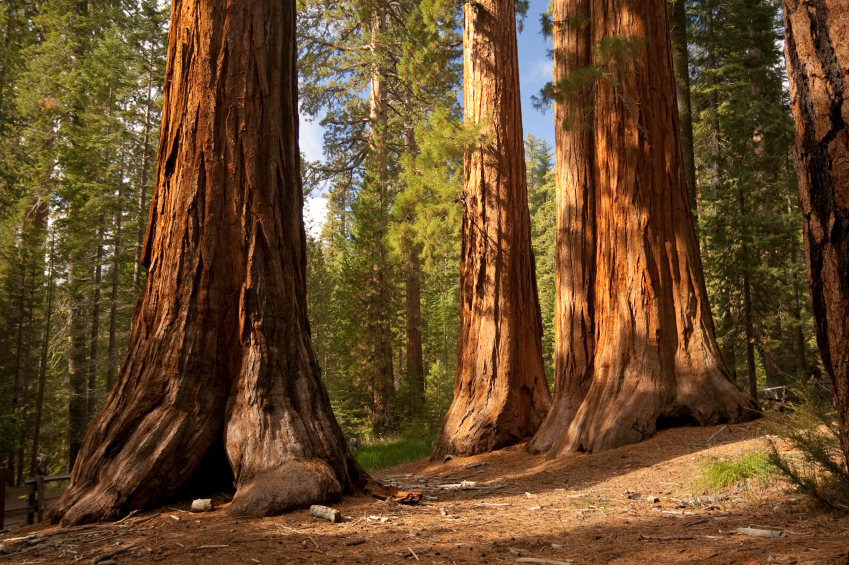
    Naturally the groves of sequoia are the primary draw to both namesake Sequoia National Park and to Kings Canyon National Park. “Noblest of a noble race,” is how the great naturalist John Muir described the trees, biggest on earth, and the prime reason for the formation of the parks. General Sherman, standing 274 feet tall and measuring 36.5 feet in diameter at the base of its massive trunk, is the largest of the large trees.

    Scenic 46-mile-long Generals Highway connects the national parks and offers access to the most popular sequoia groves, but auto travel is restricted to lower and middle elevations, so if you want to fully experience the park you need to hike into the Sierra Nevada high country.

    Long-distance backpacking expeditions aren’t required to reach many of the alpine charms of Sequoia and Kings Canyon national parks. Where the road ends, an extensive trail system begins and many of the parks’ most compelling natural attractions—waterfalls, rivers, lakes, vista points and remote sequoia groves—can be reached by easy, moderate and all-day hikes.

    HIKE Sequoia & Kings Canyon collects my favorite day hikes in what the National Park Service considers to be the five major regions of the parks: Giant Forest, Mineral King and the Foothills areas of Sequoia National Park plus the Grant Grove and Cedar Grove areas of Kings Canyon National Park.

    The groves are great, but it’s possible to take many hikes in Sequoia and Kings Canyon national parks without sighting a single sequoia. Hillsides with chaparral and dotted with oaks aren’t exactly rare in California but the California Foothills ecosystem in the lower elevations around Ash Mountain in Sequoia National Park is the only one in the nation under National Park Service protection. Some foothill trails, including footpaths along forks of the Kaweah River, can be hiked all year around.

    Mineral King, a gorgeous, avalanche-scoured valley ringed by rugged 12,000-foot peaks, is another area irresistible to hikers. Views from atop the Great Western Divide and the many lakes hidden in glacial cirques compel hikers to return summer after summer.

    The hiking season for much of Sequoia and Kings Canyon national parks is a fairly short one. Middle elevations—5,000 to 9,000 feet—are often snow-covered from November through May. In Mineral King, and higher in the High Sierra, the season can be even shorter.

    If you have only one day (promise yourself to return soon when you have more time!), drive from Grant Grove to Giant Forest or vice-versa and hike amidst the magnificent sequoia in each locale.
    Ideally, the hiker needs at least three days to get a fair sampling of Sequoia-Kings Canyon National Parks. Take in the sequoia groves on the first day, on the second day, head for the high country (Lakes Trail is a good choice) and on the third day, take a hike in Mineral King.

    More than one million visitors per year pass through the parks, and major trails are well-traveled during the summer, but I’ve rarely felt overwhelmed by humanity when hiking in Sequoia and Kings Canyon national parks. Many hikers have told me they have found quiet and tranquility on the trail to the park’s natural treasures—provided, of course, you avoid tourist-trafficked hot spots such as Moro Rock and General Sherman Tree.

    When I hit the trail in Sequoia and Kings Canyon national parks, I feel as if I’m living large and hiking larger: the trees are huge, the mountains high, the canyons deep and the trail system is quite extensive—a well-maintained network of more than 800 miles. The parks offer hundreds of thousands of acres of untouched Sierra high country, of which more than 90 percent is designated wilderness. If you’re a hiker, that’s a dream come true.

    Hike smart, reconnect with nature and have a wonderful time on the trail.

    Hike on.

    —John McKinney

  • San Miguel Island

    San Miguel Island

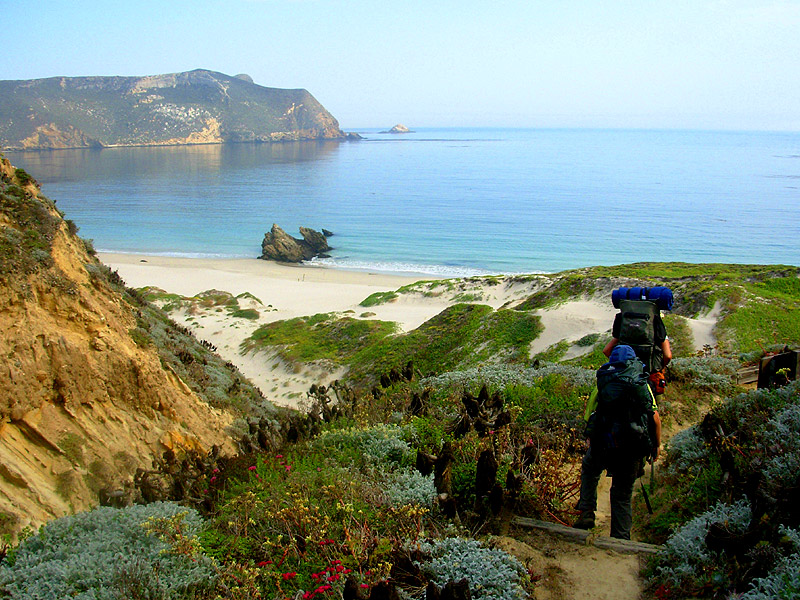
    San Miguel, westernmost of the Channel Islands, has much to offer the hiker, particularly if you join a ranger-guided hike.

    Hiking down to Cuyler campground on San Miguel Island. (Todd Clark)
    Hike to Cuyler campground on San Miguel Island.(Todd Clark)

    Eight miles long, four miles wide, it rises as a plateau, 400 to 800 feet above the sea.

    Wind-driven sands cover many of the hills, which were severely overgrazed by sheep during the island’s ranching days. Owned by the U.S. Navy, it was used as a bombing site and missile tracking station.

    San Miguel is home to six pinniped species: California sea lion, northern elephant seal, steller sea lion, harbor seal, northern fur seal and Guadalupe fur seal. The island may host the largest elephant seal population on earth. As many as 15,000 seals and sea lions can be seen basking on the rocks during mating season.

    San Miguel offers some great hiking, and guided hikes. Cuyler Harbor Beach, Cabrillo Monument and the Lester Ranch site are the sights you can see on your own. From Cuyler Harbor, the hike to Lester Ranch is about 3 miles round trip with 700-foot elevation gain.

    Rangers and naturalists offer guided hikes to other parts of the island, soon after Island Packers boats arrive on San Miguel.

    A trail extends most of the way from Cuyler Harbor to the west end of the island at Point Bennett, where the pinniped population is centered. Trails pass the island’s two round peaks, San Miguel and Green Mountain, drop in and out of steep canyons and traverse the caliche forest, composed of fossil sand casts of ancient plants. Calcium carbonate reacted with the plants’ organic acid, creating a ghostly forest.

    PLANNING TO GO TO SAN MIGUEL ISLAND?

    Plan a very long day—or better yet, an overnight trip to San Miguel. It’s at least a five-hour boat trip from Ventura. Boat over to the island with Island Packers (805) 658-5730, the Channel Islands National Park primary concessionaire. Island Packers offers plenty of free parking, a gift shop and restrooms.

    For more information contact Channel Islands National Park or stop in at the visitor center (805) 658-5730 in Ventura Harbor at 1901 Spinnaker Drive.

    THE HIKE

    Follow the beach at Cuyler Harbor to the east. The harbor was named after the original government surveyor in the 1850s. The beach around the anchorage was formed by a bight of volcanic cliffs that extend to bold and precipitous Harris Point, the most prominent landmark on San Miguel’s coast.

    At the east end of the beach, about 0.75 mile from anchoring waters, a small footpath winds its way up the bluffs. It’s a relatively steep trail following along the edge of a stream-cut canyon. At the top of the canyon, the trail veers east and forks. The left fork leads a short distance to Cabrillo Monument.

    You will be able to see the trail above the east side of the canyon. When you get to the top of the canyon the ranger station and pit toilet are straight ahead. Instead of going straight you can turn east. The trail ascends a short distance to the Cabrillo Monument. The Lester Ranch is a short distance beyond that.

    Juan Rodriguez Cabrillo, Portuguese explorer, visited and wrote about San Miguel in October 1542. While on the island he fell and broke either an arm or a leg (historians are unsure about this). As a result of this injury he contracted gangrene and died on the island in January 1543 and it’s believed (historians disagree about this, too) he was buried here. In honor of Cabrillo, a monument was erected in 1937.

    The right fork continues to the remains of a ranch house. Of the various ranchers and ranch managers to live on the island, the most well known were the Lesters. They spent 12 years on the island and their adventures were occasionally chronicled by the local press.

    When the Navy evicted the Lesters from the island in 1942, Mr. Lester went to a hill overlooking Harris Point, in his view the prettiest part of the island, and shot himself. Within a month his family moved back to the mainland. Not much is left of the ranch now. The buildings burned down in the 1960s and only a rubble of brick and scattered household items remain.

    Interested in more hikes near San Miguel Island? Check out HIKE the Channel Islands

  • Echo Mountain

    Echo Mountain

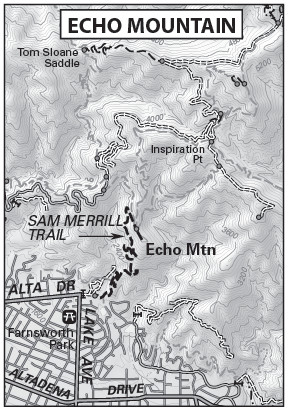
    Sam Merrill Trail: From Cobb Estate to Echo Mountain is 5.6 miles round trip with 1,400-foot elevation gain

    Professor Thaddeus Sobieski Coulincourt Lowe’s Echo Mountain Resort area can be visited not only by retracing the tracks of his “Railway to the Clouds” (See Mt. Lowe Railway hike), but also by way of a fine urban edge trail that ascends from the outskirts of Altadena.

    From Pasadena, visitors rode a trolley up Rubio Canyon, where a pavilion and hotel were located. Then they boarded the “airships” of the great cable incline, which carried them 3,000 feet (gaining 1,300 feet) straight up to the Echo Mountain Re¬sort Area. “Breathtaking” and “hair-raising” were the most frequent descriptions of ride that thrilled tourists from the 1890s to the 1930s. Atop Echo Mountain was a hotel and observatory.

    This historic hike visits the ruins of the one-time “White City” atop Echo Mountain. From the steps of the old Echo Mountain House are great clear-day views of the megalopolis.

    Pasadena and Altadena citizens have been proud to share their fascination with the front range of the San Gabriels. This pride has extend¬ed to the trails ascending from these municipalities into the mountains. Local citizens, under the auspices of the Forest Conservation Club, built a trail from the outskirts of Altadena to Echo Mountain during the 1930s. During the next decade, retired Los Angeles Superior Court clerk Samuel Merrill overhauled and maintained the path. When Merrill died in 1948, the trail was named for him.

    Sam Merrill Trail begins at the former Cobb Estate, now a part of Angeles National Forest. A plaque placed by the Altadena Historical Society dedicates the estate ground as “a quiet place for people and wildlife forever.”

    DIRECTIONS:

    From the Foothill Freeway (210) in Pasadena, exit on Lake Avenue and travel north 3.5 miles to its end at Loma Alta Drive. Park along Lake Avenue.

    Echo Mountain Map by TomHarrisonMaps.com (click to enlarge)
    Echo Mountain Map by TomHarrisonMaps.com (click to enlarge)

    THE HIKE:

    From the great iron gate of the old Cobb Estate, follow the trail along the chain-link fence. The path dips into Las Flores Canyon, crosses a seasonal creek in the canyon bottom, and begins to climb. With the earnest, but well-graded ascent, enjoy good vistas of the San Gabriel Valley and downtown Los Angeles.

    After 2.6 miles of, steep and mostly shadeless travel, arrive at a signed junction with Mt. Lowe Railway Trail (see hike description). Bear right and walk 100 yards along the bed of the old Mt. Lowe Railway to the Echo Mountain ruins. Just before the ruins is a very welcome drinking fountain.

    Up top, spot the railway’s huge bull wheel, now embedded in cement, and just below a pile of concrete rubble, all that remains of the railway depot. The steps and foundation of the Echo Mountain House are great places to take a break and enjoy the view straight down precipitous Rubio Canyon, the route of Lowe’s railway.

    Echo Mountain takes its name from the echo that supposedly bounces around the semicircle of mountain walls. You can try shouting into the strategically placed “megaphone” to get an echo but perhaps even echoes fade with time.

    Interested in more hikes in the San Gabriel Mountains? Check out my “Hike the San Gabriel Mountains Pocket Guide” at The Trailmaster Store

  • Sequoia: Redwood Canyon

    Sequoia: Redwood Canyon

    Redwood Canyon, Hart Tree Trails

    6. 5 mile loop with 700-foot elevation gain; return via Sugar Bowl is 9-mile loop with 1,200-foot gain

    The largest sequoia groves on the planet are found in Redwood Canyon in Kings Canyon National Park. More than 15,000 big trees spread over 4,000 acres and hiking is the only way to visit them.

    Sixteen miles of trail weave among the extensive old-growth groves and meander along Redwood Creek. The trails offer hikers a kind of wilderness experience not possible from the awesome, but extremely popular groves in Sequoia National Park.

    From a hiker’s perspective, the sequoias en route sure seem more densely congregated than elsewhere in the park. The sequoia’s creek-side companions are quite colorful: in spring, dogwood blooms along with purple lupine, and in autumn the forest lights up with the red and gold leaves of the aspen.

    Sequoias aren’t the only big trees in Redwood Canyon. Sugar pines can be as tall or taller than neighboring sequoia and have much larger cones—measuring 10 to 24 inches long—longest of all trees.

    If you’re short of time, hike out and back through Redwood Canyon—a 4-mile round trip jaunt on a trail paralleling Redwood Creek. Otherwise choose among stellar loop trips with plenty of sights to see: Tunnel Tree (the trail goes through it), Hart Tree (a top 20 sequoia), and a hollowed-out sequoia once used as a cabin.

    My favorite loop visits Hart Tree and Fallen Goliath and returns via Redwood Canyon. Consider a longer return through the Sugar Bowl, characterized as “a grove within a grove,” for its dense stands of young sequoia.

    DIRECTIONS TO THE REDWOOD CANYON TRAILHEAD

    From the Big Stump entry to Kings Canyon National Park, continue on Highway 180 1.5 miles to Generals Highway. Turn right and drive 3 miles to Quail Flat and a junction with the paved road to Hume Lake on the left. Turn right on dirt Redwood Saddle Road, descending amidst great sequoias 1.7 miles to a junction; fork left to the parking lot and signed trailhead.

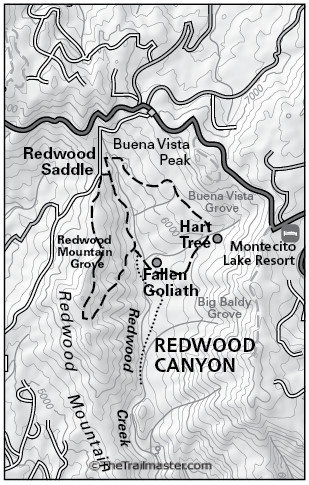
    Redwood Canyon Map by TomHarrisonMaps.com (click to enlarge)
    Redwood Canyon Map by TomHarrisonMaps.com (click to enlarge)

    THE HIKE

    Walk down the wide forest path 0.3 mile to a signed junction. Bear left, crossing and re-crossing tributaries of fern-lined Redwood Creek. About a mile out, reach Barton’s Post Camp, site of a logging operation in the late 1800s.

    Hike another mile to lush and lovely Hart Meadow, and then to and through Tunnel Tree (a hollowed-out sequoia log) to meet the short (100-yard) spur trail to Hart Tree at the 3.2-mile mark. After visiting the tree, largest in the grove, return to the main trail and descend to Fallen Goliath, a truly ancient tree now serving as a “nursery log” for young sequoias.

    The path descends to Redwood Creek and a junction with Redwood Canyon Trail. Head right, up-creek and soon (0.1 mile) reach a junction with Sugar Bowl Trail; go left to extend your outing with a hike up and around Redwood Mountain. Otherwise continue up-canyon parallel to the creek. When you return to the junction with Hart Tree Trail, bear left and retrace your steps to the trailhead.

    Interested in more hikes in Sequoia and Kings Canyon? Check out my guide: HIKE Sequoia and Kings Canyon