TALES

  • Hike California State Parks

    Hike California State Parks

    California State Parks offer some of the best hiking the state has to offer: Torrey Pines, Malibu Creek, Point Lobos, Calaveras Big Trees, Humboldt Redwoods and a hundred more. Watch my video Hike California State Parks and hiker on!

    With the recent addition of Dos Rios Ranch State Park to the system, California now has 280 state parks!

    Who knew?
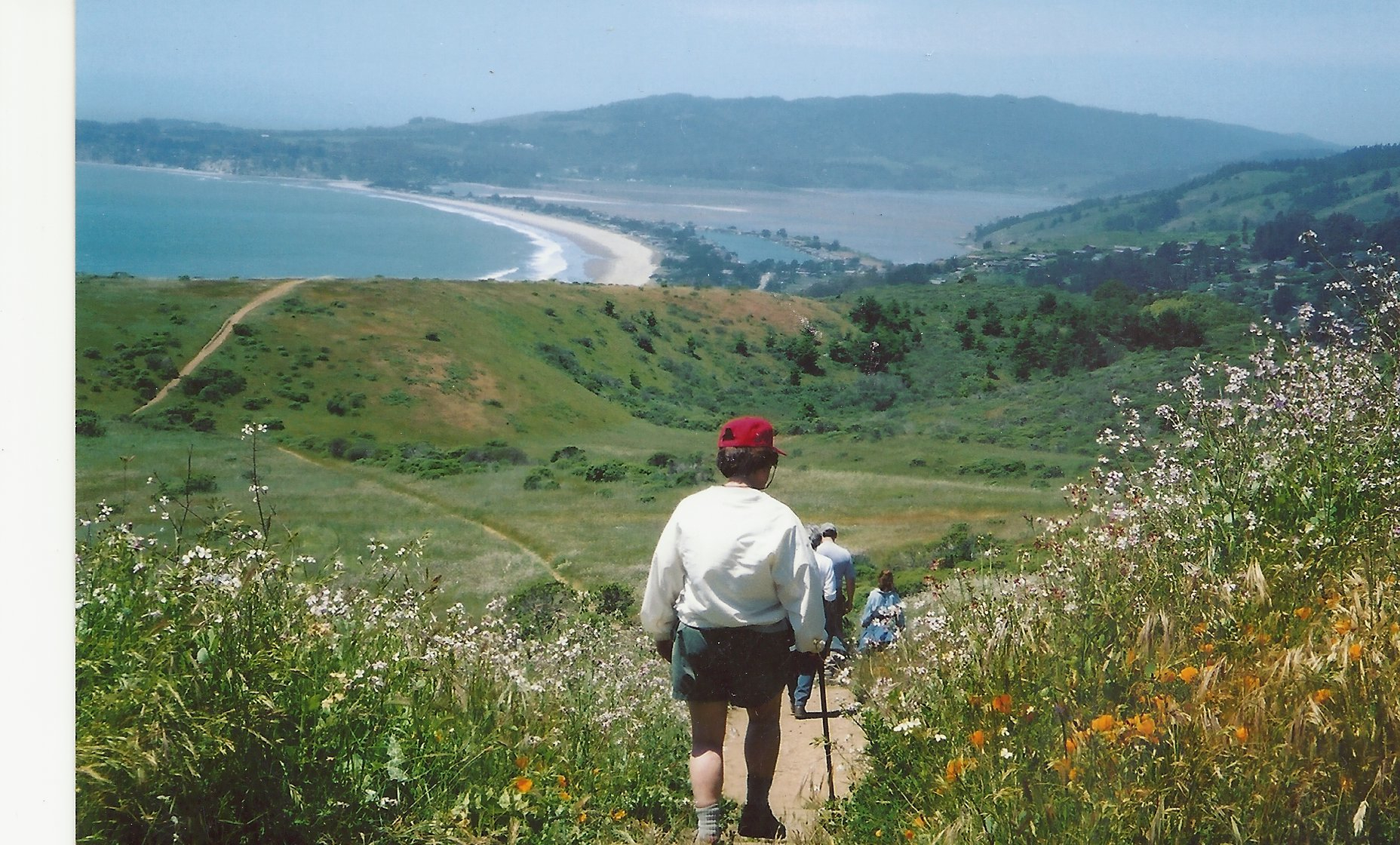
    Down the Dipsea Trail in Mount Tamalpais State Park.The short answer is hardly anyone. I’ve asked a thousand Californians or more to name five California State Parks. Fewer than 10 percent can do so. Surprising to me, a majority of these baffled respondents are outdoorsy Californians—the kind of people who come to my talks or I meet on the trail.

    I confess to being a little obsessed by California state parks and am the only crazy enough to have hiked and written about all 280 of them.  At first my interest in the parks was professional. During a long stint as the Los Angeles Times hiking columnist, I noticed my readers enjoyed discovering SoCal’s state parklands. For nearly 20 years, I partnered with the California State Parks Foundation, helping to share stories about the wonders of our state parks. Then I started keeping a list of parks I visited, and you know how it is when you get compulsive about something…

    Turns out you can take a hike in about half of California’s 280 state parks.  You can explore these “hiker parks” on 3,000(!) miles of trail.
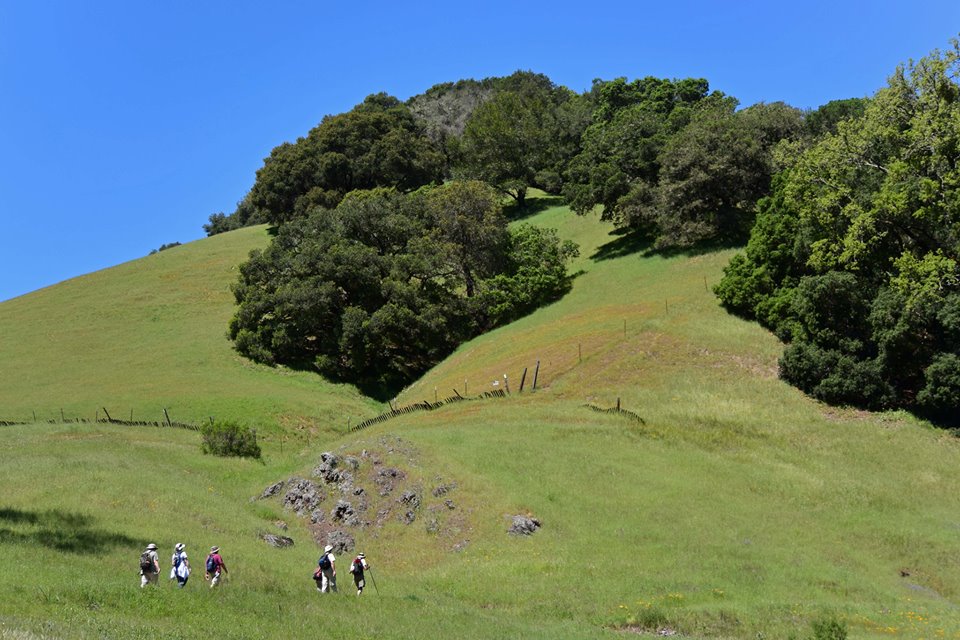
    Wine country wandering, Sugarloaf Ridge State Park.The California State Park System is widely regarded as the nation’s finest—and the most popular, too, with nearly 70 million visitors a year. In terms of number of parks and number of visitors, it’s second only to the National Parks system.

    Other states have high mountains, vast deserts, and scenic shorelines, but only California contains all of these natural features, and preserves examples of them in its park system.
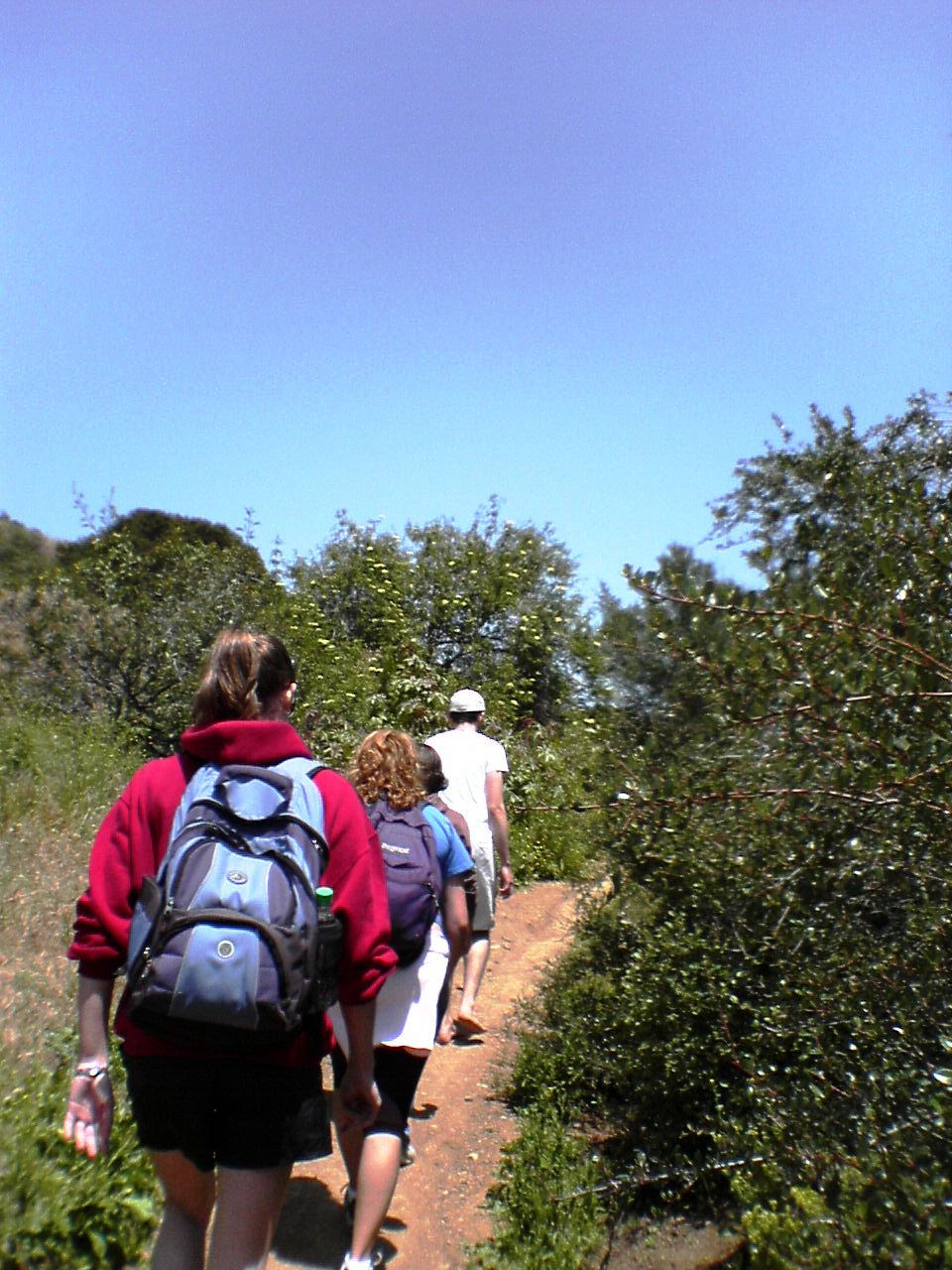
    Hiking Topanga State Park, one of the gems of the Santa Monica Mountains.The multitude of intriguing state park environments, and the many fine paths that explore them, add up to some world-class hiking adventures.

    Ancient redwoods grow along the mist-covered edge of the continent. The alpine beauty of the Sierra Nevada towers above Emerald Bay and Sugar Pine Point state parks on the shores of world-famous Lake Tahoe. Warm, sandy state beaches from San Clemente to Refugio beckon visitors to Southern California.

    State parks preserve a cross-section of California ecology from the bottom of the Central Valley at Caswell Memorial State Park to the top of alpine peaks at Mt. San Jacinto State Park; from uncommonly dry desert lands, where Joshua trees thrive, such as Saddleback Butte State Park to the near-rainforest environment of Del Norte Redwoods State Park.
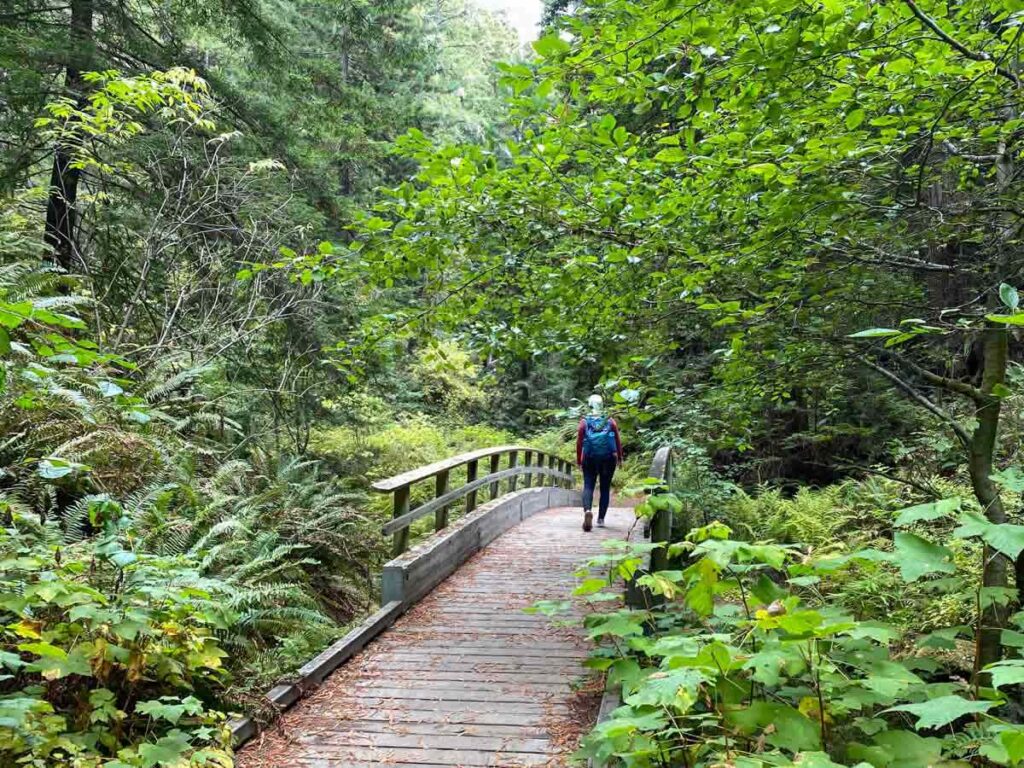
    Footpath amidst the ferns in Van Damme State ParkState parks showcase a fabulous array of Nature’s handiwork: giant Sequoias in Calaveras Big Trees State Park; the rare Torrey pines making a last stand in a natural reserve near San Diego; palm oases in Anza-Borrego Desert State Park; some of the tallest trees on earth in Jedediah Smith Redwoods State Park.

    State parks highlight California’s history and offer the opportunity to follow the trails of the forty-niners, Spanish missionaries, and Native Americans. Hike into history where the Gold Rush began (Marshall Gold State Historic Park), where a famed writer found inspiration (Jack London State Historic Park), where a lonely lighthouse-keeper lived and worked (Pt. Sur State Historic Park).

    Park pathways are as varied as the parks themselves. Some trails are easy—a “walk in the park.” Leg-stretchers along the Sacramento River at Woodson Bridge and Colusa state recreation areas allow motorists a break from Interstate 5; beach walks from Border Field State Park to MacKerricher State Beach provide a similar break from Coast Highway 1.

    Many state park hikes are suitable for the whole family—slow paced adventures with much to see on a short hike. These family hikes, by utilizing described options, can usually be extended to half- day or all-day outings. The avid hiker will find challenges aplenty in the parks, too—long day hikes that offer grand tours and great workouts.

    Hike smart, reconnect with nature, and have a wonderful time on the trail.

    Hike on.

    —John McKinney
  • Nine Months of                   Spring Hiking

    Nine Months of Spring Hiking

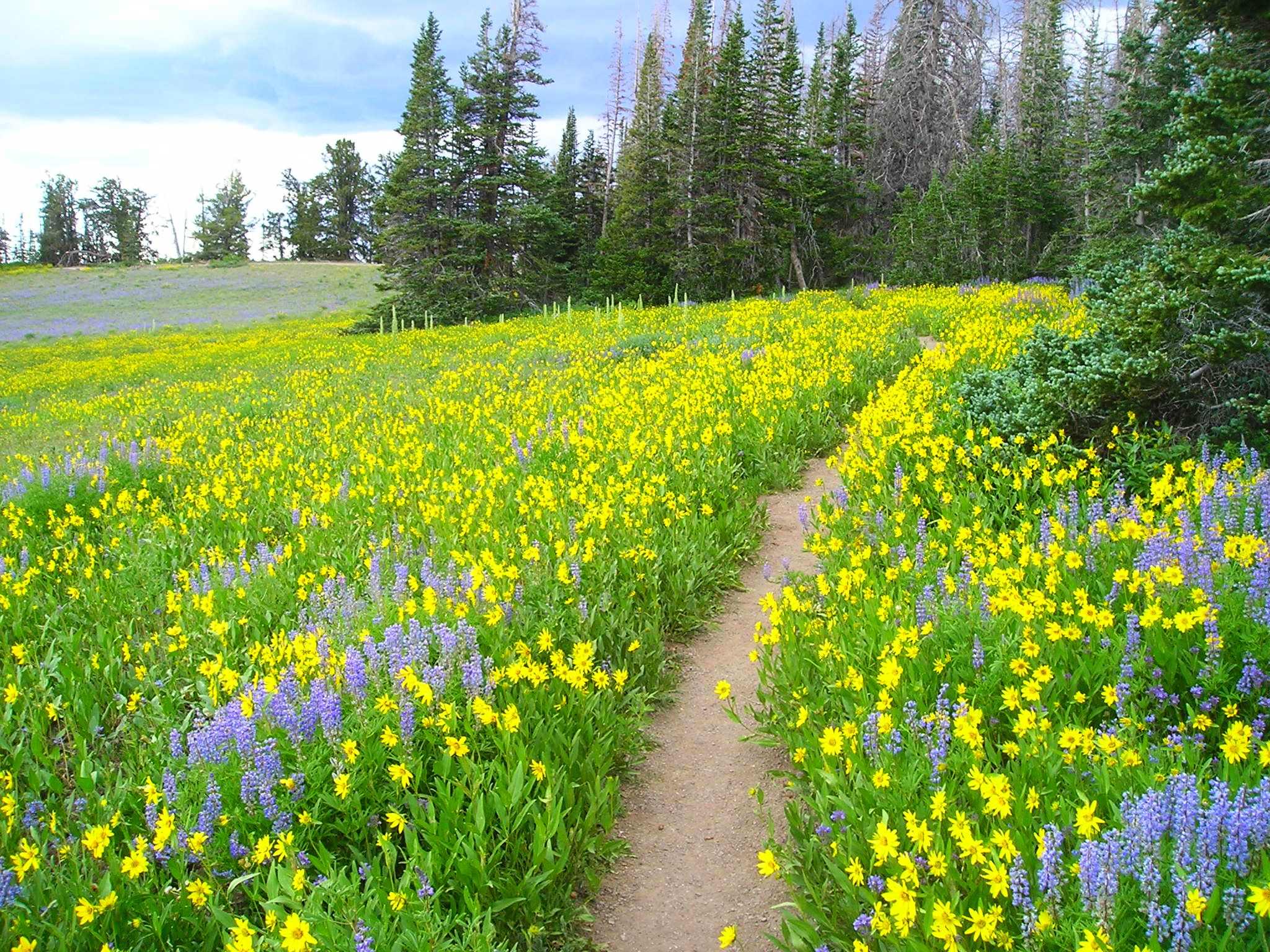
    Spring is the exact same length as other seasons. But wherever you live, and wherever you hike, spring is the one season that everyone agrees is too short. Just when you notice the days are longer and the flowers are in bloom, it’s summer.

    April showers bring May flowers.

    True enough at very particular latitudes and altitudes. In the low desert, however, for example, January showers bring February flowers. And in the Rockies, June showers can bring July flowers.

    If an advertiser claimed, “April showers bring May flowers,” the government would require a lengthy disclaimer.

    Wildflowers bloom at greatly different times and elevations in Sequoia National Park. (NPS)
    Wildflowers bloom at greatly different times and elevations in Sequoia National Park. (NPS)

    I’m indebted to rangers at the Sequoia National Park Visitor Center for pointing out to me that certain parts of the country—most particularly the regions around Sequoia, Kings Canyon and Yosemite national parks—have nine months of spring: January through September. These parks offer a way of resolving the “National Spring Deficit,” the rangers joke.

    More accurately, Sequoia National Park has 13,000 feet of spring, interpretive rangers explain. Elevations in this park range from just over 1,000 feet to the 14,494-foot top of Mt. Whitney. For every 1,000 foot increase in elevation, there is a corresponding temperature drop of three degrees F.

    So what does a change of elevation really mean? And how does it get us more spring?

    In Sequoia National Park, and in other fabulous hiking areas around North America, if you’re willing to gain elevation, you can partake of the joys of spring hiking for far longer than the traditionally defined three month period between the vernal equinox and the summer solstice. In certain mountain ranges, a wide range of temperatures and elevations create a variety of habitats and climates, both macro and micro, that can make hiking in spring a 9-month opportunity.

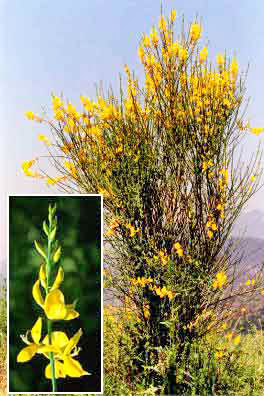
    Spanish broom: one of many blooms in Sequoia National Park's lengthy Spring. (NPS)
    Spanish broom: one of many blooms in Sequoia National Park’s lengthy Spring. (NPS)

    In the case of the High Sierra, the first flowering plants can appear as early as January in the lowest foothills that rise from California’s flat Central Valley. At Sequoia National Park’s middle elevations (4,000 to 7,000 feet), where the mighty sequoias thrive, spring flowers begin to bedeck the meadows in April. On higher slopes, hikers will notice the more obvious signs of spring—tender grasses and wildflowers—in June and July. In the very highest alpine ecosystems, spring comes very late—August, even September. Spring and summer are greatly compressed at such high elevation. Spring comes and goes in a matter of weeks.

    In Sequoia National Park, you can drive to a 7,500-foot trailhead, gaining more than 6,000 feet and losing nearly twenty degrees F. in temperature. You can then hit the trail for the 14,494-foot top of Mt. Whitney, losing another twenty degrees F. or so as you climb to the top of the highest peak in the continental U.S. Hikers pass a lot of “Spring” as they make one of America’s most classic climbs.

    Flowering plants are not the only life forms following spring uphill. Bears emerge from hibernation, foraging at ever higher altitude to sniff out their vegetal preferences. Birds and bees and many more creatures thrive in spring, whenever and wherever they find the season.

    So, if you want to prolong spring, hike higher and higher into the high country. Pause along the trail to admire the wide variety of flowering plants that adorn different elevations.

  • Why I Compiled a Hiker’s Dictionary

    Why I Compiled a Hiker’s Dictionary

    The idea for a Hiker’s Dictionary came to me a few years ago when I was speaking to the annual California Recreational Trails Conference, a gathering of the state’s top trail-builders and advocates. One of the points of the talk I was presenting was that we trail enthusiasts have a jargon of our own. If we want to communicate effectively with each other—and the general public—we need to define our terms.

    We all had a long laugh when I read a mock press release about the grand opening of a new trail that was chock full of incomprehensible-to-the-layperson language about stakeholders and staging areas, VDs(Visitor Days) and viewsheds.

    Ridiculous?

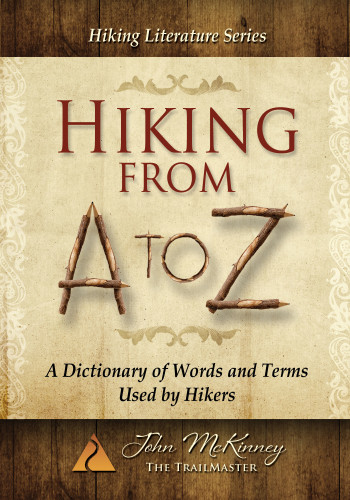
    Get all the hiker words you need to know from John McKinney's hiker dictionary, "Hiking from A to Z"
    Get all the hiker words you need to know from John McKinney’s hiker dictionary, “Hiking from A to Z”

    Of course. But it occurred to me that as “hiking writer” I had for the past thirty years used a vocabulary that was particular to hikers and likely peculiar to non-hikers, but had never been defined. So began my compilation of a hiker’s dictionary and eventually Hiking from A to Z: A Dictionary of Words and Terms Used by Hikers.

    “If you wish to converse with me, define your terms,” declared Voltaire, the great French writer/philosopher. And as a cautionary note to those blazing new trails, Voltaire also wryly observed: “Our wretched species is so made that those who walk on the well-trodden path always throw stones at those who are showing a new road.”

    My academic qualifications to edit a dictionary for hikers?

    Absolutely none. As an undergraduate at the University of Southern California I studied broadcast journalism (and helped start a hiking club) and later earned an MFA in film at California Institute of the Arts. My academic training has helped me talk about hiking on radio and TV and make nature films and hiking videos. It did not lead me to continue in academia by working for a PhD in Hikerology or any scholarly writing about hiking.

    I’ve written two-dozen or so books and a thousand articles about hiking and nature but confess that not a single one of them is footnoted. I’ve delivered talks to a wide variety of groups from health care providers to the Sierra Club but have yet to be asked to deliver a paper at an academic conference. And I’m not holding my breath for an invite from academia.

    My work in the field of hiking has been in, well, the field. It’s my hope that this considerable field research will add to the hiker’s fun and knowledge of hiking. So take a hike.

    And then look-up “take a hike” in the hiker dictionary.


  • WALK Until You’re 99

    WALK Until You’re 99

    When Abraham was 99 years old, the Lord appeared before him and said: “I am God Almighty, walk before me and be blameless.”

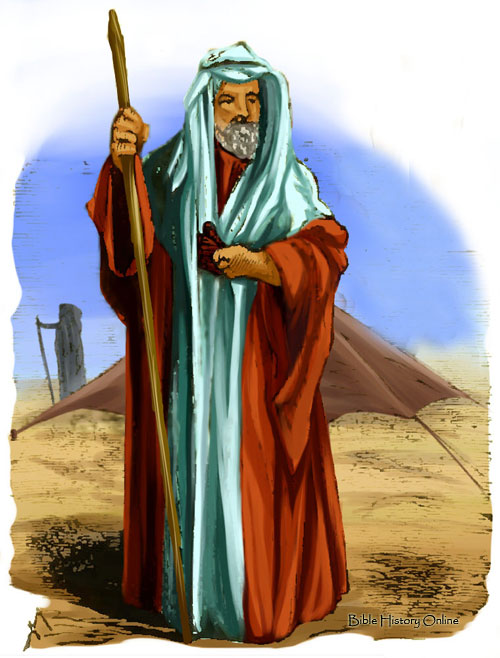
    Abraham continued his walk in every sense of the word well past the age of 100. (illustration Bible History online)
    Abraham continued his walk in every sense of the word well past the age of 100. (illustration Bible History online)

    According to Genesis 17, the Lord assigned old Abraham some enormous tasks; he was to become the father of many nations and to take everlasting possession of the whole land of Canaan for himself and his descendants. Further, in order to keep covenant with the Lord he was to circumcise all the males in his household as well as all other males in the area.

    Abraham complied with all of the Lord’s commands but was taken aback by one last request: Create a son with his wife Sarah.

    At this point in the conversation the Bible reports: “Abraham fell face-down and laughed.”

    “Will a son be born to a man a hundred years old?” asked Abraham when he pulled himself together. Then he remembered his wife—at 89 not exactly in her prime childbearing years. “Will Sarah bear a child at the age of 90?”

    Virility and fertility proved not to be problems and a son was born a year later, as the Lord had promised. Abraham not only fathered Isaac, but founded the Jewish nation.

    As Abraham demonstrates, there is old and there is old; that old adage “you’re only as old as you think,” has been proven time and time again since Abraham was born about 2166 B.C. Recent studies confirm that older walkers are far more fit and of far more cheerful disposition than their sedentary counterparts.

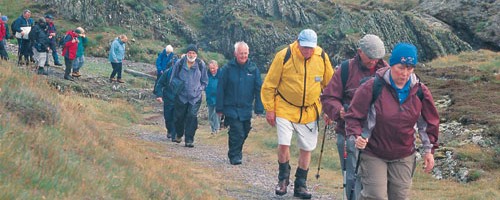
    These older hikers in England's Lake District aren't about to hang up their boots. (photo touristnetuk.com)
    These older hikers in England’s Lake District aren’t about to hang up their boots. (photo touristnetuk.com)

    Many older folks are wrongly convinced their need to walk diminishes with age, a survey conducted by the President’s Council on Physical Fitness reports. Many seniors are also apt to exaggerate the dangers of walking and their inability to walk.

    Walking is a way for seniors to stay out in the world. To best resist the many paralyzing effects old age, seniors would be wise to combine the body, the mind and the heart—keeping all vigorous by continuing to walk, to learn, and to love.

    Almost anyone at any age can walk—and will feel better for it. At God’s request, Abraham began walking among his people, among the lovely oak grove of Mamre, and across the desert plains of the Holy Land. Abraham, who did not receive God’s call to walk until he was 99, lived to the ripe old age of 175.

    Walk until you’re 99—or older!

    Footnotes

    * Who are the oldest walkers you know? Why do they walk? What puts a spring in their step?

    * Early sport-walker Edward Payson, at 22 years of age, caught the nation’s attention when he race-walked from Boston to Washington, D.C. to the presidential inauguration of Abraham Lincoln. More remarkably, he was still walking fast some 50 years later; when he was 71, he walked from New York to San Francisco in 105 days.

  • Is Hiking a Sport?

    Is Hiking a Sport?

    Is hiking a sport?

    During a long tenure as the Los Angeles Times hiking columnist, my weekly column, titled “Hiking” was published in three different sections of the newspaper: first, in View (California lifestyle) on Thursdays; next, Calendar (what’s happening around town) on Fridays; and finally, Travel on Sundays.

    is hiking a sport?
    Is Hiking a Sport?

    Over the years editors of all these sections of the paper explained why hiking could fit into their particular purview: readers want to get out into nature.

    One Los Angeles Times editor, though, was dead certain he didn’t want Hiking in his section.

    “No way is hiking a sport,” longtime Times Sports editor Bill Dwyre told me. “A sport has to have competition.”

    I was thinking fondly of Bill Dwyre, who recently retired after writing a three-times-weekly sports column for the Los Angeles Times since 2006. I enjoyed his columns–even if Dwyre did not consider hiking a “real sport.”

    Doubtless most sports writers and sportscasters, along with most fans of the major sports, would agree with the old school sports columnist, though the word “competition” is nowhere to be found in the dictionary definition of sport. In fact, with sport usually defined as “any activity that gives enjoyment or recreation,” hiking is a sport according to Webster’s and other dictionaries.

    Sport or not, admittedly, there’s little competition in hiking. Hikers sometimes race each other up a mountain. But that’s really trail-running, which is really running which, at its most competitive, is definitely a sport. Likely there are record-holders for completing various trails in the fewest number of hours or days, but neither hikers nor anyone else pays any attention to such feats.

    So, is hiking a sport?

    Recently one of my jock-ish friends spelled out the difference between “real sports” and a recreation like hiking: “Sports take place on fields and courts and so on that are made by man; hiking is something you do way out there in nature.”

    And hikers wouldn’t have it any other way.

    Hike On.
    John McKinney

    P.S. Just like any other sport, hikers have their own language. Check out my hiker’s dictionary: Hiking From A to Z: A Dictionary of Words and Terms used by Hikers

  • Homage to Switchbacks

    Homage to Switchbacks

    “What’s wrong with this trail?” the perspiring young sportsman in the Boston Red Sox baseball cap complains to me as I catch up with him at the one-mile marker on Echo Mountain Trail. “It doesn’t seem to be leading anywhere. And it’s got too many of those…turning things, those—”

    “Switchbacks,” I offer.

    “Don’t you just hate them?”

    Caught between the urge to lecture him and the urge to whack him with my hiking stick, I do neither, and simply stride past him with a smile. “I like switchbacks,” I call out over my shoulder.

    “Yeah, right,” he mutters.

    As I zigzag along on a perfect winter day, savoring the alternating vistas of mountains above and metropolis below, it occurs to me that lately I have encountered a great number of people who are unaware that the switchback is the hiker’s best friend and one of the West’s greatest inventions. Worse, there seem to be increasing numbers of hikers like “Sox” who hate switchbacks.

    better have switchbacks
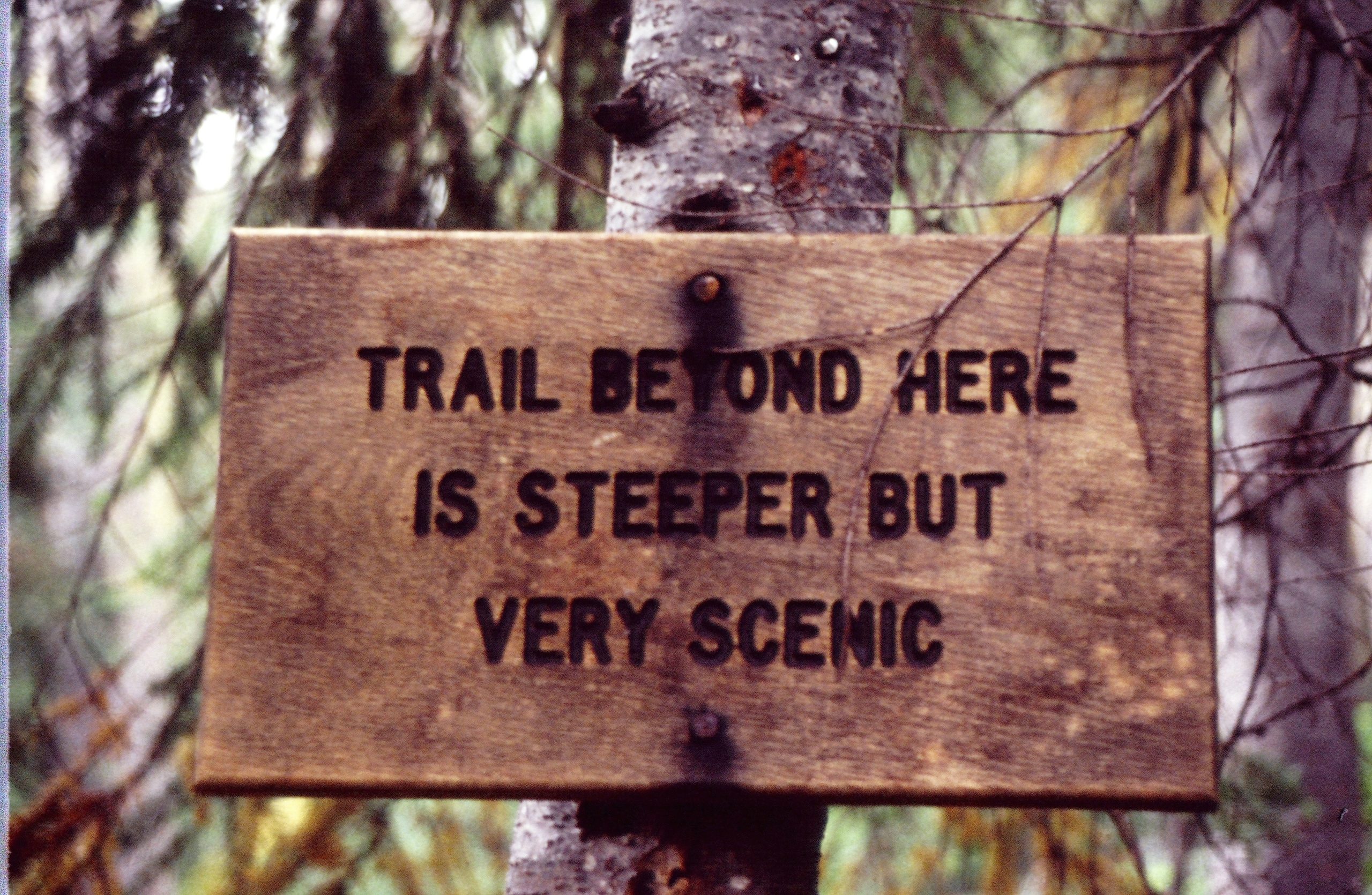
    A more lyrical way to describe a hike’s difficulty: “Trail Beyond Here is Steeper But Very Scenic”

    Perhaps such bias arises from ignorance, I muse. While most hikers can define a switchback (a trail that follows a zigzag course on a steep incline) and know one when they see one, it’s obvious detractors don’t grasp why the switchbacking way is so wonderful: it’s lots easier zigzagging up the shoulder of a mountain than taking a straight line up it. California’s recreation trails are ranked among the world’s best, in part because they use so many switchbacks to reach so much beauty.

    Ah, the beauty. Switchbacking up Saddle Peak in the lovely Santa Monica Mountains. Switchbacking up Mt. Whitney on those 97 superbly graded switchbacks hewn out of granite —one of the finest examples in America of the trail builder’s art—at sunrise when the switchbacks slowly turn pink, then a magnificent fiery orange…

    The sound of a cell phone ringing ends my reverie and draws my attention down to Sox, two switchbacks below. As I zig north and he zags south, I overhear Sox tell his caller: “This crazy guy I met likes these *#$@@% switchbacks.”

    Switchback haters like Sox seem to be divided into two camps: some would prefer to eliminate them altogether in favor of straight Point A to Point B style pathways; others regard them as an unavoidable necessity that gets you up a mountain at a maddeningly slow pace. Sure you gain elevation, but so slowly that the trail becomes repetitive and the trudge becomes a drudge.

    New England Switchbacks

    You don’t know what you’ve to ‘til it’s gone and even I never fully appreciated the switchback until I hiked in the eastern U.S. A decade ago I was commissioned to write a book about the great hikes of New England and before I hit the trail wondered: After ascending the West’s great mountains, how difficult could it be for me to summit a piddley, 3,000-foot peak?

    Very difficult, I discovered, because New England trails lack switchbacks. In fact, New Englanders take a perverse pride in the steepness of a trail. Slogging up a trench-like trail eroded down to the bedrock straight up a mountain is true hiking because it’s such hard work. Apparently, switchbacks would add ease and pleasure to the journey and run contrary to the Puritan ethic. Idle feet are the devil’s playthings or something like that.

    Switchbacks in the Western U.S.

    I feel blessed to have been born west of the Rockies, where trailblazers took a different approach. Many now-popular pathways were first prospectors’ trails constructed with switchbacks for the use of pack animals. This switchbacking tradition continued when trail use changed from business to pleasure. Traditionally, western land has been cheap and there’s been plenty of room to roam, so that a trail builder can afford “the luxury” of long, meandering switchbacks.

    A few switchbacks from the top, my thoughts drift to friend and fellow Californian Greg Miller, now president of the American Hiking Society and stationed in Washington D.C. “I’m going through switchback withdrawal,” he confessed recently. “Where are my beloved switchbacks? Philosophically speaking, what’s wrong with hiking back and forth in a never-ending zigzag pattern?”

    Yes, that’s it, switchbacking is a philosophy. Sure I appreciate, more than anyone, the switchback, the noun, the thing, but it is switchbacking, the intransitive verb, the process that literally and figuratively gets my heart pumping. When we talk of the trail switchbacking over the mountain and hikers switchbacking up the trail, we are talking about a philosophy that values the journey as much as the destination.

    You see, Sox, switchbacking is more than a better way to build trails; it’s a philosophy, best studied and practiced in the West’s wide open spaces. California is all about creative movement—in the performing arts, on the football field with the West Coast Offense, and on the hiking trail.

    Sox?

    Far, far below, I see Sox in rapid retreat back to the trailhead. Guess the switchbacks got to him.

    Sox, you need an attitude adjustment. Switchbacks don’t force you to see everything twice, they help you view the world from every point of the compass.

    Switchbacking, like life itself, is not all about getting from one place to another as fast as possible; it’s about getting there the best way possible.

  • Hike With Gratitude: Giving Thanks On the Trail

    Hike With Gratitude: Giving Thanks On the Trail


    What happens when we hike with gratitude? Amazing things!


    “God has two dwellings: one in heaven, and the other in a meek and thankful heart,” declared Izaak Walton, the 17th century English writer now regarded as the “patron saint of fishing.”

    Hike with gratitude and count your blessings–in Izaak Walton\’s England or wherever you roam

    Walton’s walks by the river Dove and along the banks of many other brooks and ponds, inspired him to write “The Compleat Angler,” still regarded as the greatest book ever about fishing. His book combines practical advice on the art of angling with some highly moral and spiritual passages. Walton’s gratitude for God’s gifts, the beauties of pastoral England and the companionship of his fellows shines right through in his book, as admired now as it was when published in 1653.

    “Nobody expresses their gratitude about anything or thanks me,” you say. Likely as not, you’re probably right. Try to remember the last time anyone thanked you for anything. It was probably a “Thanks-and-have-a-nice-day,” at the check-out counter from a supermarket cashier or a “Thanks for your order,” from a fast-food franchise. Such gratitude!

    Now try to remember the last time anyone thanked you for anything important. It’s a dispiriting cycle: we rarely get thanks, and we rarely give it. Even those of us who try hard not to be thoughtless are often thankless–except perhaps for the one hour a week we spend inside our house of worship.

    Action Item: Hike with Gratitude

    My suggestion: On one walk—better yet one hike—a week use a few minutes of your time to exercise your gratitude while you stretch your limbs. List everything in your life that you are thankful for, and everything that you enjoy. Contemplate this list on your hike.

    Warning: this exercise in gratitude might require considerable spiritual effort, may stretch, to the point of strain, a rarely used muscle. Expressing thanks might seem ever-so-saccharine; to the most curmudgeonly among us, it might elicit a gag response.

    And yet hiking with an attitude of gratitude takes us someplace special. The way it helps us is by bringing our life into balance. Just as hiking integrates the body and mind, expressing gratitude integrates what’s all right with our world with what’s wrong.

    Giving thanks brings our life into harmony. No wonder scripture, such as this passage from Psalm 92, often describes gratitude toward God as “singing praises.”

    We can be thankful for possessions and money and yet for the freedom to walk the whole earth, and for the great benefits of our creative spirit, our life and health, we consider ourselves under no obligation to express any gratitude.

    By expressing our gratitude, we can hike from feeling stressed to feeling blessed. A grateful thought toward heaven is the simplest of prayers.

    Hike with gratitude.

    Hike On,

    John McKinney
    The Trailmaster


  • Trail Builders: Art and Science

    Trail Builders: Art and Science

    Let us now acknowledge trail builders, of this generation, generations past and generations to come. Not all hikers appreciate the trail at their feet—but to my way of thinking, they should. Trails are a thing of beauty and a joy to behold, especially considering the time, effort, expense and, increasingly, the mastery of bureaucracy required to build one these days.

    The trail-builder’s art—and it is an art as well as a science—is vastly under-appreciated, even by seasoned hikers.

    Check out my video, excerpted from the pilot of “Hike On” a TV series about hiking The Trailmaster is developing for California public television:

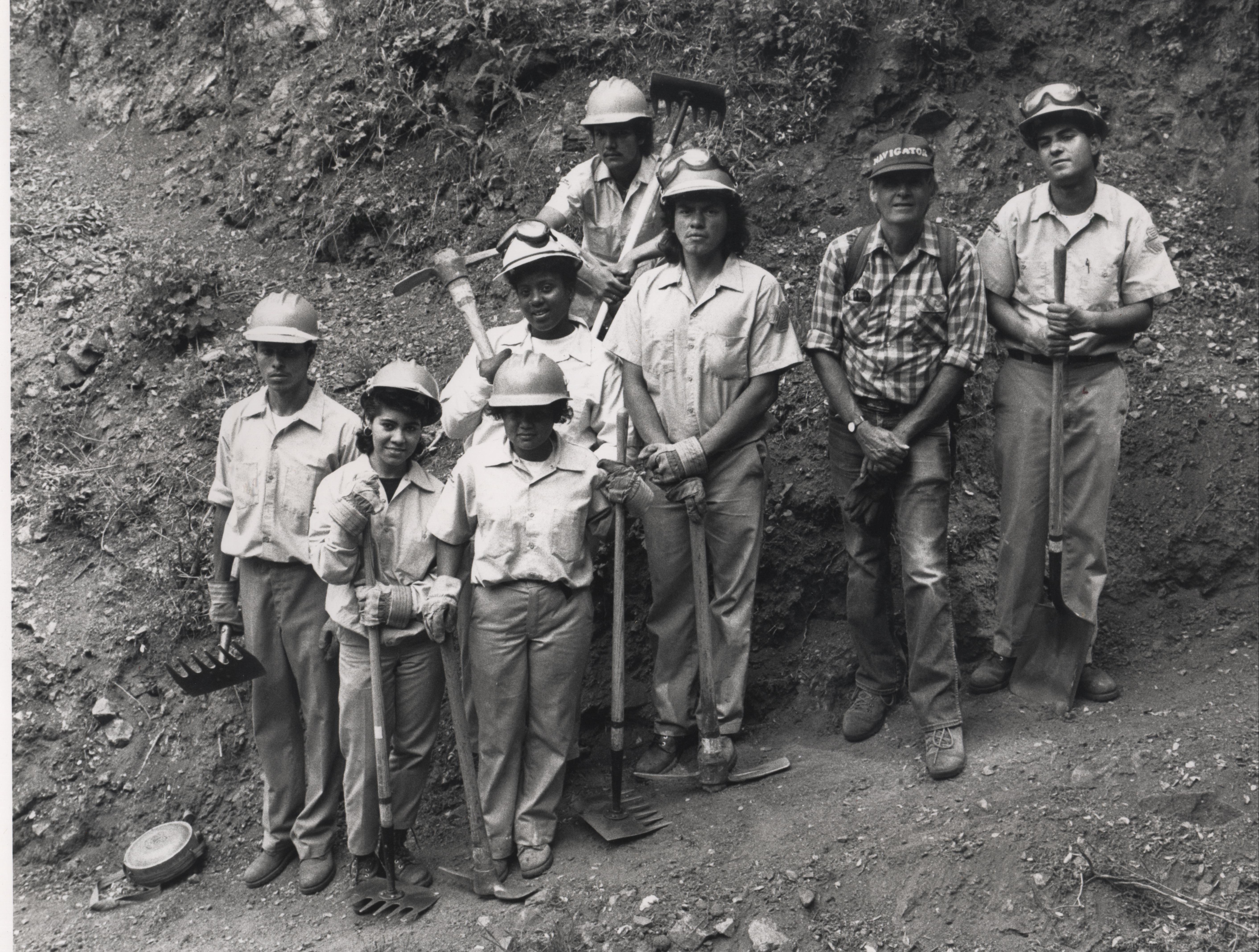
    Trail builders themselves, most volunteer, some professional, are very special, dedicated people. I’ve watched trail builder Ron Webster practice his craft all over the mountains of Southern California for decades, and come to admire what he does, and the kind of dedication required, and the kind of person he is for making trail work a major part of his life’s work.

    Master Trail Builder Ron Webster and his youthful trail crews worked on the Backbone and many other trails in the Santa Monica Mountains.
    Master Trail Builder Ron Webster and his youthful trail crews worked on the Backbone and many other trails in the Santa Monica Mountains.

    Webster brings solid contractual and people skills to the job, including the ability to do cost-breakdowns and construction estimates for trails, and to manage crews from a diversity of backgrounds. He’s good at working with trail crews composed of at-risk youth, at teaching young men and women to be part of a team, to take pride in their work and to master

    I particularly admire how the master trail builder designs the route for a trail. After spending many, many hours on the slopes to be crossed by a new trail, Webster goes into what he calls “Alignment” in which he envisions the trail upon the mountain. It’s a combination of a Zen state and a construction blueprint.

    Modern Trail Builders

    Some modern day trail builders have a philosophic approach as they plan and construct the way. “A trail route is not a route from here to there. It is a place to reconnect,” states Robert Searns, founding owner of Urban Edges, Inc., a planning and development firm based in Denver, Colorado.

    “In building trails, we need to think about the trail experience,” Searns explains. “What does the trail look like? What does it smell like, taste and sound like? Does the experience challenge the mind? Does it touch a chord that resonates the soul? A good trail will do that.”

    I love a hand-built trail, one that goes easy on the land, one that seems almost as much a part of the geography as a streambed. A good trail is like a good guide, subtly pointing things out and picking the very best route from place to place.

    Hike On.
    John McKinney
    The Trailmaster

  • WALK with Laughter

    WALK with Laughter

    Maybe it’s the outwardly stern image of the serious exercise-walker, striding with erect posture, a jabbing arm swing, and unsmiling face that suggests walkers can’t walk and laugh at the same time. Ha! A good laugh and a long walk are two terrific cures for what ails us; in tandem, they are doubly powerful.

    Humor is a barrier-breaking, rapport-building, mood-elevating, healing and revealing exercise.

    Like walking.

    Hike on. With a sense of humor and laughter, of course.
    Hike on. With a sense of humor, of course.

    Perhaps those who take the long walk through life a bit too seriously should consider that God most certainly has a sense of humor. God made the porcupine, the rhinoceros, the banana slug. And God made you.

    I’ve always liked that description of the Almighty found in Psalm 2:4: “The one whose throne is in heaven sits laughing.”

    Genesis records that when Sarah gave birth to a son at age 90, she said: “God has brought me laughter and everyone who hears about this will laugh with me.” She and her husband Abraham, then 100, named their son Isaac, which means he laughs.

    An ancient Eastern Orthodox Church tradition relates that the raised-from-the-dead Lazarus laughed for years after Jesus commanded him to “Rise, take up your bed and walk.”

    Ever since Norman Cousins’ landmark book, The Anatomy of an Illness, health professionals, as well as many ministers and rabbis, are rediscovering the healing power of humor. Research published in the Journal of the American Medical Association actually scientifically proved what Cousins and countless generations of anecdotal evidence had pointed out: laughter is useful in fighting serious illness.

    How laughing improves our health

    During a hearty laugh, the diaphragm, heart, lungs, thorax, abdomen, and even the liver and kidneys are given a gentle, even therapeutic, massage. Cousins calls laughter “Internal Jogging.” With all due respect to Cousins, who wrote his book in the 1970s at the height of the jogging boom, perhaps we should instead call laughter “Internal Walking.”

    Walking, hiking and humor have one more use in common: each fights pain. Laughter, like walking, activates the human brain’s secretion of morphine-like molecules called endorphins, which in turn override pain, perk us up, and can give us “athlete’s high.” The retreat of pain is accompanied by an increase in mobility. So the more we walk and laugh, laugh and walk, the better we feel.

    Only when faith falters, when heart and step are unsure, are we afraid to laugh in God’s presence. A person without a sense of humor is like a tender-footed walker, wincing at every pebble in the path.

    Walk with laughter.

    Footnotes
    • What makes you laugh on a walk? What do you think would make you laugh?

    • Want to make God laugh?
    Tell him your plans.

    Limerick Rut
    By Madeleine Begun Kane

    A woman was stuck in a rut.
    She’d tripped, falling down on her butt.
    She was wedged in so tight,
    She might be there all night.
    Seems its risky to text while you strut.

    P.S. Interested in more reasons to hike for your health? Check out HIKE for Health & Fitness: Slim Down, Shape Up, and Reconnect with Nature

    P.P.S. How about some funny hiker gear? Check out our t-shirts

  • Letter From John To The Hikers

    Letter From John To The Hikers

    Brothers and Sisters. From the time Adam and Eve were exiled from Paradise, humankind has mourned its lost relationship with the natural world.

    Adam took a fall for us all. Never again would he or Eve or any of the billions of humans who followed them walk the Earth without sin against God, against one another, and against nature.

    Adam’s fall corrupted nature. Adam’s fall corrupted human nature. Adam’s fall was the hiker’s fall.

    Hikers fall. Rarely. Frequently. Softly. Seriously. All hikers eventually fall. And just as we fall when we are hiking in nature, we fall and we fall short in our care of nature.

    Listen now to the cry of Creation.

    Today we are more disconnected from nature than ever before. We chop down the great trees of the world—in the cold forests of the north, in the tropical rainforests, and in the woods near our homes. We foul streams and rivers, lakes and oceans. Every day another species of plant or animal is lost from earth for all time.

    We want more than we need, and take more than we need from nature. We fail to moderate our desire for material things, which causes us to view nature as a commodity and merely as a collection of resources to be used as food and fuel. We refuse to acknowledge nature is more than the sum of its resources.

    To reconnect with nature, reconnect with God, and remember that it’s you, not another, that is the cause of the despoiling of nature. The hiker’s contribution to halting the abuse of nature is for each of us individually to correct ourselves.

    Begin the restoration of nature by restoring yourself.
    Begin the restoration of nature by restoring yourself.

    Do not seek more control over the holy forests, the holy mountains, or the holy waters. Do not seek more control over other people.

    Instead, control yourself. Learn from the monks: Take personal responsibility for your own thoughts and actions toward nature. Avoid blaming others for the abuse of nature, and do not hide behind broad excuses about corrupt politics, a perverted economy, and immoral humanity.

    Begin the restoration of nature by restoring yourself. One fitting time for self-reflection is during Great Lent, which should be a period of repentance and reduced commercial activity. But no need to wait for Lent; bring a little bit of Lent on each hike. Give up blame. Set aside anger. Give thanks for God’s many blessings, for friends and family, and for the natural world around you.

    Make nature the stuff of your prayers. Bring the tall mountain, roaring river, and singing bird into the sanctuary of your heart. An appreciation of the beauty and power of nature adds to appreciation of our Lord. When we are right with God, we will do right for nature.

    Hike as children of light. Leave ego and arrogance at the trailhead and you shall see and hear nature in all its glory. In nature, find refuge from cities full of idols. In nature, find yourself. In nature, find the Holy Spirit or allow the Holy Spirit to find a way into your heart.

    Blessed be the one who loves to hike and blessed be the one who hikes to love.

    Remember the words from the Holy Mountain of St. Silvan the Athonite: “The heart that has learned to love, has pity for all creation.”

    Love the red dawns, golden sunsets, and sky of many colors.

    Love the still waters, burbling streams, and thundering waterfalls.

    Love the ancient oaks, the cedars, and the palms.

    Love the sandy beach, rocky shore, and tide pools.

    Love the desert dunes, slot canyons, and badlands.

    Love the lupine, the lilies, and the daffodils.

    Love every day of God’s light. Love everything in nature, and you shall discover the heavenly mystery in all living things. And once you have discovered it, you will come to feel it more and more, as you hike mile after mile, and with each passing day and week and year of your life.

  • Hike On Halloween: New Holiday Tradition

    Hike On Halloween: New Holiday Tradition

    Hike on Halloween and start a new holiday tradition. There’s likely a place in your neck of the woods that’s just a little bit spooky or has a scary-sounding name.

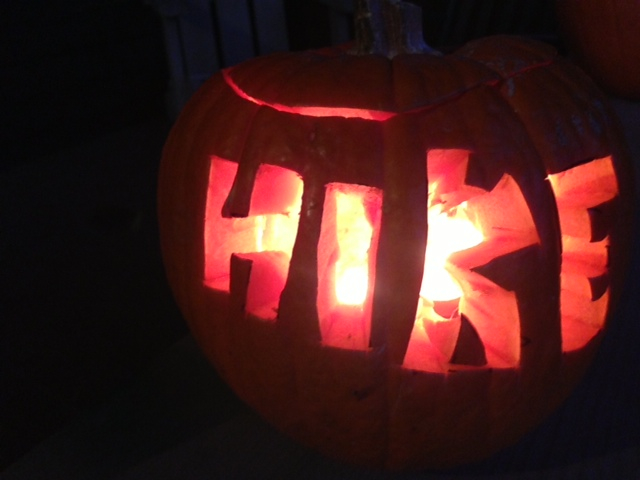
    HIKE. Carve it on a pumpkin and remind yourself that autumn is a great season for hiking.
    HIKE. Carve it on a pumpkin and remind yourself that autumn is a great season for hiking.

    The Trailmaster has been pleased to note an upswing in hikers hitting the trail on or near other holidays, both sacred and secular. The “New Year’s Day Hike,” is now embraced by parks departments across the country. Easter Sunday hikes and Christmas hikes are very popular, and lots of hiking takes place over Presidents Day, Memorial Day and Labor Day weekends. Thanksgiving hikes can be wonderful multi-generational outings with family and friends.

    I suppose the real reason I want to encourage taking a hike on Halloween is that for too many people in too many places in the country, Halloween marks the END OF THE HIKING SEASON. It’s NOT an official end of the hiking season (no governmental agency or hiking authority declares Halloween to be the end of hiking season, but nevertheless at the end of October, scores of hikers hang up their hiking boots until the following spring.

    OK, if you live in a really cold place, with lots of snow on the ground by Halloween, I understand why your hiking season is over. But what really bugs The Trailmaster is that Halloween is often the end of hiking season for those in warmer climes, even for those fortunate to live in regions with four-season hiking.

    So let’s get out there and take a Halloween hike–preferably to a scary-sounding or spooky-looking place to hike.

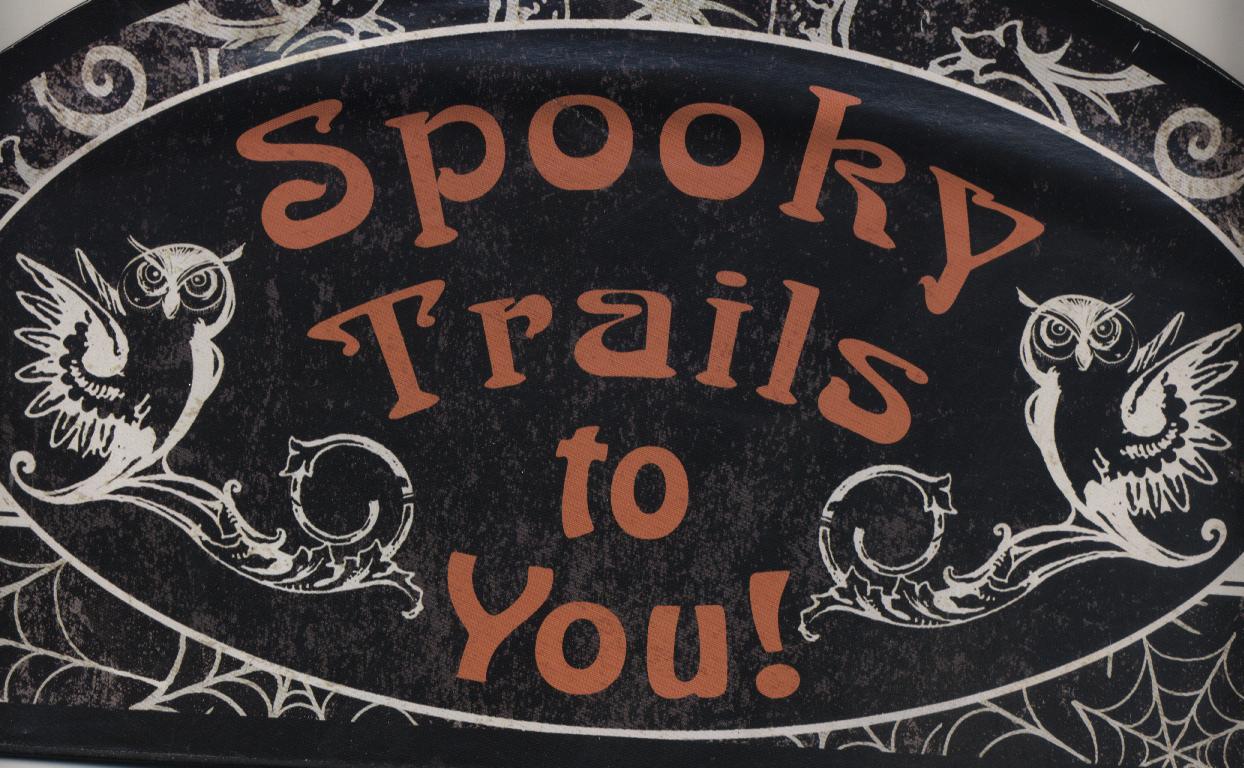
    Take a Halloween Hike! And "Spooky Trails to You."
    Take a Halloween Hike! And “Spooky Trails to You.”

    Halloween always makes me think of the large number of California locales with deathly and devilish names that I’ve hiked to over the years. In Southern California, trails lead to the Devil’s Punchbowl in the Mojave Desert and Devil’s Canyon in the San Gabriel Mountains. For a devil of a time, follow Devil’s Slide Trail into the San Jacinto Mountains or the Devil’s Backbone Trail up to Mt. Baldy.

    California’s national parks have their share of trails to scary-sounding places. Take a hike in Devil’s Postpile National Monument or trek to Bumpass Hell and Devil’s Kitchen in Lassen Volcanic National Park.

    Death Valley National Park is likely the nation’s best place for a Halloween hike. Hit the trail to the Funeral Mountains, Skull Mountains, Coffin Peak, Deadman’s Pass, Dante’s View, Devil’s Golf Course or Hell’s Gate.

    Here’s wishing you Happy Halloween and Happy Trails.

    Hike On,
    John McKinney
    The Trailmaster

  • Hiker Boxes: Share and Share Alike

    Hiker Boxes: Share and Share Alike

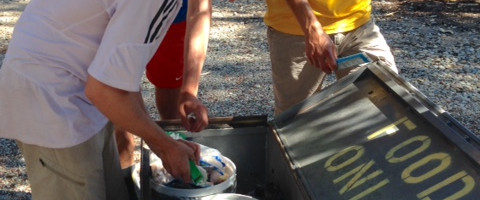
    I love the very idea of a hiker boxes, and of course the huge help they can be to the hiker who needs more food, or who forgot or lost some gear.

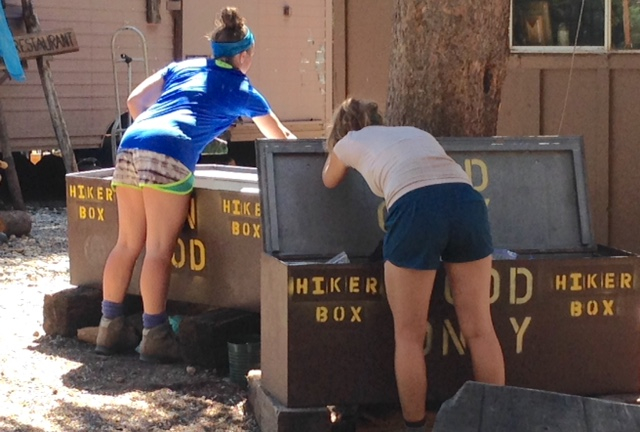
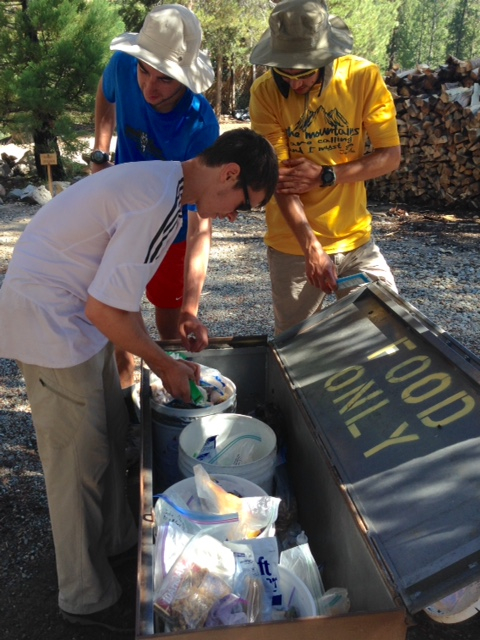
    Recently I re-supplied my son Daniel and his two buddies, who are hiking the John Muir Trail, near the trail’s midpoint at Edison Lake. Right outside the Vermillion Valley Resort café/store stood two hiker boxes—one for food and one for gear. I was pleased to observe hikers adding to the hiker boxes and taking what they needed. There were smiles all around—on the faces of the hikers who gave and on the hikers who received.

    John Muir Trail hikers are pretty happy to find these hiker boxes at Vermillion Valley Resort, located near the midpoint of the trail.
    John Muir Trail hikers are pretty happy to find these hiker boxes at Vermillion Valley Resort, located near the midpoint of the trail.

    What Are Hiker Boxes?

    By definition a hiker box is a box you find located along a long-distance trail where you can leave or take supplies. Hiker boxes can be found at backcountry stores or other businesses, lodges, outfitters or volunteer organizations.

    Common items in a hiker box include:

    • Food, often left when a hiker tires of eating something or bought and brought more than needed.
    • Gear someone decided was unnecessary and so just extra weight

    At Vermillion Valley Resort, the hiker box with the food contained everything from the very healthiest of vegetarian backpacking dinners to cans of Spam, plus lots of granola and trail mix. And who knew there could be so many different kinds of just-add-water meals with rice or noodles?

    "What looks good for dinner?" This Hiker Box along the John Muir Trail was full of foodstuffs ranging from candy bars to $10 freeze-dried meals.
    “What looks good for dinner?” This Hiker Box along the John Muir Trail was full of foodstuffs ranging from candy bars to $10 freeze-dried meals.

    The hiker box with gear held lots of bottles of biodegradable soap, bandannas, and blister kits. Clothing for the taking included hiking shorts, fleece pullovers and a sports bra.

    As I watched the happy JMT hikers add and take items from the hiker boxes, it occurred to me that sharing is what hiking is all about. In this time when so many people are disconnected from the great outdoors, it’s certainly a perfect time for hikers to share the joy of hiking with the many who hike and the many more who do not what it means to be a hiker.

    Let’s share with our trail companions the health and wellness benefits of hiking. Let’s share with friends and family members that wonderful perspective on the natural world gained by walking through it at two or three miles an hour.

    And when we hikers have an extra bottle of mosquito repellant, a freeze-dried beef stroganoff dinner or a trekking pole, let’s be sure to share and leave it in the hiker box for the next hiker who comes along.

    Interested in more hiker terms? Check out my Hiking from A to Z: A Dictionary of Words and Terms Used by Hikers

  • HIKE Griffith Park and the Hollywood Hills

    HIKE Griffith Park and the Hollywood Hills

    Introduction from the Trailmaster

    Griffith Park will always have a special place in my heart. I was born in Glendale, only a mile away from the park’s eastern boundary. My parents introduced me to park trails at a very tender age; by their recollection, the sojourn to Bee Rock was my first hike.

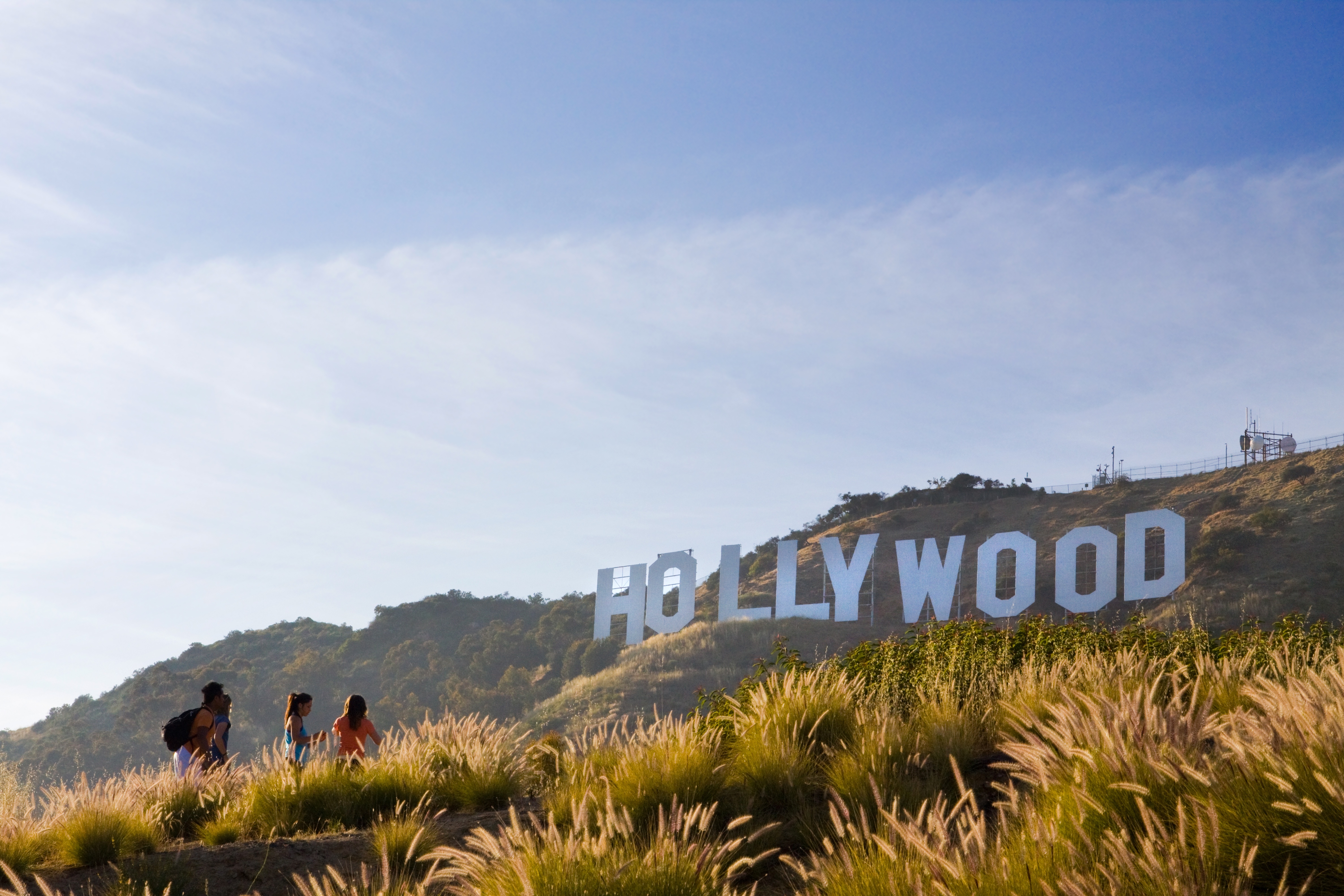
    The Hollywood Sign: even bigger than you thought when you hike up to it.
    The Hollywood Sign: even bigger than you thought when you hike up to it.

    While I can’t say I remember hikes taken at three and four years old, I have fond memories of hiking Griffith Park in the many years since: as a Boy Scout, during my college days at the University of Southern California, on Sierra Club-led hikes. I introduced my own children, teenagers now, to the pleasures of hiking in the park, and have always enjoyed taking out-of-town guests from across the country and around the world up to Mt. Hollywood and of course the HOLLYWOOD Sign.

    I’ve often hiked for pleasure—and for business, too. It seems Griffith Park is a very convenient location for reporters to interview a hiking expert and The Trailmaster has shared his expertise about hiker safety, the best trails in L.A., hiking for good health and many more topics while walking park trails. During my 18-year stint as the Los Angeles Times hiking columnist, I often wrote stories about Griffith Park trails and these accounts proved to be among the most popular with readers.

    Griffith Park History

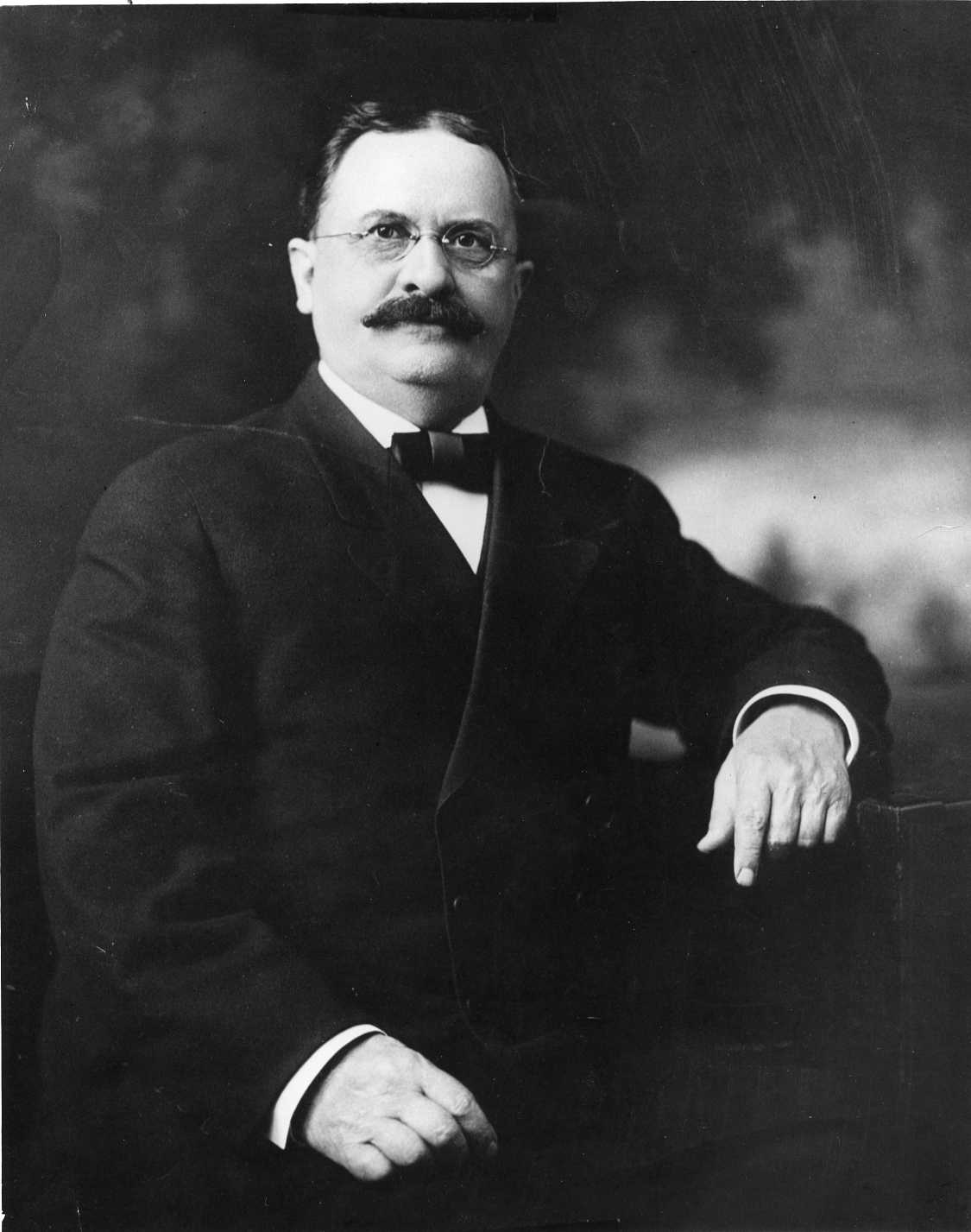
     Industrialist and philanthropist Griffith J. Griffith, quite the colorful character, donated land to the city of Los Angeles for a park.
    Industrialist and philanthropist Griffith J. Griffith, quite the colorful character, donated land to the city of Los Angeles for a park.

    Hiking Griffith Park and the Hollywood Hills has been a favorite pastime for Angelenos for more than 100 years. By some accounts, members of the Sierra Club’s Angeles Chapter have been leading hikes in Griffith Park since the 1940s.

    The attraction of hiking the hills has long been getting away from it all without having to travel far to do so. And it continues today. Centrally located it is, but no one who is a hiker would refer to Griffith Park as the “Central Park of Los Angeles;” Griffith is much larger, much wilder and much more rugged than its New York City counterpart.

    “Life seems healthier and slower-paced in this nearby wilderness,” wrote Mike Eberts, avid hiker and author of Griffith Park: A Centennial History. “Twigs, not tempers, snap here. It’s quite a contrast from a surrounding city that often seems tense, dense, polluted and pooped.”

    Many of the park’s most colorful figures have praised the wonders of this natural haven in the midst of the metropolis. It was an honor and a privilege for me to walk with and talk with Griffith Park legends Charlie Turner (Dante Orgolini’s longtime successor as caretaker of Dante’s View) and botanist-ranger-historian extraordinaire Bill Eckert. I’ll always remember the founder of Amir’s Garden, Amir Dialameh, who lived by the motto: “In the land of the free, plant a tree.”

    “My secrets to a healthy and happy life…” Amir revealed to me one day as he tended his garden on the shoulder of Mt. Hollywood. “Being out in nature at least five days a week, staying away from doctors and lawyers, and hiking, lots of hiking.”

    Hollywood Hills

    Outside the boundaries of Griffith Park, several other locales in the Hollywood Hills beckon the hiker. “Hollywood Hills,” the affluent neighborhood, measures just seven square miles, but the hills available for hiking are much more extensive and extend all the way from the western boundary of Griffith Park to…?

    HIKE Griffith Park and Hollywood HillsGood question! Where do the Hollywood Hills “end” and the Santa Monica Mountains “begin?” Of course “Hollywood Hills” is just another name for the eastern portion of the Santa Monica Mountains; the difference in names is really about historical usage and cultural identification rather than geography. Certainly no official boundary line marks the two.

    Feel free to disagree if you think I wrongly assigned trails in Wilacre Park in the wilds of Studio City or Franklin Canyon in the Beverly Hills backcountry to the Hollywood Hills. Be assured, though, that The Trailmaster has covered his bets and all the best trails in the range are described in this guide’s sister publication, HIKE the Santa Monica Mountains.

    The Hollywood Hills are known to millions around the world for the presence of the HOLLYWOOD Sign. Many tourists, hikers and not, mistakenly believe the iconic landmark rests atop Mt. Hollywood in Griffith Park rather than on the summit of nearby Mt. Lee outside the park. I always enjoy the smiles on the faces of visitors as they make the pilgrimage to the top of the sign.

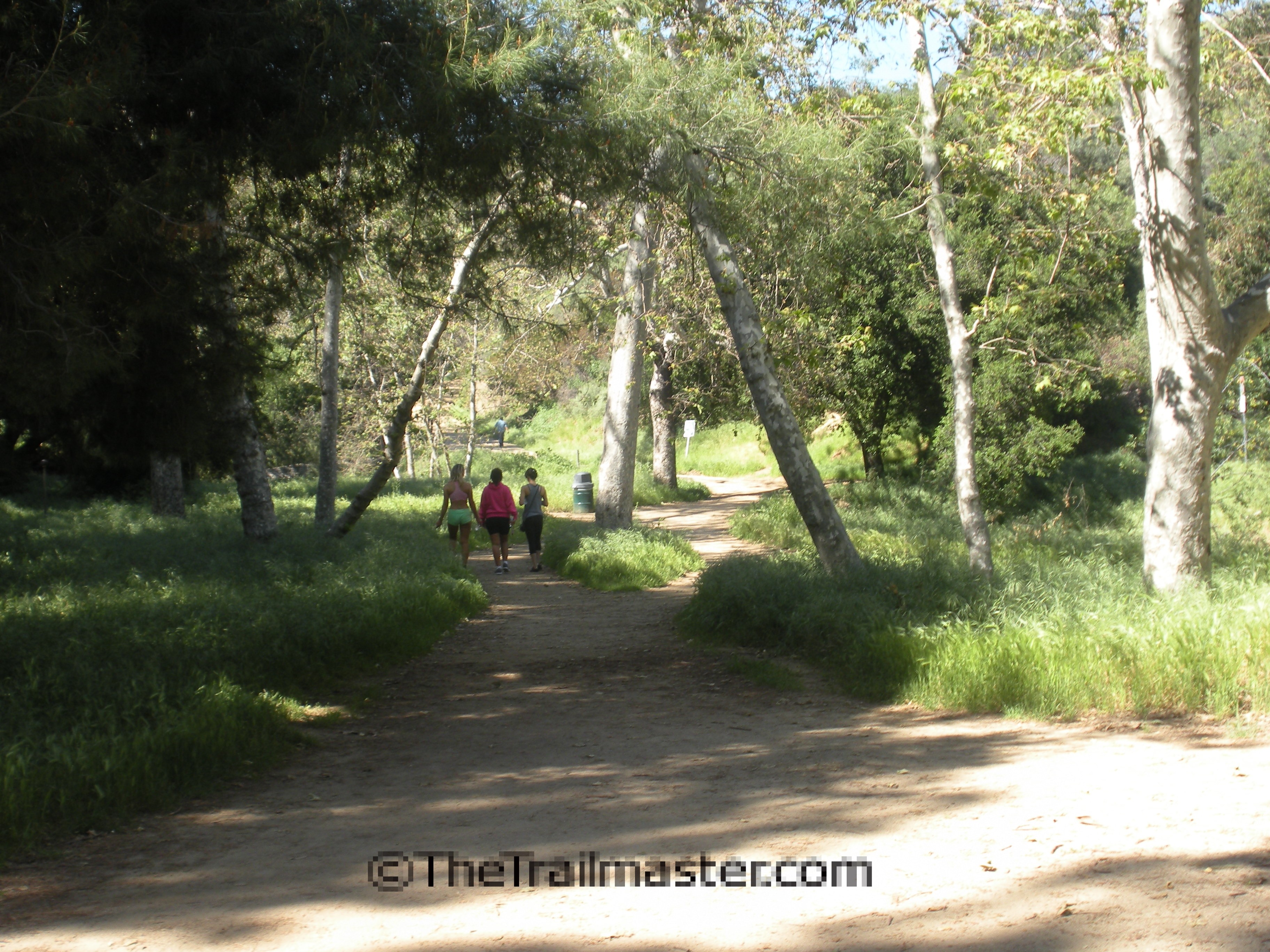
    From Griffith Park's Vermont Canyon entrance, the trail leads through a sycamore grove.
    From Griffith Park’s Vermont Canyon entrance, the trail leads through a sycamore grove.

    Trails in Griffith Park and in the parks scattered over the Hollywood Hills lead over similar terrain, but the hiking experience can be different. Griffith is one large park administered by one agency, the City of Los Angeles Department of Recreation and Parks. Elsewhere in the Hollywood Hills, the parks and preserves are much smaller and overseen by a number of (sometimes overlapping) land managers.

    Most Griffith Park trailheads boast convenient, sufficient (and free!) parking, while outside the park, parking is scarce (near Runyon Canyon Park) or requires a fee (Fryman Canyon). Griffith Park has a uniform set of rules; rules vary in other parks—dogs/no dogs for example.

    Along with the natural attractions and more than 100 miles of hiking trails, I’m attracted to Griffith Park and the Hollywood Hills for three more reasons: the variety of vistas, the connection to the film industry and the diversity of hikers met along the way.

    The summit of Mt. Hollywood (1,625 feet) provides an extraordinary vantage point for clear-day views of Mt. Lee and the bold HOLLYWOOD lettering across its summit, plus the entire Los Angeles Basin from the San Gabriel Mountains to the Pacific Ocean. The view at night can be spectacular, too; Mt. Hollywood is one of the most popular night-hiking destinations in the city. I love the views from Beacon Hill, Glendale Peak, Fryman Overlook and Inspiration Point atop Runyon Canyon.

    Ever since pioneer silent filmmaker D.W. Griffith (no relation to park founder Colonel Griffith J. Griffith) filmed the battle scenes for his epic “Birth of a Nation” in the park in 1915, Griffith Park has been a popular location for movies. Annually, Griffith Park is often the busiest destination in Los Angeles for on-location filming.

    The park has a lot of different “looks”—and with moviemaker magic can be made to mimic locales around the world. By now, virtually every nook and cranny in the park has appeared in a commercial, film or TV show. Production crews love to shoot scenes here, particularly because the park is so close to studios in Burbank and Hollywood.

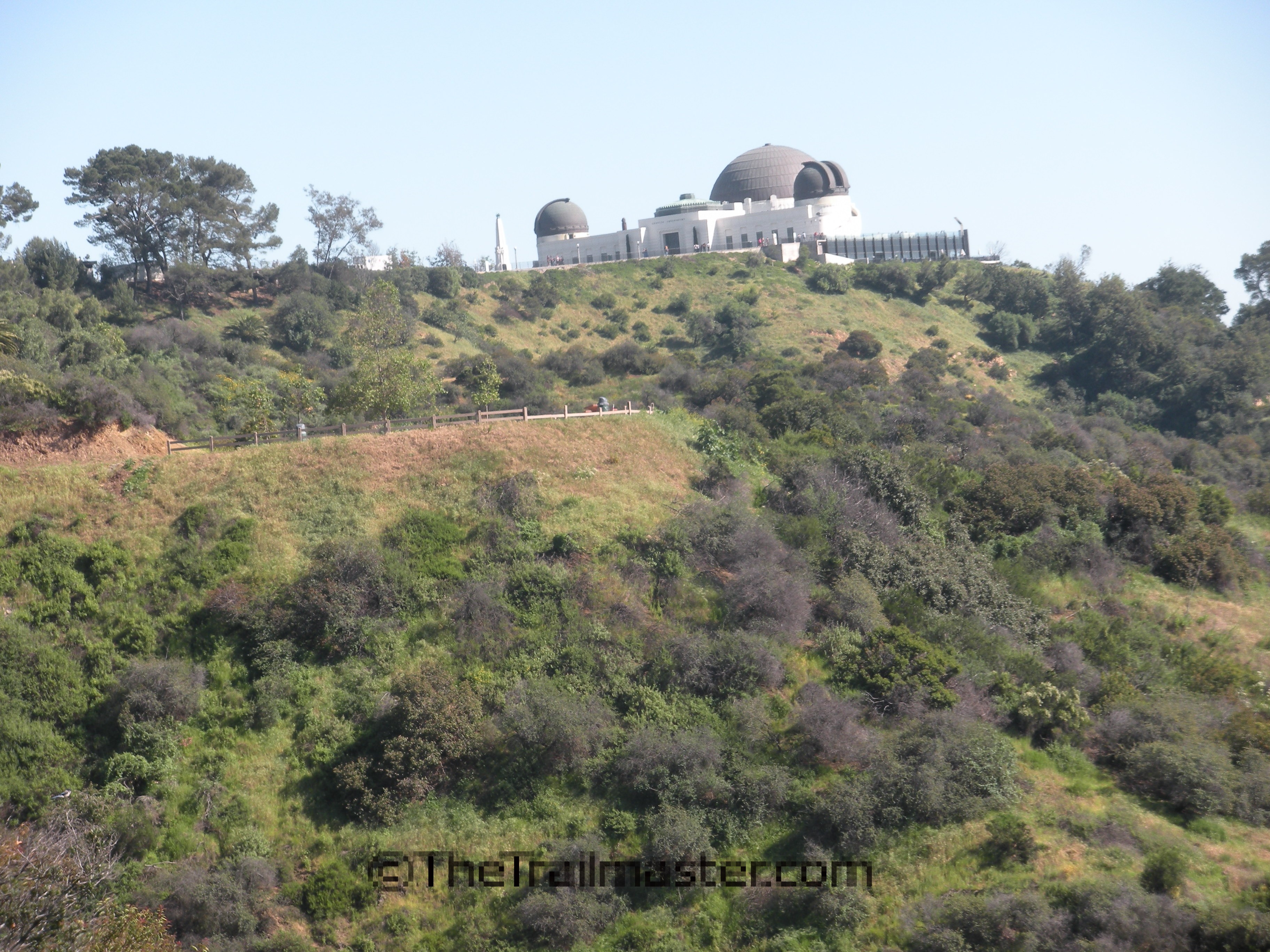
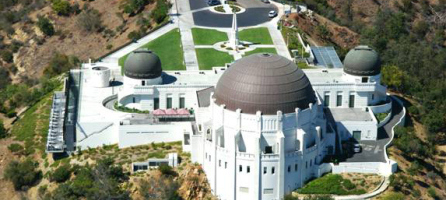
    Observe Griffith Observatory from many different angles on your hikes through Griffith Park.
    Observe Griffith Observatory from many different angles on your hikes through Griffith Park.

    For film fans, it’s fun to hike past Griffith Observatory and recall scenes from “The Terminator” or that 1955 James Dean classic, “Rebel Without a Cause.” Or hike to and through Bronson Caves, used in that campy sci-fi flick, “Invasion of the Body Snatchers,” the John Wayne western, “The Searchers,” and as the Bat Cave in the Batman TV series of the 1960s. The HOLLYWOOD Sign has been featured in dozens of films, beginning with “Hollywood Boulevard” in 1935 and including “The Day of the Locust,” “The Italian Job,” “Earthquake” and “Shrek II.”

    I’m also delighted by the number of new hikers I meet on the trail: on work-out hikes in Wilacre Park, on nature hikes in Franklin Canyon, on hill climbs to Bee Rock, Cahuenga Peak and Getty View. And it’s wonderful to see such a diversity of hikers—of all ages, colors and ethnic backgrounds.

    Hike smart, reconnect with nature and have a wonderful time on the trail.
    Hike on.
    —John McKinney
    P.S. Check out HIKE Griffith Park and Hollywood Hills for more hikes in the area.

  • Hiking Humor

    Hiking Humor

    Hikers have a sense of humor. Really. Perhaps we project a too serious demeanor as we climb to the top of the hill, prompting non-hikers to view us as humor-challenged. But hiking humor exists!

    In fact, is anyone out there working on a collection of hiking humor? The Trailmaster can’t wait to read it, share it, and laugh out loud. (Humorous quotes)

    Examples of Hiking Humor

    As a group, hikers like a good joke as much or more than anyone. Here are some classic hiker jokes, silly stories and funny life lessons from the trail:

    How to Cross a River

    One day three men were hiking along and came upon a wide, raging river. They needed to get to the other side, but it looked impossible to ford, and they had no idea of how to do it.

    The first man prayed: “Please God, give me the strength to cross this river.”

    Poof! God gave him big strong arms and legs and he was able to swim across the river—though it took him two hours to do it.

    Seeing this, the second man prayed: “Please God, give me the strength and ability to cross this river.”

    Poof! God gave him a rowboat and he was able to row across the river—though it took him three hours to do it.

    The third man had observed how this had worked out for his two hiking buddies, so he also prayed, saying, “Please God, give me the strength, ability and intelligence to cross this river.”

    Poof! God turned him into a woman. He looked at the trail map, and in a minute walked across the bridge.

    If You See Bigfoot…

    Once there was a group of hikers traveling through the deep woods in the Pacific Northwest. The group leader gave the hikers a very stern warning: “If, by chance you see Bigfoot, run. But whatever you do, don’t touch Bigfoot!”

    That night, after the group had set up camp, one hiker was in his tent, when Bigfoot appeared. The huge creature stood in the doorway of the tent. The hiker was so scared, he ran screaming out of the tent, but on his way, he touched Bigfoot. Bigfoot ran after him. The guy ran as fast as he could through the dark forest, Bigfoot was in hot pursuit.

    He made it back to the trailhead, jumped in his car and sped home. A few days later, Bigfoot showed up at his back door. Panicked, the guy starts running as fast as he can, Bigfoot right behind. Finally, exhausted, he trips and falls. Bigfoot catches up to him, plants his huge feet right next him.

    Shaking, the guy gets to his feet and shouts, “What do you want?!”

    Bigfoot reaches out to him and says, “Tag, you’re it.”

    Hiking in Bear Country

    A guy’s going on a hiking vacation into the remote mountains out west. Before heading into the wilderness, he stops at a small town general store to get some supplies.

    After picking out provisions, he approaches the crusty old guy behind the counter.

    “I’m going hiking up in the mountains, and was wondering–do you have any bears around here?”

    “Yup,” replies the storeowner.

    “What kind?” asks the hiker.

    “Well, we got black bears and we got grizzlies,” he replies.

    “I see,” says the hiker. “Do you have any of those bear bells?”

    “Say what?”

    “You know,” explains the hiker, “those little tinkle-bells that hikers wear in bear country to warn the bears that they are coming, so the bears aren’t surprised and attack them.”

    “Oh, yeah. Back there,” he says, pointing to a dusty shelf on the other side of the store.

    The hiker selects some bells and returns to the counter to pay for them. “Another thing,” the hiker inquires, “how can I tell when I’m hiking in bear country anyway?”

    “By the scat,” the old fellow replies, ringing up the hiker’s purchases.

    “Well, uh, how can I tell if it’s grizzly country or black bear country?” the hiker asks.

    “By the scat,” the storeowner replies.

    “Well, what’s the difference?” asks the hiker. “I mean, what’s difference between grizzly scat and black bear scat?”

    “The stuff that’s in it.”

    Frustrated, the hiker persists, “Okay, so what’s in grizzly bear scat that isn’t in black bear scat?” he asks, an impatient tone in his voice.

    “Bear bells,” replies the old man as he hands the hiker his purchases.

    More Hiking Humor: Complaints to the U.S. Forest Service

    How well do you know your fellow hikers? How smart do you think they are, anyway? These are actual complaints to the Forest Service from trail users.

    “Escalators would help on steep uphill sections.”

    “Instead of a permit system or regulations, the Forest Service needs to reduce worldwide population growth to limit the number of visitors to wilderness.”

    “Trails need to be wider so people can walk while holding hands.”

    “Ban walking sticks in wilderness. Hikers that use walking sticks are more likely to chase animals.”

    “All the mile markers are missing this year.”

    “Trails need to be reconstructed. Please avoid building trails that go uphill.”

    “Too many bugs and leeches and spiders and spider webs. Please spray the wilderness to rid the area of these pests.”

    “Please pave the trails so they can be plowed of snow in the winter.”

    “Chairlifts need to be in some places so that we can get to wonderful views without having to hike to them.”

    “The coyotes made too much noise last night and kept me awake. Please eradicate these annoying animals.”
    “Reflectors need to be placed on trees every 50 feet so people can hike at night with flashlights.”

    “Need more signs to keep area pristine.”

    “A McDonald’s would be nice at the trailhead.”

    “Too many rocks in the mountains.”

    “The places where trails do not exist are not well marked.”

    Oh, Canada! Complaints and Questions

    Staff at Canada’s Banff National Park compiled a list of the “All Time Most Dim Questions” asked by park visitors. Read ’em and groan.

    How do the elk know they’re supposed to cross at the “Elk Crossing” signs?
    Are the bears with collars tame?
    I saw an animal on the way to Banff today—could you tell me what it was?
    Where can I buy a raccoon hat?
    Are there birds in Canada?
    What’s the best way to see Canada in one day?
    Where can I get my husband, really, REALLY, lost?
    Is that 2 kilometers by foot or by car?

    Life Lessons from the Trail

    A pebble in a hiking boot always migrates to the point of maximum irritation.

    The return distance to the trailhead where you parked your car remains constant as twilight approaches.

    The sun sets two-and-a-half times faster than normal when you’re hurrying back to the trailhead.

    The mosquito population at any given location is inversely proportional to the effectiveness of your repellent.

    Waterproof rainwear isn’t. (However, it is 100% effective at containing sweat).

    The width of backpack straps decreases with the distance hiked. To compensate, the weight of the backpack increases.

    Average temperature increases with the amount of extra clothing you’re carrying in your day pack.
    Given a chance, matches will find a way to get wet.

    The weight in a backpack can never remain uniformly distributed.

    When reading the instructions for a water filter, “hour” should be substituted for “minute” when reading the average quarts filtered per minute.

    The little toothpick in your new Swiss Army knife will disappear the first time you take it on a hike.

    Like to wear your hiking humor? Check out hilarious hiker gear HERE

  • Hiking Mount Athos, the Holy Mountain

    Hiking Mount Athos, the Holy Mountain

    Mount Athos, the Holy Mountain, has several faces: a Greek landscape of astonishing beauty; monasteries of an architectural genius that will not be seen again; two thousand monks living much the same as their brothers in Christ did, a thousand years ago.

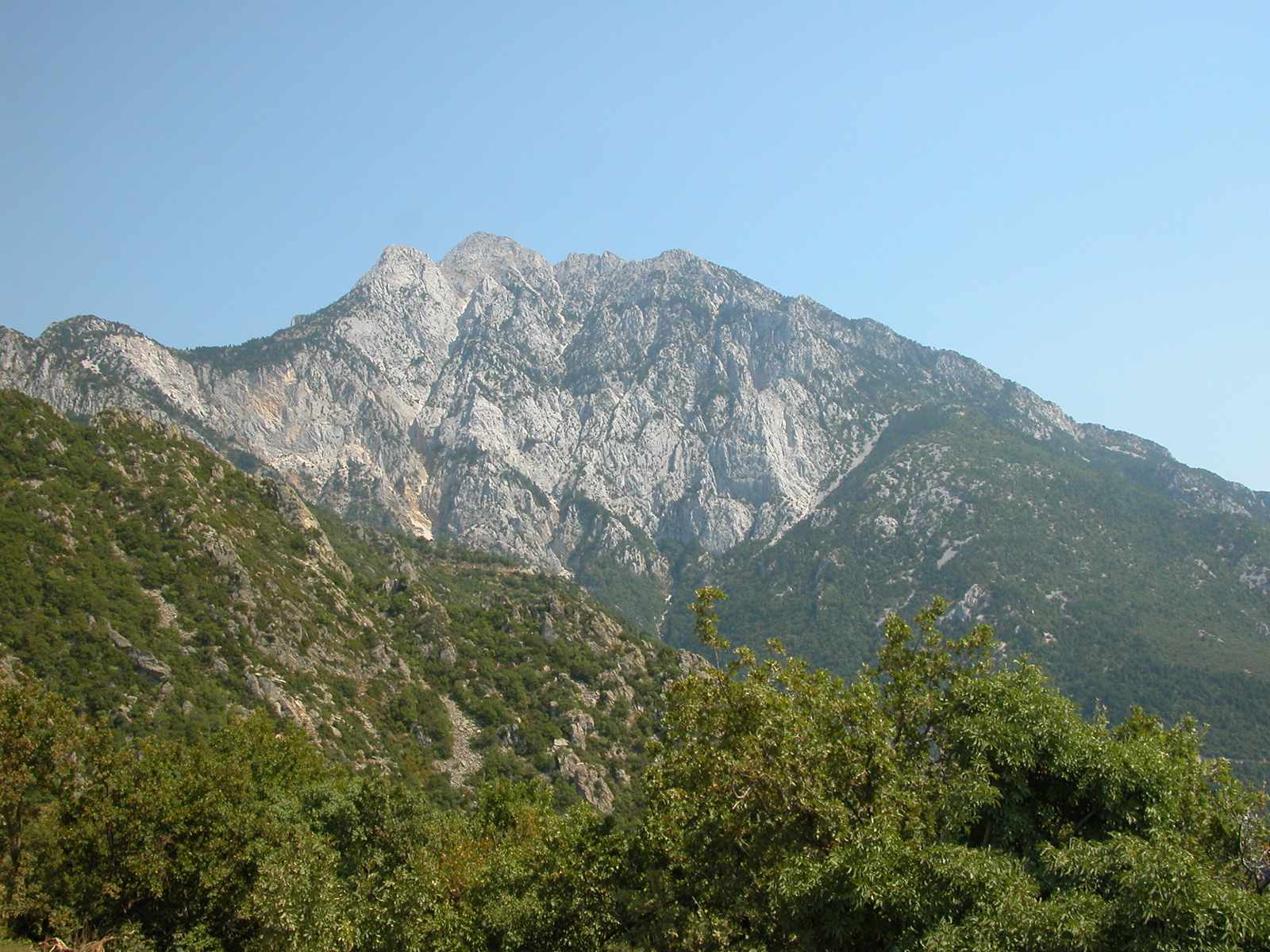
    Mount Athos, the Holy Mountain, one of the great natural beauties of Greece.
    Mount Athos, the Holy Mountain, one of the great natural beauties of Greece.

    And the Holy Mountain is one of the world’s great hikes. The monks call it the “Garden of the Holy Virgin Mary” and surely it’s one of the most exotic and pristine places to hike in Europe.

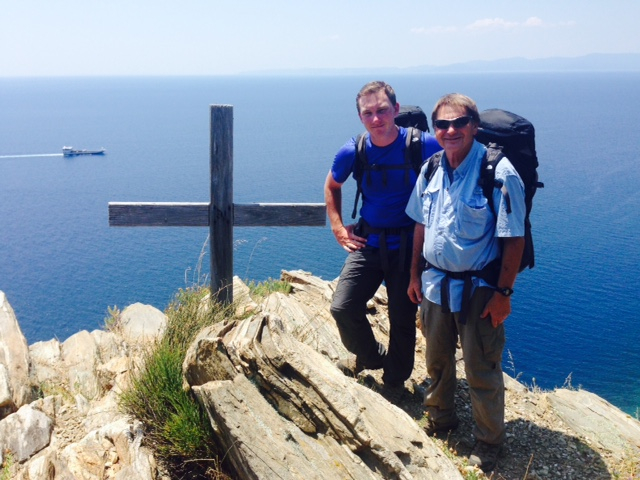
    I recently hiked the Holy Mountain with my son Daniel, who just graduated from high school, my friend Spiro Deligiannis, and his godson Zachary Deligiannis, who just graduated from college and nursing school. Spiro and I had hiked to the top of the mountain once before 20 years ago and it was hugely satisfying to return with two fine young men and hike the Holy Mountain again.

    Trailmaster John McKinney and his son Daniel. You're never more than a few miles from the sea when hiking around the Mt. Athos.
    Trailmaster John McKinney and his son Daniel. You’re never more than a few miles from the sea when hiking around the Mt. Athos.
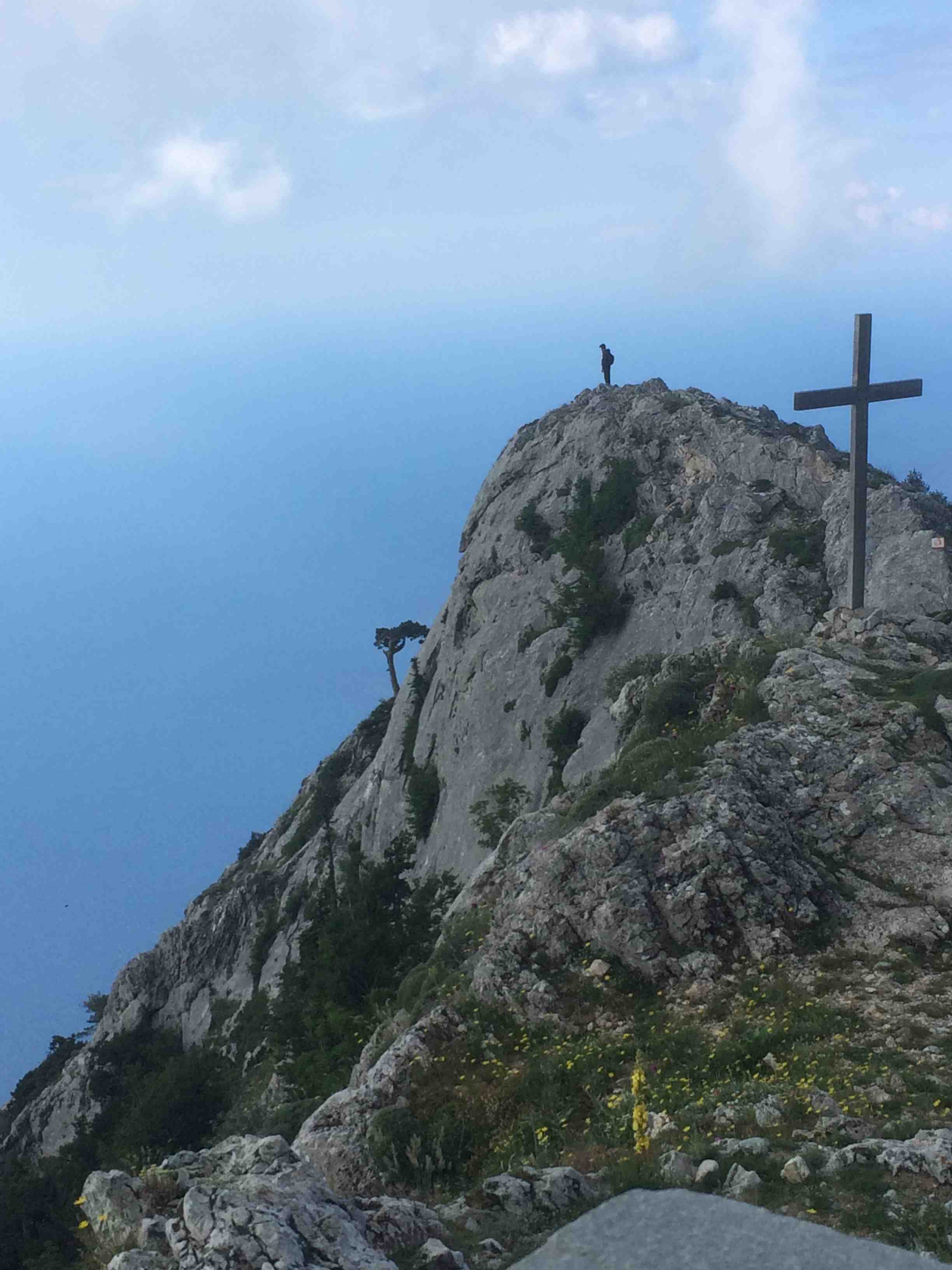
    This isolated, pyramid-shaped peak rises more than six thousand feet over the northern Aegean Sea. It stands alone at what seems like the end of the earth, but is actually at the very end of the 37-mile long peninsula of Agion Oros (“Holy Mountain” in Greek).

    From Saint Anna Skete (a monastic community perched on the cliffs on the west side of the peninsula) it’s a very steep, eight-mile ascent to the summit of Mount Athos with a 5,800-foot elevation gain. Most of the route is via ancient mule track, with some stairs at lower elevations and a few lengths of trail improved by the good works of the Friends of Mount Athos.

    Anyone whose first impression of the Greek landscape was formed by a visit to one of the country’s sparsely vegetated islands or watching the typical Travel Channel episode about Greece is sure to be astonished by the lush green landscape of Mount Athos. The spring/early summer wildflower show, highlighted by scarlet poppies, is spectacular.

    The trail leads through several plant communities, beginning at the lowest elevations, where there’s a thriving Mediterranean flora (similar to the one in the hills near my home in Santa Barbara, California). The mountain also hosts an oak and chestnut woodland, scattered stands of pine and fir, and an alpine zone above tree line.

    A promontory near Panaghia Chapel offers terrific coastal vistas.
    A promontory near Panaghia Chapel offers terrific coastal vistas.

    Water is available from springs along the way, as well as from the Panaghia Chapel, where there is a hiker shelter, and at the Metamorphosis (Transfiguration) Chapel at the summit.

    Mount Athos, 2,030 meters (6,660 feet) in elevation, is not huge by mountain standards but positively awesome when you approach it by trail because no other peaks are nearby. The mountain seems to rise straight out of the Aegean Sea. Vistas from the top are out of this world—the whole peninsula, including many monasteries—and on especially clear days, Mount Olympus on mainland Greece and the eastern coast of Turkey.

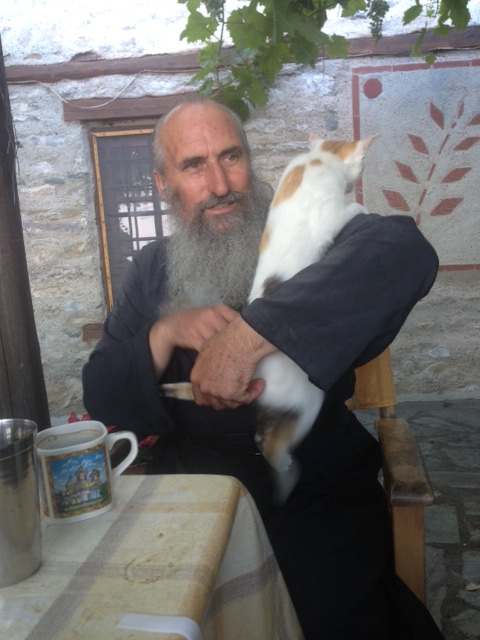
    Father Daniel offered us hospitality, wise counsel, and frozen water bottles to take with us on the trail to the top of Mount Athos.
    Father Daniel offered us hospitality, wise counsel, and frozen water bottles to take with us on the trail to the top of Mount Athos.

    The Holy Mountain is holy ground for the world’s 270 million Orthodox Christians. In keeping with monastic tradition dating from the days of the Byzantine Empire, women have not been permitted to set foot on Mt. Athos for more than a thousand years. In fact, visits, except by male religious pilgrims, are strictly regulated.

    The peak is mainly known among Greek Orthodox and Russian Orthodox pilgrims and hikers and its summit is infrequently visited. It’s a strenuous day hike to the top but doable by hikers in pretty good condition. The relative scarcity of hikers is not due to the difficulty of the ascent, but rather because of its isolated location within an autonomous monastic-republic, which requires prospective pilgrims to secure difficult-to-obtain entry permits.

    Our hike took place during the first week of July because that’s when we were suddenly issued our Diamonitirio (Mount Athos “Passports”). We backpacked from monastery to monastery, visited a half dozen monasteries, then spent three days with Father Daniel, a monk who lives near Saint Anna Skete.

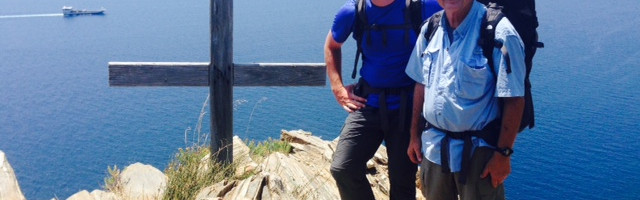
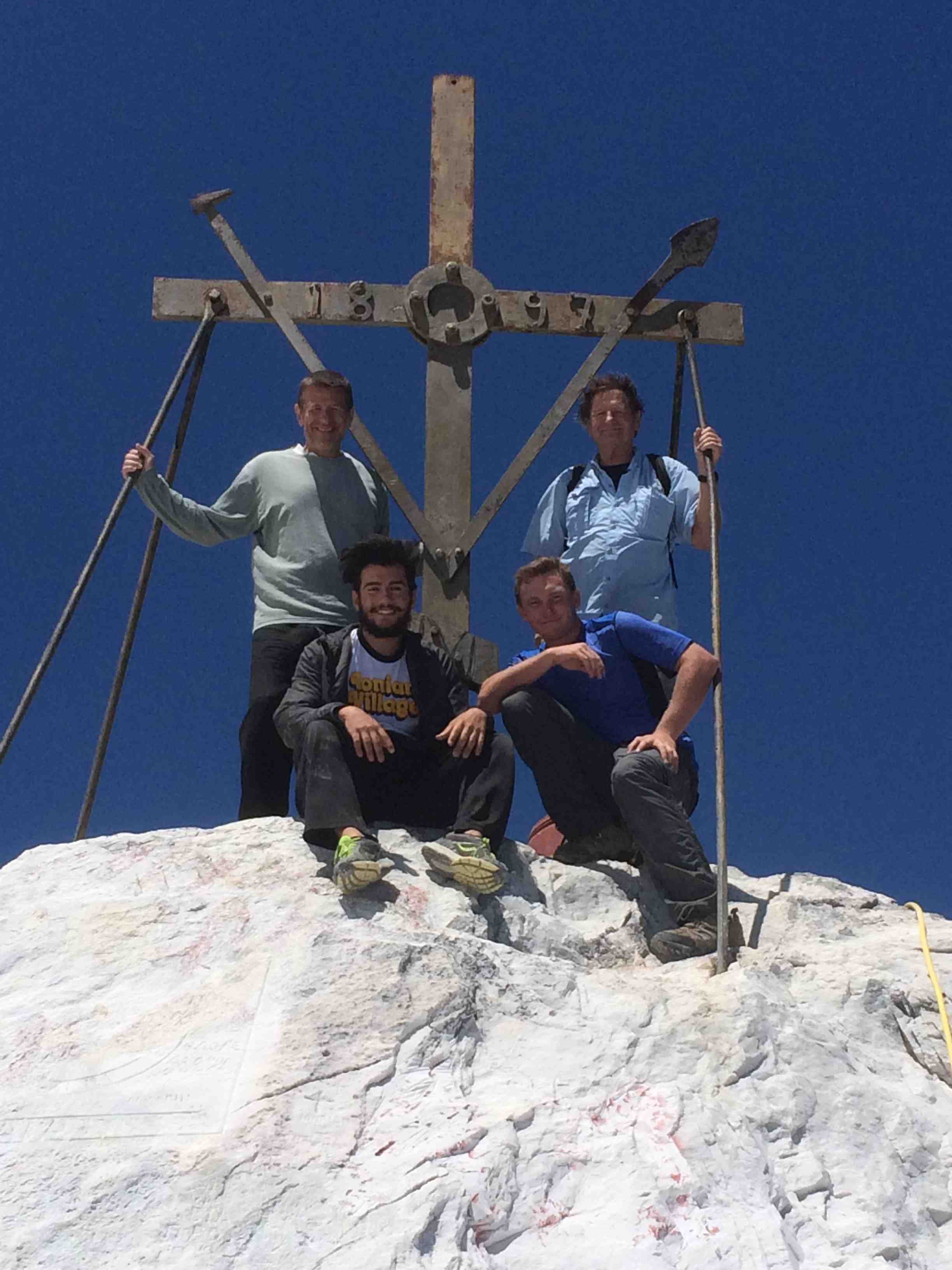
    Atop Athos is an iron cross, where we four pilgrims are all smiles after our long climb: (L-R) Spiro Deligiannis, John McKinney, Zachary Deligiannis and Daniel McKinney.
    Atop Athos is an iron cross, where we four pilgrims are all smiles after our long climb: (L-R) Spiro Deligiannis, John McKinney, Zachary Deligiannis and Daniel McKinney.

    Certainly I began looking at hiking a bit differently after hiking up, down and around the Holy Mountain. My first trip was an accidental pilgrimage. Then the Los Angeles Times hiking columnist, I had a strictly pedestrian purpose for my trip: hike around the Holy Mountain and write newspaper and magazine stories about Mount Athos. However what I encountered there turned out to be a personal epiphany composed of hiking, Orthodox Christianity, icons, and adoption. The experience was nothing short of a miracle. My second visit was a more purposeful pilgrimage—a grand hike around the mountain with stops at monasteries and deeply meaningful visits with monks.

    I’m completing a book about my experiences on Mt. Athos: “Hiking the Holy Mountain: Revelations on the Trail Between Heaven and Earth.” I look forward to its publication and sharing some wonderful stories. In the meantime, you can get a sneak preview behind the scenes by visiting Hiking the Holy Mountain Gallery

  • Words You Associate with Hiking

    Words You Associate with Hiking

    What are words you associate with hiking?

    By that I mean the words that describe the feelings (mostly good, I hope) that hiking brings you.

    Rewarding. Relaxing. Adventure.

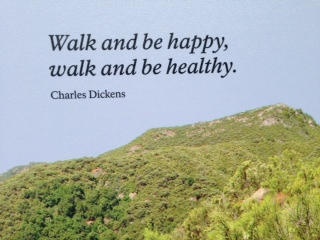
    Words for hikers from Charles Dickens posted along the trail to Marble Falls in Sequoia National Park.
    Words for hikers from Charles Dickens posted along the trail to Marble Falls in Sequoia National Park.

    These are a few of about two-dozen words I’ve heard hikers mention over and over again to describe what hiking means to them.

    I love “hiker words” and, if you do too, please take a look at the dictionary I compiled, Hiking from A to Z: A Dictionary of Words and Terms Used by Hikers. This pocket-sized book has hundreds of definitions of words from alpine to zip-line. You’ll find an extended definition of hiking itself, definitions of 36 different kinds of trails, and definitions of colorful words such as touron (a combination of tourist and moron).

    My hiker dictionary is pretty darn practical though. You won’t find words that describe the “inner” hiker. No one who knows me would describe me as a sensitive New Age kind of guy; nevertheless, the more I hike and the older I get the more I want to understand why people hike so that I can motivate more of them to hit the trail.

    Escape. Healing. Connection.

    Literally, I want to find the words that move them.

    Freedom. Spirituality. Sharing.

    My gathering of “Words You Associate with Hiking” has not been systematic at all. The words come from participants in hike leader trainings I’ve conducted, from hikers on day-long and week-long tours that I’ve led, and the many hikers I’ve met over the years on and off the trail. In other words, this gathering of hiker words is just one hiker’s perspective.

    So What Are the Words You Associate with Hiking?

    Peaceful. Wonder. Calm. Endurance. Happy. Healthy. Perseverance. Solitude. Humbling. Exhilarating. Camaraderie. Surprising. Revitalization.

    You may have an entirely different set of words to describe the hiking experience. Awesome!

    Awesome. Another good word associated with hiking.

    Hike On.

    John McKinney
    The Trailmaster

    P.S. We associate more technical words with hiking, too. Check out my Hiking From A to Z: A Dictionary of Words and Terms used by Hikers