John McKinney

  • Sequoia and Kings Canyon: Eagle Lake, Mineral King

    7.2 miles round trip with 2,200-foot elevation gain

    Eagle Lake, a popular weekend backpacker destination, is reached by one of Mineral King’s easier trails. Relatively easier, that is. A 2,200- foot gain at high altitude in 3.5 miles is a good workout to say the least.

    The lake lies in cirque, a basin formed by glacial erosion. When the light is right, the lake mirrors some of its scenic surroundings: weathered foxtail pines and polished granite walls, their shaded cracks and crevices patched by long-lingering snow.

    Eagle, like many a Sierra lake, was “improved” to render it more reservoir-like. The Mt. Whitney Power Company built a rock dam to better control waters flowing down to their hydroelectric plant located near Three Rivers.

    The moderately steep path has three branches: to Eagle Lake; to Mosquito Lakes (see hike description); to White Chief Canyon.

    En route to Eagle Lake, you’ll encounter two strange waterways. The path crosses Spring Creek, which emerges as if from nowhere. Geologists speculate that it’s of subterranean origin. If the sudden appearance of Spring Creek isn’t strange enough, Eagle Lake Trail hikers also witness the disappearance of Eagle Creek into a large sinkhole. The creek reappears down the hillside, leading to speculation that is channeled through a network of underground passageways in the marble rock below ground and emerges as…Spring Creek?

    Very mysterious.

    Experienced hikers, familiar with cross-country travel, can make a loop of this hike: climb a ridge from Eagle Lake then descend into Mosquito Lakes Basin. You’ll arrive at Mosquito Lake #4 and follow the lake chain north until you join the Mosquito Lakes Trail that returns you to Mineral King.

    DIRECTIONS TO THE EAGLE LAKE TRAILHEAD

    From Highway 198, about 3 miles northeast of the town of Three Rivers, turn right (east) on Mineral King Road. (If you drive up to the park’s Ash Mountain entrance station, you’ve gone a tad too far; double back.) The mostly paved road (it reverts to dirt in several places en route) leads about 24 miles to the Mineral King Ranger Station. Continue east on Mineral King Road another 1.3 miles and across a wooden bridge to the trailhead parking area.
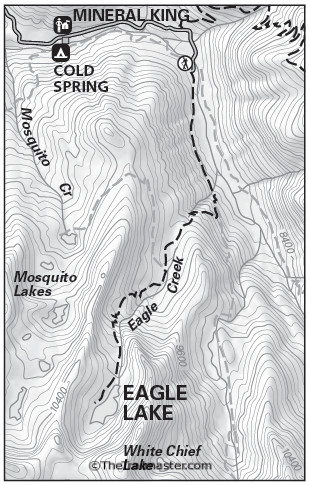
    Eagle Lake Map by TomHarrisonMaps.com (click to enlarge)
    Eagle Lake Map by TomHarrisonMaps.com (click to enlarge)

    THE HIKE

    Join the signed trail and soon view the restored “Honeymoon Cabin,” circa 1914. The path leads south along the East Fork of the Kaweah River and in 0.3 mile crosses the strange Spring Creek on a wooden footbridge. Look for Tufa Falls, a cascade so named for high levels of calcium carbonate in the waters.

    One mile out, at a junction with the trail to Eagle Lake/Mosquito Lakes, turn right, tackling steep switchbacks that climb a half-mile over fir-clad mountainside. Observe Eagle Creek’s disappearing act into a sinkhole and continue across a meadow to the junction with Mosquito Lakes Trail, two miles out. (See Mosquito Lakes hike.)

    Continue southwest toward Eagle Lake. Staying west of Eagle Creek, the trail switchbacks steeply, climbing white granite slopes and finally reaching the outlet of Eagle Lake.

    Interested in more hikes in Sequoia and Kings Canyon? Check out my guide: HIKE Sequoia and Kings Canyon
  • Olympic Memories on Baldwin Hills Hike

    Olympic Memories on Baldwin Hills Hike

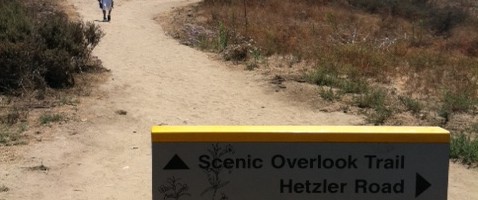
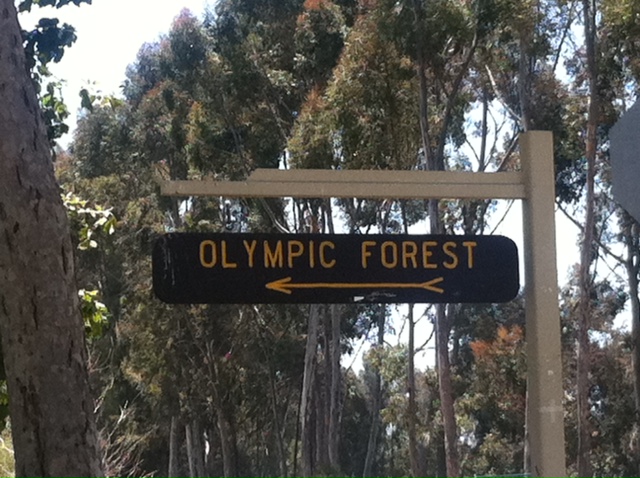
    olympic forestWhenever I take a Baldwin Hills hike I’m reminded that the city of Los Angeles twice hosted the Olympic games. One favorite Baldwin Hills hike is in Kenneth Hahn State Recreation Area. On my last visit I began hiking near the park’s Olympic Forest. When planted the forest included at least one tree for each of the 140 nations that participated in the 1984 Olympic Games.

    Adding to the international flavor is Doris’s Japanese Garden, also located near the trailhead. I enjoyed a stroll past a restful pond and plum trees to a waterfall.

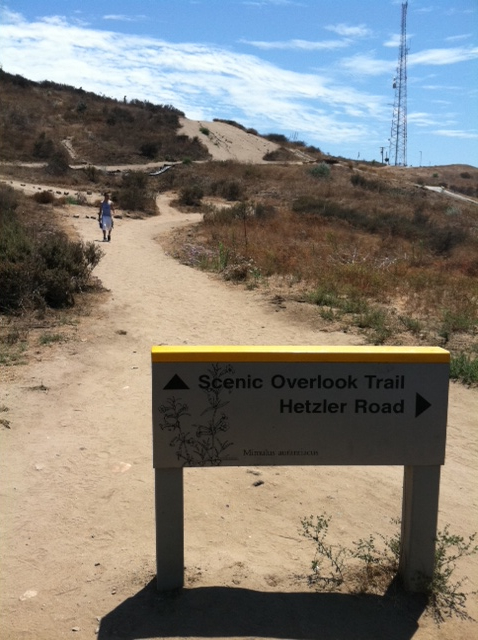
    I hiked the Walk for Health Trail. Every park should have one trail so named. Never mind, every hike is a walk for health.

    As I ascended the dirt path south above the Olympic Forest, I contemplated the paper mulberry from Tonga, the carob from Cyprus, the date palm from Egypt. Wouldn’t it be fun to be hiking along with Tongans, Cypriots, Egyptians and others from around the world?

    When Los Angeles Hosted the Olympics

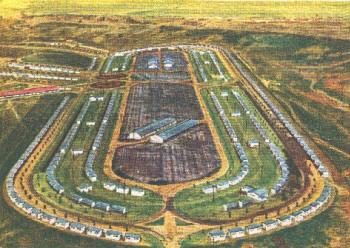
    the olympicsLos Angeles also hosted the Olympics in 1932, at which time the Baldwin Hills park site served as the Olympic Village hosting the athletes. Wow, L.A. sure must have looked different then.

    The trail climbs a hillside cloaked in the native coastal scrub to a cluster of pathways meeting close to Christine’s Point, the first of several viewpoints with benches and sunshades. I took a seat and enjoyed an air traffic controller’s view of LAX. Ah, this is what a Baldwin Hills hike is all about. Then I stood up, turned around, and admired clear-day vistas of the Hollywood Hills, San Gabriel Mountains and downtown L.A.

    Hike the Baldwin Hills for great views of L.A.

    Hiking may not be an Olympic event, but it sure is a satisfying workout, the best of outdoors recreation and as the signs along the Walk for Health Trail point out—good for the mind, body and spirit.

    Interested in more hikes in Los Angeles? Check out HIKE Los Angeles

  • Echo Mountain

    Echo Mountain

    Sam Merrill Trail: From Cobb Estate to Echo Mountain is 5.6 miles round trip with 1,400-foot elevation gain

    Professor Thaddeus Sobieski Coulincourt Lowe’s Echo Mountain Resort area can be visited not only by retracing the tracks of his “Railway to the Clouds” (See Mt. Lowe Railway hike), but also by way of a fine urban edge trail that ascends from the outskirts of Altadena.

    From Pasadena, visitors rode a trolley up Rubio Canyon, where a pavilion and hotel were located. Then they boarded the “airships” of the great cable incline, which carried them 3,000 feet (gaining 1,300 feet) straight up to the Echo Mountain Re¬sort Area. “Breathtaking” and “hair-raising” were the most frequent descriptions of ride that thrilled tourists from the 1890s to the 1930s. Atop Echo Mountain was a hotel and observatory.

    This historic hike visits the ruins of the one-time “White City” atop Echo Mountain. From the steps of the old Echo Mountain House are great clear-day views of the megalopolis.

    Pasadena and Altadena citizens have been proud to share their fascination with the front range of the San Gabriels. This pride has extend¬ed to the trails ascending from these municipalities into the mountains. Local citizens, under the auspices of the Forest Conservation Club, built a trail from the outskirts of Altadena to Echo Mountain during the 1930s. During the next decade, retired Los Angeles Superior Court clerk Samuel Merrill overhauled and maintained the path. When Merrill died in 1948, the trail was named for him.

    Sam Merrill Trail begins at the former Cobb Estate, now a part of Angeles National Forest. A plaque placed by the Altadena Historical Society dedicates the estate ground as “a quiet place for people and wildlife forever.”

    DIRECTIONS:

    From the Foothill Freeway (210) in Pasadena, exit on Lake Avenue and travel north 3.5 miles to its end at Loma Alta Drive. Park along Lake Avenue.

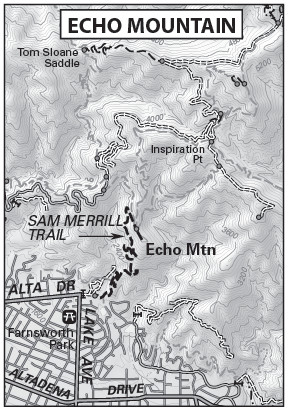
    Echo Mountain Map by TomHarrisonMaps.com (click to enlarge)
    Echo Mountain Map by TomHarrisonMaps.com (click to enlarge)

    THE HIKE:

    From the great iron gate of the old Cobb Estate, follow the trail along the chain-link fence. The path dips into Las Flores Canyon, crosses a seasonal creek in the canyon bottom, and begins to climb. With the earnest, but well-graded ascent, enjoy good vistas of the San Gabriel Valley and downtown Los Angeles.

    After 2.6 miles of, steep and mostly shadeless travel, arrive at a signed junction with Mt. Lowe Railway Trail (see hike description). Bear right and walk 100 yards along the bed of the old Mt. Lowe Railway to the Echo Mountain ruins. Just before the ruins is a very welcome drinking fountain.

    Up top, spot the railway’s huge bull wheel, now embedded in cement, and just below a pile of concrete rubble, all that remains of the railway depot. The steps and foundation of the Echo Mountain House are great places to take a break and enjoy the view straight down precipitous Rubio Canyon, the route of Lowe’s railway.

    Echo Mountain takes its name from the echo that supposedly bounces around the semicircle of mountain walls. You can try shouting into the strategically placed “megaphone” to get an echo but perhaps even echoes fade with time.

    Interested in more hikes in the San Gabriel Mountains? Check out my “Hike the San Gabriel Mountains Pocket Guide” at The Trailmaster Store

  • Hike the Santa Ynez Valley Wine Country

    Hike the Santa Ynez Valley Wine Country

    Hike the Santa Ynez Valley Wine Country and enjoy a couple of short trails that lead from tasting room to tasting room. Located near the little town of Los Olivos, the “Foxen Canyon Wine Trail” offers a tour from winery to winery along Foxen Canyon Road. The tour is for motorists (and some cyclists) but I’m happy to report there’s also a hiking trail to take in Foxen Canyon.

    Unwind, uncork, and take a hike in the Santa Barbara wine country.
    Unwind, uncork, and take a hike in the Santa Barbara wine country.

    Perched atop a commanding mesa overlooking Zaca Canyon, the Santa Ynez Valley and the wilderness beyond, Firestone Vineyard is the oldest (established in 1972) estate winery in Santa Barbara County. The large (by valley standards) winery produces acclaimed Merlots, Chardonnays and Rieslings. And it boasts the first and only hiking trail, too,

    During the 1990s, winery founder Brooks Firestone represented the county in the State Assembly for a few terms, before returning to expand the family business. From the earliest days of wine touring in the Santa Ynez Valley, Firestone Vineyard has been a major player and must-stop.

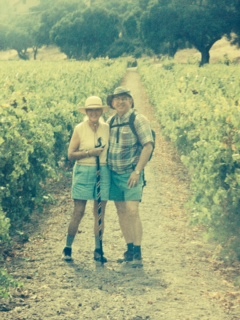
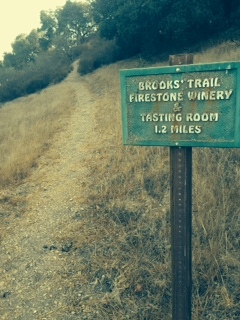
    Hikers were pleased when Firestone constructed “Brooks’ Trail” around the vineyard. The pleasant pathway connects Firestone Vineyard with the former Curtis Winery tasting room, recently taken over by Andrew Murray Vineyards.

    Andrew Murray wines are much admired, particularly for fine Rhône varieties, and it’s probably a safe bet that The Trailmaster is the one and only person who associates Andrew Murray wines with hiking. Let me explain:

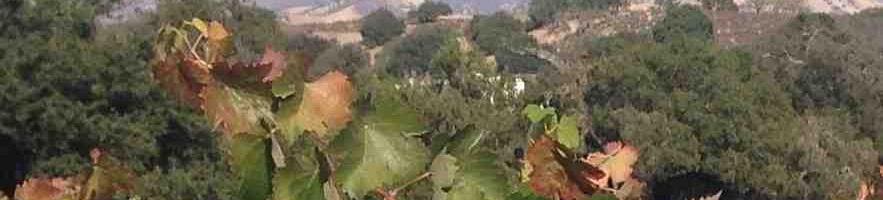
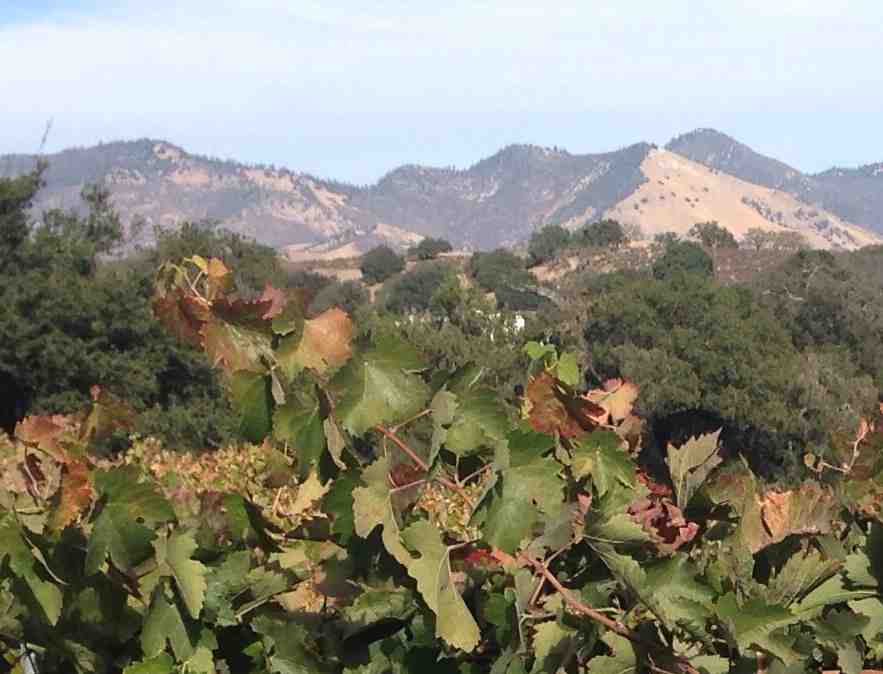
    Mountain and (Santa Ynez) Valley vistas are highlights of Brooks' Trail.
    Mountain and (Santa Ynez) Valley vistas are highlights of Brooks’ Trail.

    A decade ago, when I was leading hiking tours of Santa Barbara for an upscale walking vacation company, Andrew Murray Vineyards was quite hospitable to our hiking groups. Andrew’s Mom (Fran Murray) was active with a wonderful group, the Santa Ynez Valley Women Hikers, and she and Andrew gave us permission to walk their property and then arranged a post-hike wine tasting. A couple times, Andrew himself did the pour and proudly explained where he wanted to go with the family business. For some of the hikers on my tour, it was the highlight of the week!

    So here’s a toast to the Murrays, winemakers and hikers.

    If you have a designated driver (always a good idea if you’re on a tasting tour), you can make this an even easier 1.2 mile one-way hike (mostly downhill) from Firestone to Curtis.

    Plan your hike for a time when Firestone Vineyard’s tasting room is open, usually 10 A.M. to 5 P.M. daily. The main gain is open a little before and after these hours.

    For a little more wine country hiking, pay a visit to Zaca Mesa Winery, which occupies a scenic plateau overlooking Foxen Canyon. The winery offers tastings and two short trails, which look a bit neglected these days. Windmill Trail (0.25 mile) climbs to a picnic area then up to a little overlook. Z Trail (0.25 mile) also climbs to an overlook (a popular promontory for exchanging wedding vows). The path winds among the region’s two kinds of oaks—coastal live and valley—helpfully identified by signs en route.

    It's uphill back to Firestone Winery but it's an easy ascent, even after a bit of wine-tasting.
    It’s uphill back to Firestone Winery but it’s an easy ascent, even after a bit of wine-tasting.

    If you’re fantasizing about hiking across the valley from winery to winery and stopping at each tasting room along the trail, you’re going to be disappointed. Sauntering through vineyards in the valley is just not possible or encouraged like it is in Provence and Tuscany. We hikers are grateful to Firestone and Andrew Murray for this small sampling of Santa Ynez Valley wine-country trails, but the valley is so beautiful and enticing, we’re left thirsting for more.

    The signed path begins by the picnic area, located just below the Firestone tasting room. Valley vistas are superb from the start of the trail. The trail descends to the vineyard, skirts rows and rows of grapes, and soon crosses the vineyard’s paved entry road.

    Brooks Trail climbs a bit, then contours along oak-dotted slopes. Enjoy grand views of Foxen Canyon and the greater wine country. The sights and sounds of cars traveling Foxen Canyon and the rise and dip of active oil rigs amidst the rows of grape are also part of the valley scene. The path descends to Andrew Murray Winery and Visitor Center, where there are grassy picnic grounds under the shade of ancient oaks.

    Directions to the Santa Ynez Valley trailhead:

    From Highway 101, some 45 miles north of Santa Barbara, exit on State Highway 154 (San Marcos Pass Rd.) and head east 2.5 miles to Foxen Canyon Road. Turn left and follow the winding road 4.4 miles to a junction with Zaca Station Road. Firestone Vineyard is located 0.7 mile south on Zaca Station Road. Curtis Winery is just west on the continuation of Foxen Canyon Road.

    The most direct route to Firestone Vineyard is to exit Highway 101 on Zaca Station Road and proceed 2.5 miles northeast.

    Interested in more hikes in the Santa Barbara area? Check out HIKE Santa Barbara

  • California Lost Coast Map

    California Lost Coast Map

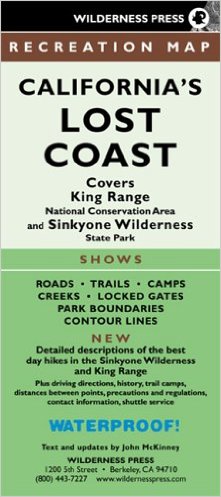
    California Lost Coast Map is just what you need for planning a day hike or backpacking adventure. The Trailmaster created this map to share the wonders of this wilderness shoreline and is pleased that each year more and more hikers from across the country and around the world are discovering the beach and mountain trails on the Lost Coast.

    Get the California’s Lost Coast Map from Wilderness Press, which usually offers it online for 25 percent off.

    Find great hikes on California's Lost Coast with the help of a map created by Trailmaster John McKinney
    Find great hikes on California’s Lost Coast with the help of a map created by Trailmaster John McKinney

    Sinkyone Wilderness State Park, along with the BLM’s King Range National Conservation Area to the north, comprise California’s Lost Coast, 60 miles of the state’s wildest coastline located in northern Mendocino and southern Humboldt counties. One reason the coast is “lost” is because no highways cross it. So rugged is this country, highway engineers were forced to route Highway 1 many miles inland from the coast—and the region has remained sparsely settled and unspoiled. It’s magnificent vistas and varied terrain—dense forests, prairies, coastal bluffs, beaches—reward the hardy explorer.

    I created the first version of this map way back in 1988 when I spent a month as a volunteer ranger at Sinkyone Wilderness State Park. Just after I moved my belongings into the old ranch house, it began to rain. And rain. And rain some more. And by the next day the road to the park was closed by a minor mudslide, marooning me from the outside world.

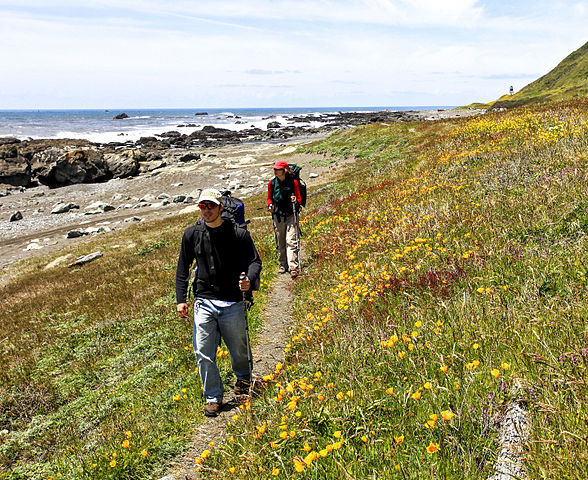
    Lost Coast hikers tramp a rugged shoreline trail (photo by Bob Wick, BLM)
    Lost Coast hikers tramp a rugged shoreline trail (photo by Bob Wick, BLM)

    I had a glorious time. A state park and 20 miles of coastline all to myself. Well, almost to myself. The sky was filled with gulls and pelicans, sea lions and harbor seals gathered at Little Jackass Cove, gray whales were migrating near shore, and a herd of Roosevelt elk seemed to accompany me wherever I hiked.

    I figured a few more nature-loving, don’t mind the rain kind of hikers would love the Lost Coast, too, if only they could find it and know where to hike. So I hiked all the trails and supervised the production of a map.

    Every few years the map (published by Wilderness Press) gets an update, and of course I love to return to the Lost Coast to hike and to field check “California’s Lost Coast.” The trail system sure is a lot better these days, with pretty well-maintained trails and trailheads. That being said, much of it is still wilderness hiking, and far more remote than any other length of coast in California.

    The Lost Coast Map also includes descriptions of a number of my favorite day hikes in the King Range National Conservation Area and Sinkyone Wilderness State Park, some along the route of the Lost Coast Trail, which extends the length of the two jurisdictions. Lost Coast Trail is starting to appear on those Top Ten and Top Twenty North American Hikes lists, and I say deservedly so.

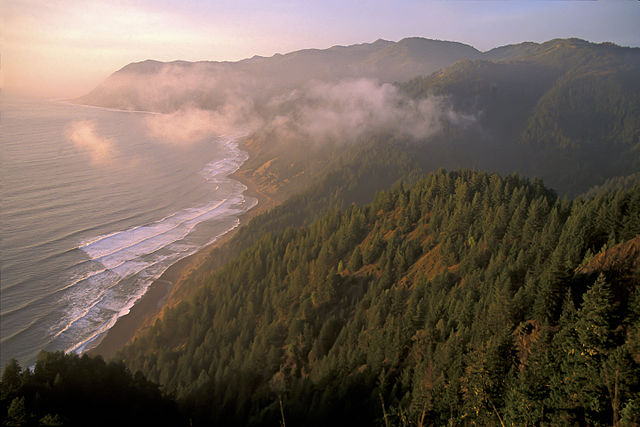
    On California's Lost Coast, the rugged peaks of the King Range seem to rise right out of the surf. (photo by Bob Wick, BLM)
    On California’s Lost Coast, the rugged peaks of the King Range seem to rise right out of the surf. (photo by Bob Wick, BLM)

    Since California’s Lost Coast is one of the rainiest regions in the state, if any map should be waterproof, this one is it. My only objection to the word “WATERPROOF!” on the front of the map is in way bigger type than John McKinney and I’m really going to have to speak to the otherwise bright and extremely meticulous editors at Wilderness Press about this…Imagine thinking WATERPROOF! is a more significant selling point than The Trailmaster’s trail-blazing and compelling prose…

    And in other Lost Coast News: Backpackers and those day hikers who like to make one-way journeys will be overjoyed to learn of three locally owned shuttle services that offer on-demand drop-off and pickup at all the major Lost Coast trailheads:

    Lost Coast Adventures (707)986-9895 or (707)502-7514
    Lost Coast Shuttle (707)986-7437
    Lost Coast Trail Transport Service 
(707)986-9909

    The BLM has a very helpful visitor center, with a great staff and information handouts. Backpackers in particular will need to drop by to find out about trail camps and keeping your food out of the paws of the increasing bear population.

    Have a great time on the Lost Coast!

    Hike On,

    John McKinney
    The Trailmaster

  • Hiking Mount Athos, the Holy Mountain

    Hiking Mount Athos, the Holy Mountain

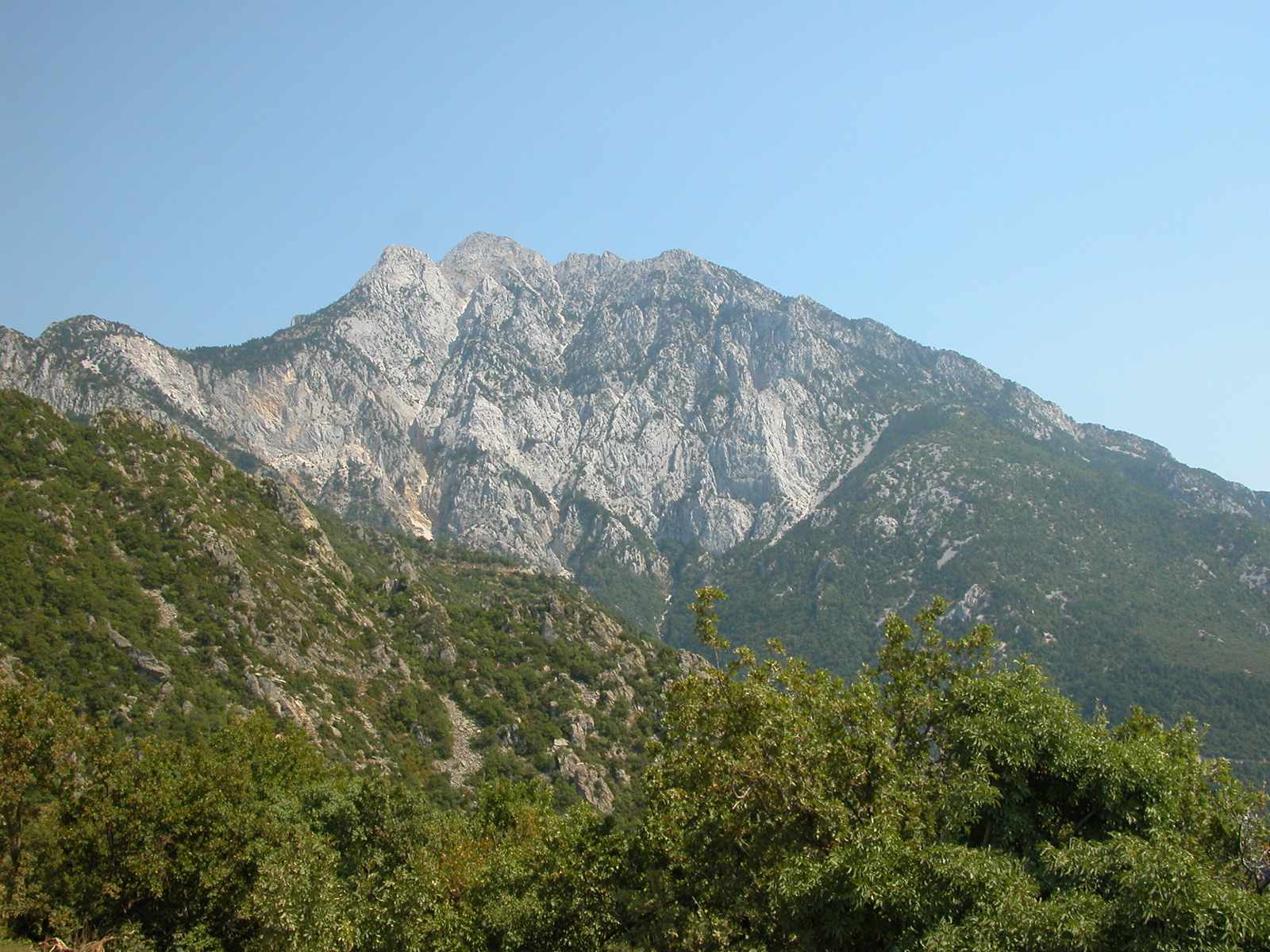
    Mount Athos, the Holy Mountain, has several faces: a Greek landscape of astonishing beauty; monasteries of an architectural genius that will not be seen again; two thousand monks living much the same as their brothers in Christ did, a thousand years ago.

    Mount Athos, the Holy Mountain, one of the great natural beauties of Greece.
    Mount Athos, the Holy Mountain, one of the great natural beauties of Greece.

    And the Holy Mountain is one of the world’s great hikes. The monks call it the “Garden of the Holy Virgin Mary” and surely it’s one of the most exotic and pristine places to hike in Europe.

    I recently hiked the Holy Mountain with my son Daniel, who just graduated from high school, my friend Spiro Deligiannis, and his godson Zachary Deligiannis, who just graduated from college and nursing school. Spiro and I had hiked to the top of the mountain once before 20 years ago and it was hugely satisfying to return with two fine young men and hike the Holy Mountain again.

    Trailmaster John McKinney and his son Daniel. You're never more than a few miles from the sea when hiking around the Mt. Athos.
    Trailmaster John McKinney and his son Daniel. You’re never more than a few miles from the sea when hiking around the Mt. Athos.

    This isolated, pyramid-shaped peak rises more than six thousand feet over the northern Aegean Sea. It stands alone at what seems like the end of the earth, but is actually at the very end of the 37-mile long peninsula of Agion Oros (“Holy Mountain” in Greek).

    From Saint Anna Skete (a monastic community perched on the cliffs on the west side of the peninsula) it’s a very steep, eight-mile ascent to the summit of Mount Athos with a 5,800-foot elevation gain. Most of the route is via ancient mule track, with some stairs at lower elevations and a few lengths of trail improved by the good works of the Friends of Mount Athos.

    Anyone whose first impression of the Greek landscape was formed by a visit to one of the country’s sparsely vegetated islands or watching the typical Travel Channel episode about Greece is sure to be astonished by the lush green landscape of Mount Athos. The spring/early summer wildflower show, highlighted by scarlet poppies, is spectacular.

    The trail leads through several plant communities, beginning at the lowest elevations, where there’s a thriving Mediterranean flora (similar to the one in the hills near my home in Santa Barbara, California). The mountain also hosts an oak and chestnut woodland, scattered stands of pine and fir, and an alpine zone above tree line.

    A promontory near Panaghia Chapel offers terrific coastal vistas.
    A promontory near Panaghia Chapel offers terrific coastal vistas.

    Water is available from springs along the way, as well as from the Panaghia Chapel, where there is a hiker shelter, and at the Metamorphosis (Transfiguration) Chapel at the summit.

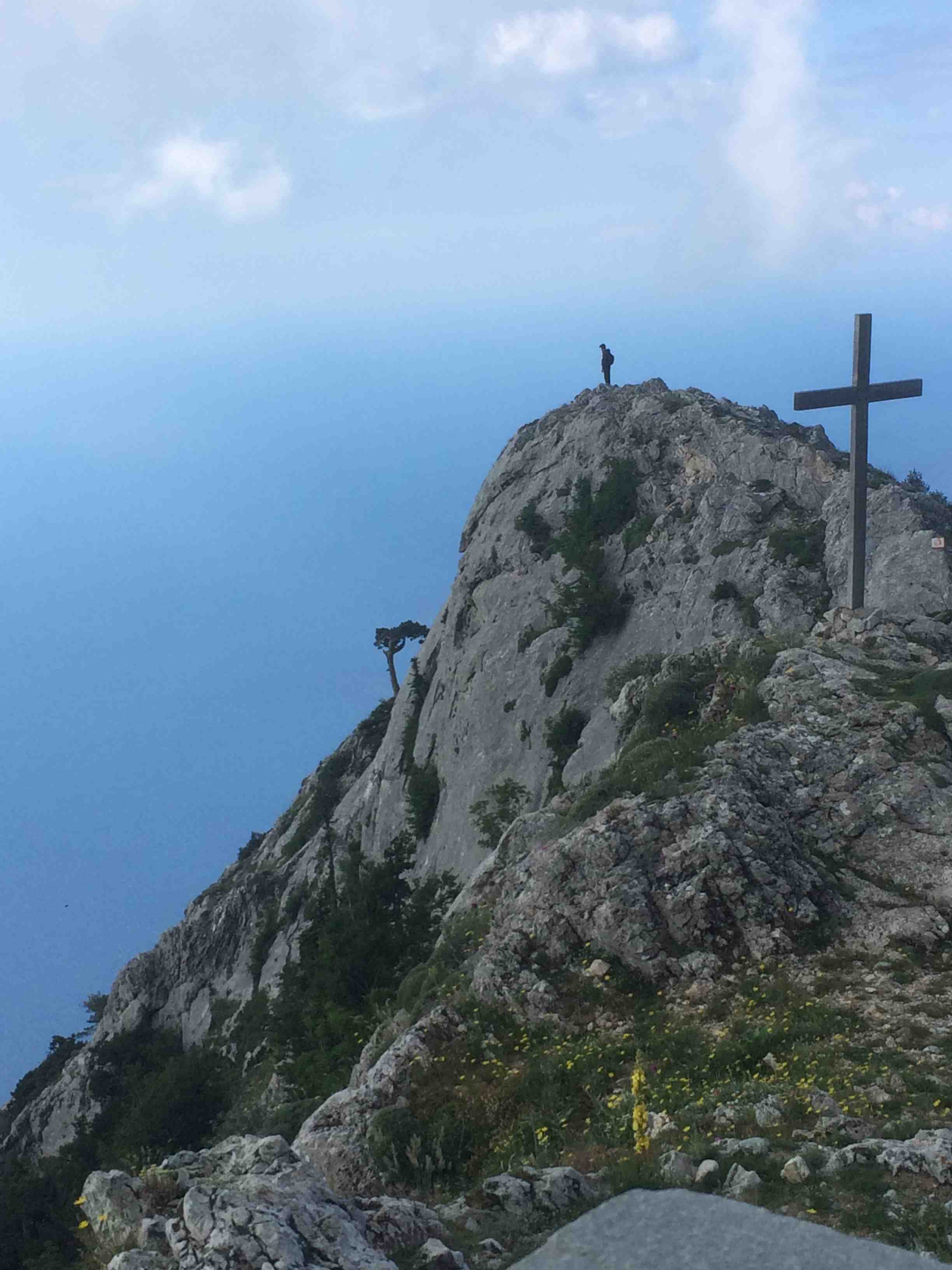
    Mount Athos, 2,030 meters (6,660 feet) in elevation, is not huge by mountain standards but positively awesome when you approach it by trail because no other peaks are nearby. The mountain seems to rise straight out of the Aegean Sea. Vistas from the top are out of this world—the whole peninsula, including many monasteries—and on especially clear days, Mount Olympus on mainland Greece and the eastern coast of Turkey.

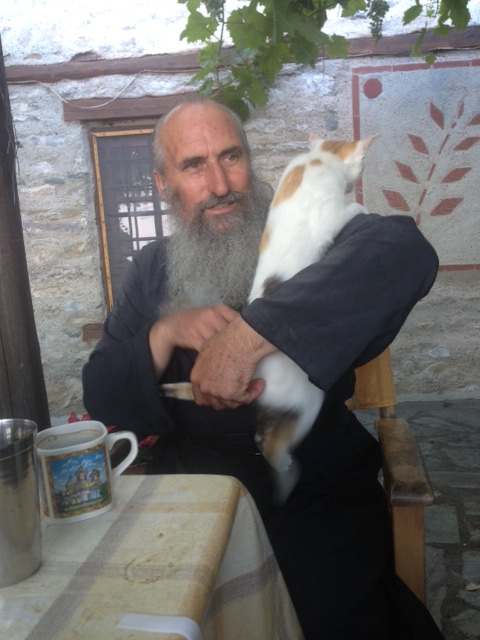
    Father Daniel offered us hospitality, wise counsel, and frozen water bottles to take with us on the trail to the top of Mount Athos.
    Father Daniel offered us hospitality, wise counsel, and frozen water bottles to take with us on the trail to the top of Mount Athos.

    The Holy Mountain is holy ground for the world’s 270 million Orthodox Christians. In keeping with monastic tradition dating from the days of the Byzantine Empire, women have not been permitted to set foot on Mt. Athos for more than a thousand years. In fact, visits, except by male religious pilgrims, are strictly regulated.

    The peak is mainly known among Greek Orthodox and Russian Orthodox pilgrims and hikers and its summit is infrequently visited. It’s a strenuous day hike to the top but doable by hikers in pretty good condition. The relative scarcity of hikers is not due to the difficulty of the ascent, but rather because of its isolated location within an autonomous monastic-republic, which requires prospective pilgrims to secure difficult-to-obtain entry permits.

    Our hike took place during the first week of July because that’s when we were suddenly issued our Diamonitirio (Mount Athos “Passports”). We backpacked from monastery to monastery, visited a half dozen monasteries, then spent three days with Father Daniel, a monk who lives near Saint Anna Skete.

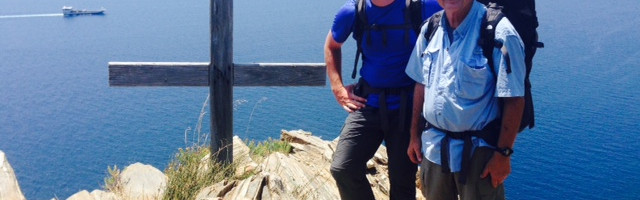
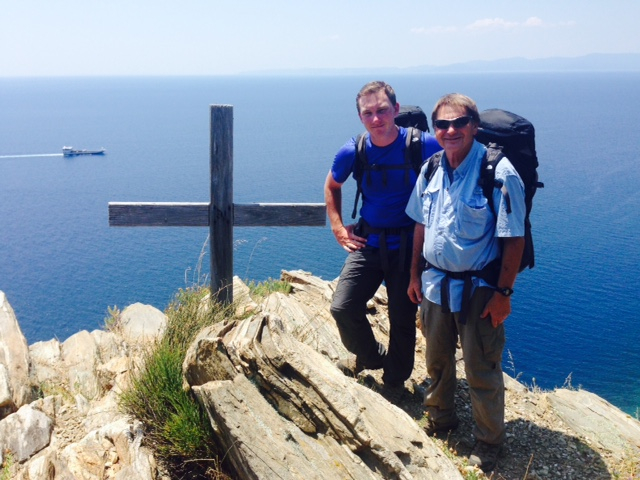
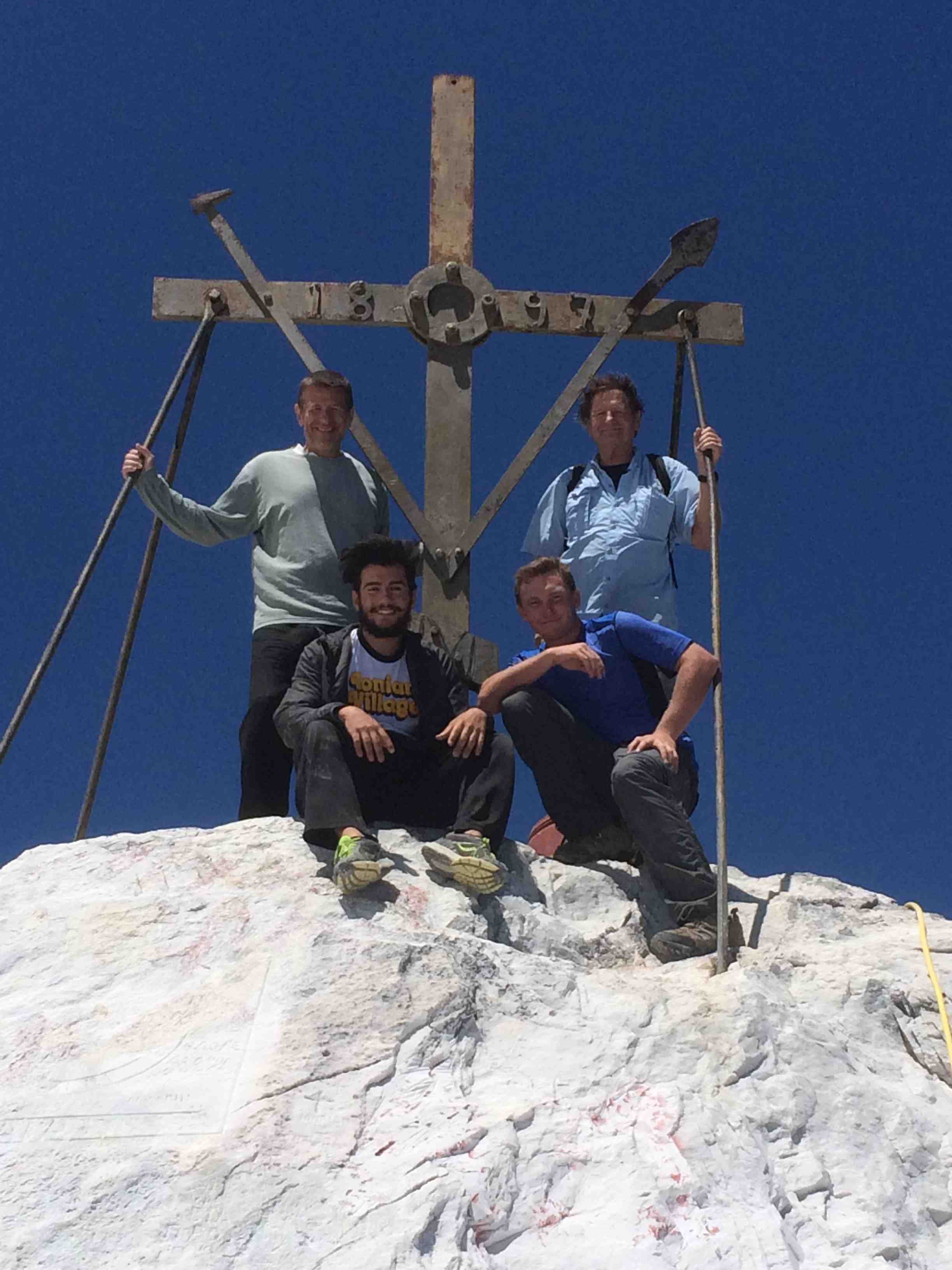
    Atop Athos is an iron cross, where we four pilgrims are all smiles after our long climb: (L-R) Spiro Deligiannis, John McKinney, Zachary Deligiannis and Daniel McKinney.
    Atop Athos is an iron cross, where we four pilgrims are all smiles after our long climb: (L-R) Spiro Deligiannis, John McKinney, Zachary Deligiannis and Daniel McKinney.

    Certainly I began looking at hiking a bit differently after hiking up, down and around the Holy Mountain. My first trip was an accidental pilgrimage. Then the Los Angeles Times hiking columnist, I had a strictly pedestrian purpose for my trip: hike around the Holy Mountain and write newspaper and magazine stories about Mount Athos. However what I encountered there turned out to be a personal epiphany composed of hiking, Orthodox Christianity, icons, and adoption. The experience was nothing short of a miracle. My second visit was a more purposeful pilgrimage—a grand hike around the mountain with stops at monasteries and deeply meaningful visits with monks.

    I’m completing a book about my experiences on Mt. Athos: “Hiking the Holy Mountain: Revelations on the Trail Between Heaven and Earth.” I look forward to its publication and sharing some wonderful stories. In the meantime, you can get a sneak preview behind the scenes by visiting Hiking the Holy Mountain Gallery

  • Words You Associate with Hiking

    Words You Associate with Hiking

    What are words you associate with hiking?

    By that I mean the words that describe the feelings (mostly good, I hope) that hiking brings you.

    Rewarding. Relaxing. Adventure.

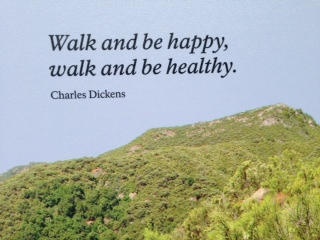
    Words for hikers from Charles Dickens posted along the trail to Marble Falls in Sequoia National Park.
    Words for hikers from Charles Dickens posted along the trail to Marble Falls in Sequoia National Park.

    These are a few of about two-dozen words I’ve heard hikers mention over and over again to describe what hiking means to them.

    I love “hiker words” and, if you do too, please take a look at the dictionary I compiled, Hiking from A to Z: A Dictionary of Words and Terms Used by Hikers. This pocket-sized book has hundreds of definitions of words from alpine to zip-line. You’ll find an extended definition of hiking itself, definitions of 36 different kinds of trails, and definitions of colorful words such as touron (a combination of tourist and moron).

    My hiker dictionary is pretty darn practical though. You won’t find words that describe the “inner” hiker. No one who knows me would describe me as a sensitive New Age kind of guy; nevertheless, the more I hike and the older I get the more I want to understand why people hike so that I can motivate more of them to hit the trail.

    Escape. Healing. Connection.

    Literally, I want to find the words that move them.

    Freedom. Spirituality. Sharing.

    My gathering of “Words You Associate with Hiking” has not been systematic at all. The words come from participants in hike leader trainings I’ve conducted, from hikers on day-long and week-long tours that I’ve led, and the many hikers I’ve met over the years on and off the trail. In other words, this gathering of hiker words is just one hiker’s perspective.

    So What Are the Words You Associate with Hiking?

    Peaceful. Wonder. Calm. Endurance. Happy. Healthy. Perseverance. Solitude. Humbling. Exhilarating. Camaraderie. Surprising. Revitalization.

    You may have an entirely different set of words to describe the hiking experience. Awesome!

    Awesome. Another good word associated with hiking.

    Hike On.

    John McKinney
    The Trailmaster

    P.S. We associate more technical words with hiking, too. Check out my Hiking From A to Z: A Dictionary of Words and Terms used by Hikers

  • Sequoia: Redwood Canyon

    Sequoia: Redwood Canyon

    Redwood Canyon, Hart Tree Trails

    6. 5 mile loop with 700-foot elevation gain; return via Sugar Bowl is 9-mile loop with 1,200-foot gain

    The largest sequoia groves on the planet are found in Redwood Canyon in Kings Canyon National Park. More than 15,000 big trees spread over 4,000 acres and hiking is the only way to visit them.

    Sixteen miles of trail weave among the extensive old-growth groves and meander along Redwood Creek. The trails offer hikers a kind of wilderness experience not possible from the awesome, but extremely popular groves in Sequoia National Park.

    From a hiker’s perspective, the sequoias en route sure seem more densely congregated than elsewhere in the park. The sequoia’s creek-side companions are quite colorful: in spring, dogwood blooms along with purple lupine, and in autumn the forest lights up with the red and gold leaves of the aspen.

    Sequoias aren’t the only big trees in Redwood Canyon. Sugar pines can be as tall or taller than neighboring sequoia and have much larger cones—measuring 10 to 24 inches long—longest of all trees.

    If you’re short of time, hike out and back through Redwood Canyon—a 4-mile round trip jaunt on a trail paralleling Redwood Creek. Otherwise choose among stellar loop trips with plenty of sights to see: Tunnel Tree (the trail goes through it), Hart Tree (a top 20 sequoia), and a hollowed-out sequoia once used as a cabin.

    My favorite loop visits Hart Tree and Fallen Goliath and returns via Redwood Canyon. Consider a longer return through the Sugar Bowl, characterized as “a grove within a grove,” for its dense stands of young sequoia.

    DIRECTIONS TO THE REDWOOD CANYON TRAILHEAD

    From the Big Stump entry to Kings Canyon National Park, continue on Highway 180 1.5 miles to Generals Highway. Turn right and drive 3 miles to Quail Flat and a junction with the paved road to Hume Lake on the left. Turn right on dirt Redwood Saddle Road, descending amidst great sequoias 1.7 miles to a junction; fork left to the parking lot and signed trailhead.

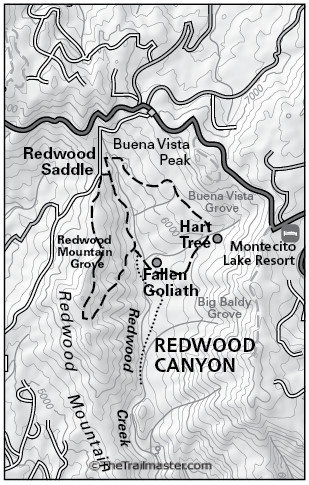
    Redwood Canyon Map by TomHarrisonMaps.com (click to enlarge)
    Redwood Canyon Map by TomHarrisonMaps.com (click to enlarge)

    THE HIKE

    Walk down the wide forest path 0.3 mile to a signed junction. Bear left, crossing and re-crossing tributaries of fern-lined Redwood Creek. About a mile out, reach Barton’s Post Camp, site of a logging operation in the late 1800s.

    Hike another mile to lush and lovely Hart Meadow, and then to and through Tunnel Tree (a hollowed-out sequoia log) to meet the short (100-yard) spur trail to Hart Tree at the 3.2-mile mark. After visiting the tree, largest in the grove, return to the main trail and descend to Fallen Goliath, a truly ancient tree now serving as a “nursery log” for young sequoias.

    The path descends to Redwood Creek and a junction with Redwood Canyon Trail. Head right, up-creek and soon (0.1 mile) reach a junction with Sugar Bowl Trail; go left to extend your outing with a hike up and around Redwood Mountain. Otherwise continue up-canyon parallel to the creek. When you return to the junction with Hart Tree Trail, bear left and retrace your steps to the trailhead.

    Interested in more hikes in Sequoia and Kings Canyon? Check out my guide: HIKE Sequoia and Kings Canyon