
Yosemite gets the crowds. Joshua Tree gets the Instagrammers. Lassen gets overlooked.
Well, maybe not for long. Visitor numbers are climbing as hikers search for alternatives to California’s crowded marquee parks.
Drive into this corner of northern California and you’ll discover that Lassen is certainly no consolation prize for hikers. The climbs are real (ask anyone who’s huffed and puffed up Brokeoff Mountain or Lassen Peak), the geothermal features are spectacular (yes, Bumpass Hell really does smell like rotten eggs), and the lakes — from Shadow to Manzanita — are as sweet as any in the Sierra.
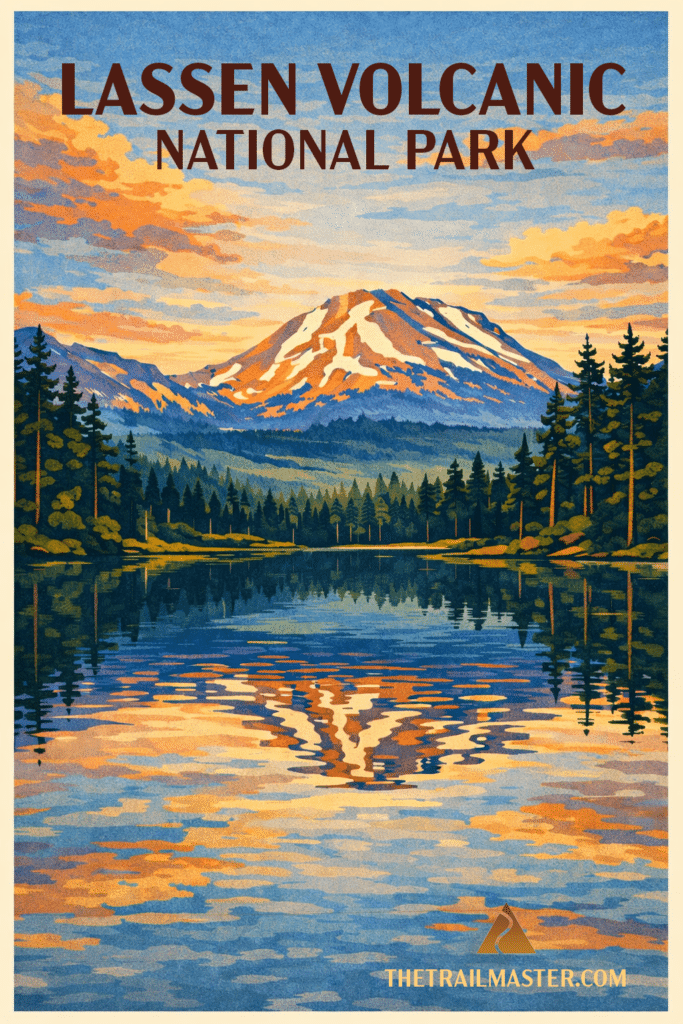
Tucked away where the Cascade Range nudges up against the northern reaches of the Sierra Nevada, the park blends the spirit of both mountain ranges. Its forests are filled with lodgepole and ponderosa pines, red fir, and even a few Sierra-style hemlocks. Its meadows host the bright blooms of mule’s ears and lupine, while its higher slopes feel closer in kinship to Shasta and Rainier than to Yosemite. Hikers who lace up their boots here discover a landscape that feels both familiar and otherworldly: a meeting ground of lava, lakes, and alpine light.
Lassen’s claim to volcanic fame is undeniable. The park preserves every type of volcano found on Earth—shield, plug dome, cinder cone, and stratovolcano—all within its 166 square miles. Hydrothermal features—bubbling mudpots, hissing fumaroles, steaming vents—offer a living laboratory of fire and water. The earth feels thin here, fragile, as if you are walking just above its beating heart.
The park is a patchwork of contrasts. To the south, the “mini-Yellowstone” of Bumpass Hell and its companion thermal basins roar and bubble, reached by short trails and interpreted with care by the park service. Here, boardwalks wind past turquoise pools and steaming mudpots, the air perfumed with sulfur, the ground hissing with volcanic energy. Families and casual hikers can experience the volcanic heart of Lassen in just a few miles.
To the east, the mood softens. A chain of lakes—Butte, Snag, Horseshoe, Juniper—invites backpackers and anglers into quieter realms. The Pacific Crest Trail threads 17 miles through this country, offering long views and deep solitude. For those who prefer reflection to roar, these waters and woods provide the park’s gentlest enchantments
Lassen also has stories. Lassen Peak blew its top in 1914, kept at it until 1921, and in the process earned the distinction of being the only national park created because of an eruption. It’s the story of Peter Lassen, an unreliable Danish trail guide who misled emigrants so badly they once forced him at gunpoint to climb his namesake mountain to get them back on track.
Believe me: once you’ve climbed Lassen Peak, soaked up the view from Brokeoff, wandered past steaming vents at Bumpass Hell, or stood on the rim of Cinder Cone staring down at the Fantastic Lava Beds, you’ll wonder why this place isn’t mobbed. And then you’ll be grateful it isn’t.
Cinder Cone & Fantastic Lava Beds
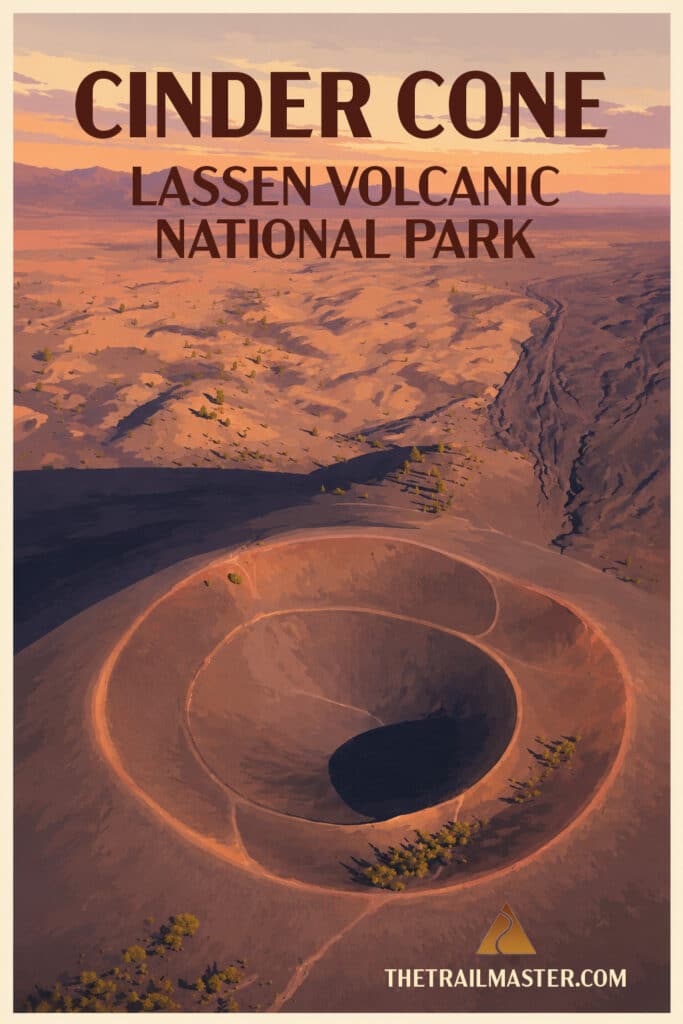
If you were asked to draw a volcano in grade school, chances are you’d sketch something that looks like Lassen’s Cinder Cone—a near-perfect pyramid of black scoria and ash, isolated in a landscape of lava and painted earth. To hike here is to enter a living geology textbook, where every step is over evidence of fire, eruption, and upheaval.
Cinder Cone is young by geologic standards—its most recent eruption only about 250 years ago. That blast spread ash across some 35 square miles, buried forests, and reshaped the country into one of California’s strangest wildernesses. Standing at its base, with cinders crunching under your boots and the jagged Fantastic Lava Beds spilling outward like a frozen river of night, you feel as though the eruption ended only yesterday.
The cone is only part of the spectacle. To its west lie the Fantastic Lava Beds, a blackened chaos of basalt where whole trees were engulfed in molten stone. To the south, the Painted Dunes glow with improbable colors—red, ochre, and orange ash layers stained by oxidized minerals. In the afternoon light, the dunes look aflame, as if the eruption never really ended. Few places in the national park system offer such a concentrated mix of starkness and beauty.
The trail itself adds another layer of story. Imagine 1850s pioneers, oxen and wagons in tow, trudging across the cinders. For them, this bizarre landscape was neither geology lesson nor scenic highlight—it was one last brutal obstacle before reaching the Sacramento Valley.
Today, the Cinder Cone hike is both approachable and profound. The short 5-mile round trip is family-friendly, though the final climb up loose cinders is a calf-burner. The longer Snag Lake loop is a rugged all-day trek, offering solitude and deeper immersion in Lassen’s volcanic backcountry. Either way, you’ll come away changed: impressed, awed, and maybe a little humbled by the forces that shaped this wild corner of California.
Lassen’s Lake District
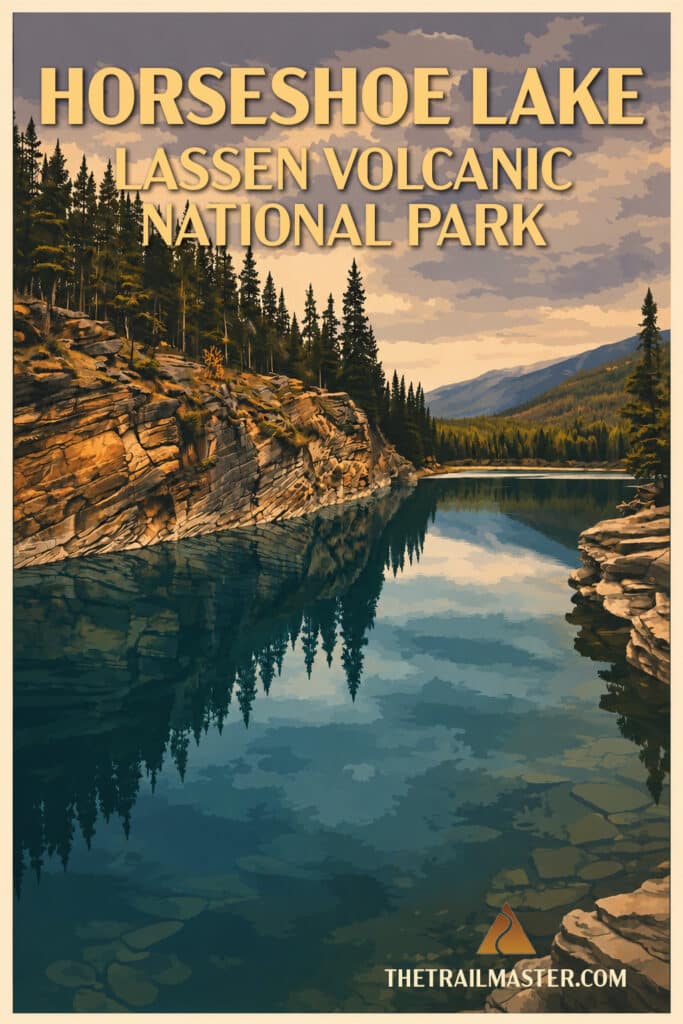
Lassen has a gentler, almost pastoral side—a country of shimmering lakes, green meadows, and rolling forests. I call this region Lassen’s Lake District, and it deserves as much acclaim as the park’s fiery features.
The Lake District spreads across the park’s midsection, accessible from Summit Lake. Unlike the dramatic landscapes carved by eruptions, this country feels downright friendly underfoot: meadows alive with dragonflies, red fir forests filtering sunlight, and lakes rimmed with soft grasses that invite a pause. I like the mix-and-match loops, from a short jaunt to Echo Lake to the big circuit around Horseshoe.
Among the highlights is Grassy Swale, a three-mile-long meadow with a name borrowed from the British countryside. The swale is pure Sierra summer: lupine painting the slopes purple, red paintbrush glowing in the grass, butterflies and frogs adding their own motion and music. Yes, mosquitoes join the party too, but even they can’t spoil the wide-open charm of meadow hiking here.
Each lake on the circuit has its own personality. Echo is small and photogenic. The Twin Lakes—Upper and Lower—are set among quiet camps and shaded shoreline. Swan is modest but secluded, a gem for solitude-seekers. And Horseshoe Lake, the largest of all, offers a broad, inviting sweep of water that demands a swim.
Here’s a Lassen less traveled. No boiling mudpots here, no steaming fumaroles. Instead: forest shade, wildflower meadows, lake reflections, and the chance to wander for a day or more in a landscape where water, not fire, is the guiding force.
Lassen has variety, that’s for sure. In a single short visit you can stand atop an active volcano, walk among boiling mudpots, wander through lava fields, swim in an alpine lake, and hike through meadows bright with wildflowers.
Maybe that’s why I’ve always had a soft spot for Lassen.
Even as more people discover it, Lassen still rewards the kind of experience many of us are seeking these days: room to wander, room to breathe, and trails that feel like discoveries rather than destinations.
If you’ve never been, this might be the year to change that.
Footnotes
Check out Lassen National Park on my site and learn about a half-dozen of my favorite hikes.
Planning a trip? Take a look at Lassen: Know Before You Go