
Life, Liberty, and the Pursuit of Happiness on the Trail
Every year on the Fourth of July we celebrate life, liberty, and the pursuit of happiness. I’ve spent much of my life looking for all three on trails and sharing what I’ve learned along the way.
There it is in the second sentence of the Declaration of Independence, the philosophical foundation of the United States: all people have certain natural rights, including “Life, Liberty, and the pursuit of happiness.” Hikers have a unique relationship with all three concepts. Because we experience them directly.
Life, at least on the trail, isn’t an abstract idea to me. Hiking has always sharpened my appreciation for being alive. The smell of bay laurel after rain. The cry of a hawk. The first glimpse of the Pacific after climbing a ridge. Hiking is where the natural world feels exuberant and abundant. It’s life at its most immediate. Wind, sunlight, fatigue, rain, birdsong, thirst, exhilaration, fear.
Hiking pulls us out of our heads and back into our senses.
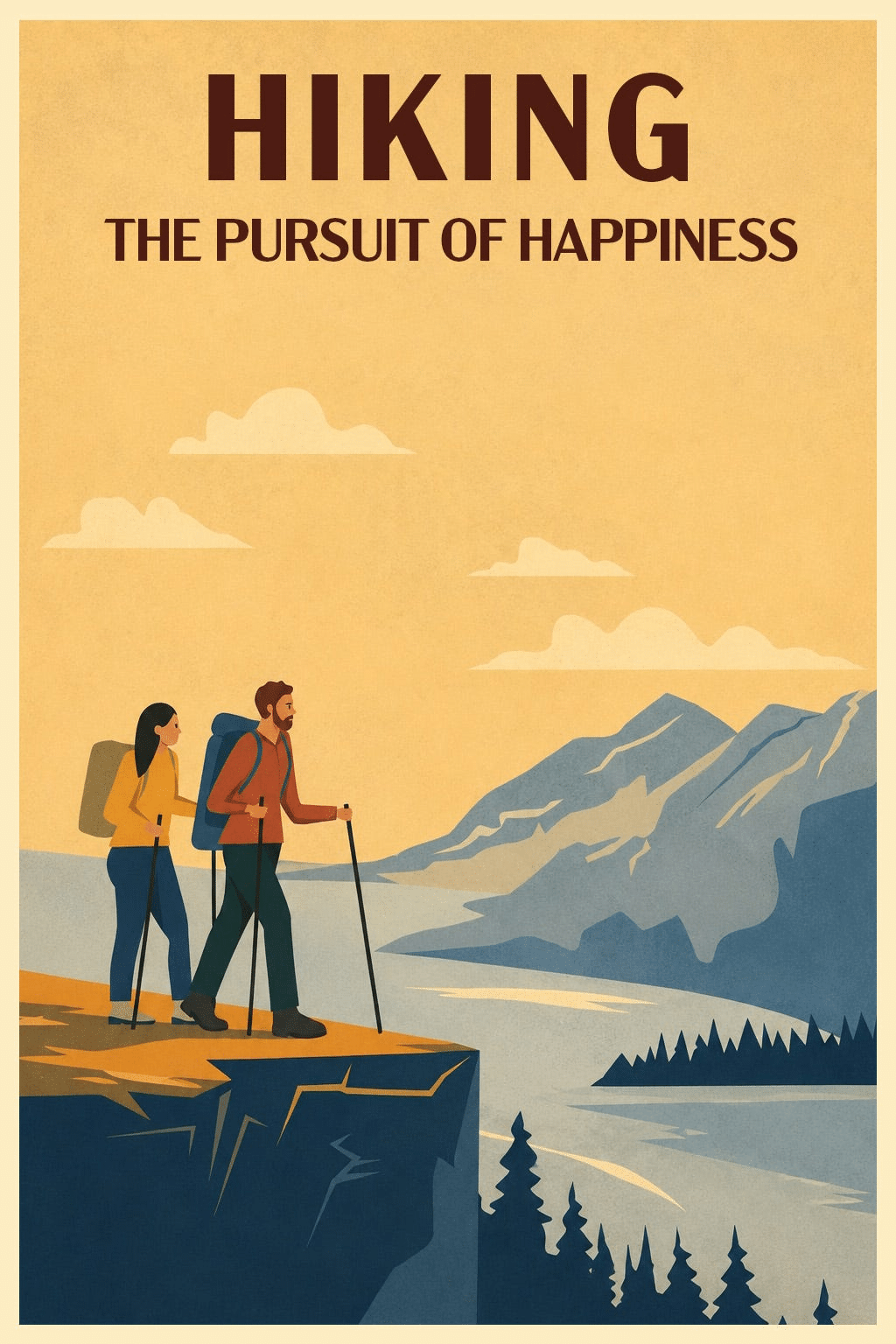
Liberty means freedom of movement. Freedom from schedules. Freedom from screens. Freedom from expectations. Places where the horizon itself feels liberating. It’s the freedom to choose a direction and keep hiking. To spend a day beyond schedules, obligations, and notifications. To be responsible for yourself.
Liberty isn’t something I think much about in everyday life. Until I spend a day hiking across the Ventana Wilderness in Big Sur and realize nobody knows where I am, nobody needs anything from me, and the only agenda is the next bend in the trail.
As for the pursuit of happiness, let’s be clear: America’s founders didn’t guarantee happiness. Only the freedom to seek it. And hikers understand that better than most. Because every hike is literally a pursuit. You set out hoping for something: a summit, a waterfall, solitude, beauty companionship, understanding. Sometimes you find it. Sometimes you don’t. Yet the pursuit itself proves worthwhile.
I was disappointed to learn that in the U.S. Constitution, drafted 11 years after the Declaration of Independence, does not protect the right to happiness—or even mention it. Perhaps an editorial oversight by the 39 delegates who signed the finished document—32 of whom were lawyers. We all know what happens when there are too many lawyers in a room…
Should another Constitutional Convention be convened during my coherent lifetime, I will testify as to this unfortunate omission and insist on an amendment guaranteeing the Pursuit of Happiness.
Not happiness itself, mind you. The pursuit. That phrase becomes more interesting the older you get. At twenty, happiness may seem like a destination. At 40 it’s an escape. At 70, you’ve learned it’s more elusive than that. It arrives unexpectedly. Often from small pleasures along the way. A view from a ridge. A conversation with a friend. The smell of pine needles warming in the sun. The satisfaction of reaching a summit you weren’t sure you could reach. Then it’s gone again. And that’s okay.
Because hiking teaches something the founders seemed to understand: The point isn’t possessing happiness. The point is having the freedom to pursue it.
Aristotle believed that happiness is an activity rather than a passive state of mind. You cannot just “be” happy without actively doing anything. Just as a musician achieves fulfillment by playing music, a hiker might achieve happiness by hiking
We know what happiness feels like on the trail, even if we can’t quite define it. We find it by combining physical exercise, mental decompression, and immersion in the natural world. We feel it with a combination of positive emotions: joy, contentment, and satisfaction.
Over the years, scientists have offered plenty of explanations for why hiking makes us happy. Endocrinologists, psychologists, exercise physiologists—everyone seems eager to weigh in. I welcome the support.
Apparently, hiking stimulates serotonin, reduce anxiety, improves sleep, releases endorphins, and even gives us our own version of a runner’s high. We hikers, naturally, call it a hiker’s high.
Psychologists say happiness arrives in two forms. There’s pleasure-based happiness: getting away from it all, feeling good, connecting with nature. And there’s purposed-based happiness challenging ourselves, sharing the trail with a cherished friend, or discovering we are capable of more than we imagined.
I didn’t need scientists to tell me any of this, but it’s nice to know they finally caught up with hikers.
Twenty years ago I wrote The Joy of Hiking, a how-to book intended to guide hikers safely along the trail and experience the pleasures of a walk in nature. It received a tepid response—at least in comparison to bestsellers The Joy of Cooking and The Joy of Sex, which outsold my work by a margin of 100 to 1.
Perhaps I underestimated the number of readers seeking outdoor adventures versus those striving to make the perfect omelet or experience a great orgasm. Or maybe too many people remain unconvinced there’s much happiness in hiking at all: the pain’s not worth the gain to the top of the hill. And then there are bugs, wild animals, whining children, complaining friends…
I love the warm idiomatic expression “Happy Trails” used to wish fellow travelers safety, clear weather, and good paths ahead. When I wish someone “Happy Trails,” I do so knowing the path ahead will have challenges, but hope their journey remains fulfilling, safe, and joyful despite the obstacles.
After all these years on the trail, I still feel fortunate, blessed even, to share my passion with hikers and would-be hikers. Truly, there’s nothing more satisfying to me than hearing I inspired someone to hike, and that they found the joy in it.
Literally I’ve hiked to a few places with “happy” in their names: Happy Hollow, a bowl-shaped depression on Little Pine Mountain in the Santa Barbara backcountry and Happy Camp Canyon in the Santa Susana Mountains. Figuratively I’ve hiked to another kind of happy place.
What I’ve learned is my “happy place” is less a particular park or preserve, mountain or shore—however glorious—and more an uplifted spirit and a place in my heart. Happiness isn’t a place you arrive at. It’s something that accompanies you for stretches of the journey. Less a place you visit, and more an experience you have. When I text friends and loved ones my photos from the trail, it’s not the lovely landscapes but the selfies with a wide smile that illustrate I’m in my happy place.
Which brings me to the pursuit of happiness in the place called the United States of America. We live in an imperfect republic in uneasy and unsettling times and pursuing happiness—much less finding it—can feel increasingly difficult. Yet even now when life is challenging for so many of us and liberties we’ve long taken for granted feel less certain, we have opportunities to pursue happiness on—and off—the trail.
And for this, for the wild country accessible only by footpath, and the freedom to walk it, I feel grateful—on Independence Day and on every day.
After all these years, I’ve learned that happiness rarely announces itself. More often it sneaks up on us somewhere between the trailhead and the summit, in the company of friends, in a moment of solitude, or in the simple act of putting one foot in front of the other.
So keep hiking. Contemplate what makes you happy and what would make you happier still. Keep on hiking and you just might find that your whole being—body and soul—will reach wider horizons, greater possibilities, and the kind of happiness that lingers in your heart long after you’ve returned to the trailhead.
Hike on, my friends.
Hike On.