
A place that grows on you—native plants, quiet trails, and a hundred years rooted in California’s wild heart.
There are places we visit—and places that quietly become part of who we are.
For me, the Santa Barbara Botanic Garden is the latter.
In 2026, the Garden marks its centennial—100 years as the first botanic garden in the nation devoted entirely to native plants. That alone is remarkable. But what keeps drawing me back isn’t just history—it’s how alive the place feels. Oaks arch overhead, manzanitas twist like living sculpture, and seasonal blooms remind you that California doesn’t need imported beauty. It’s had it all along.
Nearly 30 years ago, I began bringing my kids here, once a month, for some of their very first hikes. These days, I still like to arrive early, walking a quiet two- or three-mile loop as the sun rises and the plants wake up with the day. It’s a gentle kind of magic—one that doesn’t announce itself, but lingers.
The Garden has endured fire, change, and time itself—from the 1964 Coyote Fire to the 2009 Jesusita Fire—yet remains rooted in its founding idea: that native plants sustain both land and life.
This year, a new Centennial Route traces that story, past the Mission Dam and through a remarkable collection of California flora.
Come walk it.
You may leave with more than you expected.
Santa Barbara Botanic Garden
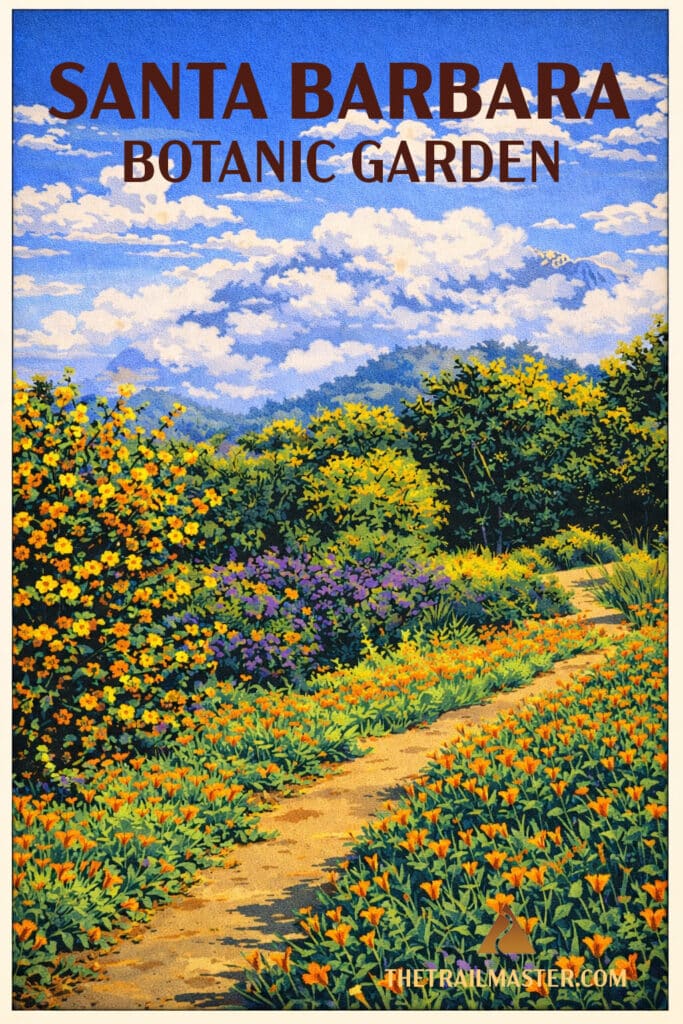
Tucked into the folds of Mission Canyon, the Santa Barbara Botanic Garden is more than a pleasant stroll among flowers—it’s a living celebration of California’s wild heart. Founded in 1926 and still growing, this 65-acre preserve is devoted entirely to California native plants, making it one of the most important botanical collections of its kind in the West.
While other gardens display roses and exotics from around the world, this one proudly says, This is California. Chaparral, oak woodland, redwood forest, desert wash, island flora—each ecosystem is represented with care and authenticity.
Trails thread through the landscape, not merely to guide visitors but to immerse them in miniature versions of California’s great bioregions. You can walk from a sunny desert scene to a shady redwood grove in minutes, feeling as if you’ve crossed half the state. The Easton Aqueduct Trail, named for writer and conservationist Robert Easton, edges the garden like a quiet backcountry loop, while Canyon and Pritchett Trails dip into the cool embrace of Mission Creek.
The garden has also embraced a spirit of adventure, especially for families. A newly expanded Children’s “Backcountry” area invites young trail explorers to scramble on logs, follow mini creek paths, and learn the language of nature not from signs alone but through tactile discovery—hands in the dirt, feet on the trail, imagination engaged. It’s a rare garden that encourages kids not just to look but to play like wild things.
The garden boasts a fine garden shop with quality gifts and field guides, and a well-regarded native plant nursery. Many of the plants grown here are difficult or impossible to find in commercial nurseries, making this a true resource for gardeners who want to bring California’s landscape into their own yards.
The garden is a sanctuary for rare and endangered plants, a research center, a teaching ground, and yes—a peaceful escape just minutes from city life. It offers docent-led walks, lectures, native plant sales, and quiet benches where time seems to slow beneath the oaks. Whether you come for botany, backcountry spirit, or a simple walk in nature, the Santa Barbara Botanic Garden rewards every step.
Tilden Regional Park Botanic Garden
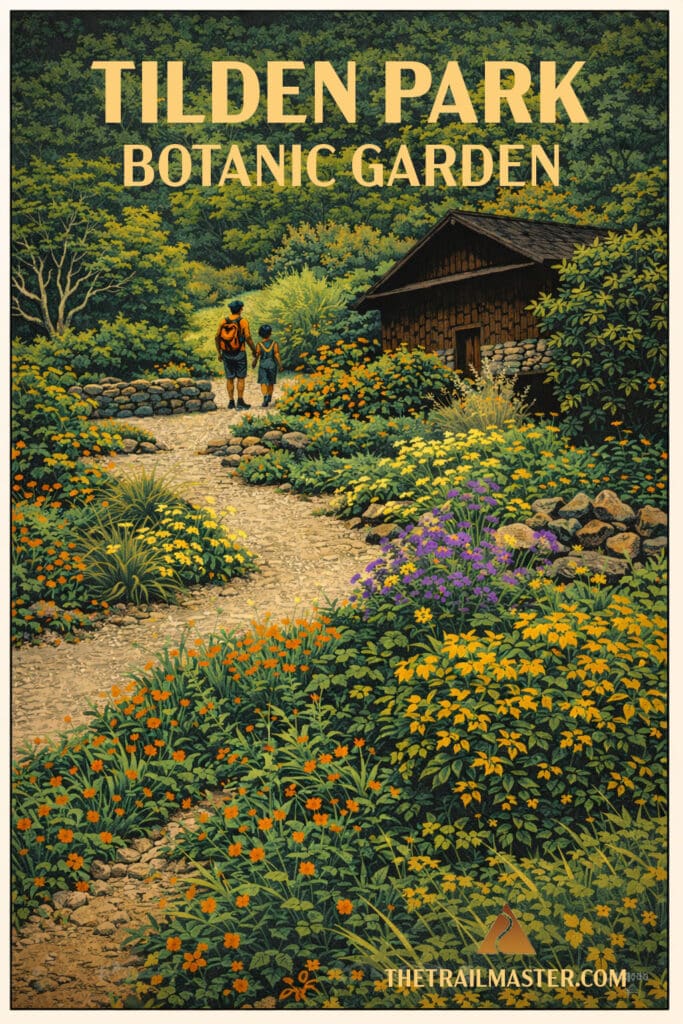
This little garden is big on California.
Other states may have deserts, mountains, valleys, islands or long coastlines, but only California has all of these environments. And all these environments are represented—10 geographically based sections in 10 acres—in Tilden Regional Park Botanic Garden.
While considerably smaller than better-known botanic gardens, Tilden Garden has much to offer, particularly when it comes to its displays of native California flora. Tree-lovers will be delighted by a walk through the redwoods and by the garden’s comprehensive collections of oaks and conifers.
Other extensive collections include native California grasses, manzanita, and aquatic plants. The garden is also a safe haven for some 300 plants on the California Native Plant Society’s “Rare and Endangered” list.
Begin your exploration of California at the garden visitor center, pick up a brochure/map and head for the Sierra, Channel Islands, or Pacific rain forest. Meander the walkways and across footbridges over Wildcat Creek to reach exceptionally well re-created Golden State landscapes named Santa Lucia, Valley-Foothill, and Shasta-Klamath.
“Imagine 160,000 square miles of California set in a garden that can be walked in a day,” garden boosters suggest. Indeed!
Theodore Payne Foundation
The Theodore Payne Foundation, dedicated to educating us about the culture and uses of native plants, is a great place to learn about local flora. A walk through the gardens is enlightening; the short hike up Wildflower Hill, inspiring.
Botanist Theodore Payne arrived in Southern California in 1893 from England with a practical knowledge of seeds and soil—and quickly developed something rarer: a sense that California’s native flora was both unique and imperiled. Even then, wildflowers were disappearing under the march of development. Payne responded the only way he knew how—by getting his hands dirty. He collected, cultivated, and championed native plants long before “native plant gardening” became fashionable or hashtag-worthy.
For nearly 60 years, Payne ran nurseries, wrote articles, and gave lectures, quietly making the case that California’s beauty wasn’t just scenic—it was botanical. Today, the foundation that bears his name continues that mission with admirable zeal and just enough dirt under its fingernails.
The nursery itself is part classroom, part temptation. Labels identify everything from manzanita to monkeyflower, and suddenly that shrub you ignored on last week’s hike has a name—and a story. Gardeners arrive with notebooks and leave with armfuls of plants. Hikers arrive curious and leave slightly more observant. It’s a gateway experience: today a labeled sage plant, tomorrow a full-blown appreciation of chaparral ecosystems.
Then there’s Wildflower Hill. In spring, it’s a show-off—poppies blazing, lupine rising in purples and blues, owl’s clover and cream cups filling in the gaps like a well-composed painting. But even outside peak bloom, the hill tells a deeper story about resilience. These are plants adapted to drought, fire, and poor soils—California natives that don’t just survive tough conditions, they define them.
The vibe at Theodore Payne Foundation in Sun Valley is refreshingly unpretentious. Volunteers talk plants, not trends. Classes teach you how to garden without waging war on nature. And the whole place feels like a quiet rebellion against lawns that demand too much water and give too little back.
Footnotes
Walk into Santa Barbara Botanic Garden history on the Centennial Route, with stops at the Desert Section planted in 1927, a redwood grove in the 1930s and ending up at the modern Pritzlaff Conservation Center.
Something is blooming every month at the Tilden Regional Park Botanic Garden, open every day from 8 a.m. to 5 p.m. The garden is lightly visited, even on busy weekends in the park. And admission is free.