
Volcanic wonders and rainbow in the High Sierra
I’ve always enjoyed introducing hikers to Devils Postpile because almost no one expects to be impressed. The monument occupies less than 800 acres and offers only two major hikes. Then visitors round a bend, stare up at the towering basalt columns, and suddenly understand why this corner of the Sierra earned national monument status.
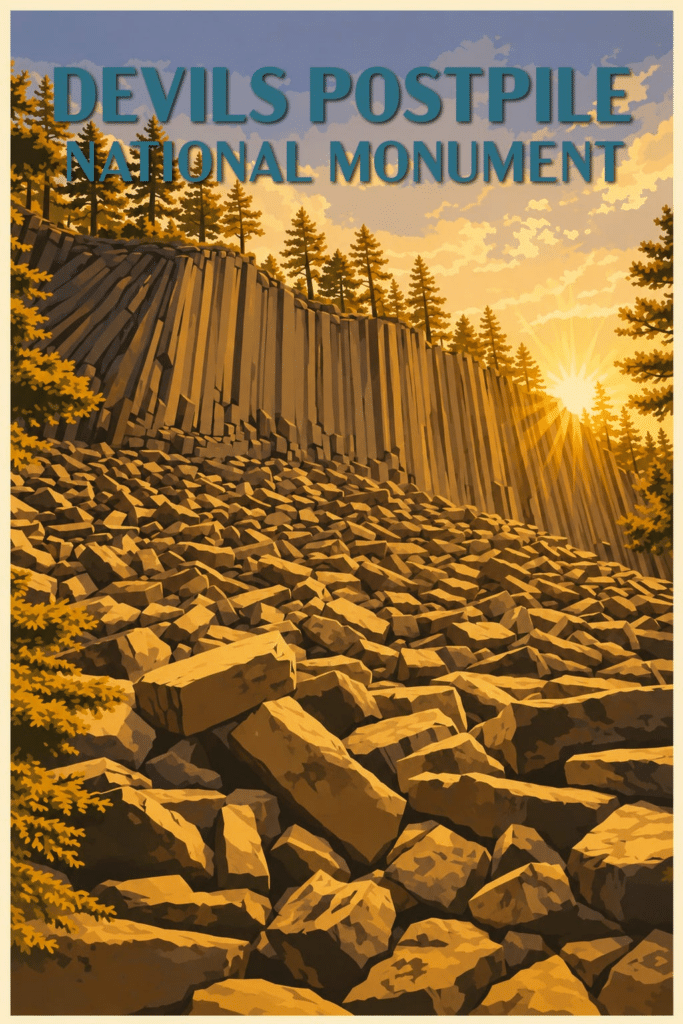
No doubt how it got its name: a wall of towering, dark rock columns that looks as if the old devil himself had stacked a mighty pile of posts fresh from his cosmic lumberyard. Geologists, less colorful but more precise, explain it as a textbook-perfect example of columnar basalt, formed when ancient lava cooled and cracked into geometric columns. As if that weren’t enough, glaciers later shaved off part of the wall and polished the top smooth, leaving behind a surface that looks for all the world like a tiled floor laid by Greek stonemasons.
The other star attraction is Rainbow Falls, a dramatic 101-foot plunge of the Middle Fork of the San Joaquin River. Spray and sun often combine here to paint a rainbow across the canyon — a sight that has been pulling hikers downstream from the Postpile for generations.
Devils Postpile is a place where you can see the highlights in a single day, then, if your boots are still restless, continue into the high-country trails of the Ansel Adams Wilderness, where the Pacific Crest and John Muir trails run like veins through granite and meadow.
Agnew Meadows and Devils Postpile
Some 100,000 years ago, lava poured into this valley and cooled slowly enough to contract into hexagonal columns, like a bundle of giant stone pencils standing on end. A later glacier sheared off the columns, leaving behind the 60-foot-high wall you see today. Nowhere else in California is the volcanic story told with such precision and drama
Devils Postpile is one of the world’s best examples of columnar basalt. About 100,000 years ago, lava pooled in this valley. As it cooled, the lava contracted and cracked into mostly six-sided columns, though fours, fives, sevens, and other polygons sneak in too. Later glaciers cut the wall to expose 60-foot-high columns and polished the top smooth.
The Postpile measures about 900 feet long and 200 feet high — roughly the size of the Acropolis in Athens — and looks every bit as imposing.
The Postpile wasn’t always so revered. Early 20th-century miners proposed dynamiting the formation to dam the river and generate hydroelectric power. Luckily, naturalists and conservationists rallied, and in 1911 President Taft declared the site a national monument. Today, hikers can not only marvel at the face of the Postpile but also climb a short spur to its top, where the fractured hexagons look like a man-made mosaic.
I’ve always thought this 7.5-mile point-to-point hike deserves more attention than it gets. Beginning at Agnew Meadows and ending at Reds Meadow Resort, the trail strings together a gallery of Sierra landscapes: broad alpine meadows, shady Jeffrey pine forests, the glassy Middle Fork of the San Joaquin, strange volcanic flats, and—of course—the famous wall of Devils Postpile.
Along the way you can slip off-trail for a swim in clear pools, picnic on granite slabs, or detour to Minaret Falls, where the river plunges in a foaming sheet. The path winds through Pumice Flat, a surreal white expanse left by past eruptions, and finally delivers you into the rustic charm of Reds Meadow Resort. Thanks to the mandatory shuttle system, it’s easy to hike one-way, avoiding the need to backtrack.
Agnew Meadows to Devils Postpile is a hike that connects threads of history, geology, and wild beauty. The Postpile itself may be the headline, but the whole route reads like a love letter to the Sierra Nevada.
Rainbow Falls
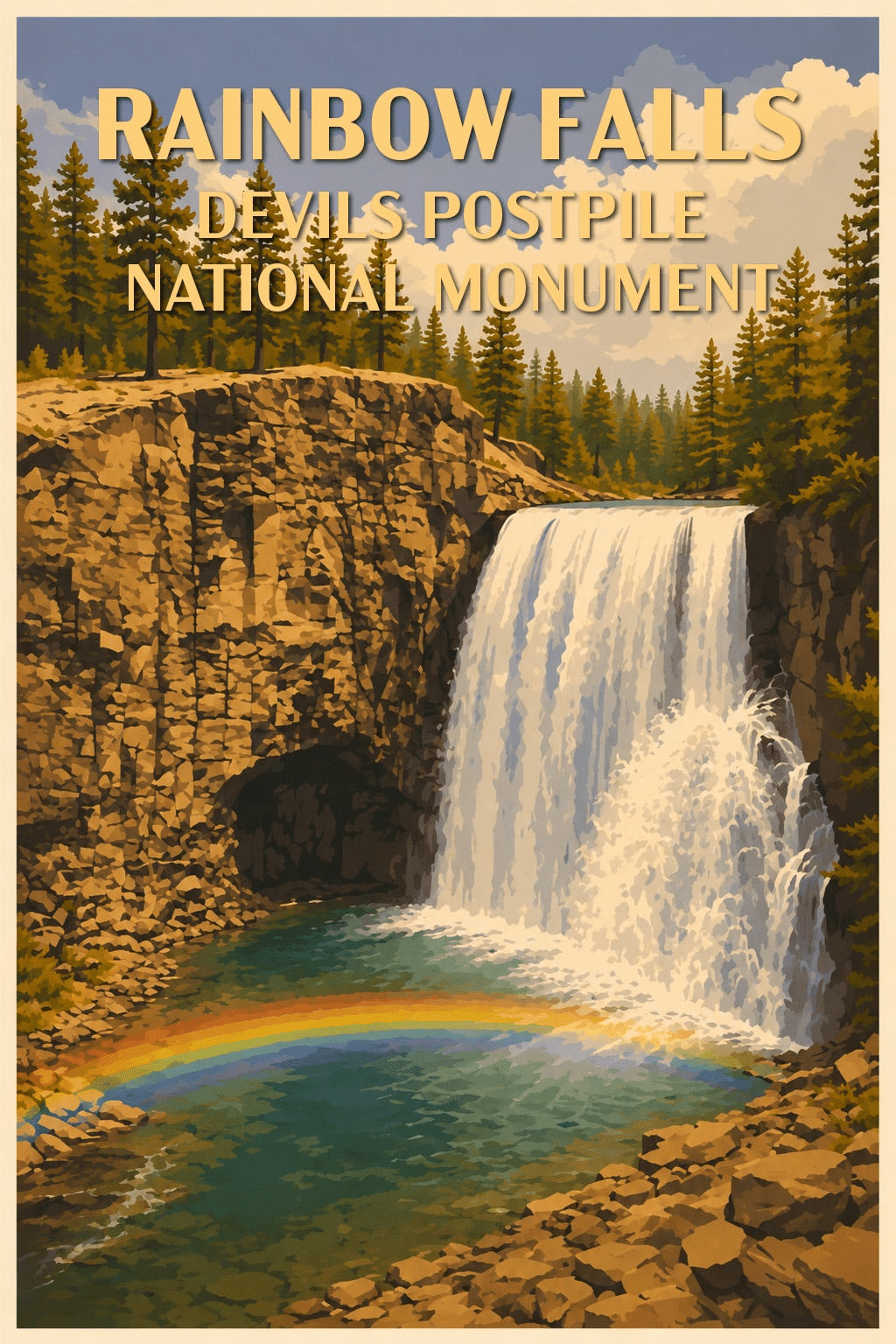
Somewhere over the rainbow is the Middle Fork of the San Joaquin River, which plummets over a rock ledge. Rainbow Falls is a crowd-pleaser, but don’t let the popularity scare you off. There’s good reason thousands of hikers make the 5-mile round trip pilgrimage each summer. Unlike most High Sierra hikes, this one begins with a gentle descent rather than a lung-busting climb. You’ll stroll through lodgepole pines, follow the river’s wandering course, and then—just when you’re lulled by the pleasant pace—you’ll hear the steady thunder ahead. That’s usually the moment when I know the hike is about to get better.
The falls themselves are an unforgettable sight. The San Joaquin River leaps in a single broad curtain over a basalt ledge into a rocky bowl. On sunny days, mist rising from the plunge pool catches the light, painting arcs of color across the spray. The “rainbows” that give the falls their name aren’t rare events—they’re nearly guaranteed at midday in summer. Photographers jockey for position, but many visitors simply sit on the rocks, cooling off in the mist and savoring the spectacle.
Rainbow Falls owes its existence to a quirky twist of geology. Ages ago, the San Joaquin shifted west, carving a temporary channel through cliffs, only to later abandon it and leap back into its original course. That leap became Rainbow Falls, a geologic encore still applauded today.
This is more than just a walk to a waterfall. Along the way, you’ll pass through a recovering burn zone from the 1992 Rainbow Fire. Blackened snags mix with young pines and colorful wildflowers, a vivid reminder of fire’s role in Sierra ecology. The views are more open now, with broad glimpses of Ritter Range peaks and Mammoth Mountain.
For those seeking a longer day, the trail continues beyond Rainbow Falls to Lower Falls, a broad cascade with pools perfect for summer wading. Or, start your adventure from the alternate trailhead near Reds Meadow Resort to trim mileage. Either way, the falls are the prize: a living rainbow at the end of a forest walk.
Know Before You Go
Hiking here requires some planning. Visit my site and learn more about Devils Postpile National Monument. In summer, private cars aren’t allowed down the narrow Reds Meadow Road; instead, a shuttle bus ferries visitors to the monument, Rainbow Falls, Agnew Meadows, and other trailheads.