
Most visitors stop at Morro Rock. Hikers discover the rest of the family.
There’s no mistaking the landmark that defines Morro Bay: Morro Rock. Rising 576 feet straight out of the surf at the mouth of the bay, the volcanic plug looks like it belongs in a fantasy novel—half fortress, half dragon’s egg.
Morro Rock has had a rough go of it. Quarrymen hacked at its flanks for a century, reducing it by nearly a third before public outcry finally stopped the chiseling in 1968. Today it’s a State Historic Landmark and a protected sanctuary for peregrine falcons.
You can’t climb the Rock—it’s off limits. (Those ubiquitous “I Climbed Moro Rock” T-shirts refer to the much more accommodating summit in Sequoia National Park.) So while scaling the “Gibraltar of the Pacific” is out, here’s the good news: Morro Rock has eight volcanic sisters. Five welcome hikers to their summits, and every one rewards the climb with sweeping 360-degree views.
Morro Rock is the westernmost of a chain of nine ancient volcanic peaks extending inland toward San Luis Obispo. Collectively they’re known as the Nine Sisters, though there’s nothing particularly delicate about these fire-breathing relics of submarine eruptions that took place long, long ago.
A morro isn’t a volcano in the classic cone-shaped sense. Think of it as the fossil of a volcano—the hardened magma that once filled its throat while everything around it slowly eroded away. Twenty million years later, these ancient volcanic hearts are still standing, refusing to disappear.
Here’s what makes the Morros so irresistible to hikers. They’re not tucked away in some remote volcanic wilderness like Lassen Volcanic National Park, where reaching them requires a serious expedition. They’re woven right into everyday life around San Luis Obispo. You can hike one before breakfast, another after lunch, and still have time for a stroll downtown or a glass of Central Coast wine. I can’t think of anywhere else in California where ancient volcanoes are so accessible—or so much fun to climb.
I learned from local hikers how to keep the Nine Sisters straight: divide them into three families. The Morro Bay Sisters include the iconic Morro Rock plus Cerro Cabrillo and Black Hill in nearby Morro Bay State Park. The Forbidden Sisters—Chumash Peak, Cerro Romualdo, and Hollister Peak—stand tantalizingly close but remain off limits on private land. Then come my favorites, the SLO Sisters: Islay Hill, Cerro San Luis, and Bishop Peak, rising above San Luis Obispo like old friends keeping watch over the city.
Whether you call them peaks, plugs, or the Nine Sisters, hiking the Morros becomes strangely addictive. One summit leads to another. Before long you’re plotting your next climb, comparing views, and arguing over favorites. That’s why I recommend taking on the SLO 5—the five Morros with public trails to their summits: Black Hill, Cerro Cabrillo, Bishop Peak, Cerro San Luis, and Islay Hill. I’ve hiked them over a long weekend more than once, and I can’t think of a better introduction to San Luis Obispo County. Together they tell a bigger story than any one peak ever could.
Begin, of course, with Morro Rock. Stand beneath California’s most recognizable volcanic landmark and imagine the fiery forces that created not one remarkable monolith but an entire family of ancient peaks stretching toward San Luis Obispo. Then lace up your boots. Climb one Morro—or better yet, climb all five.
Marine fog pours in from Morro Bay and the Pacific, swallowing one peak while revealing another, then slips away just as quickly. Sunrise, sunset, winter storms, crystal-clear autumn days—every change in light transforms the volcanic skyline into a different landscape.
From every summit you’ll spot another Morro waiting in the distance, inviting the next hike. That’s part of their charm. Unlike an isolated mountain, the Morros are always keeping each other company. Climb one and you’ll spend as much time looking toward the next summit as looking back at the one you’ve already conquered.
Black Hill
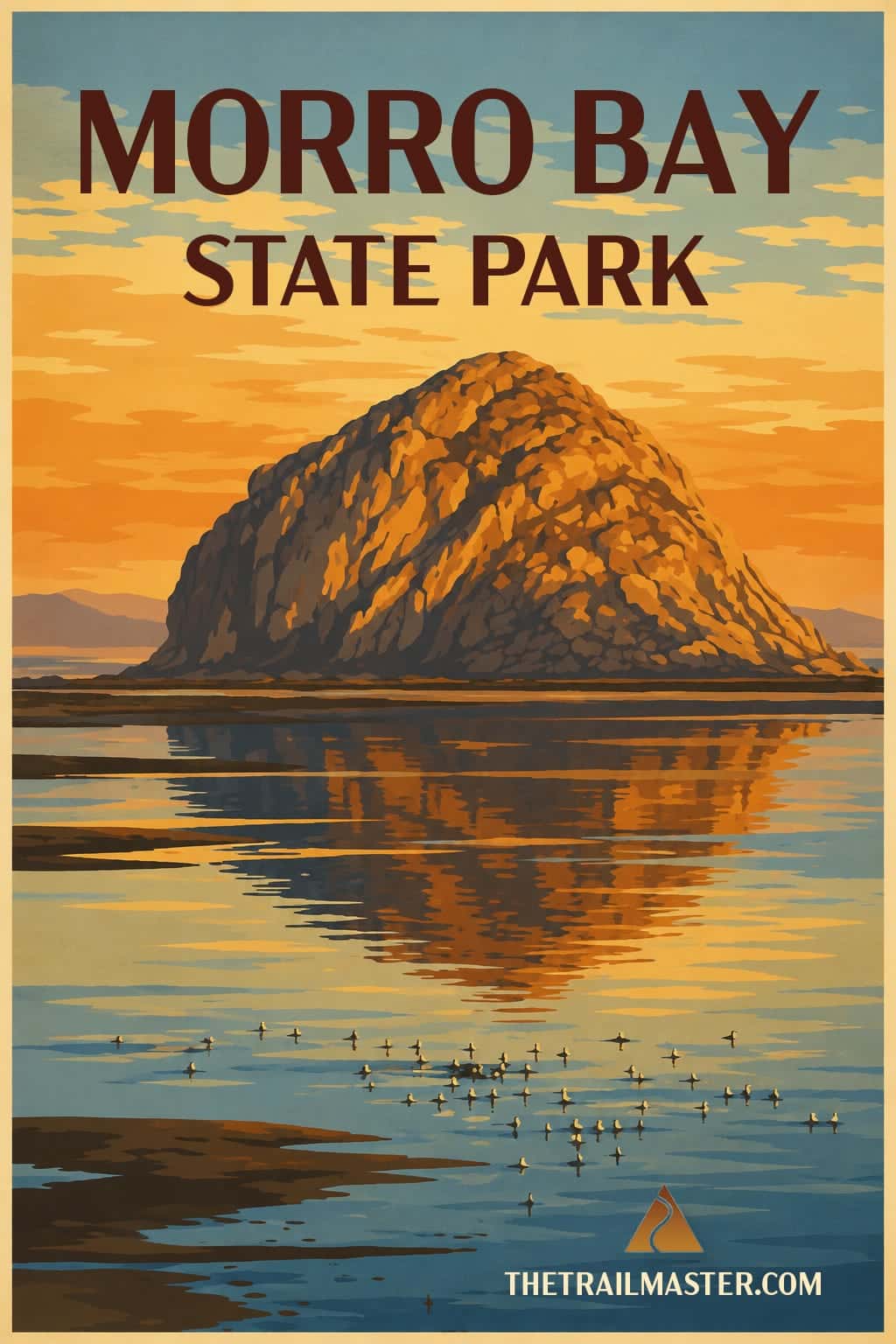
Overlooking Morro Bay and its broad estuary is Black Hill, a modest volcanic sister that rewards a little climbing. Morro Bay State Park wraps around one of California’s richest estuaries, where tidal marshes, eelgrass beds, and mudflats attract astonishing numbers of birds. Kayakers, sailors, sea lions, and wintering waterfowl share the protected waters.
The 2.6-mile hike to its 640-foot summit gives you the full picture: Morro Rock guarding the harbor, the long sand spit shielding the bay, and Montaña de Oro’s Irish Hills rolling away to the south.
From the summit you’ll watch sailboats tack across the bay, surfers chase waves, golfers search for errant drives, and wisps of marine fog drift inland like ghost ships. Rock outcrops crown the often-windblown summit, perfect perches to sit and enjoy the 360-degree panorama.
Cerro San Luis
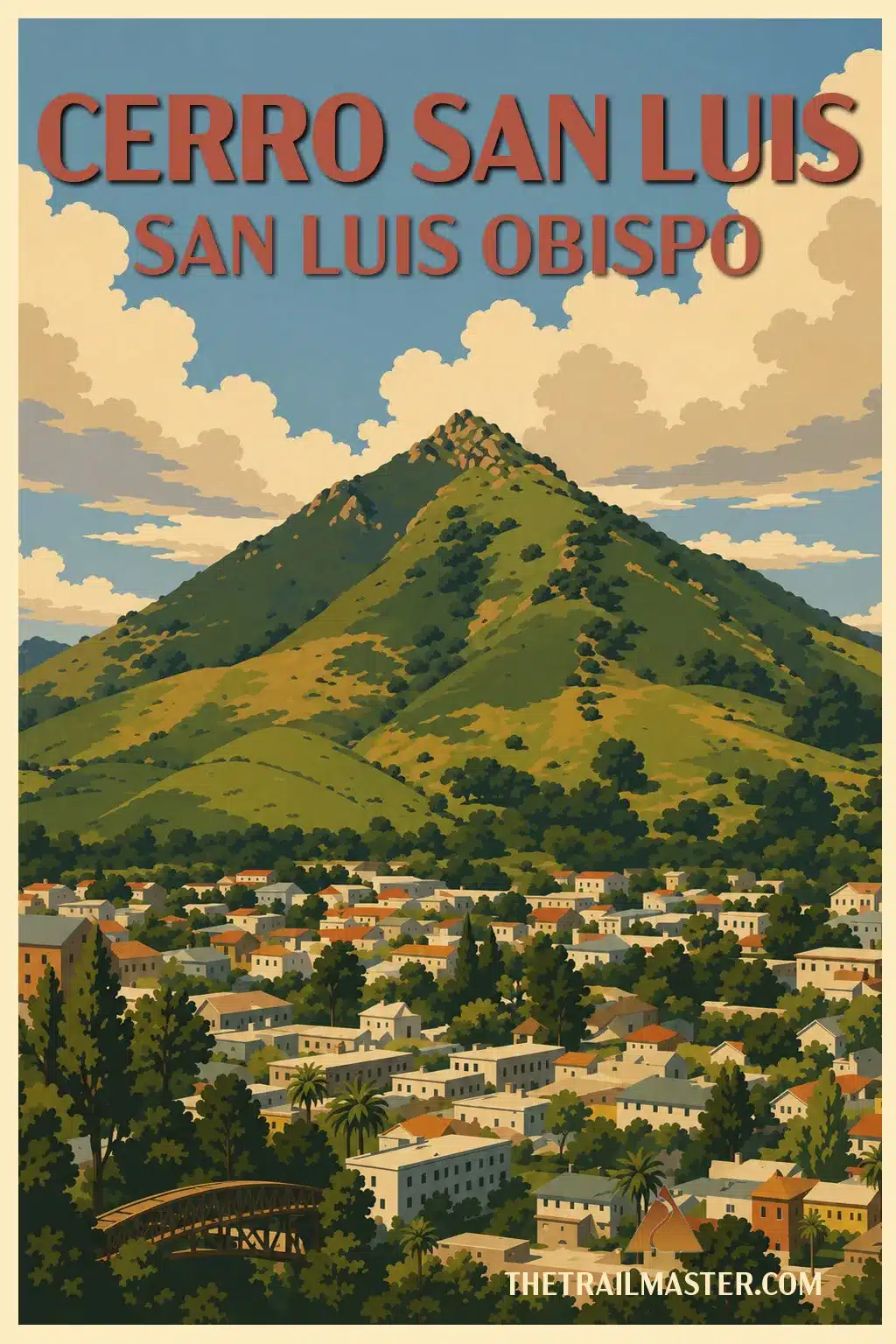
Located in the heart of San Luis Obispo, Cerro San Luis rewards hikers willing to tackle a short but spirited climb with commanding views of downtown, the Pacific, and the volcanic skyline that makes this one of California’s most distinctive small cities. It’s the mountain SLO locals simply call “our mountain,” and after one hike you’ll understand why.
In less than an hour you can trade coffee shops, bike lanes, and Cal Poly students for hawks circling overhead and a breeze scented with sagebrush, black sage, and California buckwheat. Spring carpets the hillsides with poppies, lupine, fiddlenecks, and owl’s clover. Summer turns the slopes the color of toasted wheat, a reminder that California’s golden hills are supposed to look this way.
The giant white M isn’t for the Madonna Inn, despite what most passing motorists believe. It honors Mission College Preparatory, while the illuminated cross near the summit reflects the influence of hotelier Alex Madonna.
The hike (4 miles round trip with 1,100-foot gain) is classic San Luis Obispo: Cal Poly students, trail runners, retirees, happy dogs, and visitors discovering why locals simply call it “our mountain.”
What makes Cerro San Luis special is how effortlessly it connects town and open space. In one morning you can browse the farmers market, climb an ancient volcano, identify a few native wildflowers, and still be back in town before lunch. That’s San Luis Obispo at its best.
Bishop Peak
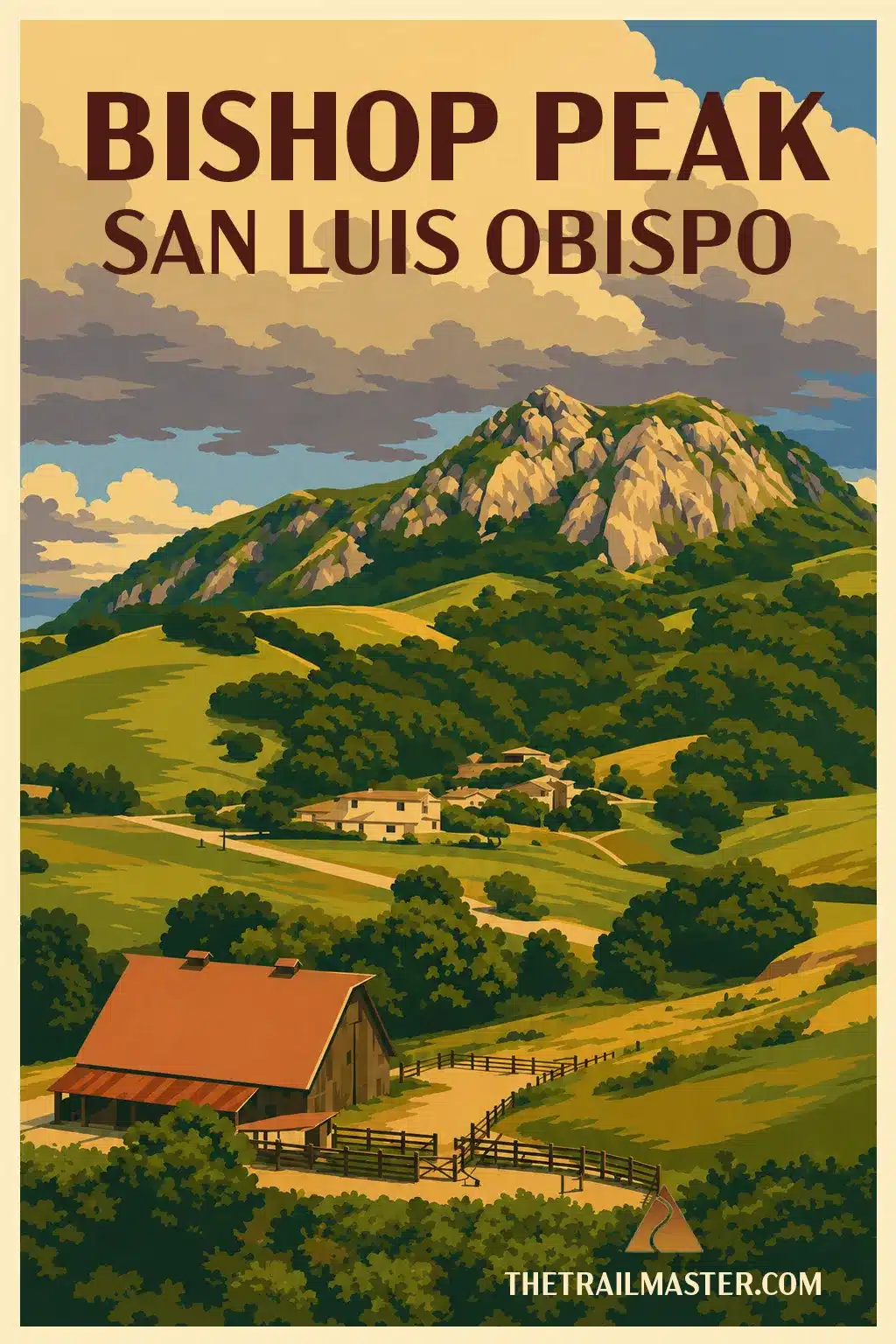
If you only have time to hike one Morro, this is the one. That’s a bold statement considering the remarkable chain of volcanic peaks stretching from Morro Bay to San Luis Obispo, but Bishop Peak earns the distinction. At 1,546 feet, it’s the tallest of the Nine Morros, the most popular hike in the county, and the summit that best captures the spirit of San Luis Obispo.
Unlike neighboring Cerro San Luis, which feels like the city’s backyard, Bishop Peak has a wilder personality. The trail wastes little time introducing itself, climbing through valley oak woodland before weaving among enormous volcanic boulders scattered across the mountainside like a giant forgot to clean up after building California.
The steep, 3.5-mile round-trip hike has become something of a San Luis Obispo rite of passage. On weekends you’ll share the trail with Cal Poly students, trail runners who somehow keep talking uphill, first-time summit seekers, rock climbers studying impossible routes, and locals saying, “You have to hike Bishop Peak.”
They’re right.
As you gain elevation, the views keep improving. Cerro San Luis fills the eastern skyline while Laguna Lake, vineyards, ranches, and the Santa Lucia Mountains spread across the horizon. In spring, the hillsides come alive with California poppies, lupine, buttercups, shooting stars, and the purple blooms of wild sage. California quail scurry beneath the brush, red-tailed hawks ride the thermals overhead, and turkey vultures drift so effortlessly they seem to have solved gravity.
The final approach is pure Bishop Peak. Two welcoming benches mark the end of the maintained trail, but most hikers aren’t finished. The real summit lies another minute or two away across a jumble of volcanic rock. Some hikes are beautiful. Others are challenging. Bishop Peak is both—and it’s only minutes from downtown.
From the summit you’ll find yourself looking toward the next Morro. Around here, one summit always seems to lead to another.