Every Trail Tells a Story

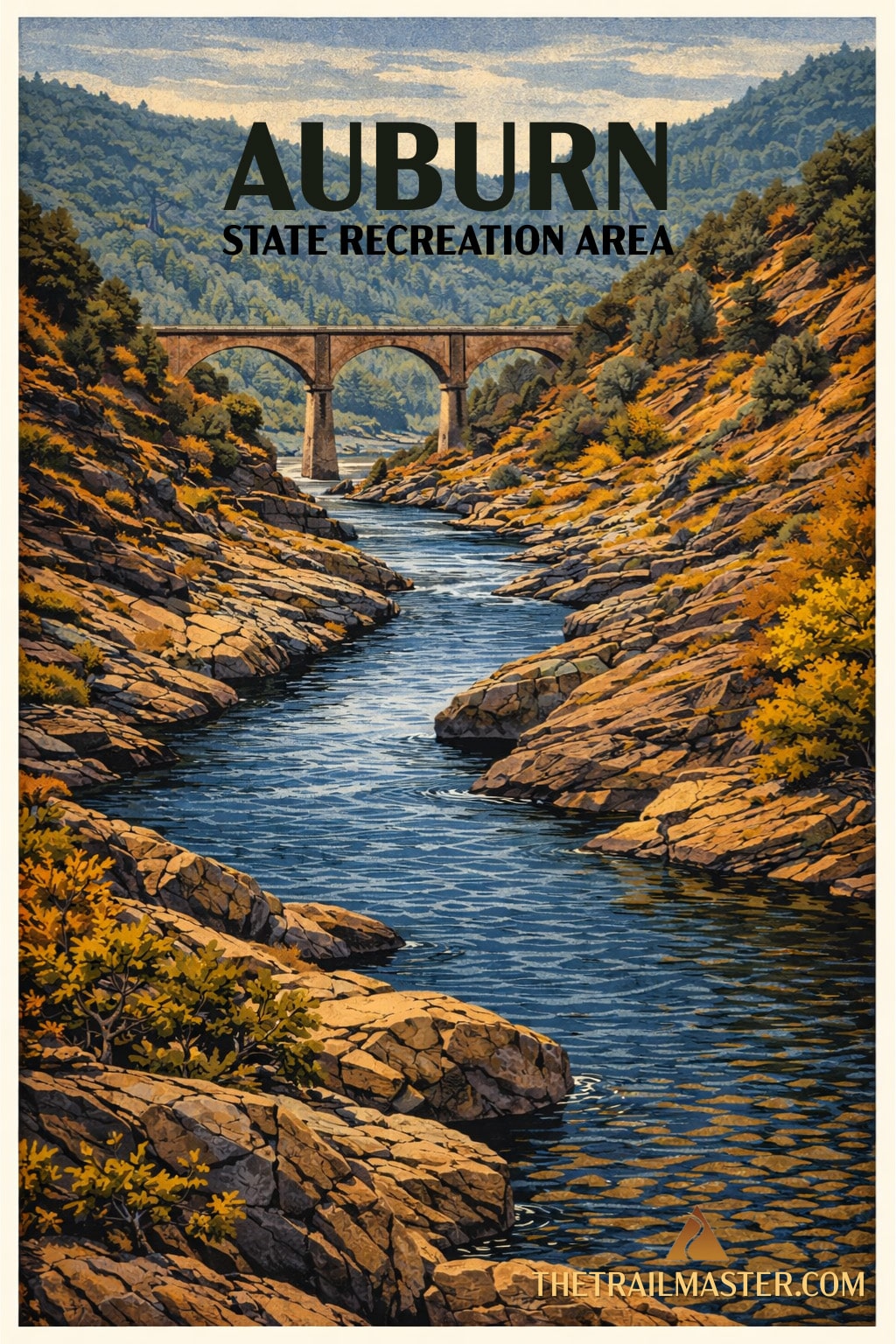
Auburn State Recreation Area
To trade a drowned canyon for a free-flowing, wild river-a rare conservation victory worth savoring.
To hike where rattlesnakes sunbathe, rafters portage, and history echoes in every bend of the canyon.
To walk in the footsteps of both miners and modern rangers, and rejoice that sometimes nature wins.
The dam builders didn’t get their way on the American River.
Back in 1967, construction began on the Auburn Dam, a project that would have drowned these rugged canyons beneath a reservoir called Auburn Lake. To the engineers, the steep gorges of the North and Middle Forks of the American River were just another place to store water. But to conservationists-and eventually to almost everyone else-they were a landscape too wild and beautiful to lose. When a similar dam collapsed in Montana, and when groups like Friends of the River stepped up their campaign, the project lost momentum. Finally, the Bureau of Reclamation halted construction and handed over management of much of the river corridor to California State Parks.
The result: Auburn State Recreation Area, a wild and varied park that now preserves more than 40 miles of canyon and river, stretching through the heart of Gold Country. Instead of a lake behind concrete, there’s a free-flowing river, whitewater rapids, canyon walls, oak woodlands, and a trail system to rival any in the Sierra foothills.
I can’t help but smile every time I come here. I spent several years involved in the pro-park, anti-dam movement. It wasn’t always easy-conservationists don’t always win-but Auburn is proof that sometimes we do. To lace up my boots and follow the river today feels like celebrating that victory all over again.
The park is alive with activity. Anglers cast for steelhead and bass. Commercial rafting companies take clients down Class II, III, and IV runs. Hikers, bikers, horseback riders, campers, and even gold-panners spread out over more than 100 miles of trails. Yet for all the bustle, Auburn still feels like a wild place, a canyon with teeth, a reminder that the American River carves its own story.
And speaking of stories: Ranger Jordan Fisher Smith, who spent 14 years here patrolling what was then technically condemned ground-land in limbo, waiting for a dam that never came-captured Auburn’s strange, edgy character in his book Nature Noir. His tales of rescues, crimes, and quiet moments along the canyon deepen the sense that this place is more than a park. It’s a battleground between what might have been and what is.
On one of my own hikes here, I met two enormous rattlesnakes stretched lazily across the trail in different spots, soaking up the sun. Neither was inclined to move quickly. I stood there waiting them out, thinking: this would never have happened if I were circling a mega-reservoir instead of following a wild trail. Irony, it turns out, makes a fine hiking companion.
From Interstate 80 on the outskirts of Auburn, exit on Auburn-Foresthill Road and head east eight miles. Turn right on Drivers Flat Road (dirt, bumpy but passable with decent clearance) and continue 2.5 miles to Ruck-a-Chucky Campground and road’s end. Note: Drivers Flat Road is sometimes closed in bad weather.
From the campground, follow the old, closed road hugging the riverbank. The American River, born in Sierra Nevada snowfields, has dragged sand, cobblestones, and house-sized boulders downstream to carve this impressive canyon. Early spring wildflowers dot the slopes; in summer the dry grass and oaks shimmer in the heat.
Look for mergansers diving in the river, or the remnants of Gold Rush miners’ camps perched improbably high above the water. It was placer gold, washed down from upstream quartz veins, that brought 10,000 miners here after James Marshall’s famous 1848 discovery on the South Fork. Today the only roar you’re likely to hear is from the river itself.
About two miles in, you’ll reach Ruck-a-Chucky Rapids, a frothing stretch too fierce for rafters. They carry their boats around this section on a portage trail, while hikers can detour to a viewpoint over the rapids-a fine turnaround spot. If you’ve got the energy, continue another two miles to Fords Bar for a longer adventure.