Every Trail Tells a Story


Anderson Marsh State Historic Park
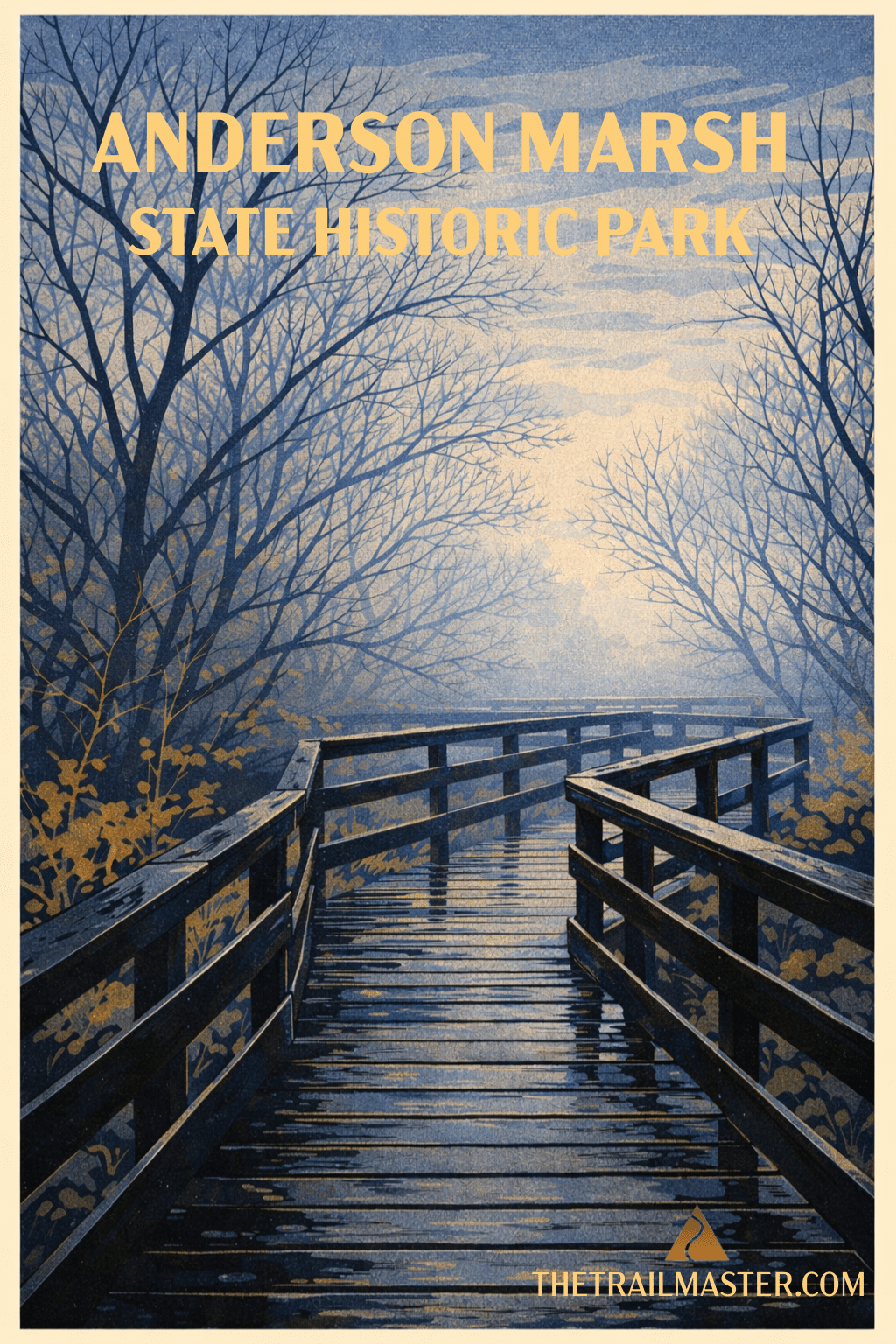
To stand in a rare remnant of the great tule marshes that once ringed Clear Lake.
To connect with the cultural heritage of the Pomo people and walk among ancient grinding stones.
To find a quieter, more reflective corner of the state park system-a place that rewards those willing to go a little out of their way.
Anderson Marsh State Historic Park is one of those places where history, culture, and nature all weave together. On the southeast shore of Clear Lake, tule reeds ripple in the breeze just as they have for millennia, providing food and shelter for wildlife-and once, for the Pomo people, who lived here as far back as 10,000 years ago. The Pomo were renowned basketmakers, and the marsh supplied the reeds, grasses, and willows that became the raw materials for their art. Today, Anderson Marsh protects both this fragile wetland ecosystem and the cultural story that belongs to it.
The park is also a reminder of just how central wetlands once were to California life. Anderson Marsh is only about 8 percent of the tule marsh that once ringed Clear Lake, California’s largest natural lake. Even this remnant provides a rich habitat for mammals, fish, birds, and amphibians. Crappie, catfish, bass, and bluegill spend parts of their lives in the shelter of the tules. Birders flock here too-expect to see herons, egrets, hawks, grebes, and migrating waterfowl depending on the season.
The park takes its name from Scottish immigrant John Still Anderson, who settled here in 1885. He and his descendants ran a cattle ranch for nearly a century. Some of the original ranch buildings remain-an old barn, bunkhouse, and ranch house-and can be toured on weekends. Trails meander from these ranch relics into the marsh and oak woodlands, linking the story of Native people, homesteaders, and today’s visitors.
Anderson Marsh also has a spiritual weight to it. Near Ridge Point, you’ll find Pomo grinding holes and petroglyphs, tangible traces of people who lived here for thousands of years before Europeans arrived. Just standing there, surrounded by tule reeds and blue oaks, you feel connected to an older California-one that existed long before vineyards, highways, and lakefront vacation homes.
Yes, Anderson Marsh is off the beaten path. But that’s part of its charm. The park is quieter than most, far removed from the bustle of Wine Country. You come here for reflection, for birdwatching, for a walk in landscapes where both nature and history feel close to the surface.
Anderson Marsh State Historic Park is located at 8400 CA Highway 53 in Lower Lake. Park in the lot by the visitor center.
Check out the old barn and visitor center before setting out on the trails. From the lot, follow signed Cache Creek Trail north. The path parallels Highway 53 briefly, then bends west to follow cottonwood-shaded Cache Creek, Clear Lake’s only outlet and a watercourse that eventually joins the Sacramento River.
Cross a bridge, then meander across meadowland to Ridge Point, 1.1 miles from the trailhead. Here you’ll find Pomo grinding holes and petroglyphs-proof that this has been a gathering place for centuries. From here, you have choices:
Marsh Trail (0.5 mile) leads into the tule marsh and offers wide views of the wetland before climbing gently into oak woodland.
Ridge Trail (1 mile) continues south, weaving through a blue oak woodland before curving east and rejoining Anderson Flats Trail.
Anderson Flats Trail crosses former pastureland, a reminder of the ranching years, and leads back toward the visitor center.
You can make a short 2-mile loop or stretch things out to 3 miles with a detour into the marsh. Either way, you’ll return with a deeper sense of both California’s natural richness and its human history.