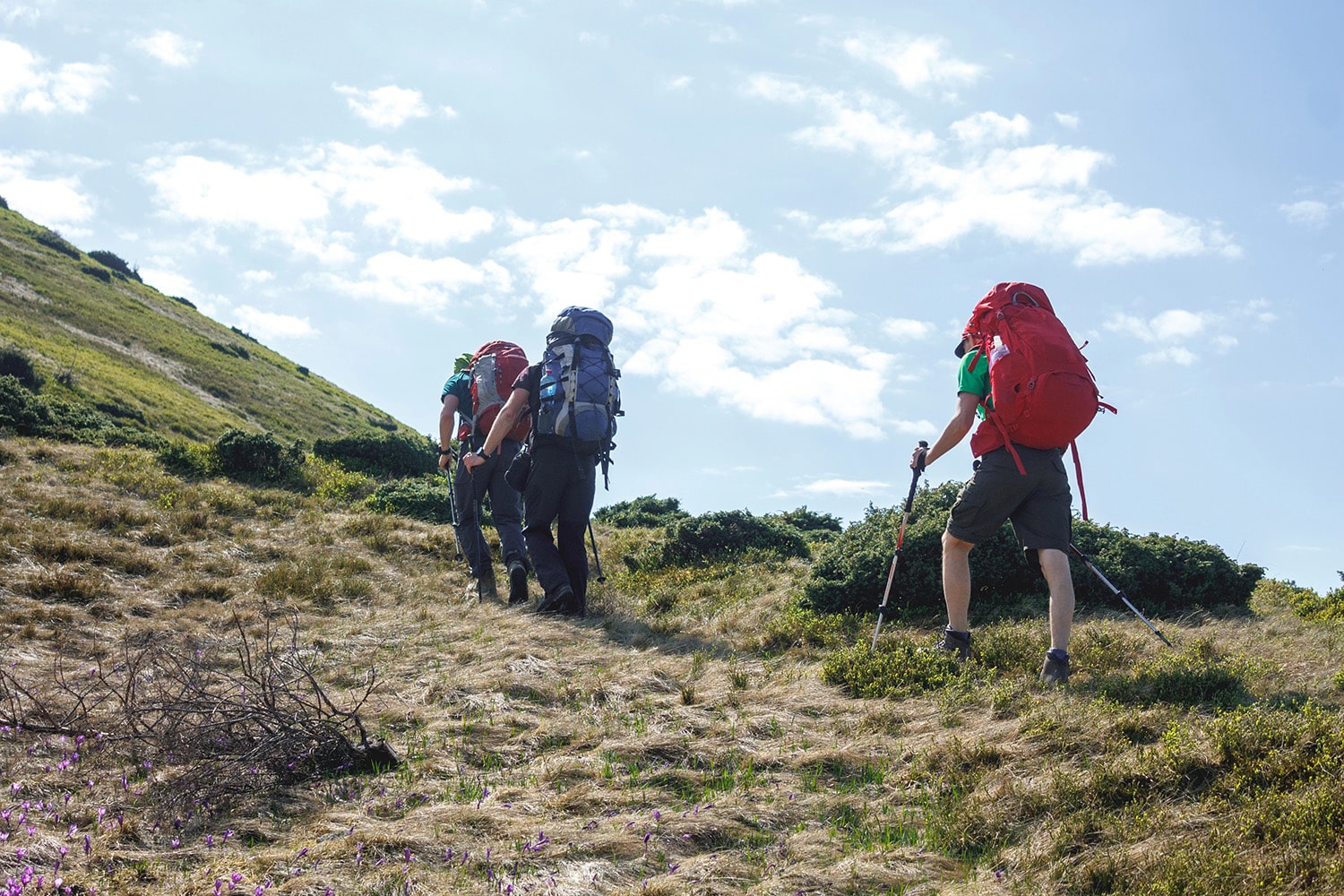
Trail Mix: food, fuel, and part of the joy of hiking.
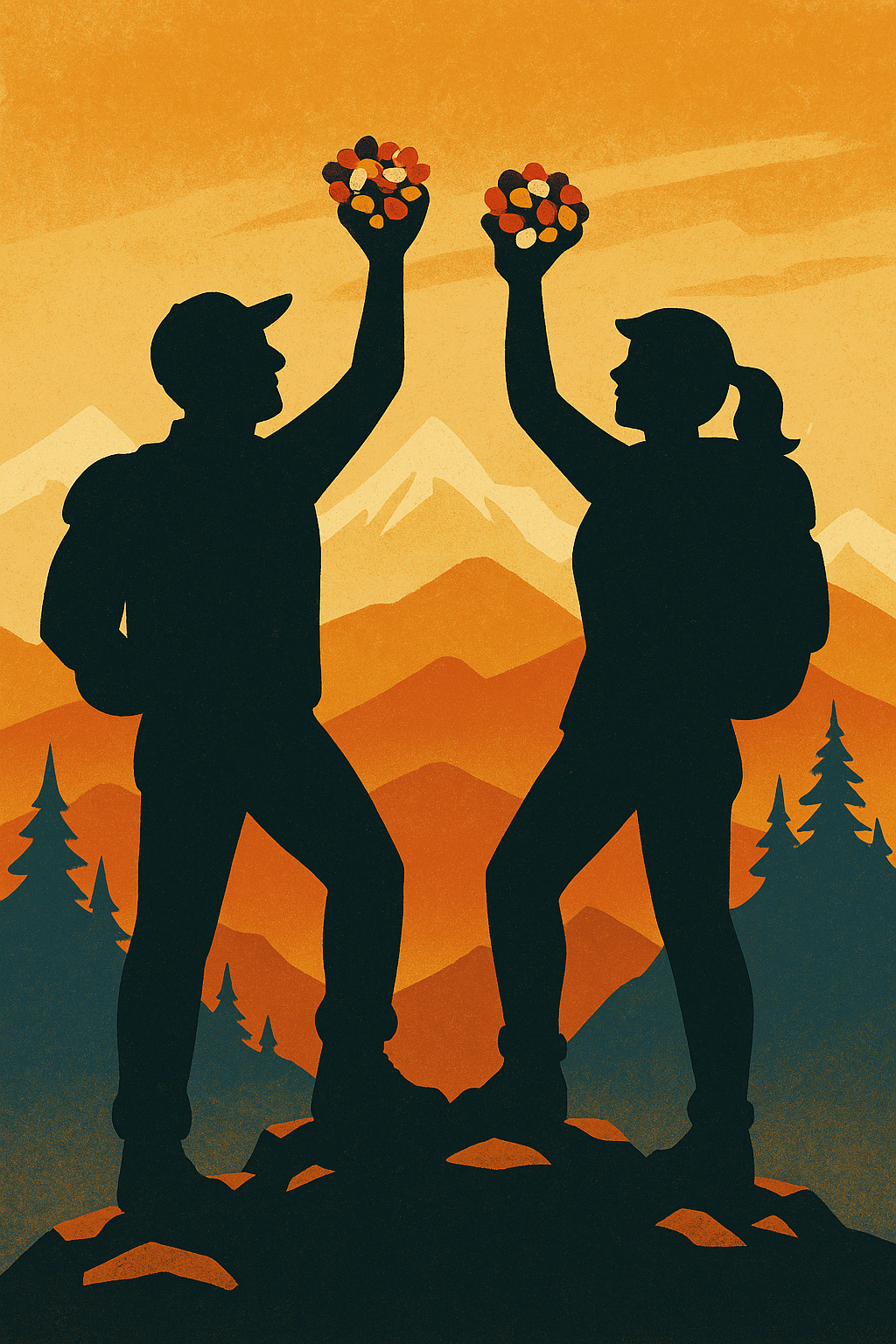
I’ve eaten a lot of trail mix in my life. A lot. Enough that if you lined up every handful I’ve consumed along the Pacific Crest Trail, it would probably create a continuous, snackable line from Mexico to Canada. (Imagine the bears’ delight.)
Trail mix has been hiking’s most dependable companion long before performance gels, electrolyte chews, or energy bars with names that sound like elite military units. Back in the day, before nutritionists got involved, we called it GORP—Good Old Raisins and Peanuts. And that’s exactly what it was: raisins. Peanuts. Maybe a stubborn almond or two if someone was feeling fancy.
GORP fueled many a Boy Scout, Girl Scout, and wide-eyed Sierra Clubber into the great unknown. But let’s be honest: raisins and peanuts alone do not spark joy. They spark survival. That’s a different energy.
Somewhere along the line, hikers revolted. We demanded flavor. We demanded crunch. We demanded those little bits of dried pineapple that look like sugar-coated treasure. We demanded M&Ms—nature’s perfect hiking candy, even though I’m pretty sure nature had nothing to do with them.
And just like that, trail mix entered its Golden Age.
The Trailmaster’s Trail Mix Memories
I have vivid memories of where I’ve snacked on trail mix:
On a windy mountain peak, where I fumbled the bag and watched half my almonds fly off into the abyss. (Enjoy, ravens.)
Beside a babbling brook, where one renegade peanut invariably rolled into the water and floated off like it was late for an appointment downstream.
On the switchbacks of San Jacinto, where I rationed my mix carefully—”one handful per mile”—only to break that rule within 30 minutes.
In the redwoods, where everything, including me, smelled faintly of pine resin, and the chocolate pieces became pleasantly squishy but never, ever melted. Redwood sorcery.
Trail mix tastes different depending on where you eat it. On a mountaintop? Gourmet. In the car on the way home? Somehow disappointing. On your couch? Wrong. Just… wrong.
Traditionalists say you can’t beat the Trail Mix basic recipe: Nuts, raisins, M&Ms
The Great Trail Mix Debate
Hikers love to claim they’ve created the perfect recipe. And each one swears theirs is superior, scientifically balanced, and nutritionally optimized.
I’ve heard passionate arguments about:
Raisins: yes or absolutely not
Cashews: essential luxury or trail-mix heresy
Pretzel pieces: too salty or just salty enough
Chocolate: always M&Ms, never chocolate chips
Banana chips: delightful crunch or dehydrated disappointment
Coconut flakes: fine if you want to smell like sunscreen
Me? I’m a bit of a trail mix anarchist. I’ll try anything once. I’ve thrown in espresso beans, ginger chews, even broken-up stroopwafels. (Don’t knock it till you hike it.)
When making mix at home, I rarely create the same batch twice. Improvisation is half the fun—kind of like choosing which trail to hike in the morning.
Store-Bought Mixes: The Modern Marvels
Store-bought trail mix has come a long way, too. Some are salty, some sweet, some sweet-and-salty, and some astonishingly healthy in a way that makes you think, This is good for me? Really?
A current favorite of mine—especially when I’m trying to be good but still want something tasty—is Power Up Trail Mix. Keto-friendly, clean ingredients, and genuinely delicious. It’s the kind of snack that makes you feel like you’ve made a responsible life choice simply by opening the bag.
In Praise of the Humble Handful
Trail mix will never be fancy. It doesn’t need to be. It’s not a meal; it’s a moment. A pause on the trail to enjoy nature, fuel up, and smile at how something so simple can make the day feel complete.
Every trail tells a story. And more often than not, that story includes a handful of trail mix.
Your Trusty Trail Companions (Even If They Never Say Much Back)**
I’ve hiked with people who treat trekking poles like they’re ski poles gone AWOL. I’ve also hiked with purists who sneer at poles—until they hit a patch of marbles masquerading as a trail and suddenly wish for a third (or fourth) leg. I fall somewhere in between: poles aren’t mandatory for every outing, but they sure do make hiking smarter, safer, and—yes—kinder to the knees we hope will carry us up many a mountain.
Back when I started exploring California’s wilds, hikers used old-fashioned wooden walking sticks and re-purposed ski poles. These days? Trekking Poles are everywhere: telescoping, folding, anti-shock, ultralight, ergonomic. Some hikers carry trekking poles that are fancier than my first car.
But beneath the tech and the titanium, the purpose remains the same: balance, rhythm, confidence, and protection. When you use poles well, they transform your hiking—not by making you faster (though that can happen), but by making you more stable, more efficient, and less beat-up at day’s end.
Let’s walk through what they do, how to choose them, and how to avoid the many mistakes I’ve seen hikers make before even stepping onto the trail.
Why Trekking Poles Help—And I Mean Really Help
Ask ten hikers why they use poles and you’ll hear ten answers. Mine?
Because the trail is rarely a sidewalk.
Here’s what trekking poles actually do for you:
Save your knees on steep descents.
Going downhill is where poles shine. Think of them as shock absorbers your knees didn’t know they ordered.
Provide balance on uneven terrain.
Roots, rocks, ruts—California has them all in endless combinations. Poles widen your base of support and keep you from doing impromptu yoga poses you’re not warmed up for.
Assist with creek crossings.
A good pole will steady you over slippery stones. A great pole will remind you to pick your foot beforecommitting your weight.
Offer a little trail diplomacy.
Menacing dogs, mysterious rustling in the chaparral, or the world’s angriest wild turkey—poles give you presence.
Keep spiders from decorating your face.
Wave a pole ahead and feel like royalty parting the webs.
Test suspicious ground.
Gopher holes, mud disguised as not-mud, or a place snakes might nap.
And maybe most important: poles keep you upright, which keeps your lungs open, which keeps your endurance humming.
Trekking Poles 101
A well-worn wooden staff has its charm—and a certain Gandalf-in-the-Sierra vibe—but modern trekking poles exist for a reason. Most poles today are made of aluminum or carbon fiber. Here’s the quick, Trailmaster breakdown:
Aluminum:
Sturdy
Affordable
Can bend instead of snapping
Carbon:
Lighter
Stiffer
Better for long days—until you fall sideways on them (carbon breaks more cleanly, which is a polite way of saying it snaps).
Poles come in two- or three-section designs:
Two-section:
Fewer moving parts
Stronger
Longer when collapsed (problematic for travel)
Three-section:
More compact
Easier to pack in luggage
Slightly less durable
For most hikers? Three-section poles are the sweet spot.
Fit and Feel
Poles should be adjusted so that your elbow forms about a 90-degree angle when the tip touches the ground. Ignore this and you’ll either hunch like a question mark or jab the air like a misguided flag-bearer.
Grip materials matter too:
Cork: Breathes and molds to your hand
Rubber: More durable, excellent in cold weather
Foam: Comfortable, light, but not as long-lasting
But here’s the Trailmaster truth: comfort is everything. And the only person who can judge comfort is the one holding the poles.
That’s why whenever a family member—from age eight to eighty-five—needed poles, I marched them straight to REI, where a real human can watch their gait, adjust the poles, and make recommendations based on terrain, style, and ambition.
For hikers ready to invest in a great pair, I often point them to trusted, durable options like the Leki Makalu Lite Cork Trekking Poles—lightweight, comfortable, reliable, and available at REI.
TREKKING POLES AREN’T JUST GEAR—THEY’RE CONFIDENCE ON A STICK
With poles, you don’t just walk the trail—you dance with it. You move in rhythm. You glide over roots, float down slopes, and stand taller.
Trailmaster Tip? Use trekking poles as tools, not crutches. Let them help you, not hold you up. And when the trail gets tough—and it will—they’ll help keep you moving forward.
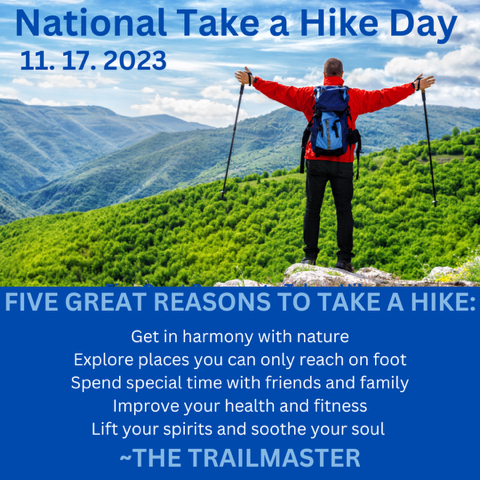
Depending on who you ask, “Take A Hike Day” (November 17) is either about going for a walk in nature or telling someone to get lost.
Naturally, The Trailmaster prefers you hit the trail rather than tell someone to go away. Hiking is by far the most popular form of outdoor recreation in the U.S., so I’m confident that many will take a hike in the way I do and say.
Five Great Reasons to Take a Hike
*Hiking helps you get in harmony with nature
*Hiking lets you explore places you can only reach on foot
* Hiking gives you special time with friends and family
* Hiking improves your health and fitness
* Hiking lifts your spirit and soothes your soul
When I meet people unaware of my unusual occupation, they invariably ask: “So John, what do you do?”
“I tell people to ‘Take a hike!’”
“Seriously, what’s your real job?”
If I had a pound of trail mix for every time I’ve been asked that question, I’d have a ton of trail snacks.
The fact is, hiking and writing about hiking is my job—and has been for a long time. I served as the Los Angeles Times hiking columnist for 17 years and have written 30 books about hiking and nature. I’ve hiked from youth through middle-age, and plan to continue hiking and telling anyone who will listen to “Take a hike!” until I’m carried off the trail.
I say “Take a hike” is not a negative and imperative declaration, but a positive and caring suggestion.
After celebrating Take a Hike Day on November 17th, in the days that follow you could celebrate Occult Day on the 18th, World Toilet Day on the 19th or Africa Industrialization Day on the 20th.
But I say, “Take a Hike!” every day instead. Or at least take a hike as often as possible. Whenever and wherever you can.
Take a hike and enjoy the greenery, the scenery and the wonderful world around you. Take a hike and reconnect with nature. Tell your friends and family to “Take a hike!”
As for those kids always on the phones, meddlesome in-laws, and annoying co-workers, well, you know what to tell them.
Hike to the HOLLYWOOD Sign. Celebrate the 100th anniversary of the iconic landmark. Enjoy this fun new video HIKE TO THE HOLLYWOOD SIGN
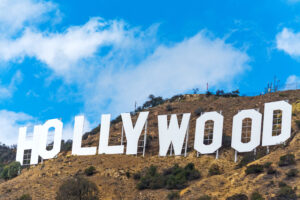
When the HOLLYWOOD Sign was dedicated on July 13, 1923, no one imagined it would become an iconic symbol for the entertainment industry and greater Los Angeles. Four thousand blinking bulbs were added to the towering letters, and it was lit up for the first time December 8, 1923
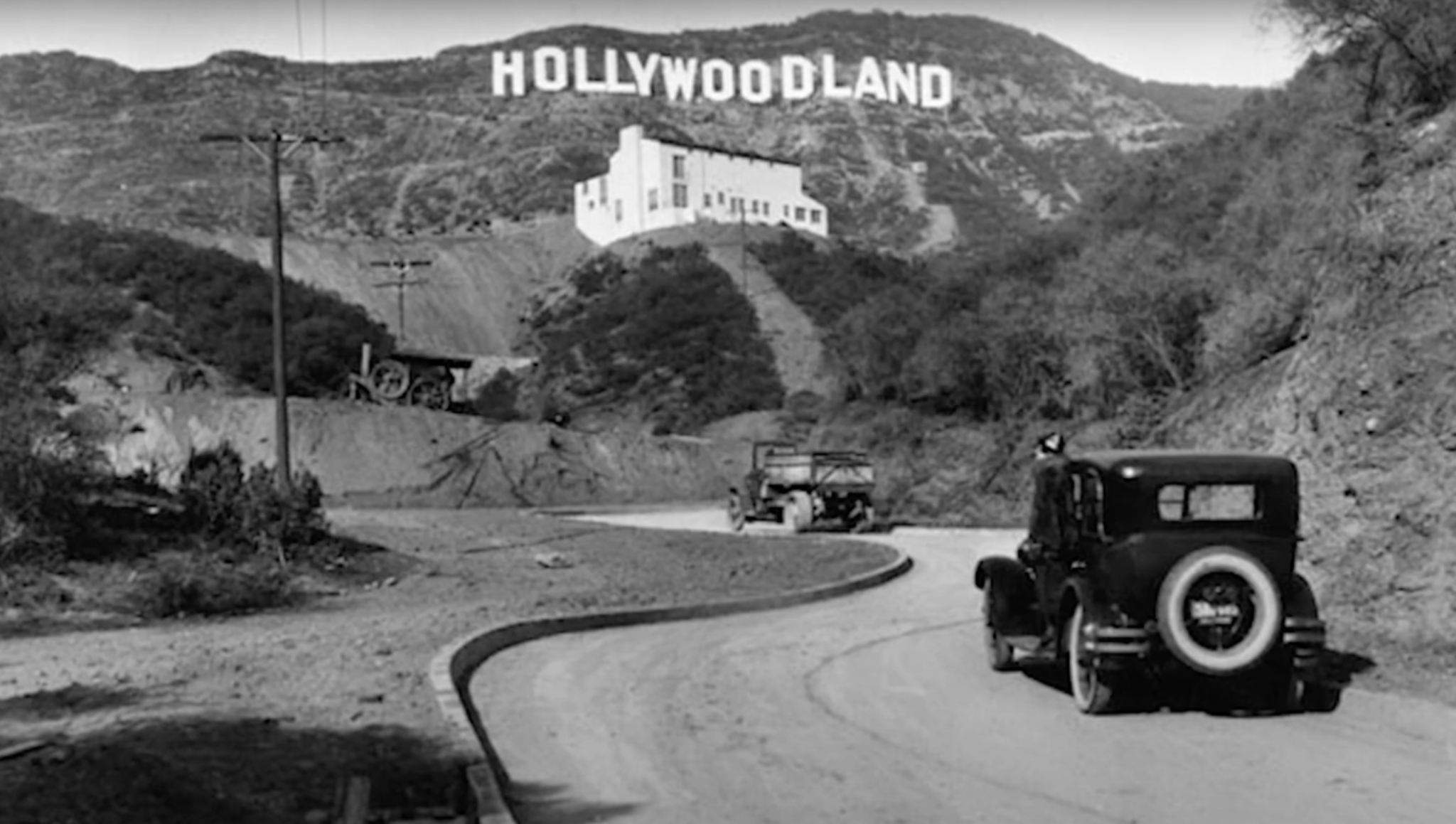
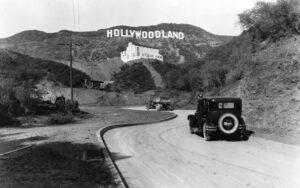
A hundred years ago, it was the HOLLYWOODLAND sign, put up by real estate developers to promote the sales of new homes in the Hollywood Hills. At the time, the “sign was believed to be the largest in the world.
Given the Writer Guild and Screen Actors Guild strikes and the uncertainty facing the TV-film industry, little wonder the sign has received scant attention in its centennial year. For a longer explanation of why the HOLLYWOOD Sign’s big year has been a bust, check out the Washington Post HOLLYWOOD Sign Story
Nevertheless it continues to be a highly popular destination for hikers. So let’s learn a little more about the Hollywood Sign before we hit the trail.
In the 1920s, visitors drove not hiked to the HOLLYWOODLAND Sign as it was then known.
A rather rickety real estate advertisement it was, 14 unevenly spaced, 50-foot-high letters that swayed in the breeze. It was built to last for a year or two, but Hollywood rapidly became the moviemaking capital of the world and the sign endured, now forever associated with the silver scree
Hiking to the HOLLYWOOD Sign likely began in earnest during the 1930s when Depression era government workers constructed the Griffith Park trail system. In 1944, about 440 acres surrounding the HOLLYWOODLAND sign became part of Griffith Park. When the sign finally got a little TLC in 1949, the “LAND” portion of the sign was removed.
In 1978 the sign got an extreme makeover with steel letters supported by sturdy cement columns thanks to the generosity of celeb donors, including Hugh Hefner, Alice Cooper, and Gene Autry. Visit the Hollywood Sign Trust to learn more about the history of the HOLLYWOOD Sign.
Mt. Lee NOT Mt. Hollywood is where you’ll find the HOLLYWOOD Sign
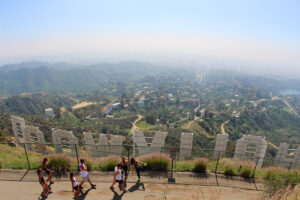
First thing a hiker needs to know is that Mt. Hollywood, Griffith Park’s premiere peak, is NOT the mountain crowned by the HOLLYWOOD Sign. The HOLLYWOOD SIGN rests near the summit of Mt. Lee. You’ll get great photo angles on the sign and abundant selfie opportunities as you ascend Mt. Lee. (Resist the urge to climb over the fence in order to have your picture taken next to the sign; it’s strictly illegal.
The Hollywood Hills form the eastern end of the Santa Monica Mountains and share a similar ecology to the range’s taller and wilder peaks to the west. The differences between the two ends of the range have more to do with human settlement than natural history; the Hollywood Hills are by far the most developed part of the mountains.
Three of The Trailmaster’s Favorite Hikes
Hike to the HOLLYWOOD Sign from Innsdale Drive: Easy hike to Hollywood Sign Overlook (Selfie Heaven), followed by ascent on Mulholland Trail and Mt. Lee Drive to the sign.
Hike to the HOLLYWOOD Sign from Wonderview Drive: A somewhat challenging route for the true hiker! Visit the Wisdom Tree and ascend Burbank Peak and Cahuenga Peak via Aileen Getty Trail on the way to the sign.
Hike to the HOLLYWOOD Sign from Brush Canyon: Visit the Bronson Caves (“Bat Cave”), ascend Brush Canyon to Mulholland Trail, then over to Mt. Lee Drive to the sign.
You can also hike to the HOLLYWOOD Sign from several popular locales in Griffith Park including Ferndell, Griffith Observatory, and Mt. Hollywood. Trailmaster recommendation: Climbing to Mt. Hollywood AND to the HOLLYWOOD Sign on the slopes of Mt. Lee adds up to a great hike!
Hollywood Sign from Innsdale Drive
From Innsdale Drive to Hollywood Sign Viewpoint
is 2 miles round trip with 200-foot elevation gain; to HOLLYWOOD Sign is 4.6 miles round trip with 700- foot gain
This hike does not save the best for last. Great views of the HOLLYWOOD Sign are yours from the beginning of the hike, which makes it highly appealing to the many visitors from across the nation and around the world looking for the easiest way to get photo ops.
A combination of winding streets and dirt fire roads lead a short mile to Hollywood Sign Viewpoint, aka Selfie Heaven. Frame your photos with the flora en route: cactus, California holly, palm trees, bougainvillea, and bamboo.
DIRECTIONS: From northbound Highway 101, exit on Barham Drive and drive north 0.3 mile to Lake Hollywood Drive. Turn right and follow the winding road, passing a junction with Wonder View Drive, then Lake Hollywood Reservoir. After 1.5 miles, turn left on Tahoe Drive and continue 0.25 mile to Canyon Lake Drive. Find curbside parking where you can, and the trailhead located 0.1 mile at the end of Canyon Lake Drive at Innsdale Drive.
THE HIKE: Walk up the wide dirt road (Innsdale Trail for lack of a better name) and… wow, there it is, the HOLLYWOOD Sign. Curve around a bend and just 0.25-mile out, you’ll find yourself directly below the letters. Wow!
The fire road angles right toward houses and at the 0.5-mile mark, squeeze past a driveway and reach a residential street (Mulholland). Turn left and make another left at the first junction. March past a thicket of signs, ascend past a last house to reach a dirt road, and wind across a hillside above the HollywoodLand neighborhood.
A short mile from the trailhead, the dirt trail ends at a teal-colored gate. Ascend steps to a paved road located at the crest of Deronda Drive to meet Mt. Lee Drive and a junction. Walk 100 yards up the paved service road (toward a water tank) to Hollywood Sign View. Join visitors from around the world, nearly all taking and posting photos.
Back to business and the route to the Hollywood Sign: 1.3 more miles up paved Mt. Leet Drive. As you ascend get views of Griffith Observatory and Mt. Hollywood to the east, and downtown L.A. to the southeast and, in 0.3 mile, meet a dirt fire road (Mulholland Trail) that leads toward Brush Canyon (see hike description). Keep left on the paved road for the final mile, and get more views: the Verdugo Mountains, San Gabriel Mountains, and downtown Burbank.
Just short of the summit, look right and note the signed junction with steep Aileen Getty Ridge Trail that leads to Cahuenga Peak. (A great add-on to this hike!) Minutes later, pass along the chain link fence separating the road from the sign, and reach a vista point above the ‘H’ in the HOLLYWOOD Sign. Enjoy!
Hollywood Sign from Wonderview Drive
From Wonder View Drive to Cahuenga Peak is 2.4 miles round trip with 900-foot elevation gain; to Mt Lee is 3.2 miles round trip
Wonder View Trail leads to the 1,820-foot summit of Cahuenga Peak, high point of the Hollywood Hills. The narrow and steep path (a true hiker’s route) continues to nearby Mt. Lee, which hosts the famed HOLLYWOOD Sign.
In 2010, hikers and movie fans from across the nation and around the world were delighted to learn that creative conservation efforts, combined with fundraising from private and public sectors, succeeded in purchasing the peak and adding it to Griffith Park.
When the developers announced plans to subdivide the peak into luxury estates, local conservationists, film fans, and celebs rallied to “Save the Peak.” Some
$12 million was raised to purchase the 138-acre site. Hollywood notables, including Steven Spielberg and Tom Hanks, plus the Tiffany & Company Foundation, Hugh Hefner and Aileen Getty contributed serious cash, as did state and local agencies.
Enjoy vistas from Burbank Peak and Cahuenga Peak on the way to Mt. Lee and the HOLLYWOOD Sign.
As the story goes, Cahuenga, which names a pass, a peak and nowadays a boulevard was once a native Shoshone village located on the banks of the Los Angeles River near present-day Universal City. The peak is the 12th highest in the Hollywood Hills/Santa Monica Mountains.
DIRECTIONS: From Highway 101 in North Hollywood, exit on Barham Boulevard and head north 0.3 mile. Turn right on Lake Hollywood Drive and continue 0.5 mile to intersect Wonder View Drive (no street parking). Park alongside Lake Hollywood Drive.
THE HIKE: Walk 0.25 mile up paved Wonder View Drive to its end. Hike past a yellow vehicle gate on dirt road 300 feet to unsigned Burbank Peak Trail (formerly Wonder View Trail) on your right. Begin a steep eastward ascent east, zigzagging up the south slope of Cahuenga Peak. Enjoy wonderful views of Mt. Lee with its forest of antennae, Griffith Observatory, Mt. Hollywood, downtown L.A.
Step off the trail and get wisdom or share it at the Wisdom Tree
After a quite aggressive 0.8-mile climb the rough trail gains a ridgeline and splits: the signed right fork leads to Cahuenga Peak and a short pathway leads left to a lone pine tree and the top of Burbank Peak (1,690 feet). Pause to read the summit logbook stashed below the Wisdom Tree; hikers have been known to get very creative with their philosophizing in this book. Clear-day panoramic views are terrific—particularly angles on the San Fernando Valley and San Gabriel Mountains.
Join signed Aileen Getty Ridge Trail and hike east along a ridgeline 0.3 mile to the summit of Cahuenga Peak. The path then drops to a saddle between Cahuenga Peak and Mt. Lee (1,680 feet) and ends at Mount Lee Road. Turn right and walk up the paved road to the viewpoint above the HOLLYWOOD Sign.
Hollywood Sign from Brush Canyon
From Canyon Drive to HOLLYWOOD Sign is 6.4 miles round trip with 1,100-foot elevation gain
Located in the southeast area of the Griffith Park, Brush Canyon is less developed and less crowded than other areas of the park. Cloaked in chaparral, Brush Canyon definitely lives up to its name. Apparently, its brushy nature was not a secret; “Brush Canyon” was on the map in the early years of the 20th century—even before the park was established.
But brush isn’t the only flora in the Brush Canyon. Oak and sycamore thrive in the bottom of the canyon.
Along with offering a convenient trailhead for a hike to the HOLLYWOOD Sign, Brush Canyon is an ideal place to start for a sojourn to other nearby summits—particularly the three noteworthy peaks that rise above the ridges of the canyon: Mt. Bell, Mt. Chapel and Mt. Hollywood.
Due to the closure of the Hollyridge Trail, Canyon Drive trailhead has become a favorite trailhead for a hike to the HOLLYWOOD Sign. Expect lots of company on the trail from SoCal hikers and visitors from across the US and around the world.
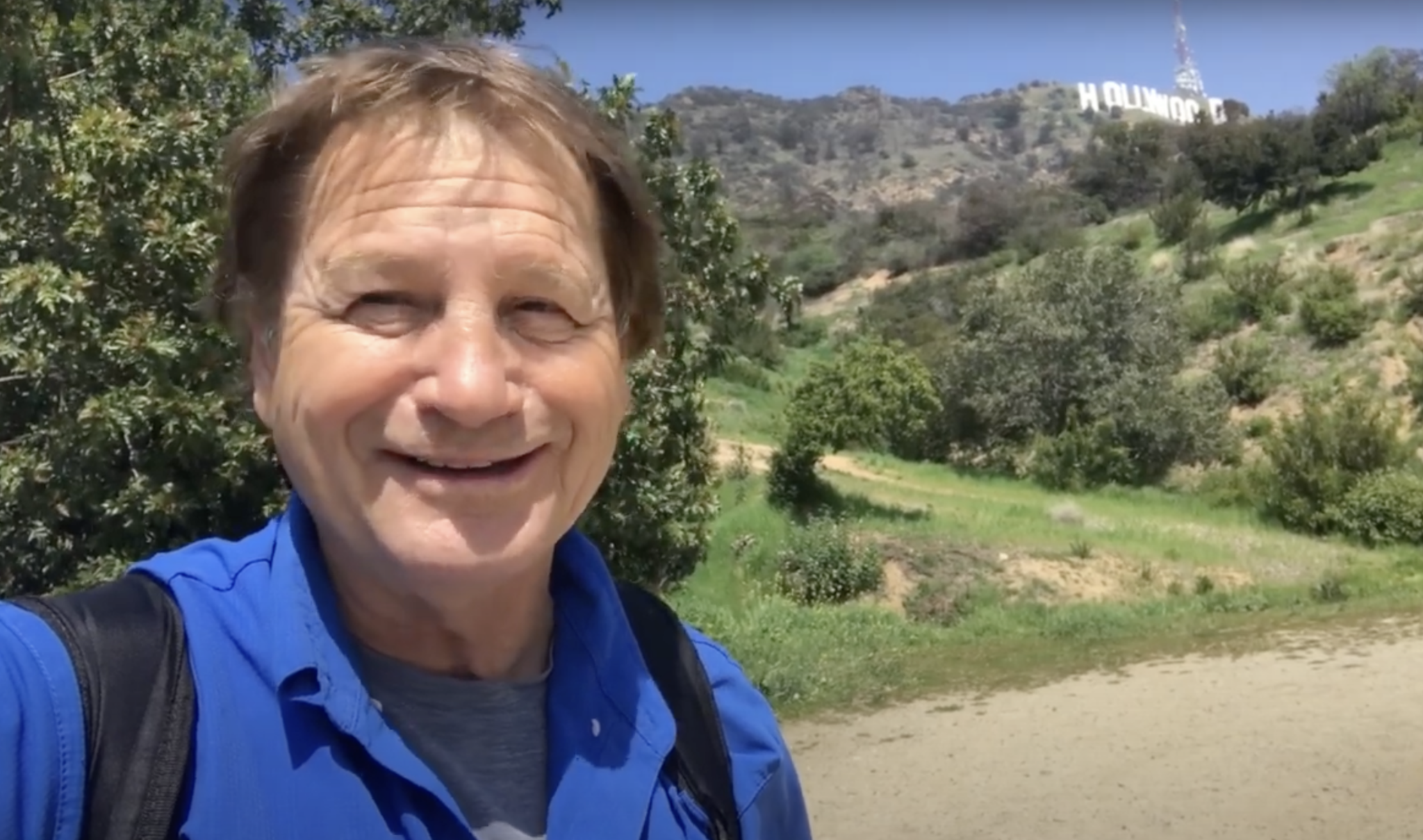
Enjoy the view from above the DOOWYLLOH Sign, uh, HOLLYWOOD Sign
DIRECTIONS: From Franklin Avenue, on the southern boundary of Griffith Park, turn north on Bronson Avenue or Canyon Drive (the streets soon join and continue as Canyon). Follow Canyon Drive a winding mile through the hills into Griffith Park. Park alongside the road or in a lot near a picnic area or in a small parking lot by the trailhead at road’s end. Note: Park authorities close the road at sunset.
THE HIKE: Those heading directly for the Bronson Caves will locate the trailhead on the right (east) side of Canyon Drive. Join a fire road and hike south a short distance to the caves.
Walk past an info board with a large park map and join the fire road (Brush Canyon Trail). The trail passes handsome sycamores that line the canyon bottom but once the trail begins climbing northeast it leaves the trees behind and Brush Canyon lives up to its name. Chaparral flora frame views of the HOLLYWOOD Sign and Mt. Hollywood.
After 1.25 miles and a stiff 600-foot gain, reach an overlook (great views of metro LA) and soon thereafter a signed junction with Mulholland Trail, a wide dirt road. Go left (west) on a more level course, pass a junction with Hollyridge Trail (that leads to the closed Beachwood Drive trailhead). Keep right, and wind west to meet Mt. Lee Drive, 2.2 miles from the trailhead.
A 0.4-mile descent on Mt. Lee Drive leads to Hollywood Sign View (great views indeed and photo ops galore from this overlook; see hike description from Innsdale Drive). Ascend the steep paved road about 1 mile to the summit and a view of DOOWYLLOH, those giant white capital letters from above and behind the sign.
A locked gate prevents hikers from reaching the top of Mt. Lee. But do enjoy the views from about 100 feet above the HOLLYWOOD Sign.
"Hike with Kids will encourage countless families and children to explore the great outdoors.” —Richard Louv, Last Child in the Woods HIKE With Kids is now Available!
“It’s a gift from one generation to another to take kids on a hike,” says John McKinney author of 30 hiking-themed books whose weekly hiking column ran for 18 years in the Los Angeles Times. “As a parent myself, I wrote HIKE With Kids to inspire adults to take kids hiking and to provide the practicalities to do so.”
(For hikers in many parts of the country, it’s not advisable to take a hike right now while the country is battling the Covid-19 pandemic, McKinney cautions. In some regions, it might be okay to hike, provided social distancing practices are observed and the trail is wide and lightly traveled.)
Whether you’re indoors a lot or not, it’s a good time to learn about nature, nurture, and the fun you and your kids will have on a hike.
Hike with Kids Is the Antidote We Need
Recent studies have shown that more American children are replacing outdoor activities with those done indoors and, as a consequence, are suffering from what author-advocate Richard Louv calls “Nature Deficit Disorder.” But according to McKinney there is an antidote. Taking a hike in nature improves the health of children, increases their ability to concentrate and boosts their self-esteem, emotional wellbeing and leadership skills.
From selecting gear to safety tips to favorite trail snacks, John reveals the best ways to share the joys of nature—and the fun of hiking with kids.
Discover which of the Ten Essentials are truly essential and the Six Secrets to Hiking with kids.
Gear-up with the right stuff, learn what to pack, and how to pick a hike kids will like.
Get tips for hiking with kids of all ages: babies and toddlers, tweens and teens.
And be sure to check out “The Trailmaster’s Ten-Point Plan for Getting Kids Back on the Nature Trail.”
“Beyond the substantial physical and emotional benefits found through hiking, kids who hike learn an appreciation for nature that lasts a lifetime,” say McKinney. “They’re the ones who will stand up and protect our natural environments in the future. Hiking is an investment in them and in our future.”
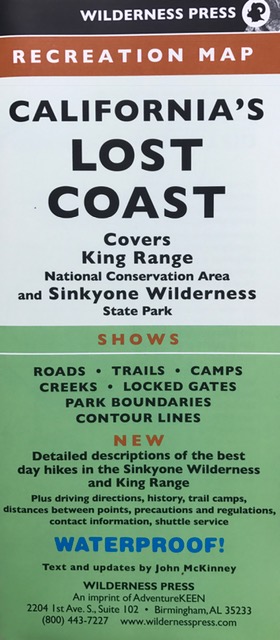
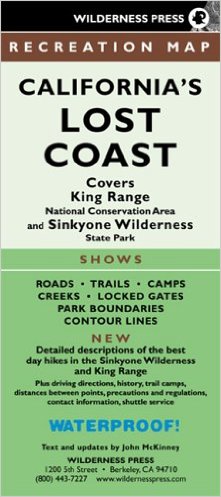
A new and significantly revised edition of the popular map, California’s Lost Coast is now available. Featuring black sand beaches, redwood groves, and 60 miles of the state’s wildest coastline, the Lost Coast is a magnificent place to hike.
Order the new California’s Lost Coast Map ($9.95) from Wilderness Press for only $7.46 (save 25 percent). The map is also available from Amazon, The Trailmaster Store, and California REI stores.
New Edition of California’s Lost Coast map now available
In recent years the Lost Coast has gained national—even international—attention as a top hiking destination, garnering rave reviews and earning it a place on numerous “Best Hikes” lists including:
“North America’s 10 Most Memorable Hikes”—Backpacker
“Great American Hikes: 20 Top Trails across the USA” —USA Today
“Top 10 Coastal Hikes in California & Pacific Northwest”—The Guardian
Lost Coast Brewery, located in Eureka, California, is also spreading the word about the Lost Coast to beer-lovers everywhere with its Lost Coast Ale and other award-winning beers. Its beer-making operation has increased dramatically in recent years, and Lost Coast beer is now sold around the state and across the nation, as well as in 11 countries.
Why Is this California’s Lost Coast?
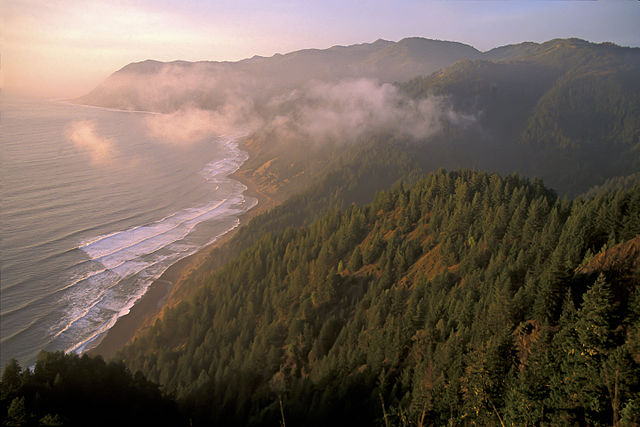
Sinkyone Wilderness State Park, along with the BLM’s King Range National Conservation Area to the north, comprise California’s Lost Coast, located in northern Mendocino and southern Humboldt counties. One reason the coast is “lost” is because no highways cross it. So rugged is this country, highway engineers were forced to route Highway 1 many miles inland from the coast—and the region has remained sparsely settled and unspoiled. It’s magnificent vistas and varied terrain—dense forests, prairies, bluffs and beaches—reward the visitor who plans an adventure on the Lost Coast.
On California’s Lost Coast, the rugged peaks of the King Range seem to rise right out of the surf. (photo by Bob Wick, BLM)
The new map incorporates recent changes in facilities and access that add up to altogether better visitor experience. The BLM has upgraded 7 campgrounds and its day-use recreation areas. Trail camps in the King Range and walk-in camps in the state park have also been improved. Roads and trails are in better shape than in years past, with improved signage as well.
California’s Lost Coast map details the BLM’s new wilderness permit system for backpackers. Those backpackers and day hikers who like to make one-way journeys will be pleased to learn of a new shuttle service that offers drop-off and pickup at all the major Lost Coast trailheads. The map highlights the new Paradise Royale Mountain Bike Trail System, a great way for mountain bikers to experience the Lost Coast.
While field-checking his California’s Lost Coast map, Trailmaster John McKinney gets the latest info from a Sinkyone Wilderness State Park ranger.
John McKinney, author of 30 books about hiking and longtime coastal trails advocate, created the 1st edition of this map while serving as a volunteer camp host at Sinkyone Wilderness and worked closely with the AdventureKeen team to produce this 3rd edition.
John pioneered the California Coastal Trail and wrote a narrative about his adventure: Hiking on the Edge: Dreams, Schemes, and 1600 Miles on the California Coastal Trail.
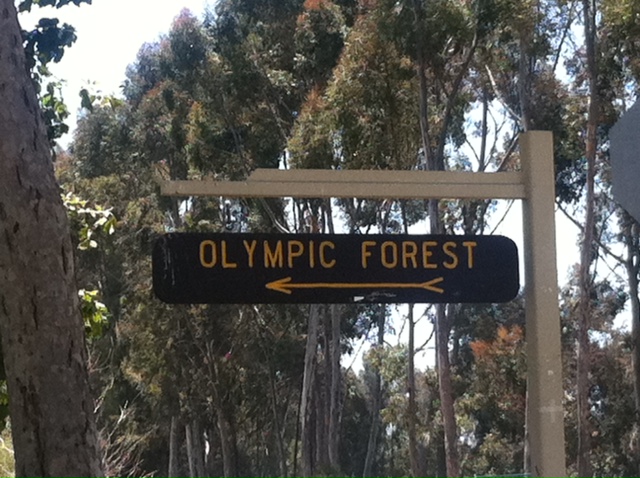
Whenever I take a Baldwin Hills hike I’m reminded that the city of Los Angeles twice hosted the Olympic games. One favorite Baldwin Hills hike is in Kenneth Hahn State Recreation Area. On my last visit I began hiking near the park’s Olympic Forest. When planted the forest included at least one tree for each of the 140 nations that participated in the 1984 Olympic Games.
Adding to the international flavor is Doris’s Japanese Garden, also located near the trailhead. I enjoyed a stroll past a restful pond and plum trees to a waterfall.
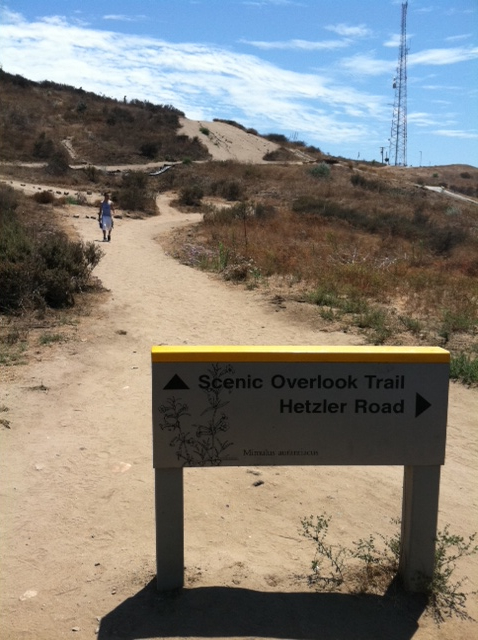
I hiked the Walk for Health Trail. Every park should have one trail so named. Never mind, every hike is a walk for health.
As I ascended the dirt path south above the Olympic Forest, I contemplated the paper mulberry from Tonga, the carob from Cyprus, the date palm from Egypt. Wouldn’t it be fun to be hiking along with Tongans, Cypriots, Egyptians and others from around the world?
When Los Angeles Hosted the Olympics
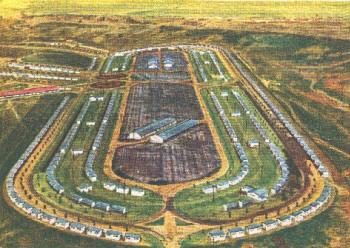
Los Angeles also hosted the Olympics in 1932, at which time the Baldwin Hills park site served as the Olympic Village hosting the athletes. Wow, L.A. sure must have looked different then.
The trail climbs a hillside cloaked in the native coastal scrub to a cluster of pathways meeting close to Christine’s Point, the first of several viewpoints with benches and sunshades. I took a seat and enjoyed an air traffic controller’s view of LAX. Ah, this is what a Baldwin Hills hike is all about. Then I stood up, turned around, and admired clear-day vistas of the Hollywood Hills, San Gabriel Mountains and downtown L.A.
Hike the Baldwin Hills for great views of L.A.
Hiking may not be an Olympic event, but it sure is a satisfying workout, the best of outdoors recreation and as the signs along the Walk for Health Trail point out—good for the mind, body and spirit.
Interested in more hikes in Los Angeles? Check out HIKE Los Angeles
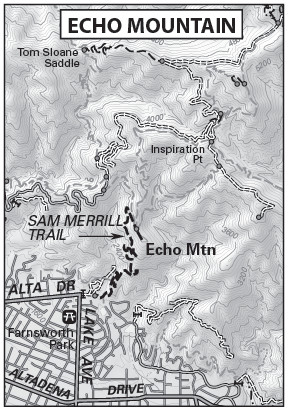
Sam Merrill Trail: From Cobb Estate to Echo Mountain is 5.6 miles round trip with 1,400-foot elevation gain
Professor Thaddeus Sobieski Coulincourt Lowe’s Echo Mountain Resort area can be visited not only by retracing the tracks of his “Railway to the Clouds” (See Mt. Lowe Railway hike), but also by way of a fine urban edge trail that ascends from the outskirts of Altadena.
From Pasadena, visitors rode a trolley up Rubio Canyon, where a pavilion and hotel were located. Then they boarded the “airships” of the great cable incline, which carried them 3,000 feet (gaining 1,300 feet) straight up to the Echo Mountain Re¬sort Area. “Breathtaking” and “hair-raising” were the most frequent descriptions of ride that thrilled tourists from the 1890s to the 1930s. Atop Echo Mountain was a hotel and observatory.
This historic hike visits the ruins of the one-time “White City” atop Echo Mountain. From the steps of the old Echo Mountain House are great clear-day views of the megalopolis.
Pasadena and Altadena citizens have been proud to share their fascination with the front range of the San Gabriels. This pride has extend¬ed to the trails ascending from these municipalities into the mountains. Local citizens, under the auspices of the Forest Conservation Club, built a trail from the outskirts of Altadena to Echo Mountain during the 1930s. During the next decade, retired Los Angeles Superior Court clerk Samuel Merrill overhauled and maintained the path. When Merrill died in 1948, the trail was named for him.
Sam Merrill Trail begins at the former Cobb Estate, now a part of Angeles National Forest. A plaque placed by the Altadena Historical Society dedicates the estate ground as “a quiet place for people and wildlife forever.”
DIRECTIONS:
From the Foothill Freeway (210) in Pasadena, exit on Lake Avenue and travel north 3.5 miles to its end at Loma Alta Drive. Park along Lake Avenue.
Echo Mountain Map by TomHarrisonMaps.com (click to enlarge)
THE HIKE:
From the great iron gate of the old Cobb Estate, follow the trail along the chain-link fence. The path dips into Las Flores Canyon, crosses a seasonal creek in the canyon bottom, and begins to climb. With the earnest, but well-graded ascent, enjoy good vistas of the San Gabriel Valley and downtown Los Angeles.
After 2.6 miles of, steep and mostly shadeless travel, arrive at a signed junction with Mt. Lowe Railway Trail (see hike description). Bear right and walk 100 yards along the bed of the old Mt. Lowe Railway to the Echo Mountain ruins. Just before the ruins is a very welcome drinking fountain.
Up top, spot the railway’s huge bull wheel, now embedded in cement, and just below a pile of concrete rubble, all that remains of the railway depot. The steps and foundation of the Echo Mountain House are great places to take a break and enjoy the view straight down precipitous Rubio Canyon, the route of Lowe’s railway.
Echo Mountain takes its name from the echo that supposedly bounces around the semicircle of mountain walls. You can try shouting into the strategically placed “megaphone” to get an echo but perhaps even echoes fade with time.
Interested in more hikes in the San Gabriel Mountains? Check out my “Hike the San Gabriel Mountains Pocket Guide” at The Trailmaster Store
California Lost Coast Map is just what you need for planning a day hike or backpacking adventure. The Trailmaster created this map to share the wonders of this wilderness shoreline and is pleased that each year more and more hikers from across the country and around the world are discovering the beach and mountain trails on the Lost Coast.
Find great hikes on California’s Lost Coast with the help of a map created by Trailmaster John McKinney
Sinkyone Wilderness State Park, along with the BLM’s King Range National Conservation Area to the north, comprise California’s Lost Coast, 60 miles of the state’s wildest coastline located in northern Mendocino and southern Humboldt counties. One reason the coast is “lost” is because no highways cross it. So rugged is this country, highway engineers were forced to route Highway 1 many miles inland from the coast—and the region has remained sparsely settled and unspoiled. It’s magnificent vistas and varied terrain—dense forests, prairies, coastal bluffs, beaches—reward the hardy explorer.
I created the first version of this map way back in 1988 when I spent a month as a volunteer ranger at Sinkyone Wilderness State Park. Just after I moved my belongings into the old ranch house, it began to rain. And rain. And rain some more. And by the next day the road to the park was closed by a minor mudslide, marooning me from the outside world.
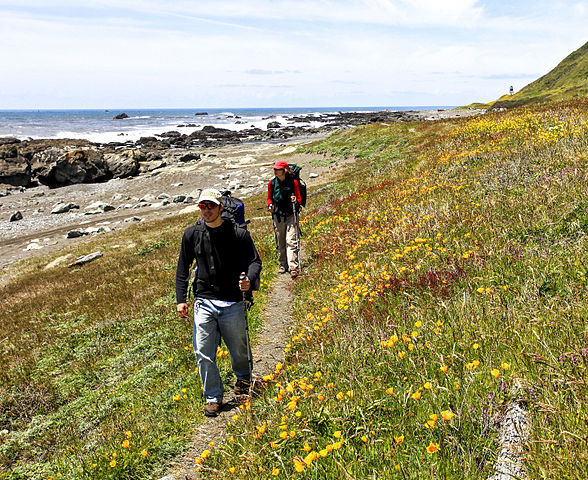
Lost Coast hikers tramp a rugged shoreline trail (photo by Bob Wick, BLM)
I had a glorious time. A state park and 20 miles of coastline all to myself. Well, almost to myself. The sky was filled with gulls and pelicans, sea lions and harbor seals gathered at Little Jackass Cove, gray whales were migrating near shore, and a herd of Roosevelt elk seemed to accompany me wherever I hiked.
I figured a few more nature-loving, don’t mind the rain kind of hikers would love the Lost Coast, too, if only they could find it and know where to hike. So I hiked all the trails and supervised the production of a map.
Every few years the map (published by Wilderness Press) gets an update, and of course I love to return to the Lost Coast to hike and to field check “California’s Lost Coast.” The trail system sure is a lot better these days, with pretty well-maintained trails and trailheads. That being said, much of it is still wilderness hiking, and far more remote than any other length of coast in California.
The Lost Coast Map also includes descriptions of a number of my favorite day hikes in the King Range National Conservation Area and Sinkyone Wilderness State Park, some along the route of the Lost Coast Trail, which extends the length of the two jurisdictions. Lost Coast Trail is starting to appear on those Top Ten and Top Twenty North American Hikes lists, and I say deservedly so.
On California’s Lost Coast, the rugged peaks of the King Range seem to rise right out of the surf. (photo by Bob Wick, BLM)
Since California’s Lost Coast is one of the rainiest regions in the state, if any map should be waterproof, this one is it. My only objection to the word “WATERPROOF!” on the front of the map is in way bigger type than John McKinney and I’m really going to have to speak to the otherwise bright and extremely meticulous editors at Wilderness Press about this…Imagine thinking WATERPROOF! is a more significant selling point than The Trailmaster’s trail-blazing and compelling prose…
And in other Lost Coast News: Backpackers and those day hikers who like to make one-way journeys will be overjoyed to learn of three locally owned shuttle services that offer on-demand drop-off and pickup at all the major Lost Coast trailheads:
The BLM has a very helpful visitor center, with a great staff and information handouts. Backpackers in particular will need to drop by to find out about trail camps and keeping your food out of the paws of the increasing bear population.


 Store-Bought Mixes: The Modern Marvels