Featured

  • Hiking the Holy Mountain Book Trailer

    Hiking the Holy Mountain Book Trailer

    While the ‘plot’ and colorful cast of Greek monks in “Hiking the Holy Mountain” seem like they came from a movie script, this is very much a true story!

    Hiking the Holy Mountain Book Trailer Video Watch now!

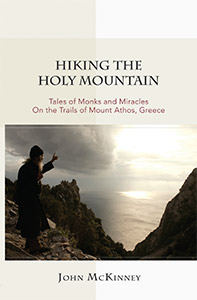
    Hiking the Holy Mountain: Tales of Monks and Miracles on the Trails of Mount Athos, Greece
    Hiking the Holy Mountain: Tales of Monks and Miracles on the Trails of Mount Athos, Greece

    “Hiking the Holy Mountain: Tales of Monks and Miracles on the Trails of Mount Athos, Greece” is the story of a hike like no other, encounters with a Greek monk/ iconographer named Father Daniel, amazing trips back in time and in faith to Mt. Athos, and miraculous events that occurred on—and off—the Holy Mountain. Mixed in are vivid tales from the lives of saints: St. Barbara imprisoned in a tower by her pagan father, dog-faced St. Christopher, the heroics of St. Constantine.

    How do you tell a story like this in two minutes?

    Well you don’t. But we figured that if a movie we really like that tells the story of a spiritual hike, “The Way,” could hook viewers in 2:32, we could too.

    We wanted to make three points in the Hiking the Holy Mountain Book Trailer:

    Want to make God laugh? Tell Him your plans. A well-worn joke to be sure, but oh-so-true. My plan was to write a magazine story about this strange place to hike. Well, that was my plan…

    On this amazing path we call life, we’re often compelled to change direction. I told the monks I was only hiking to Saint Anna’s to pick up the trail to the top of the mountain. How come they didn’t believe me and started asking me all these personal questions about my family?

    On the trail between earth and heaven, anything is possible. We never hike alone.

    Credits: Efharisto (that’s ‘thank you’ in Greek) to George Mamalakis, editor and music; Greg Pantages, narrator; Spiro Deligiannis and Zachary Deligiannis for photos and video clips.


  • Hike with Kids

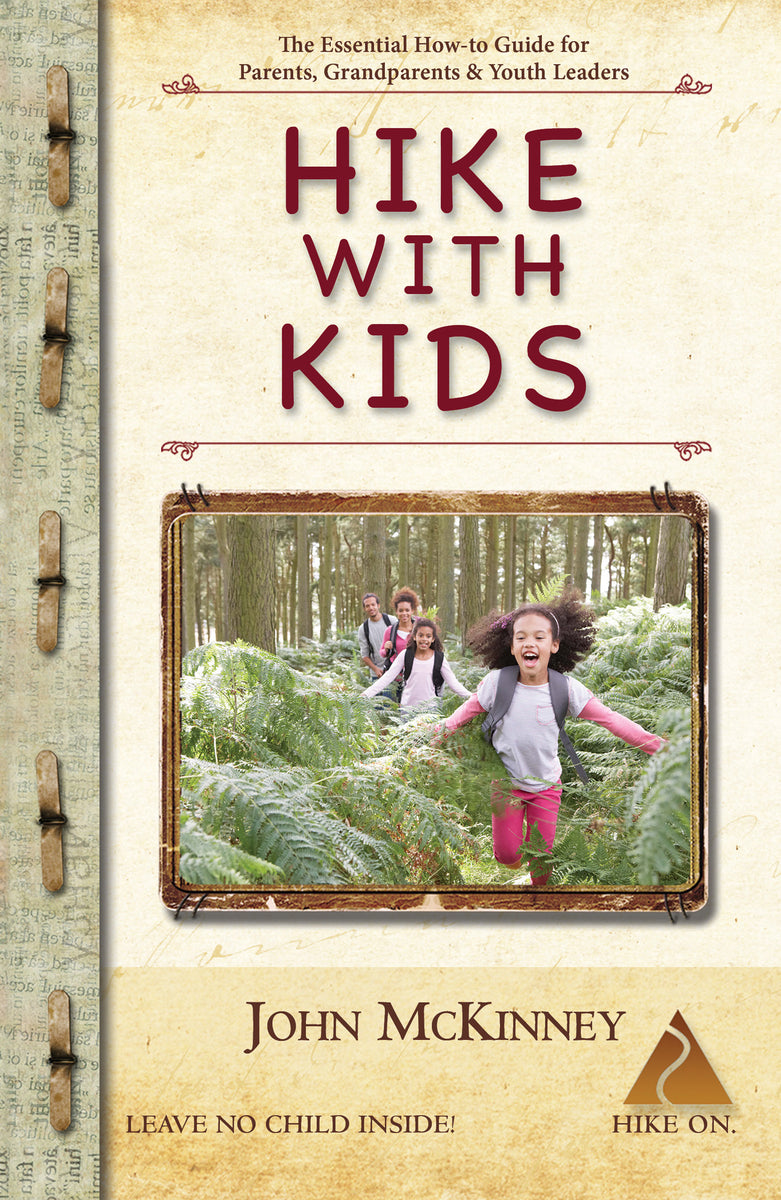
    Hike with Kids


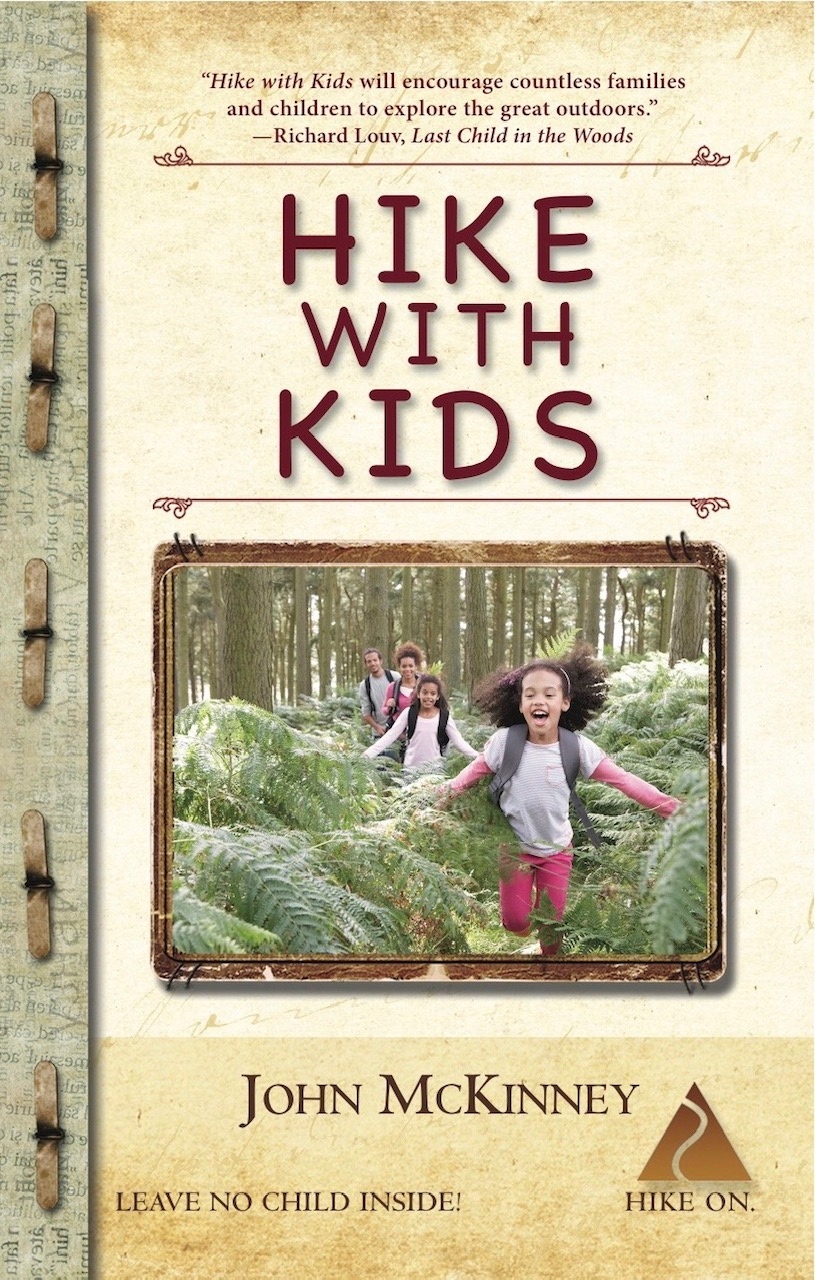
    "Hike with Kids will encourage countless families and children to explore the great outdoors.”
    —Richard Louv, Last Child in the Woods
    HIKE With Kids is now Available!

    “It’s a gift from one generation to another to take kids on a hike,” says John McKinney author of 30 hiking-themed books whose weekly hiking column ran for 18 years in the Los Angeles Times. “As a parent myself, I wrote HIKE With Kids to inspire adults to take kids hiking and to provide the practicalities to do so.”

    (For hikers in many parts of the country, it’s not advisable to take a hike right now while the country is battling the Covid-19 pandemic, McKinney cautions. In some regions, it might be okay to hike, provided social distancing practices are observed and the trail is wide and lightly traveled.)

    Whether you’re indoors a lot or not, it’s a good time to learn about nature, nurture, and the fun you and your kids will have on a hike.

    Hike with Kids Is the Antidote We Need

    Recent studies have shown that more American children are replacing outdoor activities with those done indoors and, as a consequence, are suffering from what author-advocate Richard Louv calls “Nature Deficit Disorder.” But according to McKinney there is an antidote. Taking a hike in nature improves the health of children, increases their ability to concentrate and boosts their self-esteem, emotional wellbeing and leadership skills.

    From selecting gear to safety tips to favorite trail snacks, John reveals the best ways to share the joys of nature—and the fun of hiking with kids.

    • Discover which of the Ten Essentials are truly essential and the Six Secrets to Hiking with kids.
    • Gear-up with the right stuff, learn what to pack, and how to pick a hike kids will like.
    • Get tips for hiking with kids of all ages: babies and toddlers, tweens and teens.

    And be sure to check out “The Trailmaster’s Ten-Point Plan for Getting Kids Back on the Nature Trail.”

    “Beyond the substantial physical and emotional benefits found through hiking, kids who hike learn an appreciation for nature that lasts a lifetime,” say McKinney. “They’re the ones who will stand up and protect our natural environments in the future. Hiking is an investment in them and in our future.”

    Interested in Hike with Kids? Check it out HERE


  • Hiking Trails Defined

    Hiking Trails Defined

    More than 30 different kinds of hiking trails offer us a chance to take a hike! Who knew?

    I know I first picture and define hiking trails as narrow dirt footpaths, and I suspect a lot of other hikers think about hiking trails that way too. But on further reflection, we start making distinctions: hiking trail, biking trail, connector trail and loop trail, and so on.
    Hiking from A to Z with kinds of hiking trailsOver the years, I gathered definitions of various hiking trails and included them in my hiker’s dictionary: Hiking from A to Z, a Dictionary of Words and Terms for Hikers.

    Hike on.

    John McKinney

    Kinds of Hiking Trails

    Trail, Access Any trail that connects the main trail to a town, road, or another trail or trail system.

    Trail, Backcountry A primitive trail in an area where there are no maintained roads or permanent buildings.

    Trail, Connecting or Side Trails providing additional points of access to national recreation, scenic, or historic trails per the National Trails System Act.

    Trail, Designated Specific trails identified by the land management agency where some type of use (motorized or non-motorized) is appropriate and allowed either seasonally or yearlong and which have been inventoried and mapped and are appropriately signed on the ground.

    Trail, Destination A trail that connects two distinct points (A to B) rather than returning the user to the original beginning point.

    Trail, Directional Use (One-way) A trail laid out in such a way as to encourage users to travel in one direction.

    Trail, Double-track A trail that allows for two users to travel side by side, or to pass without one user having to yield the trail. Double-track trails are often old forest or fire roads.

    Trail, Extended Trails more than 100 miles in length (as defined in the National Trails System Act).

    Trail, Feeder A trail designed to connect local facilities, neighborhoods, campgrounds, etc. to a main trail.

    Trail, Front country Less emphasis is put on minimizing contact with signs of the civilized world. The main objective is to provide enjoyable trail experiences within the vicinity of developed areas by utilizing the scenic and interpretative features of semi-urban, rural, and natural environments.

    Trail, Greenway (Urban Trail) A trail established along a natural corridor, such as a river, stream ridgeline, rail trail, canal, or other route for conservation, recreation, or alternative transportation purposes. Greenway Trails can connect parks, nature preserves, cultural facilities, and historic sites with business and residential areas.

    Trail, Hiker-Biker An urban paved trail designed for use by pedestrians and bicyclists.

    Trail, Hiking Moderate to long distance trail with the primary function of providing long-distance walking experiences (usually two miles or more).

    Trail, Interpretive (Nature Trail) Short to moderate length trail (1/2 to 1 mile) with primary function of providing an opportunity to walk or paddle and study interesting or unusual plants or natural features at user’s pleasure. The ideal nature trail has a story to tell. It unifies the various features or elements along the trail into a related theme.

    Trail, Long Distance In general a trail best characterized by length (more than 50 miles), linearity (follows a linear feature), and diversity (geo- graphic and political).

    Trail, Loop(ed) Trail or trail systems designed so that the routes are closed circuits connecting a number of points of interest, giving users the option of not traveling the same section of trail more than once on a trip.

    Trail, Multiple-Use (Multi-Use, Diversified Use, Shared Use) A trail that permits more than on user group at a time (equestrian, hiker, mountain bicyclist, etc.).

    Trail, Out-and-Back A one-way trail on which you travel to a destination then backtrack to the trailhead.

    Trail, Pack A trail used by recreational stock; usually extended trails used by pack stings for overnight trips.

    Trail, Primary Continuous through route that originates at a trailhead. Primarily for directing users through an area while promoting a certain type of experience.

    Trail, Recreation A trail that is designed to provide a recreational experience.

    Trail, Regional An extended or longer trail that may cross one or more land management agency jurisdictions and connects diverse trail systems.

    Trail, Secondary Short trail used to connect primary trails or branches of primary trails. They encourage movement between two primary trails or facilitate dispersal of use through secondary branching.

    Trail, Side Dead-end trail that accesses features near the main trail.

    Trail, Single-Track A trail so narrow that users must generally travel in a single file.

    Trail, Single-Use One that is designed and constructed for only one intended use (i.e. hiking only).

    Trail, Spur A trail that leads from primary, secondary, or spine trails to points of user interests such as overlooks, campsites, etc.

    Trail, Stacked Loop Trail or trail systems designed with many loops “stacked” on each other, giving users the option of not traveling the same section of trail more than once on a trip.

    Trail, Stock A route/trail used by commercial stock.

    Trail, Undesignated (Social, Wildcat, Way, Informal, User or Visitor Created) Any unofficial trails that develop informally from use and are not designated or maintained by an agency; often found cutting switchbacks or between adjacent trails, campsites, or other sites of interest. Undesignated trails can be dangerous, eroded, and unsustainable.

    Interested in gear that shows off your hiking know-how? Check it out HERE.

  • Ten Trail-Tested Tips for Hiking with Children

    Ten Trail-Tested Tips for Hiking with Children

    Here are my favorite Ten Trail-Tested Tips for Hiking with Children. For a more detailed discussion on the subject, take a look at my new Hike with Kids: The Essential How-to Guide for Parents, Grandparents, and Youth Leaders.

    Hiking with Children tips & how-to’s:

    1. hike with kids hiking with childrenKeep your children in sight at all times. That may seem obvious, but you’d be surprised how fast kids can get off the trail.
    2. Repeat and repeat again all instructions ranging from snack breaks to porta-potty locations.
    3. Choose a hike with fairly modest elevation gains. Children prefer intimate settings, such as a little creek or a clump of boulders to those vast scenic panoramas favored by adults.
    4. Feed the Troops. Begin with a nourishing breakfast. Carry plenty of quick-energy snack foods and offer them frequently. (By the time kids tell you’re they’re hungry, they’re often already cranky and out of energy and enthusiasm.)
    5. Supplement The Ten Essentials with extra snack foods, whistles (in case you and your child become separated), a book or toy for the drive to and from the trailhead.
    6. Check your child’s temperature. While you’d think that kids would tell you if they’re too cold or too hot, they usually don’t. Dress them in layers and be sure to add or subtract clothing in response to changing weather conditions.
    7. Teach respect for nature. Enjoy but don’t disturb flowers, plants and animals. Environmental education is easy and fun on the trail, so be sure to pack a good trail guide or nature guidebook and visit park interpretive centers.
    8. When children travel in groups, the kids motivate each other to go farther and faster. And there’s lots less whining.
    9. If young spirits sag, try playing games to regain good humor and maintain that all-important forward progress up the trail. With younger children, “play dog;” that is to say, throw an imaginary stick to the next tree en route and have them fetch it. “One-two-three-jump” is another popular game. With a parent holding each hand the child hikes along one-two-three steps, then jumps as parents raise arms and swing the hopefully-no-longer reluctant little hiker into the air. I Spy is another favorite trail game: “I spy with my little eye something that is….(fill in the blank).
    10. It’s much better for everyone to stop frequently and travel slowly than to try to make the kids go faster and then have to carry them. If parents know what kids can and can’t do, everyone has a great time on the trail.

    These tips make it more likely you will enjoy hiking with children. What’s more, they’ll enjoy it too!