Every Trail Tells a Story

Palos Verdes Peninsula
John McKinney · The Trailmaster
A shoreline that refuses to be tamed: geology in motion
Nonstop coastal drama with tidepools, cliffs, and a shipwreck
A tidal, ankle-testing trek over bowling ball-shaped rocks
Palos Verdes Peninsula, famed for its rocky cliffs rising from 50 to 300 feet above the ocean and for its 13 wave-cut terraces, is quite a contrast to the stereotypical Southland shoreline of sandy beaches.
And unlike the rest of coastal SoCal—which politely stays in one place—Palos Verdes still moves. Slowly, sometimes dramatically. The Portuguese Bend landslide complex, one of the largest active slides in the nation, has been inching, slumping, and occasionally lurching toward the sea for decades. The peninsula is a geologist’s playground: shattered volcanic rock, uplifted marine terraces, tilted strata, and always the sense that the land remembers its turbulent past.
Hikers experience this living geology up close. Returning visitors will note that trails, roads—and even luxury homes—shift a little from year to year. (If your GPS track doesn’t match reality, welcome to PV.)
Yet PV’s unstable underpinnings also help keep this stretch of coast magnificently undeveloped. Blufftop mansions are kept respectfully back from the edge, leaving room for raw nature: tidepools thick with anemones, sandstone shelves carved into benches and bowls, and kelp forests just offshore where divers nose around for abalone or snap photos of garibaldi in their neon-orange glory.
And then there’s the Dominator.
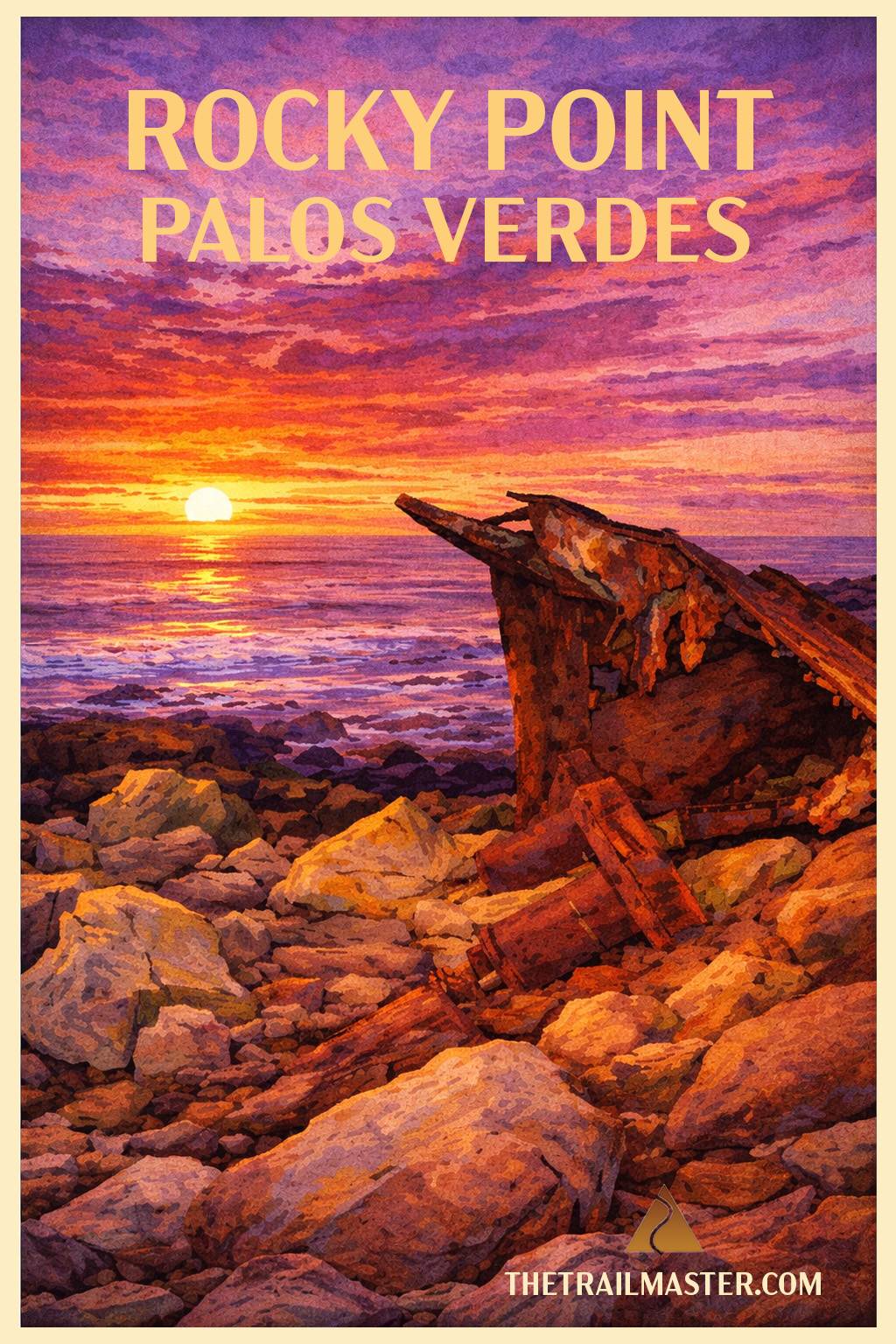
On March 13, 1961, this radar-less WWII-era freighter, hunting for San Pedro Harbor in fog, plowed straight onto the reef at Rocky Point. For months locals watched the breakup—cargo washed ashore, salvage crews swarmed, and kids reportedly rode pieces of flotsam like boogie boards. Today only fragments survive: rusted ribs, a few curved sections of hull, and the skeletal “tractor” winch that looks like a set piece from Waterworld. But even in its diminished state, The Dominator remains a pilgrimage site for coastal hikers.
A tide-dependent one, of course. This is PV—no sandy stroll here. You walk on a beach made of giant bowling balls, wet kelp, and slippery cobbles. It’s strenuous, lumpy, occasionally ankle-twisting, and absolutely worth it.
From Pacific Coast Highway in Torrance/ Redondo area, take Palos Verdes Blvd south; it bends into Palos Verdes Drive West. Near Malaga Cove Plaza, turn right on Via Corta, then right on Via Arroyo, and right again into the parking lot behind Malaga Cove School (public parking). Trail access is at the west edge of the lot where a wide path drops toward the bluffs above Flat Rock Point. Alternate access: A coastal footpath also leaves from Paseo Del Mar, 0.1 mile beyond Via Horcada where the road curves east.
Head down the broad path toward the sea and—before your feet even reach the rocks—look around. Those steep, cut-in canyons are the scars of PV’s ancient watercourses. Malaga Canyon slices down from the hills, then doglegs west to empty right at the cove.
As you descend, Flat Rock Point comes into view, its greenish water swirling around the anvil-shaped shelf that guards some of the best tidepools in the county. Definitely plan your timing around low tide if you want the full effect.
Reach the beach, turn south (left), and begin your rhythmic dance across the cobbles. The footing is uneven; go slow and savor the experience. PV’s cliffs tower above you—300 feet in places—and gulls wheel overhead as surf surges between the rocks. Pass Bluff Cove, a surfer-beloved break with waves that peel off the reef like something out of a surf film from 1966.
A mile beyond, the craggy prow of Rocky Point suddenly appears, and just around it begins the rusted scatter of the Dominator. Poke carefully among the remnants, watching the swell and avoiding sharp metal edges. This is history dissolving in slow motion.
Return the way you came or, if you’re fired up for more boulder-hopping, continue toward Lunada Bay (another 3 miles of rocky coast). Most hikers call it at the Dominator—already a full-value adventure.