Every Trail Tells a Story

Ormond Beach
John McKinney · The Trailmaster
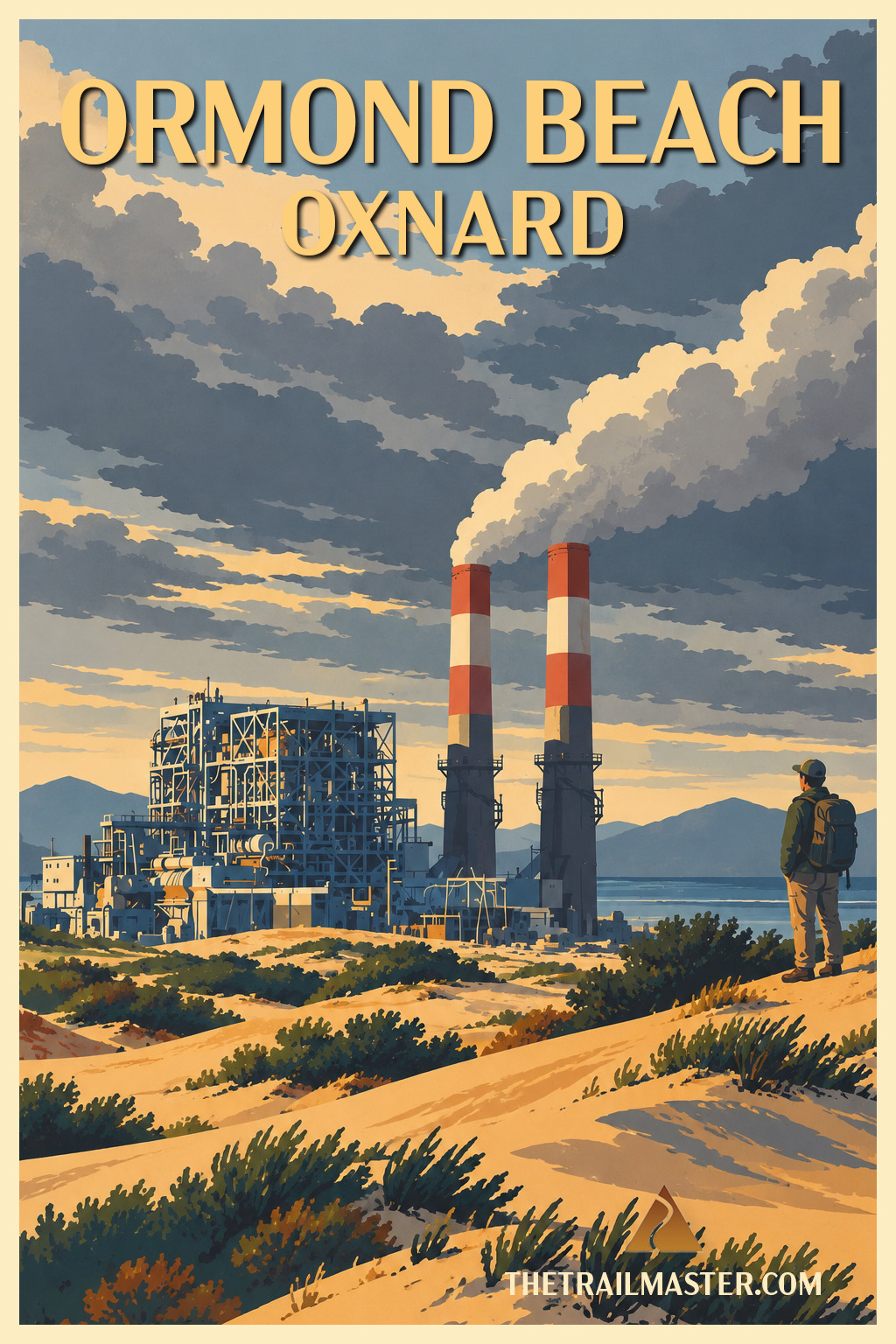
Birds have always seen something in Ormond Beach that humans struggled to appreciate.
For decades, most people noticed the power plant, the industrial skyline and the scars left by pollution. Egrets, avocets, stilts and least terns looked past all that and kept coming back. They seemed to understand something we’re only now beginning to rediscover: beneath the weeds, old roads and contaminated soil lies the framework of an extraordinary coastal wetland.
I must admit, my first impression wasn’t much different from everyone else’s. Drive past the towering generating station, the old industrial sites and the tangle of roads and utility lines, and “Let’s go hiking!” probably isn’t the first thought that springs to mind.
The beach stretches out in broad, empty simplicity. Behind the dunes, pickleweed and salt marsh begin reclaiming ground that long ago seemed destined for factories and housing tracts. A northern harrier quarters low over the marsh while a great egret stands motionless in shallow water, paying no attention whatsoever to the power plant rising behind it. Nature has an uncanny ability to ignore our aesthetic judgments.
For much of the last century, Ormond Beach became a tug-of-war between competing visions of California’s future. Industry found room here. Developers imagined thousands of new homes. Halaco operated a metal recycling plant that left behind a toxic legacy still being cleaned up today. Conservationists looked at the same landscape and saw something else entirely: one of the last sizable remnants of the vast wetlands that once stretched across the Oxnard Plain.
For years, the conservationists sounded like optimists. Today they sound more like prophets.
Wetlands are being restored. Contaminated land is gradually being cleaned up. Dunes are recovering. Trails are improving. Birds continue returning, just as they always have, while planners work toward reconnecting marshes that had been fragmented for generations. It’s slow work, sometimes frustratingly slow, but that’s often how conservation succeeds—not with dramatic victories but through years of persistence and a stubborn refusal to give up.
You can explore both Ormond Beach and the wetland—but not from the same trailhead. Birdwatchers will enjoy meandering along marsh trails. From the end of Perkins Road, a short interpretive trail gives access to a wetland island. (There’s no ocean beach access due to deep water sloughs separating the island from the coast.)
Whether you head for the waves or the wetland, Ormond Beach is a study in contrasts. Walk the shoreline and you’ll find one of Ventura County’s longest, and certainly least-crowded beaches. Wander the trails through the wetlands and you’ll discover coots, stilts, avocets, ducks and shorebirds taking advantage of habitat that’s steadily improving. Look inland and you’ll see reminders of California’s industrial past. Look seaward and the Channel Islands hover on the horizon as if patiently waiting for the next chapter.
Perhaps that’s what I like most about Ormond Beach. It’s unfinished. Most coastal parks celebrate what has already been protected. Ormond Beach invites you to witness a landscape in the middle of becoming something better. That’s a rare opportunity—and one worth watching.
Drive south down Arnold Road until it dead-ends at the coastline at a small dirt lot. The official address for navigation is 6859 Arnold Road, Oxnard, CA 93033.
To access the wetland (no beach access), take Hueneme Road to Perkins Road (located just east of J Street) and follow it all the way south to the end.
A sandy trail leads 0.25 mile through coastal sage scrub and low dunes. As you crest the final dune ridge, suddenly revealed is a wild, wide shoreline with views stretching toward the Channel Islands. Once you reach the shoreline, head south and walk parallel to the massive, industrial backdrop of the Ormond Beach Generating Station—the jarring contrast of mid-century industrial architecture looming over a pristine beach.
As you leave the power plant behind, the landscape becomes entirely wild. To your left, the coastline is bordered by the sprawling Ormond Beach Wetlands. The beach here feels exceptionally remote and wind-swept, often filled with driftwood and marine life.
Security fencing and radar structures marking the boundary of Naval Base clearly mark your turnaround point.