Every Trail Tells a Story

Laguna Coast Wilderness Park
John McKinney · The Trailmaster
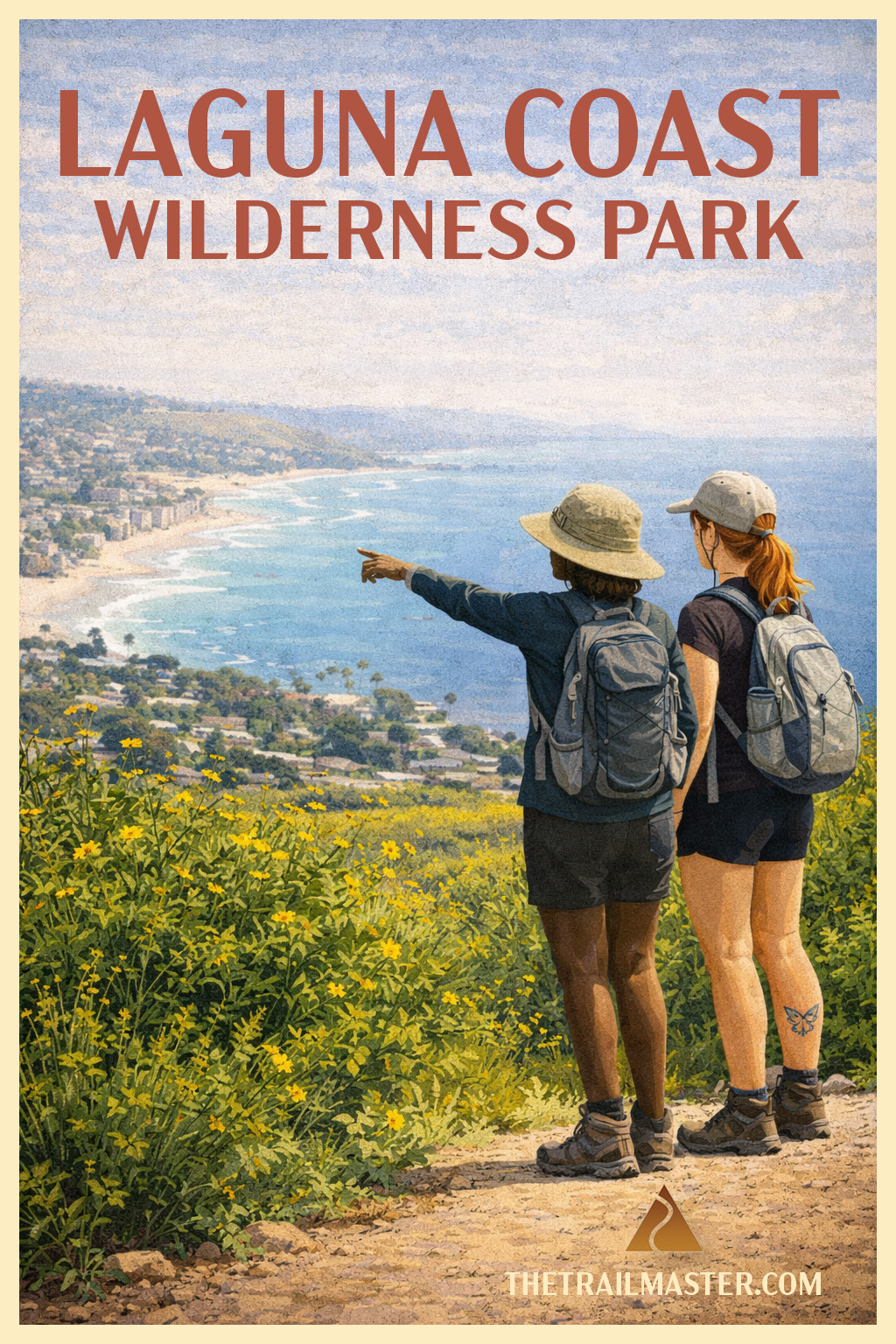
A rare taste of pre-development Orange County—yes, it really used to look like this.
Sandstone caves, seasonal waterfalls, and big views without the big crowds.
A hike powered by history: every step honors the locals who saved these canyons.
Laguna Coast Wilderness Park is the Orange County of the 19th century—before surf towns, before toll roads, before anybody thought “Laguna” would ever be followed by the word “real estate.” Here you find a lovely variety of landscapes: oak woodlands tucked into cool canyons, breezy grasslands glowing in late light, sandstone ridgelines sculpted by time and weather, and Orange County’s only natural lakes shimmering like small miracles.
The backstory is pure California. In 1865, James Irvine and his partners purchased the one-time Rancho San Joaquin. For more than a century, the Irvine Company grazed cattle across these hills. Conservation wasn’t on the menu—yet. But when Orange County’s development boom pushed deep into the landscape, the company cooperated with preservationists, setting the stage for one of the most remarkable grassroots conservation campaigns in Southern California history.
By the late 1980s, locals had had enough of bulldozers nibbling toward Laguna Canyon. In 1989, 8,000 people marched along the canyon road in an unforgettable show of resolve—artists, hikers, families, activists, old-timers, and idealists all saying, “These hills stay wild.” A year later, Laguna Beach residents voted overwhelmingly to tax themselves $20 million to protect the canyon forever. The Laguna Canyon Foundation kept the drumbeat going into the 1990s and beyond, helping secure and expand what is now a 7,000-acre sanctuary.
Walk into Laurel Canyon today and you feel that victory: laurel sumac leaning over the trail, quiet side passages lined with oaks and sycamores, sandstone outcrops eroded into caves and alcoves, and—after heavy rain—a seasonal waterfall whispering through the rocks. It’s a canyon preserved not by luck but by a community that refused to let Orange County’s last wild heart get paved over.
And while the San Joaquin Hills Toll Road slices awkwardly through the park, the landscape endures. Coyotes trot the ridgelines, hawks rise on thermals, and the coastal sage scrub continues its slow recovery from cattle and chaparral fires. The result is a park that feels both ancient and newly protected, a reminder that beloved wildlands stay wild only when people rally to defend them.
From the parking area, join the path paralleling Laguna Canyon Road and soon pass a sandstone boulder weathered into a tiny cave—an appetizer for the geology to come. The trail bends onto an open slope transitioning from old grazing grassland back toward coastal sage scrub, where buckwheat and sage reclaim their long-lost domain.
Turn away from the road and enter the increasingly sheltered quiet of Laurel Canyon. Begin a steady ascent among live oaks, sycamores, and laurel sumac. A seasonal creek threads the canyon floor; after big winter storms, a short-lived waterfall adds a flourish to the climb. Continue upward to meet a dirt road and turn left, gaining height toward a saddle on Willow Ridge.
At the ridge junction, turn left again and begin descending Willow Canyon Road—a broad path framed by views of wilderness on one side and, alas, the San Joaquin Hills Toll Road slicing through the park on the other. The descent is mellow, the canyon wide, and the scenery classic Laguna Coast. After winding past recovering slopes of sagebrush and prickly pear, the road returns you to the park office and the trailhead.