Every Trail Tells a Story

Fitzgerald Marine Reserve
John McKinney · The Trailmaster
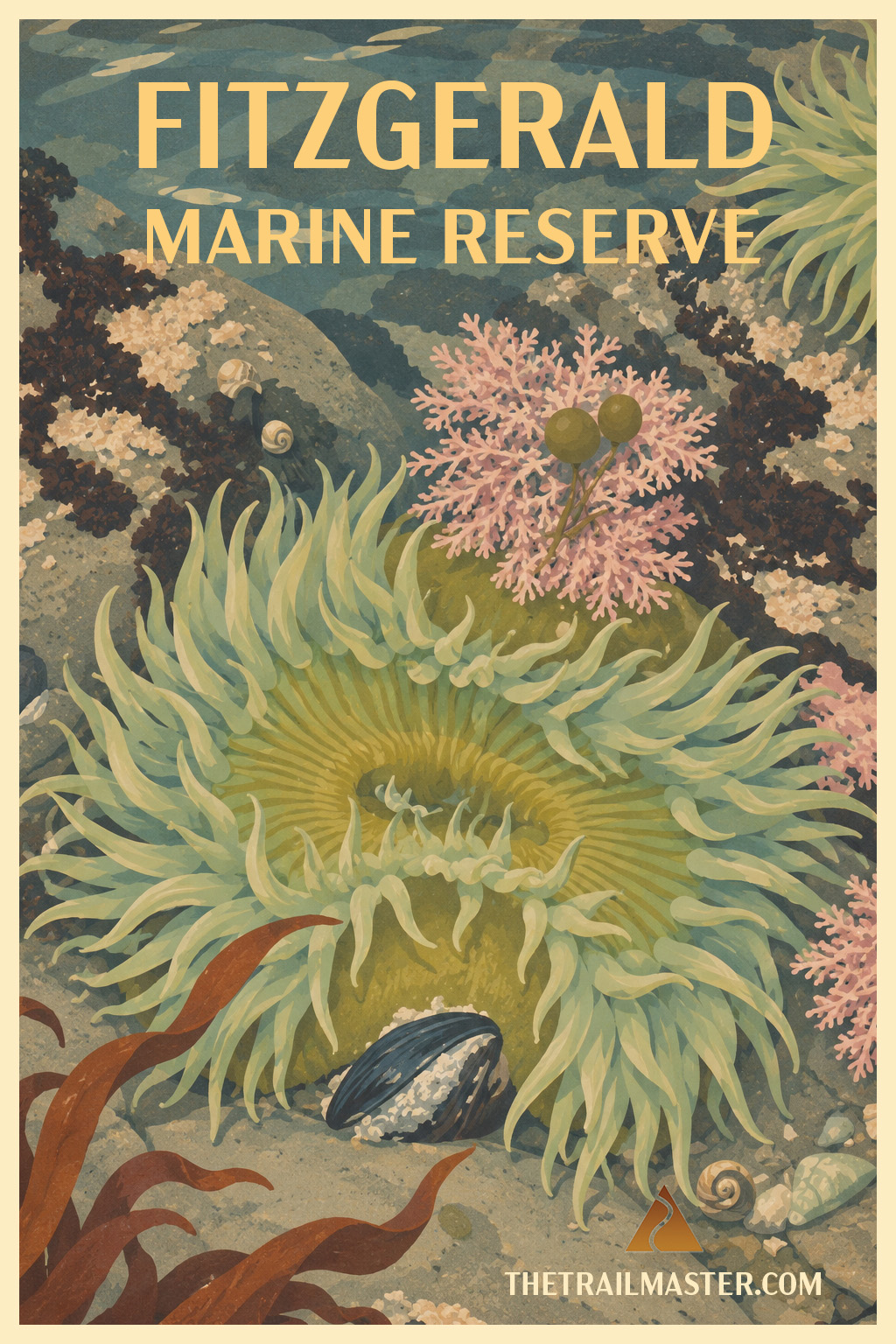
Fitzgerald puts a thousand feet of reef at your feet.
A living laboratory for scientists for more than a century.
Naturalists included. Just add low tide.
Timing is everything at Fitzgerald Marine Reserve. Arrive at high tide and you’ll find a pleasant little beach tucked beneath the bluffs at Moss Beach. Arrive when the Pacific has pulled back the curtain and an entire world appears at your feet.
At a good low tide, the rocky reef extends nearly 1,000 feet into the ocean, riddled with pools and channels temporarily abandoned by the sea. Anemones wave their tentacles underwater and fold themselves into damp blobs when exposed. Hermit crabs scuttle across the bottom. Sea urchins occupy rocky crevices, mussels crowd together and sea stars cling stubbornly to the reef. For a couple of hours, we landlubbers get to wander around the neighborhood.
Scientists have been doing considerably more serious exploring here since the 1920s. More than two dozen unique species have been discovered at Fitzgerald, helping establish the reef as one of Northern California’s richest marine-life habitats. By the 1960s, however, the tidepools’ popularity was becoming their undoing. Collectors carted away marine life, development threatened the coast, and Stanford biologists helped rally support for protection. In 1969, collecting was prohibited, and today the rule is wonderfully simple: look, don’t take—and please don’t poke the residents.
There’s more to Fitzgerald than looking down. A short trail climbs onto the bluffs, crosses a wooden bridge and follows the coast through cypress and eucalyptus. From above, the reserve reveals itself on a larger scale: reef, beach, bluff and Pacific. Shorebirds patrol the waterline, harbor seals haul out nearby and the occasional sea otter appears offshore.
I like combining the two perspectives. Walk the bluff first and admire the Pacific in all its grandeur. Then descend and start poking around—figuratively, please—among the tiny worlds left behind by the retreating tide.
The lower the tide, the better the show. Around one foot or lower, the reef opens wide enough to keep the curious occupied for hours. On weekends and holidays, volunteer naturalists wander the tidepools too, and I happily surrender to their sharper eyes. That unremarkable-looking blob? An anemone. That tiny creature disappearing beneath a rock? Ask the naturalist. The small visitor center extends the wonder, revealing through its marine specimens and exhibits just how much life inhabits the world the Pacific has temporarily left behind.
Eventually the Pacific comes back for everything. Watch the channels refill, the rocks disappear and those exposed little neighborhoods return to the sea.
Tomorrow, the curtain rises again.
From Highway 1 in Moss Beach, about 7 miles north of Half Moon Bay, turn west on California Street and follow it to the reserve.
From the parking area, angle left across the wooden bridge and follow Reserve Trail along the bluff through cypress and eucalyptus. After about 0.5 mile, descend toward the beach and return via the tidepools when tides permit. Check tide tables before visiting; around one foot or lower offers the best exploration.