Every Trail Tells a Story

Estero Bluffs State Park
John McKinney · The Trailmaster
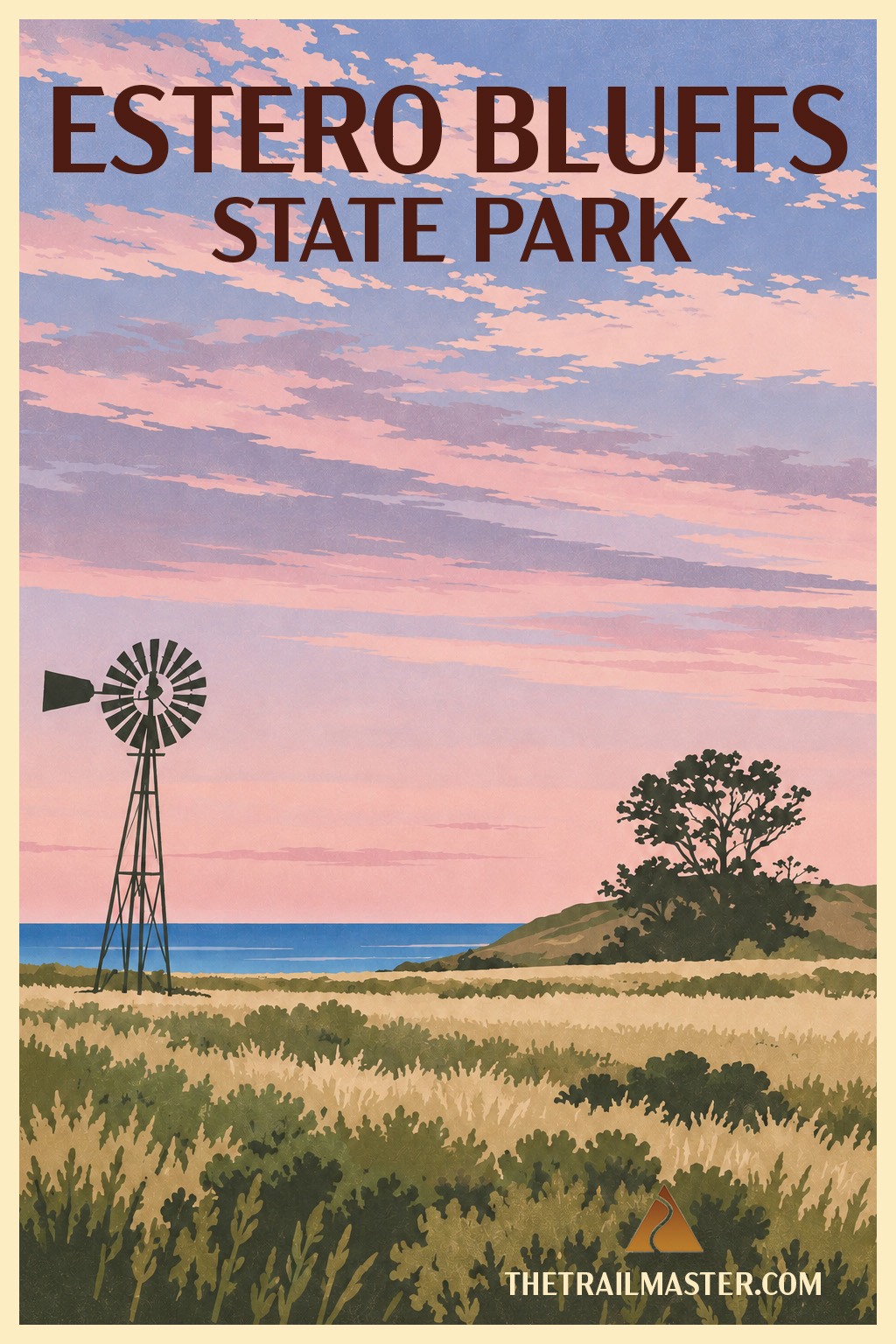
A wild coastline hiding 300 yards from Highway 1.
Creeks, coves, grasslands and enough wildlife drama for a nature documentary.
Let everybody else keep driving to Hearst Castle.
Motorists get glimpses of this coast between the billboards advertising Hearst Castle, but I’m betting scarcely one traveler in 10,000 bothers to stop and walk the bluffs—this despite multiple pullouts and plenty of parking along the four-mile length of Estero Bluffs State Park. On weekdays, I’ve often walked an hour or more along this magnificent coastline without seeing another soul.
While humans are few in Estero Bluffs State Park, birds are many: songbirds, shorebirds, seabirds, raptors. As you wander the lupine-splashed coastal terrace, look for egrets foraging at the mouth of a creek, red-winged blackbirds zooming into gullies and congregations of pelicans on the offshore rocks.
The high bird count has much to do with the high—almost astonishing, really—number of coastal habitats packed into the park’s 355 acres. Traipse grasslands of wild rye and wild oats, with occasional patches of native purple needlegrass. Nearer the sea, wander through coastal scrub—a hardy mixture of coyote bush and California sagebrush brightened by golden yarrow, California fuchsia and poppies. Cattails, rushes and sedges crowd the wetlands, habitat for the California red-legged frog.
For generations, cattle grazed these bluffs. After the missions were secularized, Rancho San Geronimo was granted to Rafael José Serapio Villa in 1842, and ranching continued under a succession of owners for another century and a half. Eventually developers proposed a resort community here, which prompted fierce opposition from Cayucos residents and conservationists. The Trust for Public Land purchased the property and transferred it to California State Parks in 2002.
What did we get for all that effort? Rolling grasslands, creeks and ravines, pocket beaches, a prominent reef and dozens of sea-battered rocks just offshore. And no facilities. Land managers wisely left well enough alone.
I’ve hiked many lengths of California coastline with varied plant and animal communities, but Estero Bluffs gives me—and the friends I’ve convinced to visit it—a particular sense of delight. At their widest, the bluffs lie barely 300 yards from Highway 1, yet once I’m out there I feel a world apart.
Butterflies and dragonflies float along on the breeze, mule deer browse the grasslands and Pacific tree frogs provide musical accompaniment. Better yet are the wildlife dramas I’ve witnessed here: gray whales migrating offshore; a coyote leading her young pups across the grassy marine terrace, patiently circling back when the curious youngsters wander into a ravine; a cormorant diving into the bay and emerging seconds later with a wriggling fish; vultures feeding on a seal carcass, their red heads standing out on a gray day.
None of this requires a long expedition into the backcountry. You pull off Highway 1, walk across the grass and there it is.
That’s the hidden magic of Estero Bluffs. Thousands of motorists hurry past on their way to better-known destinations up the coast. Let them. I’m happy to stop, walk the bluffs and see what drama nature has scheduled for today.
Access Estero Bluffs State Park from North Ocean Avenue at the north end of Cayucos. Or from downtown Cayucos, drive about a mile north on Highway 1 to the large pullout on the west side of the highway, the park’s southern access. Several additional pullouts and trailheads provide access farther north.
Follow the path across the grassy marine terrace to the bluff edge, then head north about 40 feet above a lively seascape of offshore rocks, pocket beaches, tidepools and coves. The trail dips in and out of gullies carved by seasonal creeks, most notably San Geronimo Creek, which empties into a sandy cove.
Continue past a grassy knoll and prominent Red Rock, then around Cayucos Point and its offshore sea stack. After several more gullies, reach Swallow Creek and a trail leading back toward Highway 1 and the northern trailhead. Turn around here for a fine outing, though I like continuing another half mile or so to Villa Creek before retracing my steps.