Every Trail Tells a Story

Emma Wood State Beach
John McKinney · The Trailmaster
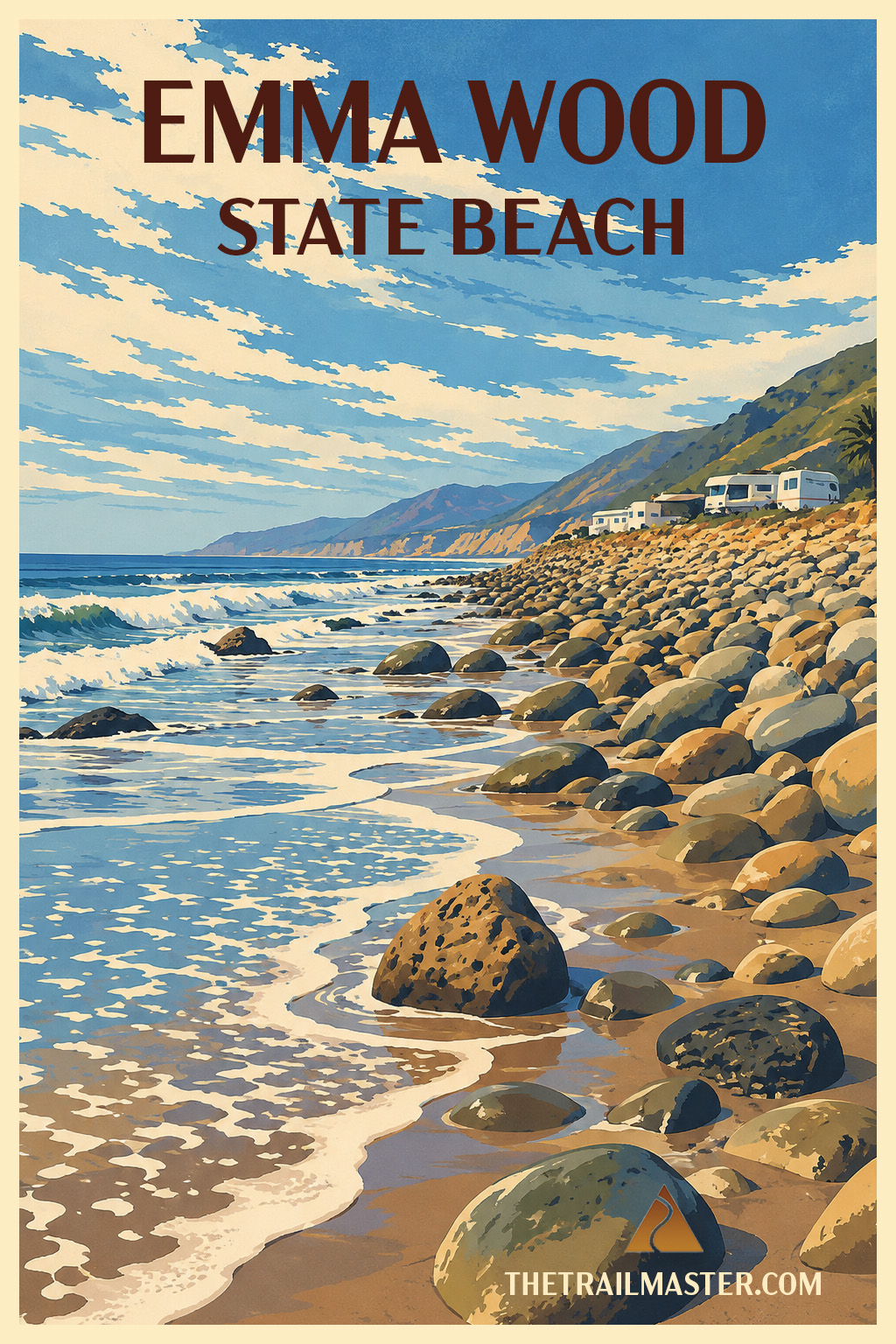
The Ventura River never enters the Pacific exactly the same way twice.
One short walk where river, marsh, dunes and ocean all shake hands.
Proof that even Highway 101 can’t completely drown out the sound of the surf.
If California’s state beaches held a popularity contest, Emma Wood would probably finish near the bottom of the pack, wondering why everyone drove right past.
That’s understandable. Highway 101 hugs one side of the park. Railroad tracks slice through the middle. The campground is reserved for RVs. None of this sounds especially promising.
Keep walking. Emma Wood’s real attraction isn’t the beach. It’s the meeting place.
Cobblestone beach gives way to low dunes. The Ventura River wanders toward the Pacific, sometimes spilling freely into the ocean, sometimes piling up behind a sandbar until the river seems to pause and reconsider its plans. Salt marsh, freshwater, riparian woodland and sandy shoreline all squeeze together in a surprisingly lively corner of the coast.
The Ventura River has always been a bit of a free spirit. Unlike rivers imprisoned in concrete channels, it still shifts with winter storms, rearranging sandbars and occasionally carving a new mouth to the sea. Some years you’ll find a broad lagoon alive with ducks, egrets and shorebirds. Other years the river slips quietly beneath the sand before finally reaching the Pacific. Every visit is a little different.
That unpredictability is exactly what keeps wildlife coming back. Great egrets stalk the shallows while snowy egrets fuss over smaller fish. Black-necked stilts pick delicately across the mudflats, and brown pelicans patrol the surf just offshore. In spring, yellow sand verbena brightens the dunes while pickleweed paints the marsh with subtle shades of green that turn surprisingly colorful as the seasons change.
It’s also one of Ventura’s quieter little success stories. More than a century ago, local naturalist E. P. Foster imagined creating a grand public park at the mouth of the Ventura River, something to rival San Francisco’s Golden Gate Park. The Great Depression interrupted those ambitions, and for decades the river mouth became better known as “Hobo Jungle” than as a nature preserve. Today, Seaside Wilderness Park protects a small but important remnant of the estuary, and because you have to arrive on foot or by bicycle, it retains a welcome sense of discovery.
I always smile when the freeway noise begins to fade behind the rhythm of waves rolling across the cobblestones. For a place squeezed between one of California’s busiest highways and a railroad, Emma Wood does a remarkable job of reminding you that nature is surprisingly good at reclaiming center stage.
From US 101 in Ventura, take the Main Street exit and follow signs to Emma Wood State Beach. Park near the Ventura River Group Camp entrance and walk under the highway to the signed Ocean’s Edge Trail.
Follow Ocean’s Edge Trail beneath the railroad bridge and along the cobblestone shoreline toward Seaside Wilderness Park. Watch for the ever-changing mouth of the Ventura River, where lagoons, sandbars and wetlands attract abundant birdlife. Return the same way or loop back via the Ventura River Trail and nearby footpaths when conditions permit.