Every Trail Tells a Story

Elkhorn Slough
John McKinney · The Trailmaster
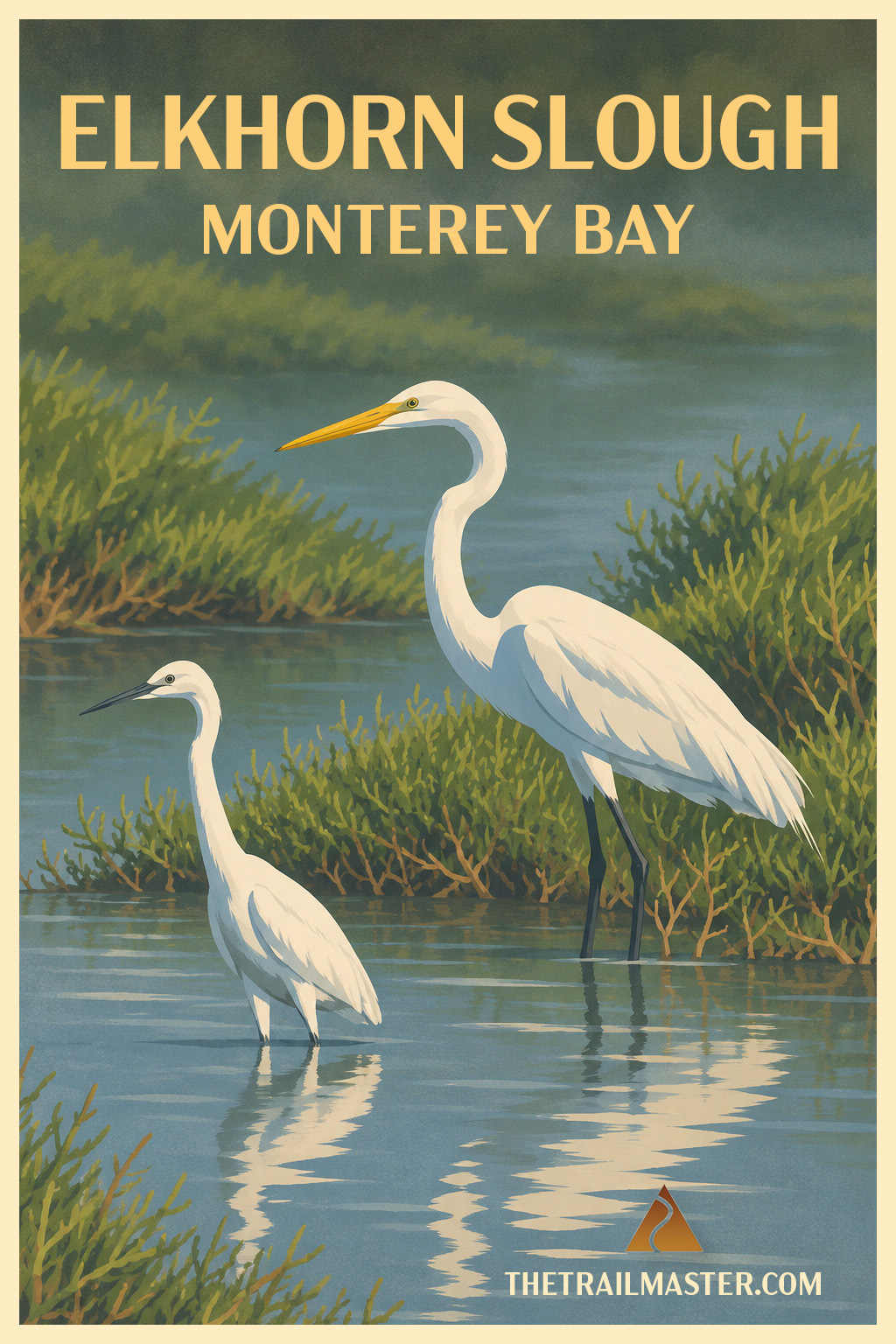
Birds, birds, birds. Bring binoculars.
Watch an entire wetland breathe with the tide.
Sea otters love Elkhorn Slough. So does the Trailmaster.
Three words to remember at Elkhorn Slough: birds, birds, birds.
They rise from the marsh, stalk the shallows, probe the mudflats and gather along tidal channels. Great blue herons stand motionless as statues. Snowy egrets step delicately through the water. Shorebirds descend in chattering flocks, while pelicans patrol overhead with considerably less fuss. In 1983, birders at Elkhorn Slough counted a then-record 116 species in a single day.
Bring binoculars.
Elkhorn Slough reaches inland from Monterey Bay at Moss Landing, an extraordinary ribbon of salt marsh, mudflat and tidal creek surrounded by the farms and rolling hills of northern Monterey County. It holds one of California’s largest remaining tracts of tidal salt marsh outside San Francisco Bay and provides essential feeding and resting habitat along the Pacific Flyway.
But numbers don’t explain the magic of walking here.
The tide does.
Water slips into narrow channels and spreads across mudflats, then retreats and exposes a banquet. Worms wriggle. Crabs scuttle. Long-legged birds get to work. Pickleweed colors the marsh while eelgrass flourishes beneath the water. The entire place seems to inhale and exhale with Monterey Bay.
I like to explore Elkhorn Slough by kayak as well as hiking boot. Paddling puts you down at water level with harbor seals, sea otters and birds, and on a favorable tide the slough even provides a free ride back toward the launch.
Usually.
Once I paddled up a tidal creek while the tide was ebbing. The water disappeared considerably faster than this experienced coastal explorer had anticipated, leaving my kayak—and its suddenly less distinguished captain—stuck in some exceedingly sticky mud.
The lesson was clear: at Elkhorn Slough, the tide is in charge.
Walking provides a different intimacy. South Marsh Loop stays close to the wetlands, passing old dairy barns, crossing a footbridge over the slough and reaching the main tidal channel. A detour follows a dike beside Whistle Stop Lagoon, and farther along the trail passes a heron rookery before turning back through woodland.
Look beyond the birds and you may spot one of the slough’s other stars. Sea otters have flourished in this sheltered estuary, floating among the channels and kelp with that familiar combination of industry and apparent leisure.
I have paddled and walked many miles along the California coast, but Elkhorn Slough always slows me down. Here you don’t march toward some grand destination. You watch a heron lift from the marsh. You wait for an otter to surface. You listen as unseen birds call from the pickleweed.
And you pay attention to the tide.
Believe me.
From Highway 1 at Moss Landing, take Dolan Road east about 3 miles, then turn left and continue about 2 miles to Elkhorn Slough Reserve.
For the richest slough experience, follow South Marsh Loop from the visitor center. The trail descends toward old dairy barns, crosses a footbridge and approaches the main tidal channel, where mudflats and marsh attract abundant birdlife. Detour along the dike beside Whistle Stop Lagoon for additional slough views, then continue past the heron rookery and through eucalyptus woodland before looping back toward the visitor center. Other trails explore the reserve’s oak-dotted grasslands, but South Marsh keeps you closest to the tidal wetlands that make Elkhorn Slough special.